

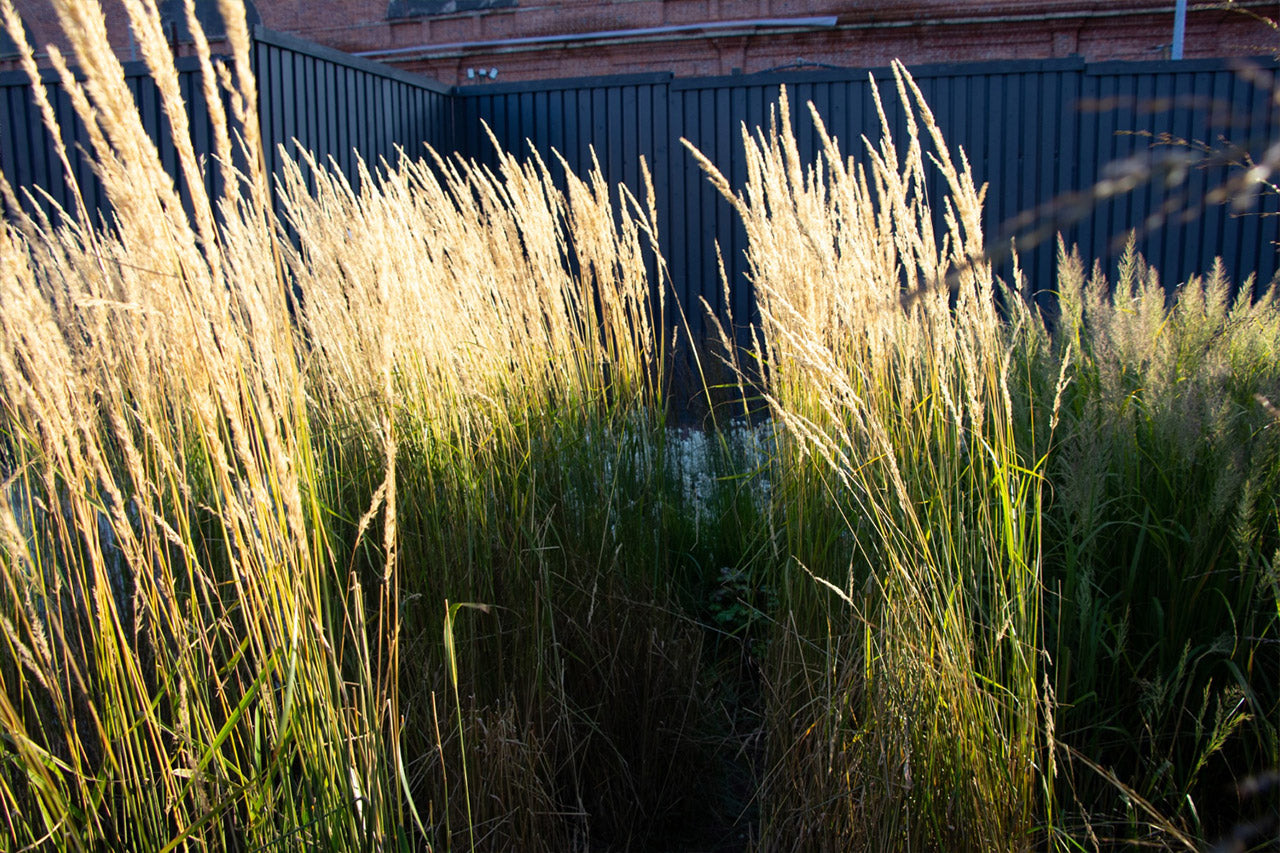
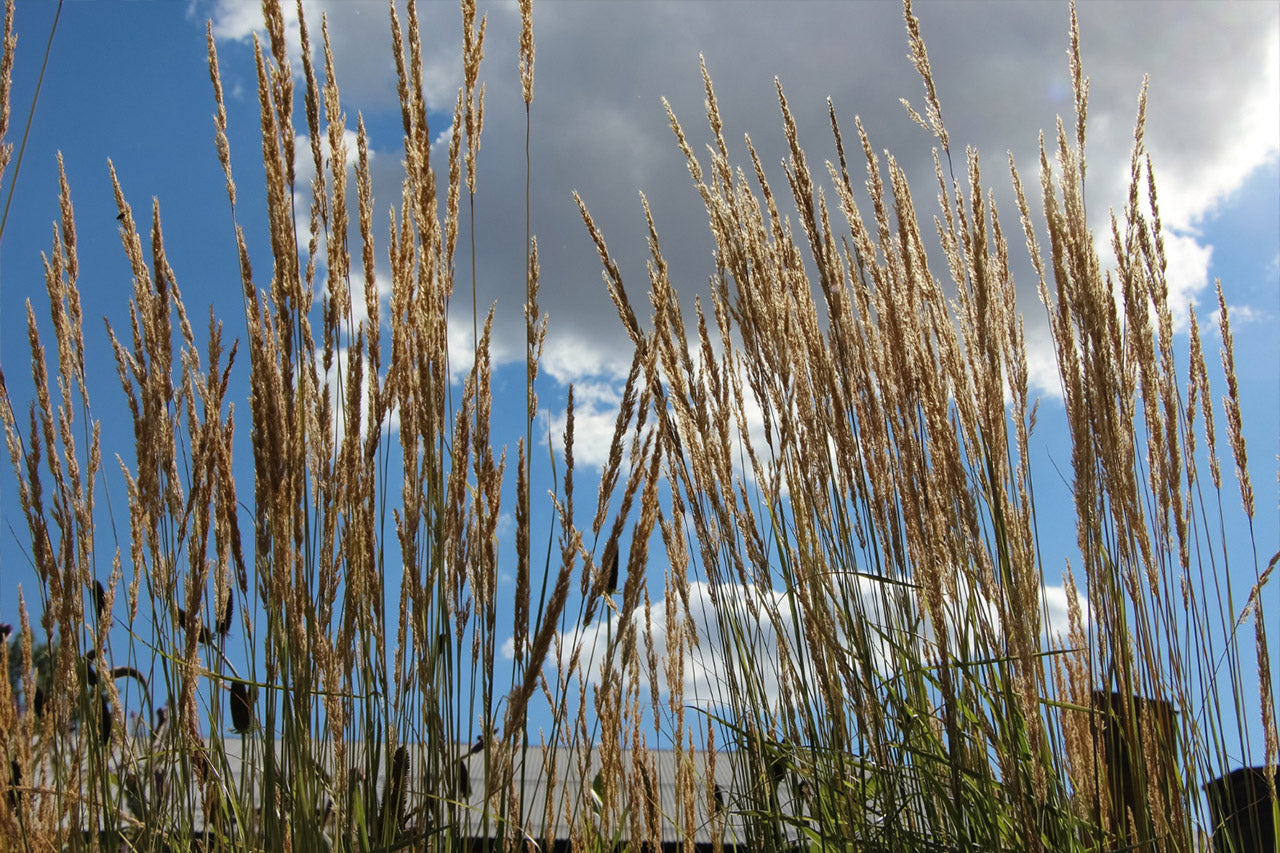
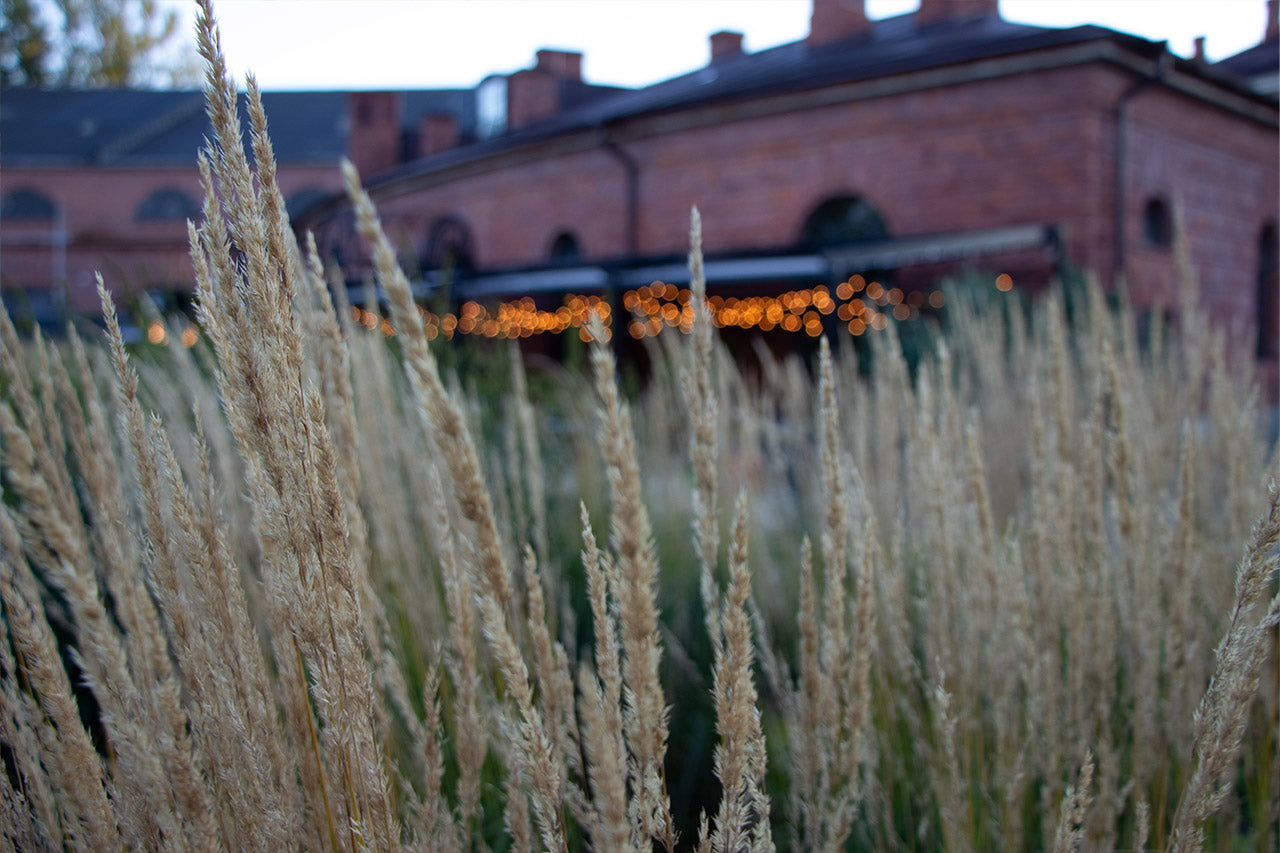
Molinia is wonderfully good at giving height and movement without blocking views. From a dense, tidy clump of foliage, it sends up fine, wiry stems topped with delicate flower panicles that hover above the border like a soft haze. You can easily see through these stems to plants beyond, so the border feels layered rather than chopped up. In a typical UK garden this is incredibly useful – you can add drama to the middle or back of a bed without casting heavy shade or creating a “wall” of grass. It’s that see‑through quality that designers reach for again and again.
Common name: Moor grass
Latin name: Molinia
Plant type: Clump‑forming, deciduous perennial grass.
Size in UK gardens: Depending on the variety, usually around 60–90cm tall in foliage, with flower stems from about 1–2m high, and clumps spreading to roughly 50–90cm across.
Best position: A sunny or lightly shaded spot in a border, meadow‑style planting or near a pond edge, where the airy stems can be backlit by the sun.
Soil: Moist but well‑drained soil; happy on many heavier or loamy soils if they don’t sit waterlogged for long, and reasonably tolerant of ordinary garden conditions.
Main interest: Fine, upright stems with airy flower panicles in summer, followed by warm autumn colour and elegant winter silhouettes.
Fragrance: Not grown for scent – the appeal is visual and textural, plus the gentle sound in the wind.
Hardiness: Fully hardy in most UK gardens; top growth dies back in winter and re‑sprouts from the base in spring.
Care level: Easy to moderate – low‑maintenance once established, with one main cut‑back a year and sensible watering when young.

The Simpson’s team raises the majority of our trees here at the nursery. For varieties outside our own production, we work with independent local growers we trust - all chosen for UK climate suitability.
Planting time: As container‑grown plants, Molinia can be planted in most months when the ground isn’t frozen or waterlogged; spring and early autumn are usually easiest, giving roots time to establish before summer heat or winter cold.
Watering: Water regularly in the first season so the rootball and surrounding soil don’t dry out completely, especially in lighter soils. Once established in the ground, moor grass is fairly self‑sufficient but appreciates extra water in prolonged dry spells, particularly on free‑draining sites.
Feeding: Molinia prefers reasonably lean conditions and rarely needs heavy feeding. A light mulch of compost or leaf mould in spring is usually enough to keep it going; avoid rich, high‑nitrogen feeds that can make growth too soft and floppy.
Pruning: Cut back the old stems and foliage once a year, in late winter or very early spring, before new shoots appear. You can either shear clumps close to the ground or pull out old material by hand while leaving new growth intact.
Winter: In the ground, established Molinia generally needs no special winter protection beyond a mulch and sensible siting on well‑drained soil. The old stems can be left standing for winter interest and wildlife, then removed before fresh growth starts.