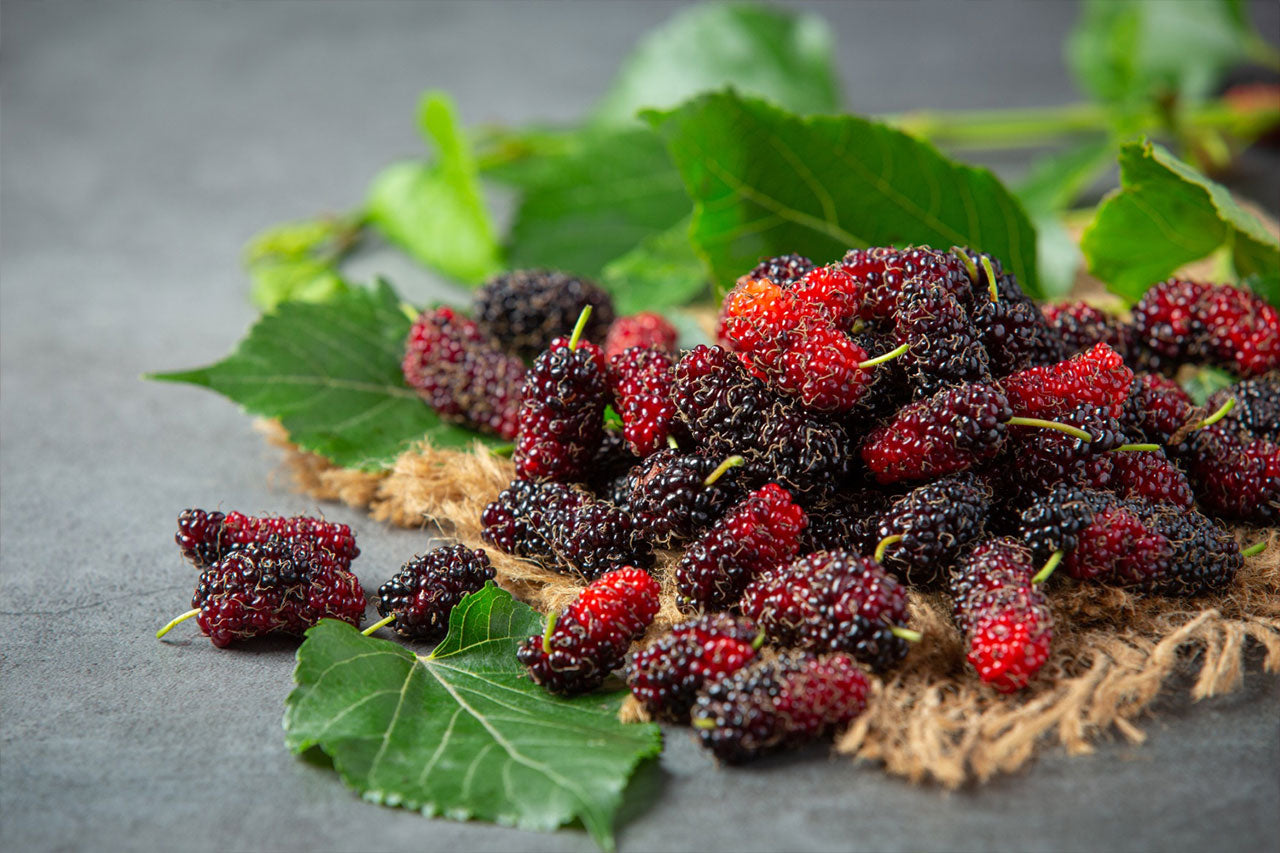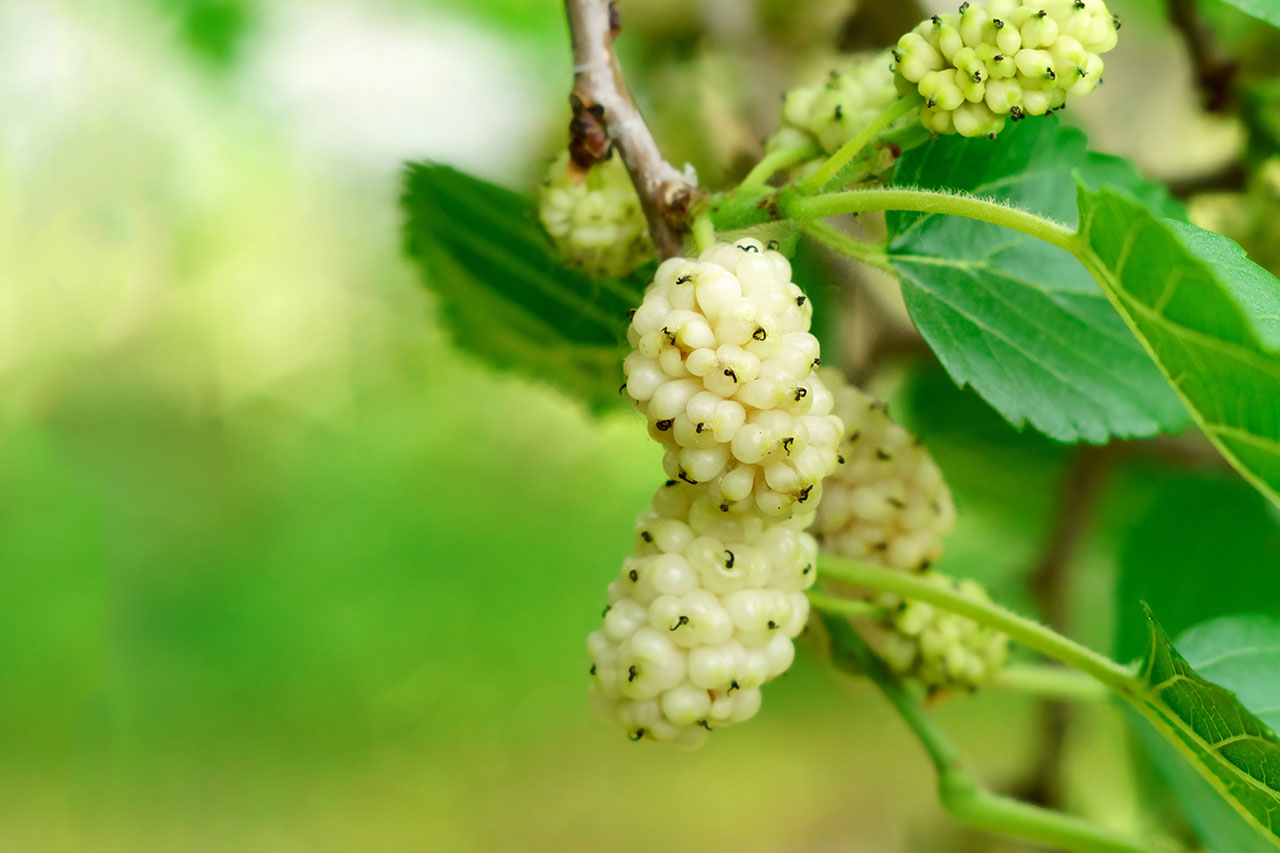

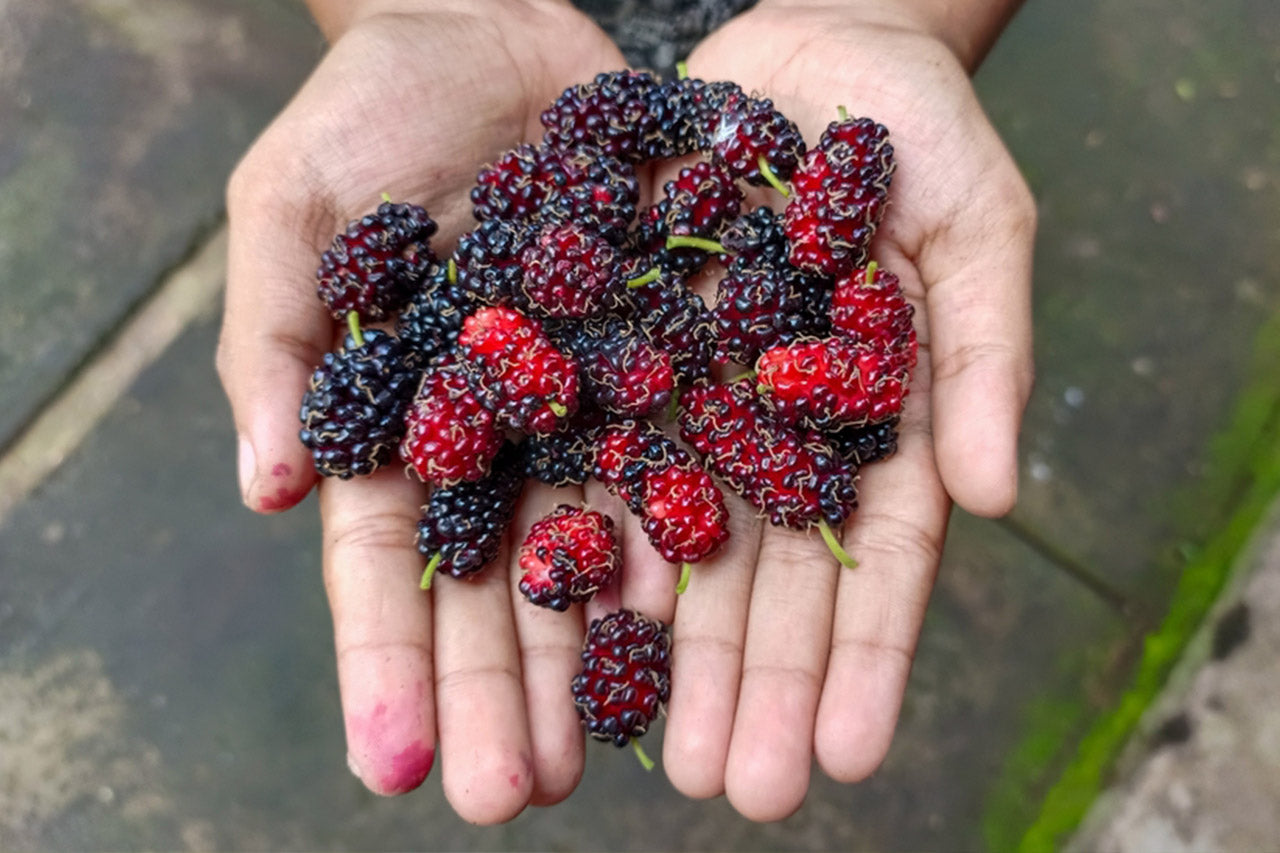
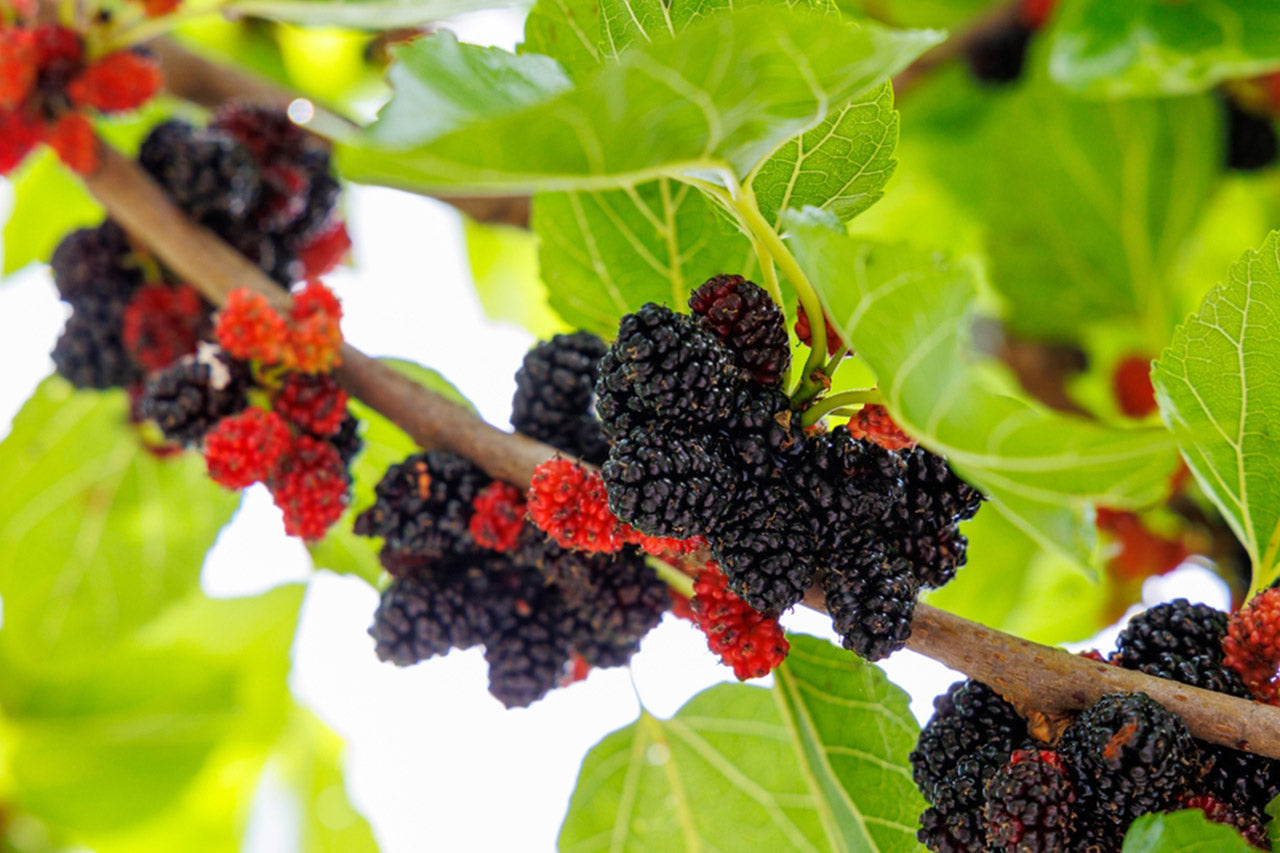
Mulberries are one of those fruits that feel almost too good to be true — soft, juicy, and sweet with a gentle, winey depth. When they’re ripe they come away easily, and the best way to harvest is often simply to lay a sheet beneath and let the fruits drop with a light shake. In a UK garden, they’re a real midsummer treat: a handful eaten straight away, or a bowlful for pies, jams and compotes. The flavour is far richer than most shop-bought berries, and once you’ve tasted them warm from the tree, you’ll understand the fuss.
Common name: Mulberry tree.
Latin name: Morus (most commonly Morus nigra for fruit in UK gardens).
Size in UK gardens: Often 4–8m tall and wide over time; can be kept smaller with careful pruning, but it’s best given space.
Best position: Full sun in a warm, sheltered spot for best fruiting and ripening.
Soil: Fertile, well-drained soil is ideal; copes with many soils once established, but dislikes waterlogging.
Main interest: Lush foliage, cooling shade, and sweet summer fruits; older trees have beautiful winter structure.
Fragrance: Not noticeably scented.
Hardiness: Hardy in most UK gardens once established.
Care level: Low to moderate – easy once settled, but needs a well-chosen site and gentle, minimal pruning.

The Simpson’s team raises the majority of our trees here at the nursery. For varieties outside our own production, we work with independent local growers we trust - all chosen for UK climate suitability.
Planting time: As container-grown trees, mulberries can be planted in most months when the soil isn’t frozen or waterlogged; spring and autumn are usually easiest.
Watering: Water well in the first 1–2 seasons, especially in dry spells; once established, mulberry is fairly resilient but fruits better with steady moisture.
Feeding: A spring mulch of compost or well-rotted manure is usually enough; a light balanced feed helps on poorer soils.
Pruning: Minimal – prune lightly and carefully, ideally when fully dormant; mulberries dislike heavy pruning and can bleed sap.
Winter: Hardy once established; shelter and mulch help young trees settle in, especially in windy sites.
Availability is always changing, so please check with us if you have a particular variety in mind.


A handsome, vigorous mulberry with a bold-leaved, summery canopy that feels generous and a little exotic. The fruit is typically sweet and mild, often lighter in flavour than black mulberry, and the tree itself brings real shade and presence. Great if you want a productive tree with a relaxed, Mediterranean-leaning mood.
A striking ornamental mulberry with beautifully cut, lace-like foliage that gives the whole canopy a lighter, more decorative look. It feels more “garden feature” than purely fruit tree, though it can still produce sweet fruit depending on conditions. Ideal if you want shade and structure with extra leaf texture and interest.
A graceful weeping mulberry with a cascading outline that reads like a living umbrella—very sculptural and instantly eye-catching. It’s primarily grown for its form and foliage effect, creating a calm, draped presence over a lawn or seating spot. A lovely choice when you want a statement tree that feels gentle and theatrical.
The classic, deeply traditional mulberry with a rugged framework and a truly old-orchard soul—one of those trees that feels like it belongs on an ancient wall line. The fruit is richly flavoured, dark, and intensely sweet-tart, often considered the best for eating. Ideal if you want a heritage tree with unforgettable fruit and real character.

A sturdy, garden-friendly mulberry with a confident, productive feel—still wonderfully characterful, but with a slightly more practical, orchard-ready presence. The fruit is sweet and richly flavoured in that classic mulberry way, and the canopy gives lovely shade. A great choice if you want mulberry character with a reliable garden performance.