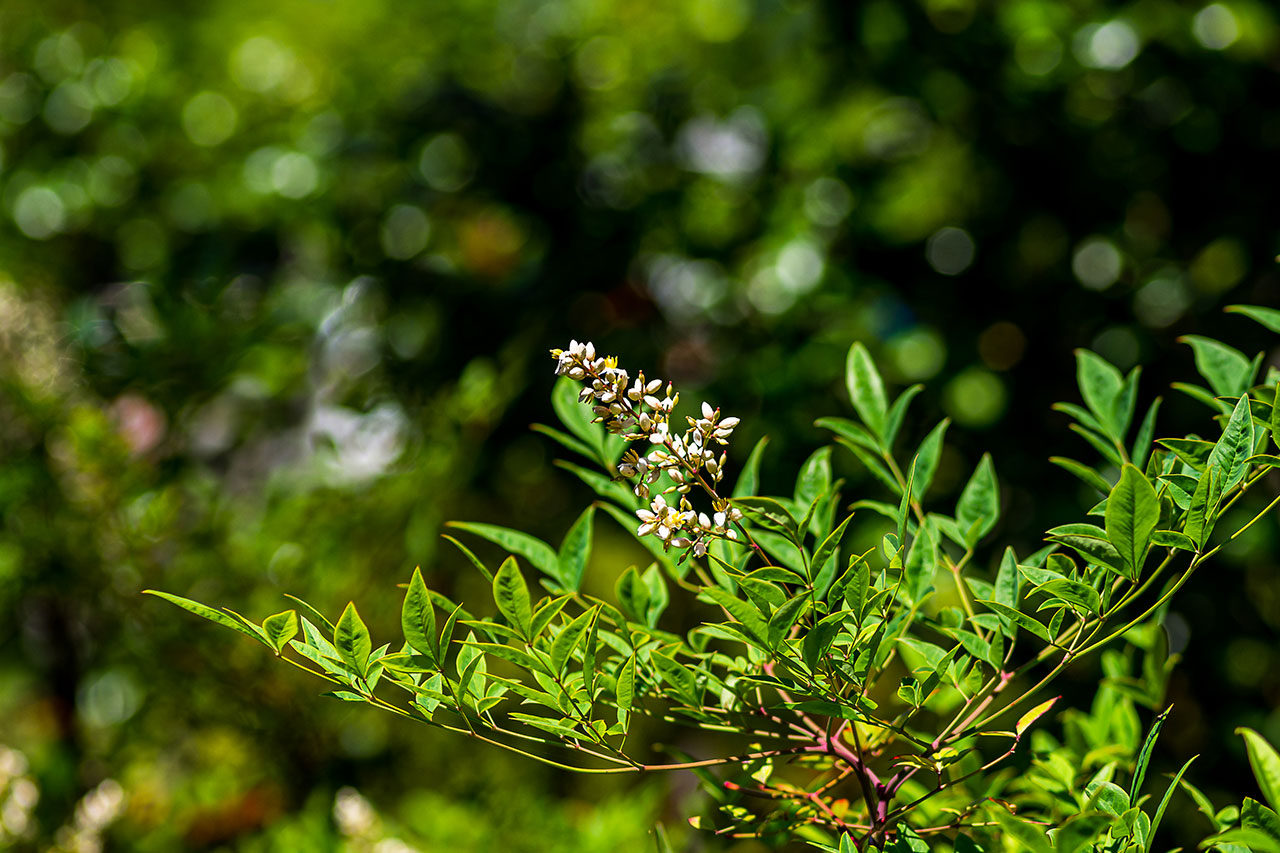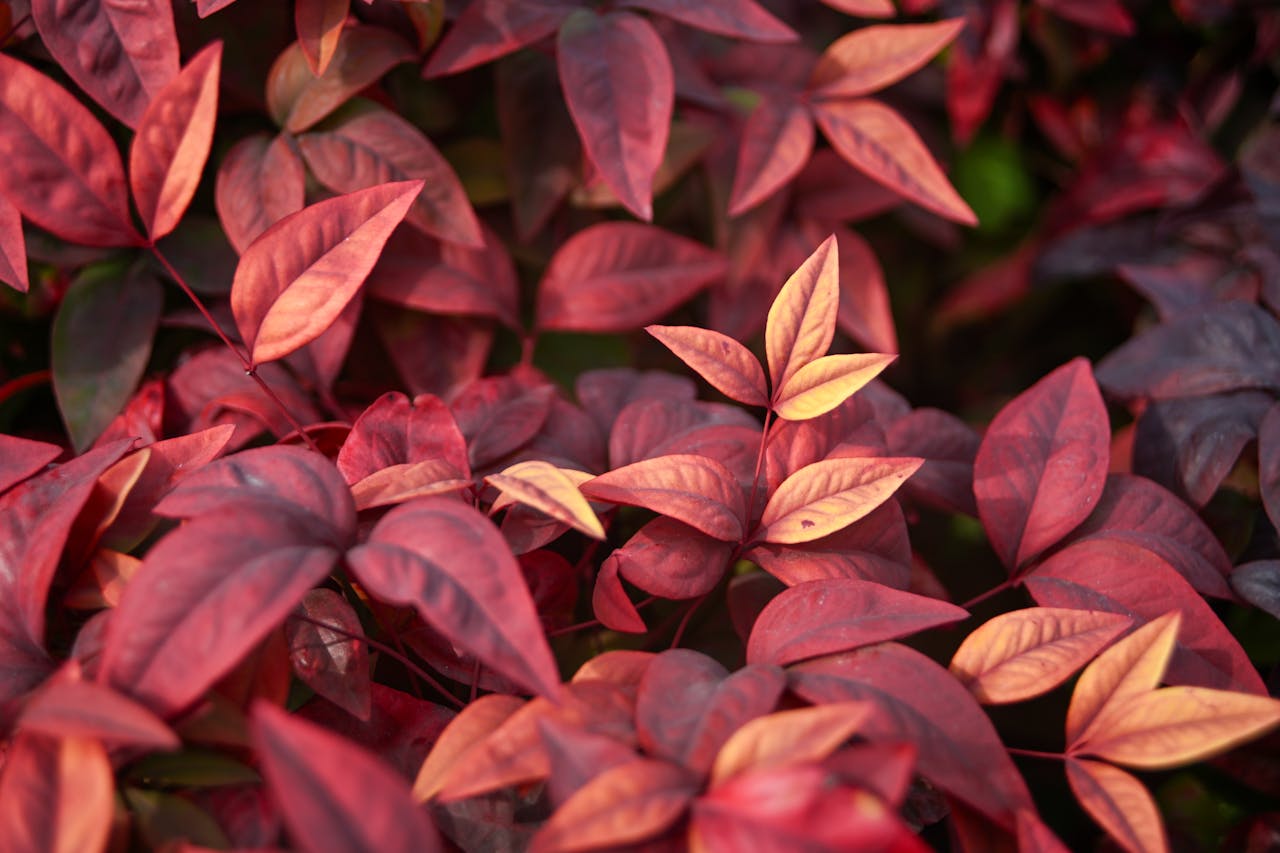

One of nandina’s loveliest qualities is the way its foliage never looks quite the same for long. Young leaves often emerge with tints of bronze, pink or red, before softening into fresh greens for summer. As autumn approaches, the whole plant may flush rich red, orange or wine tones, especially in sun, with some colour often lingering into winter. That slow, gentle shifting means even a single plant can give your border or pot a sense of movement and change, without any need for frantic deadheading or replanting.
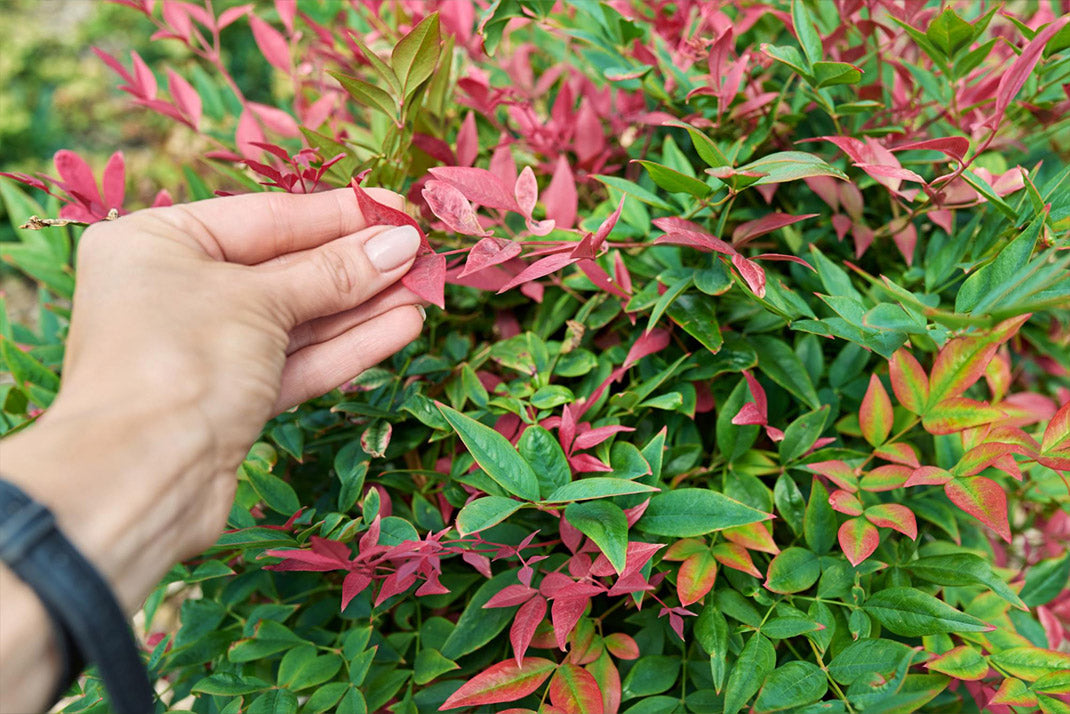
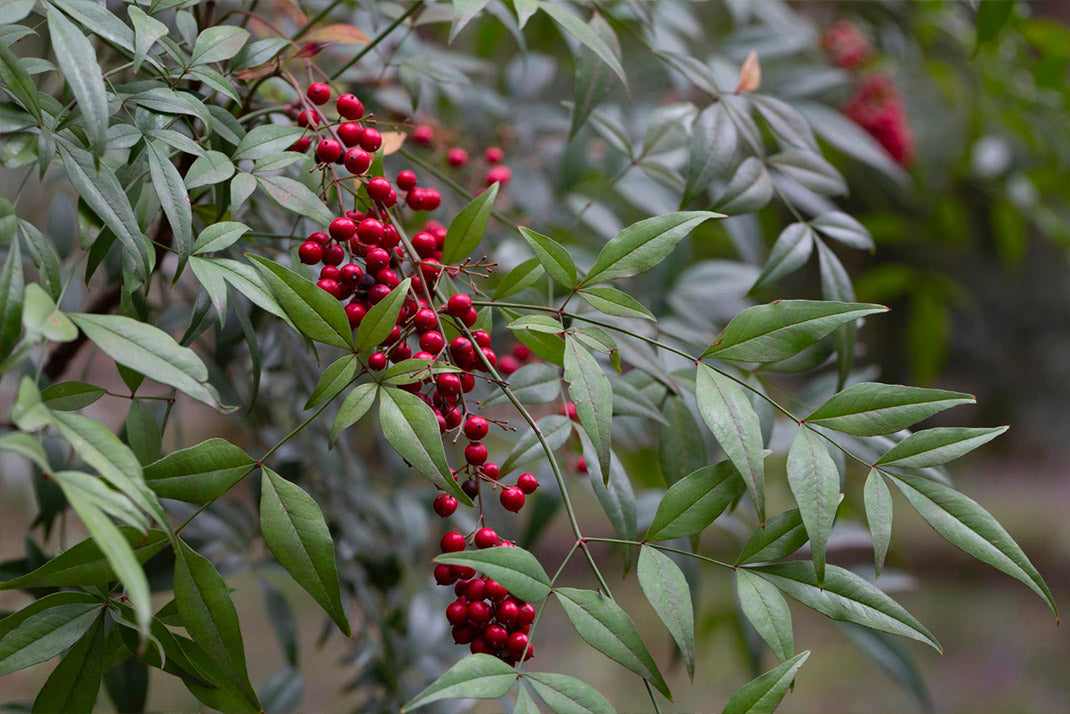
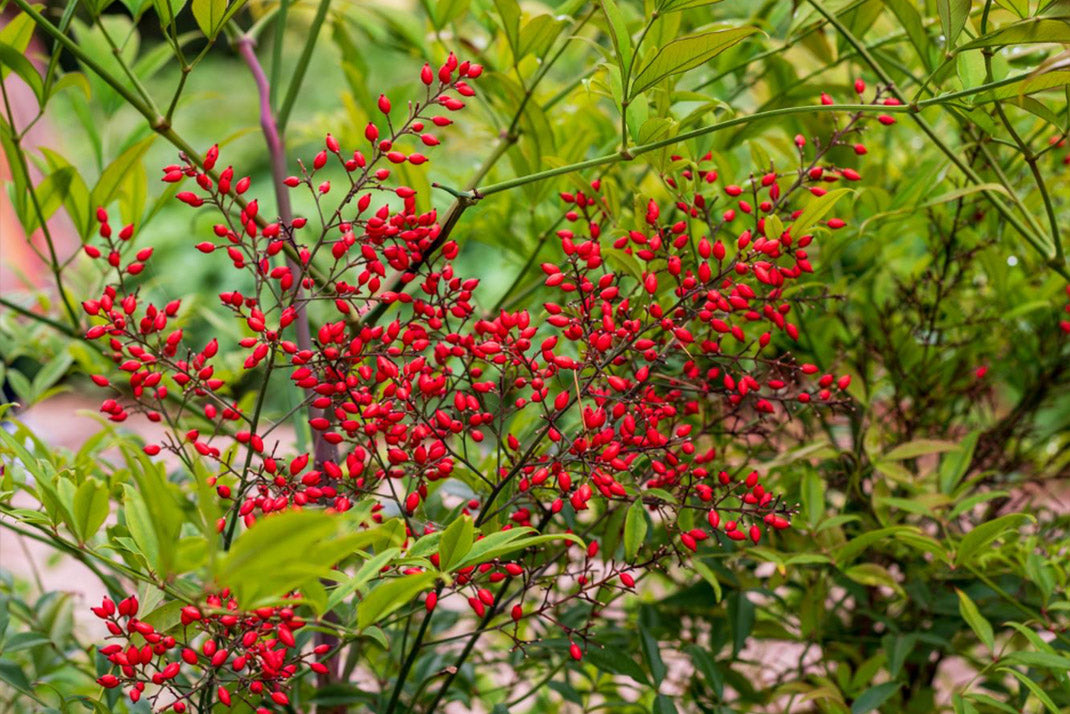
Common name: Heavenly Bamboo
Latin name: Nandina
Size in UK gardens: Usually 60–150cm tall and wide in most gardens, depending on variety; some older forms can reach around 2m in height with time, while dwarf types stay well under 1m.
Best position: Full sun to light partial shade; best foliage colour and berrying are usually seen in a sunny, reasonably sheltered spot.
Soil: Moist but well‑drained, reasonably fertile soil; happy in most garden loams if not waterlogged or bone‑dry, and it adapts well to containers with a good compost.
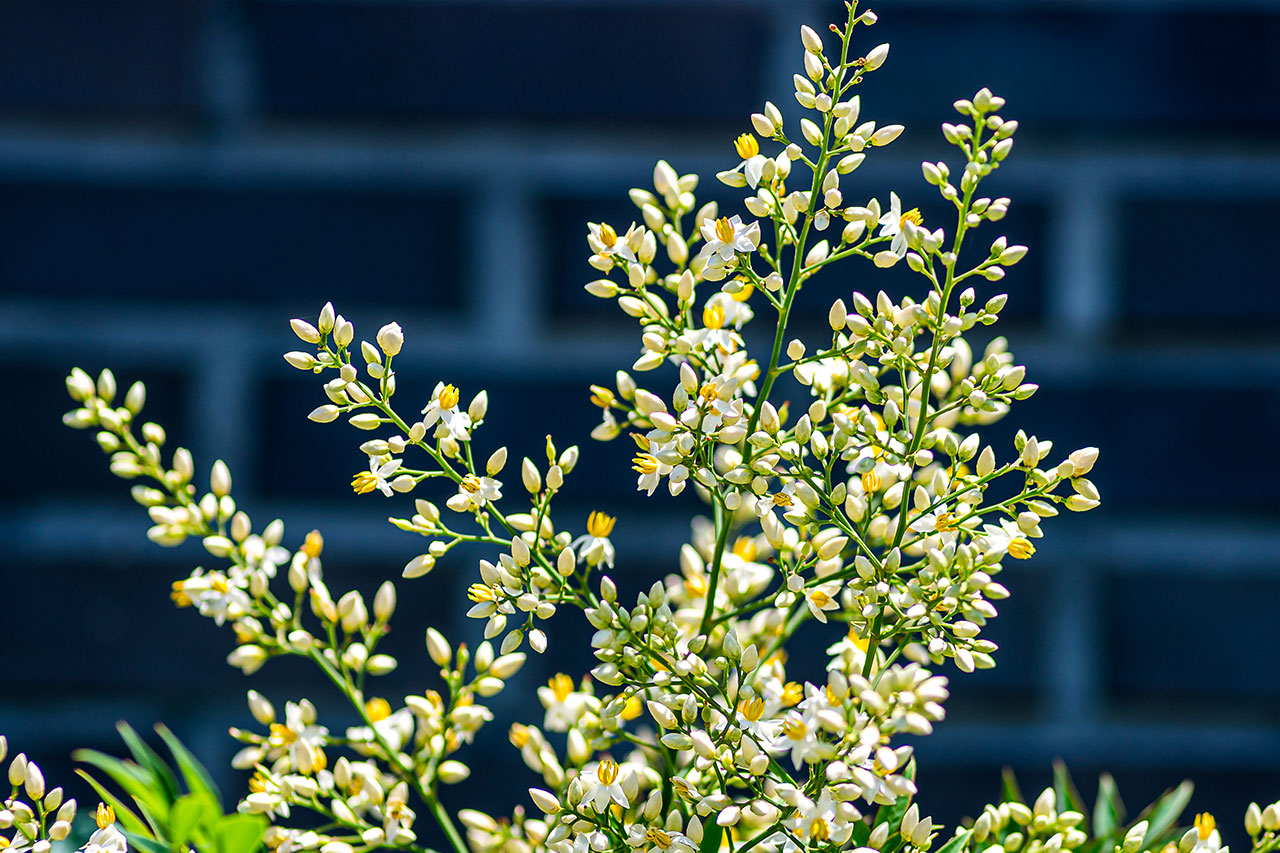
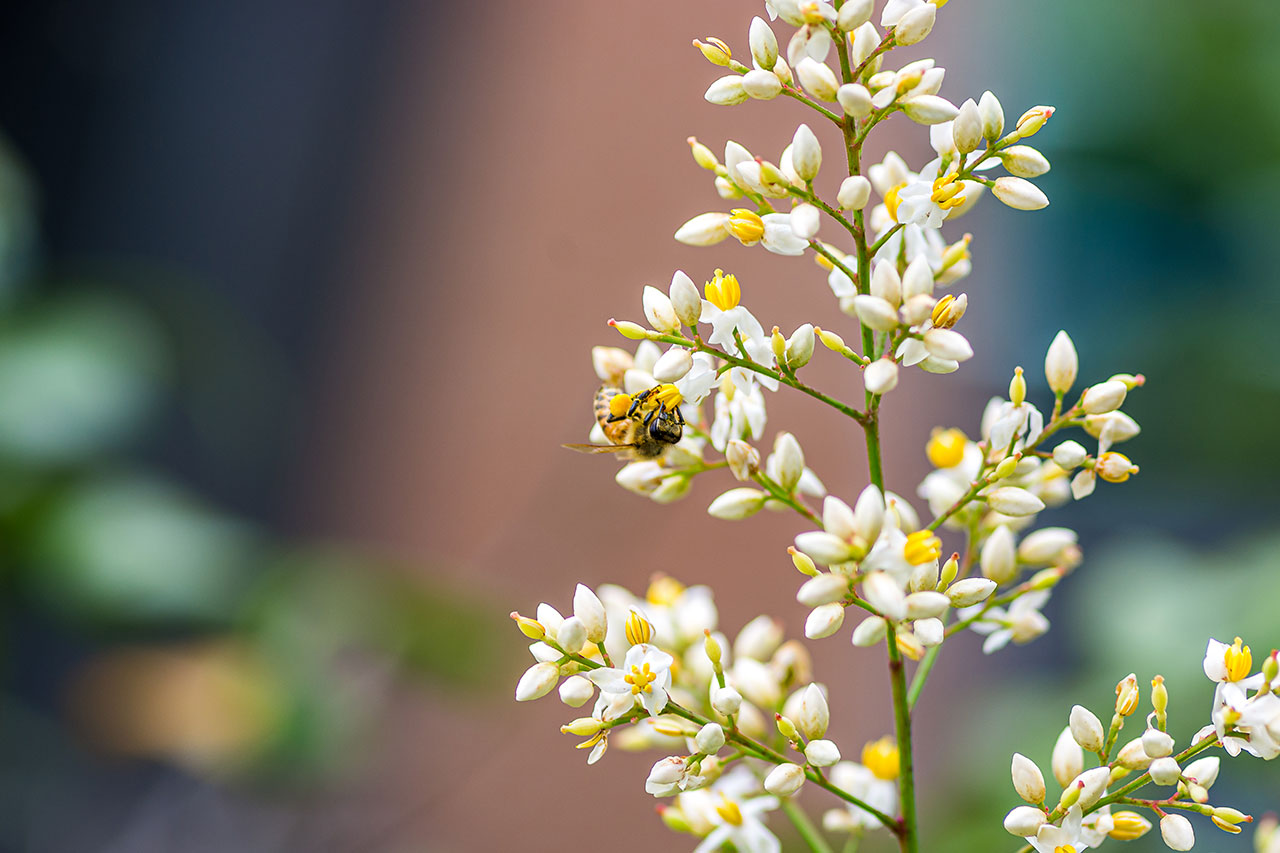
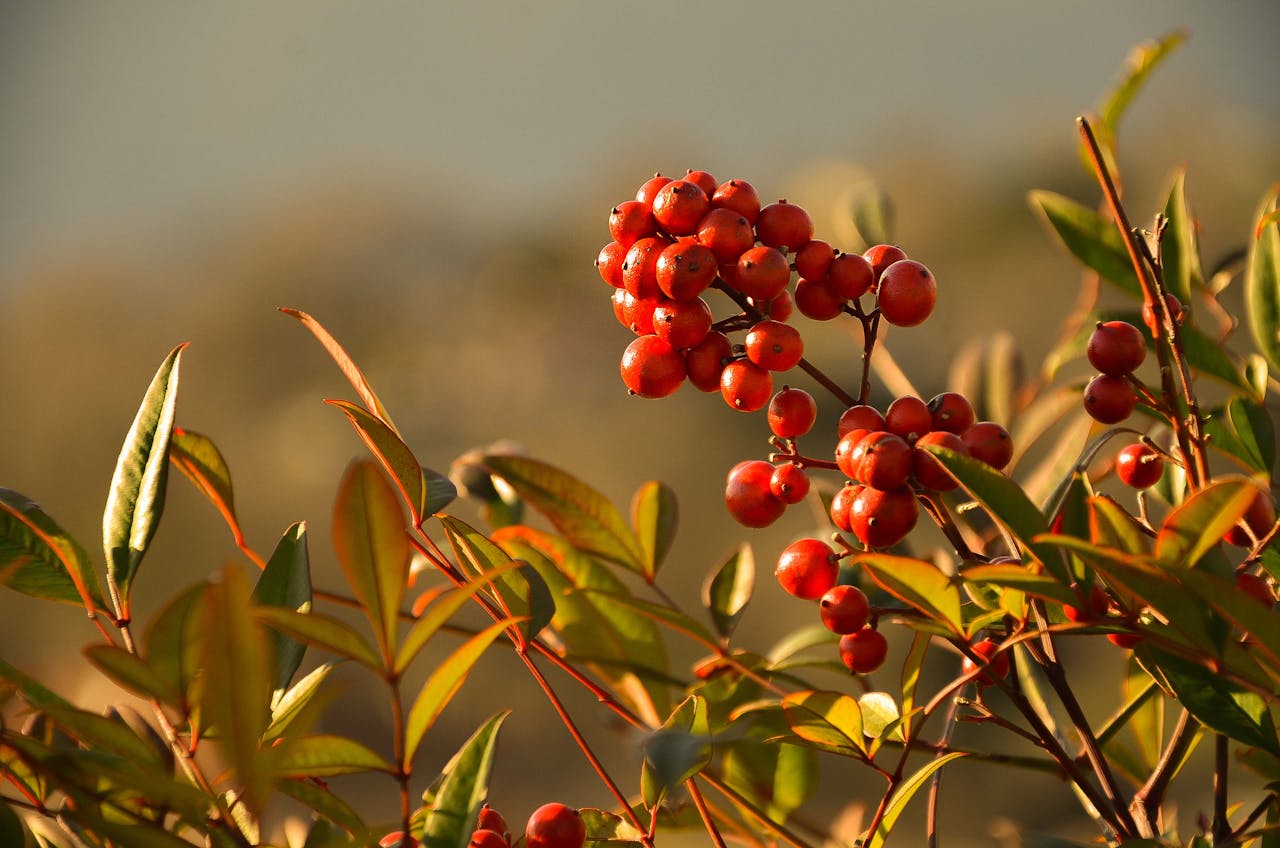
Main interest: Fresh bronzy or red young leaves in spring, airy sprays of white flowers in early summer, then bright autumn/winter foliage tints and (on some varieties) clusters of red berries.
Fragrance: Flowers may have a light, delicate scent close up, but nandina is mainly grown for foliage and berries rather than strong fragrance.
Hardiness: Generally hardy in most UK gardens (to about −10°C or lower once established); may need a bit of shelter in colder, more exposed spots, especially for compact or variegated forms.
Care level: Easy to moderate – slow to steady growing, not demanding, and happy in borders or pots if you get the light, drainage and watering about right.

The Simpson’s team raises the majority of our trees here at the nursery. For varieties outside our own production, we work with independent local growers we trust - all chosen for UK climate suitability.
Planting time: As container‑grown shrubs, nandinas can be planted in most months when the soil is workable and not frozen or waterlogged, with spring and early autumn usually the easiest times for both plant and gardener.
Watering: Water well through the first growing season, and in any dry spells during the second, so the rootball and surrounding soil don’t dry out completely. Once established, nandina copes with ordinary dry spells but appreciates a thorough soak in prolonged drought, especially on lighter soils or in pots.
Feeding: In borders, a mulch of garden compost or well‑rotted manure in spring is usually all that’s needed. In containers, use a slow‑release fertiliser in spring or give an occasional liquid feed in summer to support good foliage colour and berrying.
Pruning: Nandina needs only light pruning – mainly removing any dead, damaged or very straggly stems in late winter or early spring. Older, woody stems can occasionally be cut back low to encourage fresh shoots and keep the plant bushy.
Winter: In the ground, established nandinas usually come through winter well, perhaps with a little leaf scorch in harsher areas. A mulch over the root area helps in cold, wet sites, and container plants appreciate a sheltered position out of the worst wind and frost.
Availability is always changing, so please check with us if you have a particular variety in mind.


A wonderfully versatile evergreen with a light, bamboo-like look, its fine leaves arranged in airy tiers that always feel neat and fresh. New growth often flushes with warm tones, giving changing colour through the seasons. Excellent for adding texture and a gentle, oriental elegance to borders and pots.
A compact, mound-forming nandina with fine, feathery foliage that stays neat and low, perfect for adding texture without height. The leaves often colour warmly in cooler months, giving a soft seasonal glow. Ideal for edging, repeated planting, or small spaces where you want evergreen finesse.
A striking variegated nandina, its leaves flecked and brushed in cream, green and soft blush tones so the plant looks lightly painted. The effect is bright and refined, adding sparkle to borders and containers. A superb choice when you want evergreen texture with extra colour detail built in.