
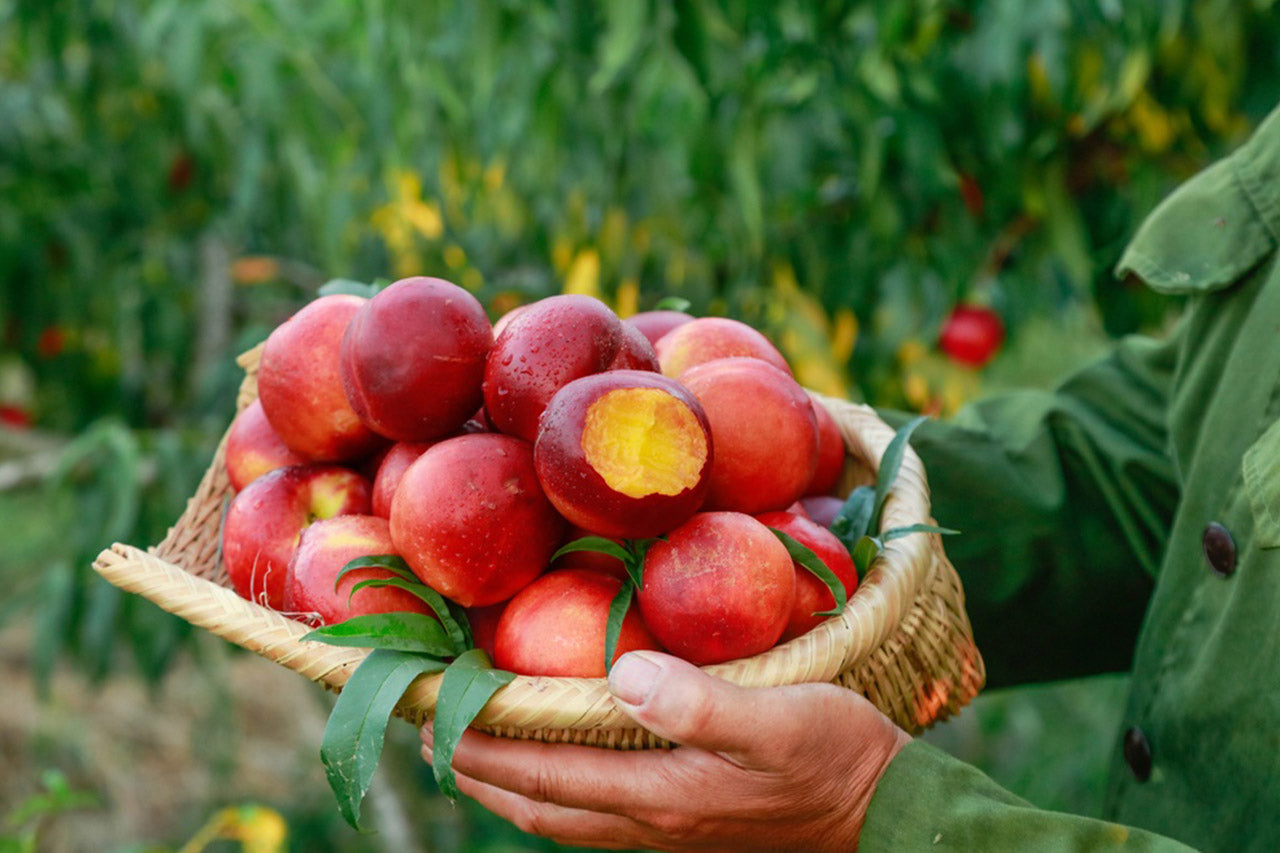
Nectarines are the kind of fruit that makes you stop and smile when you pick one yourself — smooth-skinned, sun-warmed, and sweet with a bright, juicy edge. In the UK, home-grown nectarines are at their best when you can let them ripen fully on the tree, which is where the real flavour comes from. They’re perfect eaten straight away, but also brilliant sliced into breakfast bowls, baked into tarts, or paired with soft cheeses and honey. If you like the idea of a garden that gives you something genuinely indulgent, nectarine is a lovely choice.
Common name: Nectarine tree.
Latin name: Prunus persica var. nucipersica (often simply sold as Prunus persica).
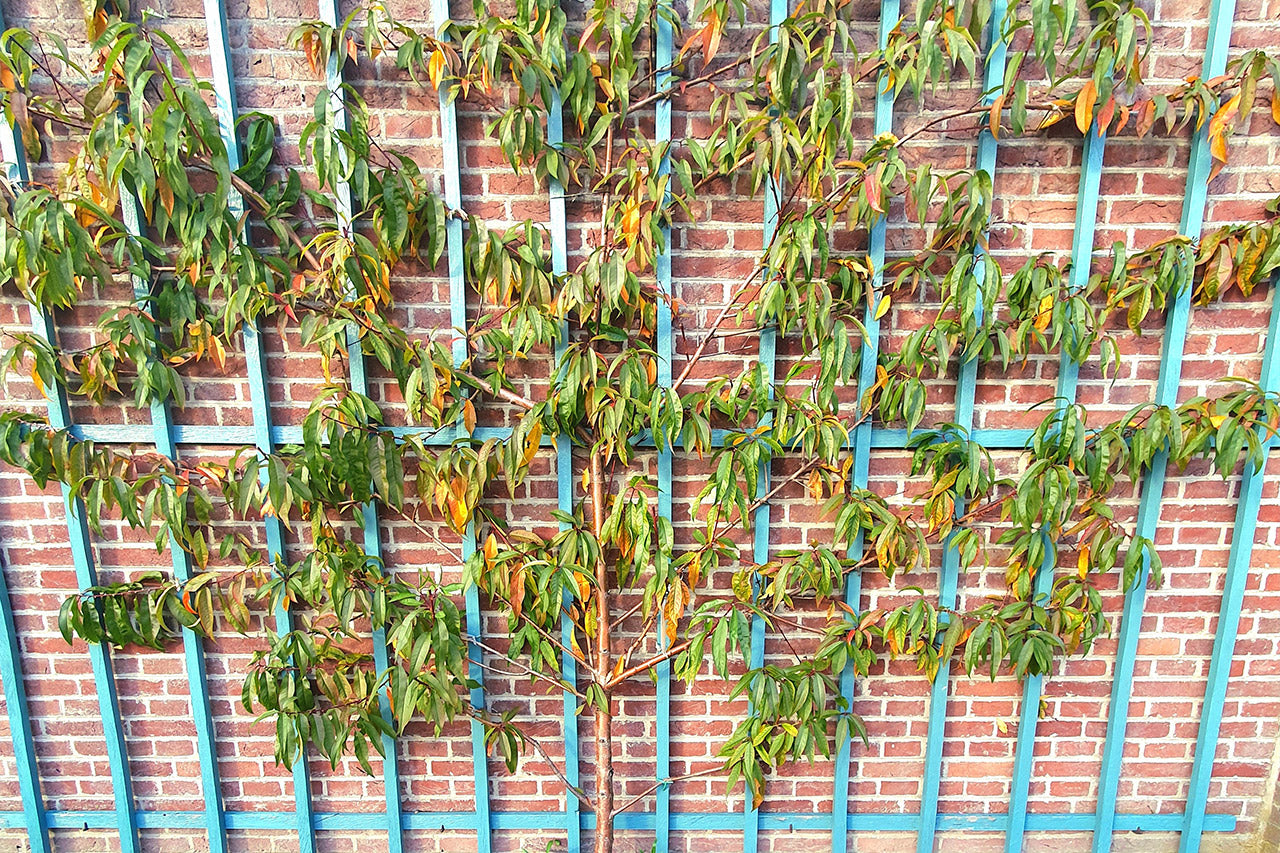
Size in UK gardens: Typically 2.5–4m depending on training and rootstock; often kept flatter as a fan on a wall.
Best position: Full sun in the warmest, most sheltered spot you have — ideally a south or south-west facing wall.
Soil: Fertile, well-drained soil; dislikes waterlogging and heavy, cold winter wet.
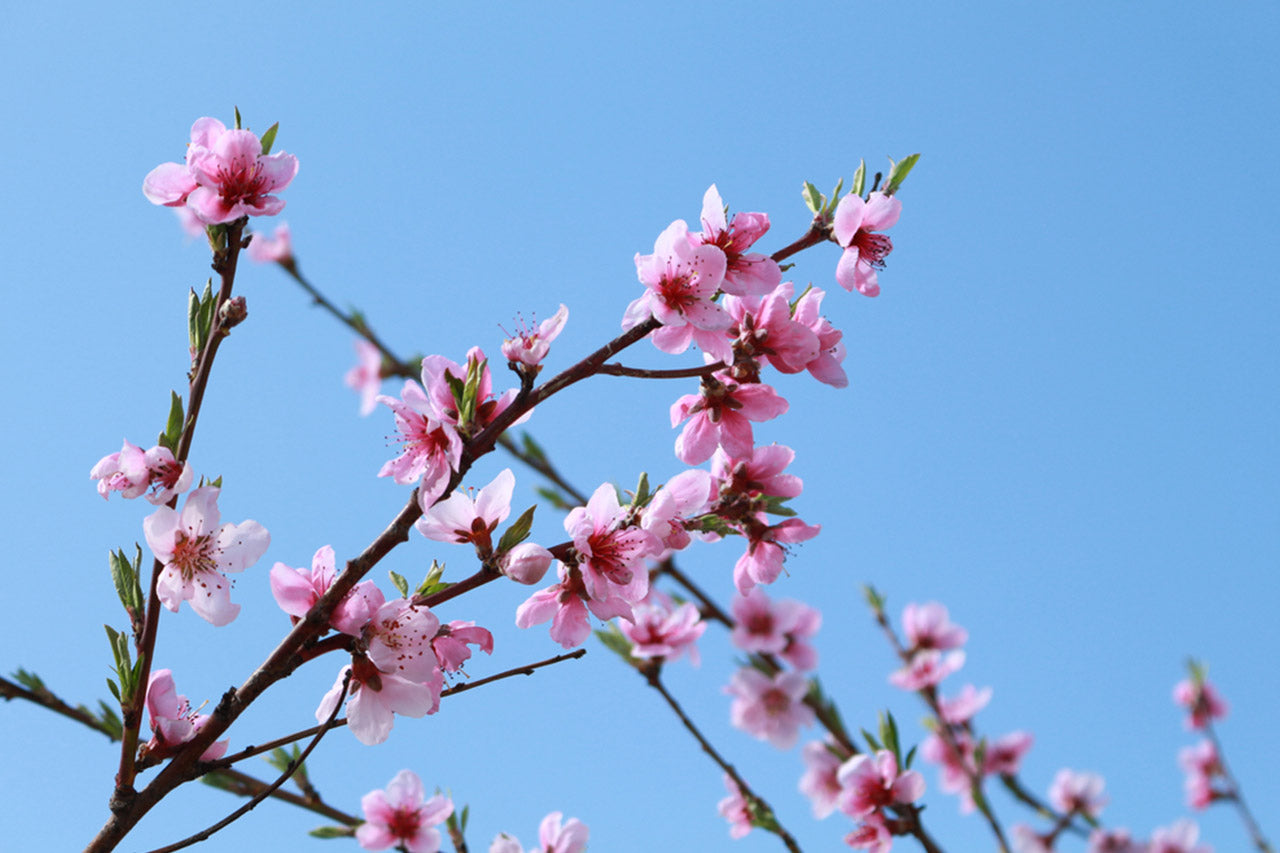
Flowering time: Early to mid-spring; fruit ripens in late summer depending on variety and warmth.
Fragrance: Blossom may have a light, fresh scent, but usually not strongly scented.
Hardiness: Hardy enough as a tree, but blossom and young fruit are vulnerable to late frosts.
Care level: Moderate – rewarding, but needs sun, good pruning, and a little attention to frost and disease.

The Simpson’s team raises the majority of our trees here at the nursery. For varieties outside our own production, we work with independent local growers we trust - all chosen for UK climate suitability.
Planting time: As container-grown trees, nectarines can be planted in most months when soil isn’t frozen or waterlogged; spring and early autumn are usually easiest.
Watering: Water well while establishing and during dry spells; steady moisture helps fruit swell and reduces stress.
Feeding: Mulch in spring with compost or well-rotted manure; a balanced spring feed can help on lighter soils.
Pruning: Essential – prune to keep an open, well-spaced framework and encourage new fruiting wood, usually in summer for trained trees.
Winter: The tree is hardy, but blossom is vulnerable to late frosts; fleece in spring can save a crop.
Availability is always changing, so please check with us if you have a particular variety in mind.


A nectarines-with-attitude sort of tree—sleek fruit, glossy leaves, and that sunny-wall glamour when it’s grown in a sheltered spot. The flavour is sweet, fragrant, and richly juicy when fully ripe, with a slightly sharper edge than many peaches. Ideal if you want a nectarine that feels punchy, summery, and special.
A classic nectarine with a slightly old-fashioned, greenhouse-or-sunny-wall romance—lush leaves, early blossom, and fruit that feels like a treat. The flavour is sweet, richly perfumed, and juicy, with that clean nectarine brightness when properly ripened. Ideal if you can give it warmth and shelter.
A nectarine with a softer, elegant feel—very much a “sunny wall” tree that brings a little Mediterranean ease to the garden. The flavour is sweet and fragrant with a gentle tang, juicy and perfumed when fully ripe. A lovely choice if you want nectarines that feel refined, sunny, and special.