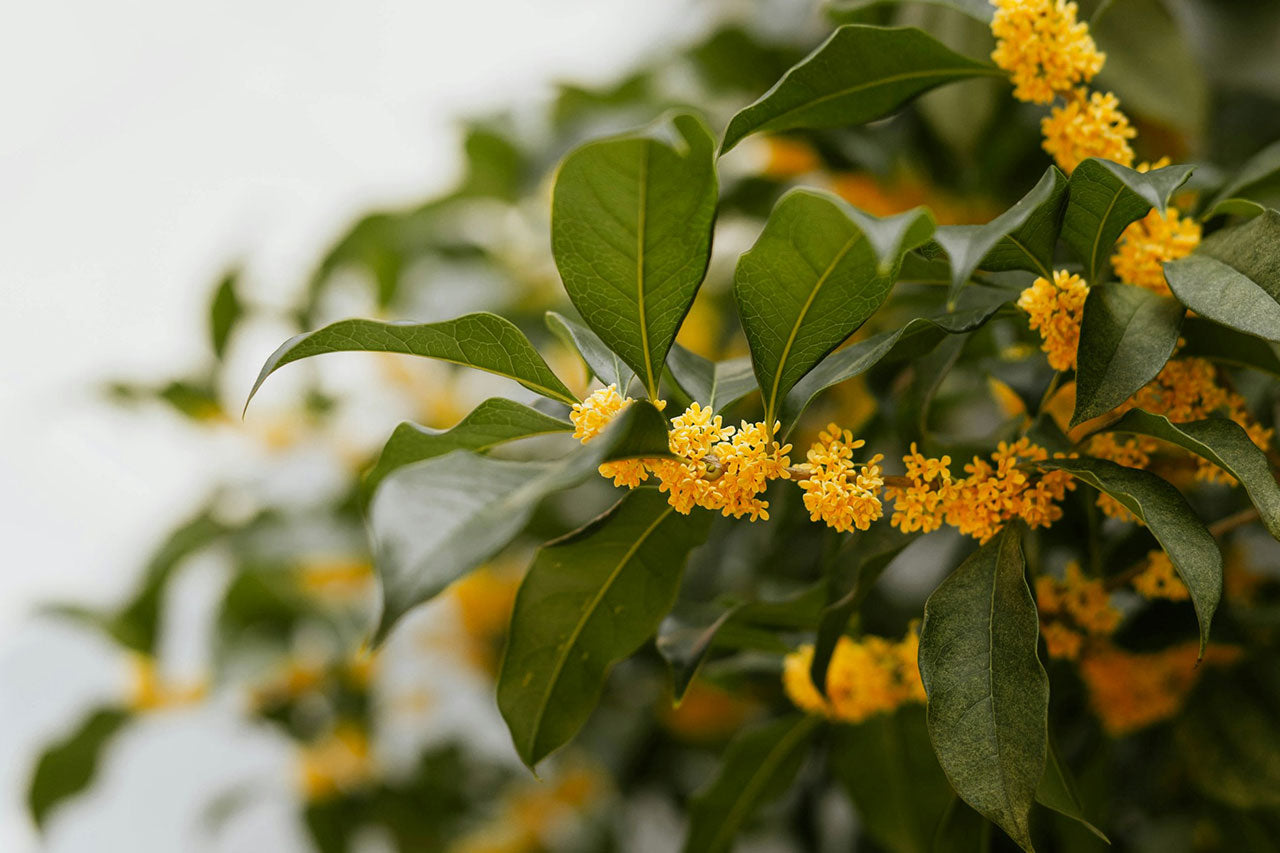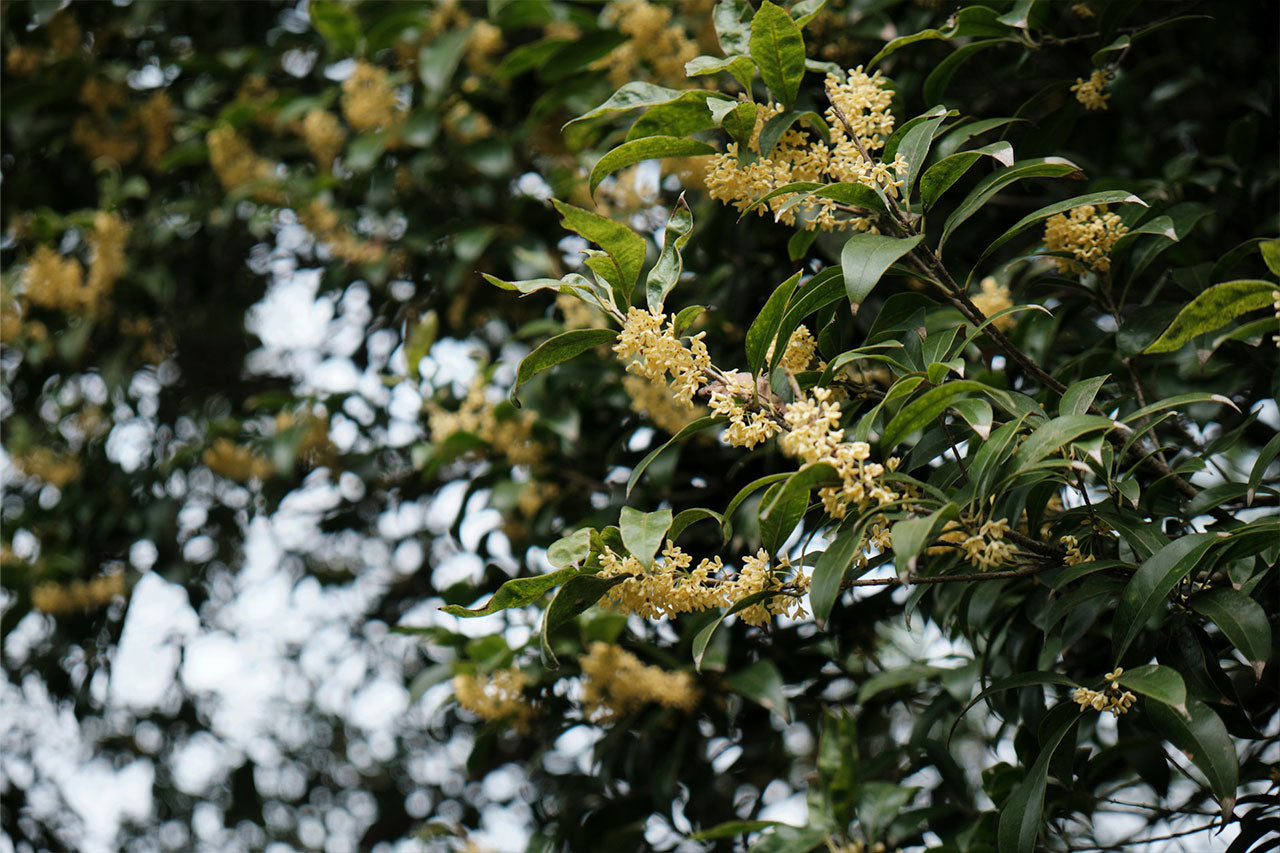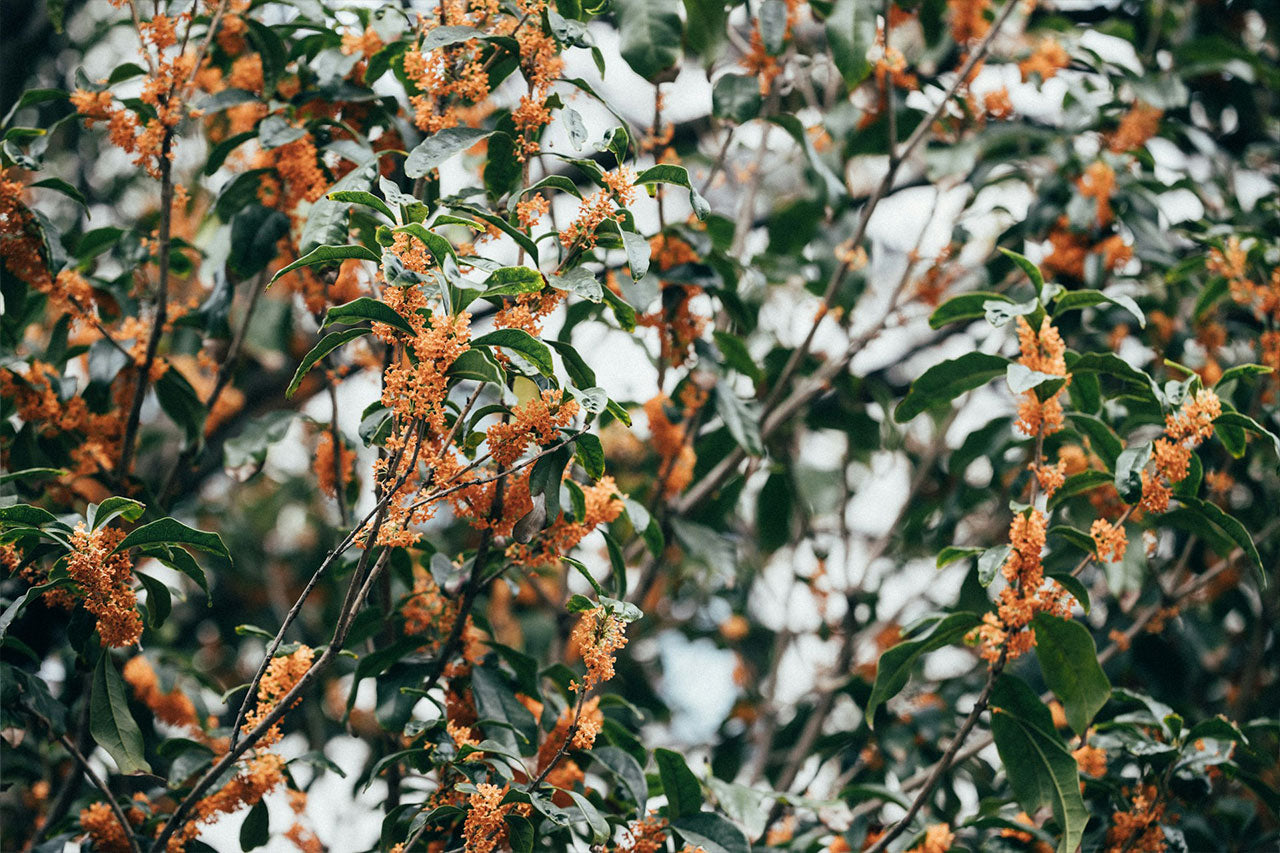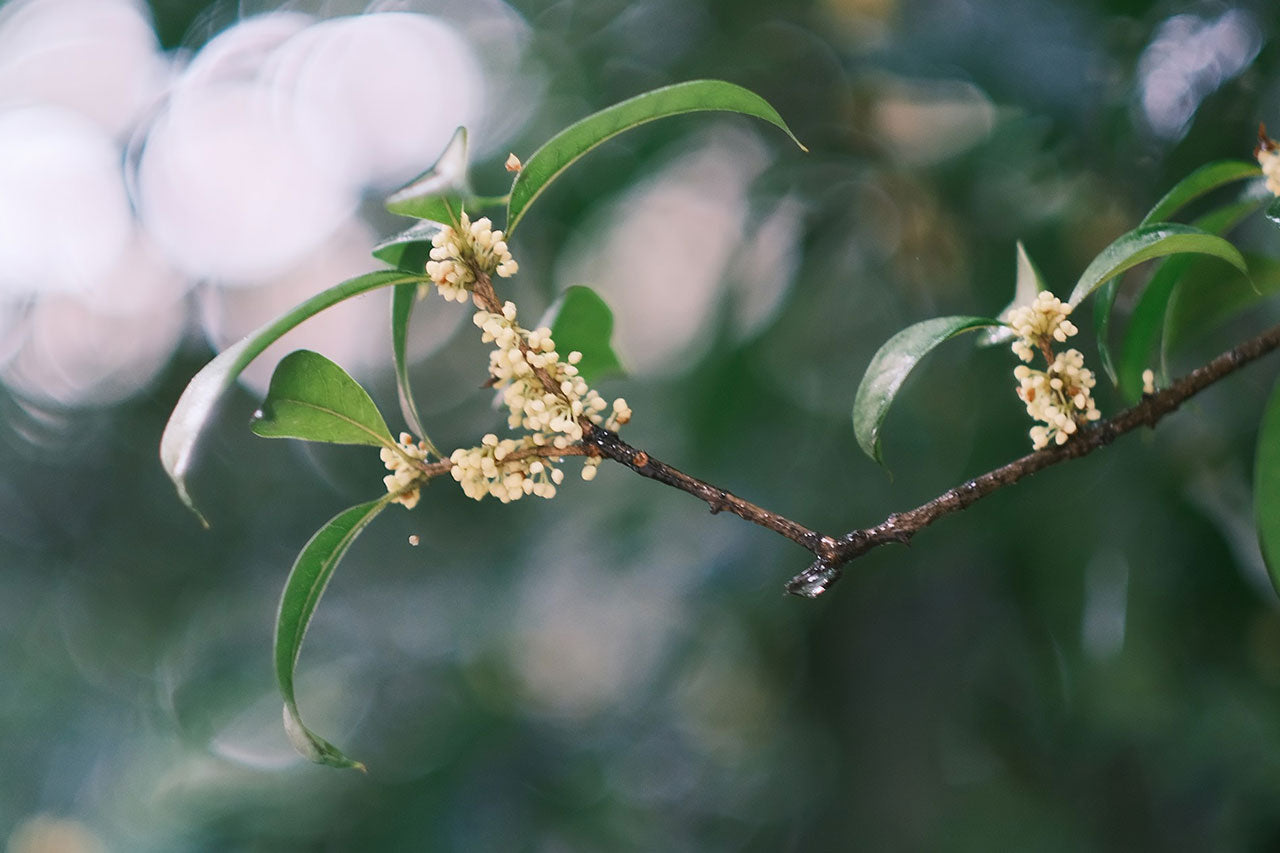

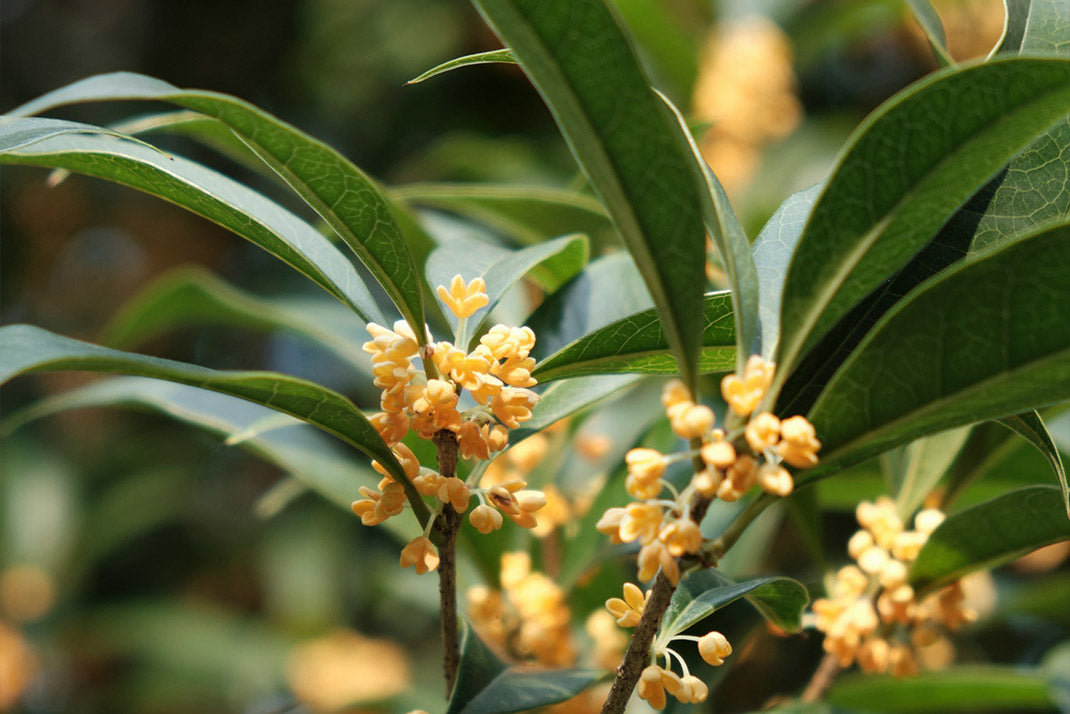
There’s something magical about rounding a corner in early spring and suddenly walking into a cloud of scent. Osmanthus flowers are tiny and often half‑hidden in the foliage, but their perfume can be astonishingly strong – sweet, rich and somehow both fresh and comforting. Different species and varieties lean towards jasmine, orange blossom or even apricot notes, but all bring a sense of luxury to the garden. Because the shrubs are evergreen, you can plant them in exactly the right spot for your nose and know they’ll quietly sit there, waiting for their scented moment each year.

Common name: False Holly, Sweet Olive
Latin name: Osmanthus
Size in UK gardens: Typically 2–4m tall and wide over time, depending on species and pruning; some compact forms stay around 1.5–2m, while older, unpruned plants can eventually reach 4–5m.
Best position: Sun or light shade in a reasonably sheltered spot; happy in full sun if the soil doesn’t dry out, and very useful where you want an evergreen that still flowers in part shade.
Soil: Any reasonably fertile, moist but well‑drained garden soil, from light sand to improved clay or chalk, so long as it doesn’t sit wet in winter.
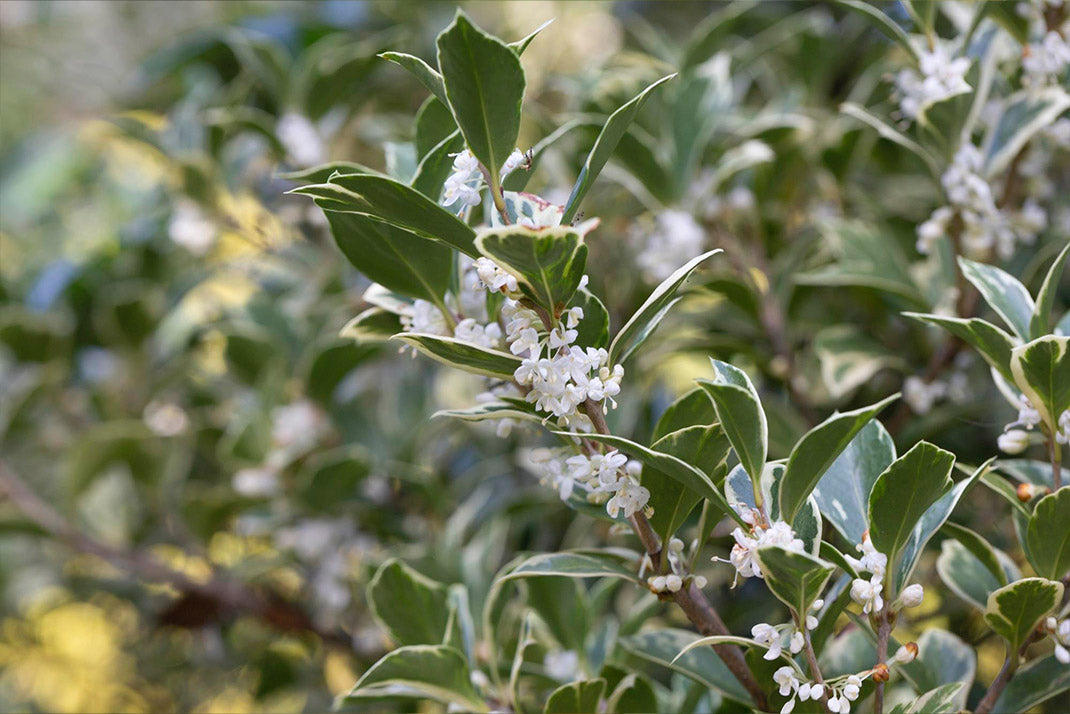
Main interest: Glossy evergreen foliage all year, with clouds of small, tubular white flowers in spring or late summer (depending on variety), each carrying a powerful, jasmine‑ or apricot‑like perfume; some forms also produce blue‑black berries.
Fragrance: Strongly and sweetly scented when in flower; it’s the perfume – often compared to jasmine, orange blossom or gardenia – that really makes osmanthus special.
Hardiness: Fully hardy in most UK gardens (down to around –15°C or a little lower once established), especially in well‑drained soil; some tender species need extra shelter, but the common garden forms are tough.
Care level: Generally easy and slow‑growing; once settled in, osmanthus needs very little more than occasional watering in dry spells, a yearly mulch and light pruning only if you want to shape it.

The Simpson’s team raises the majority of our trees here at the nursery. For varieties outside our own production, we work with independent local growers we trust - all chosen for UK climate suitability.
Planting time: Because plants are container‑grown, you can pop an osmanthus into the garden in most months when the soil is workable and not frozen or waterlogged, with spring and autumn generally the easiest times for both rooting and watering.
Watering: Water regularly through the first growing season so the rootball and surrounding soil don’t dry out completely, especially on lighter, sandy soils in East Anglia. Once well established, osmanthus is fairly drought‑tolerant but will still flower and perform better if not left bone‑dry for weeks on end.
Feeding: In borders, a mulch of garden compost or well‑rotted manure in early spring is usually all that’s needed. On very poor soils you can add a light scattering of a balanced, slow‑release fertiliser at the same time to support flowering and healthy foliage.
Pruning: Osmanthus needs little pruning beyond a light trim if it outgrows its allotted space. Tidy or shape the plant in late winter or just after flowering, removing any dead, crossing or awkward shoots and, if necessary, shortening longer branches to keep a neat outline.
Winter: In the ground, established plants usually come through winter with no special protection. Foliage may bronze a little in cold snaps but normally greens up again as temperatures rise. Container plants appreciate a more sheltered spot in hard frosts so their roots don’t freeze solid.
Availability is always changing, so please check with us if you have a particular variety in mind.
A wonderfully decorative evergreen, grown as much for its marbled foliage as for its flowers. The leaves are splashed cream and green, often flushing pink on new growth, so it brightens borders all year. Give it a sheltered spot in sun or light shade, and you may be rewarded with a gentle autumn fragrance.
A tidy evergreen shrub with glossy leaves and clusters of small white spring flowers that are surprisingly sweetly scented. It’s ideal as a specimen or clipped hedge, bringing year-round structure with a lovely burst of perfume when in bloom. Plant in sun or light shade, and prune lightly after flowering to keep it dense and shapely.