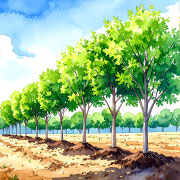

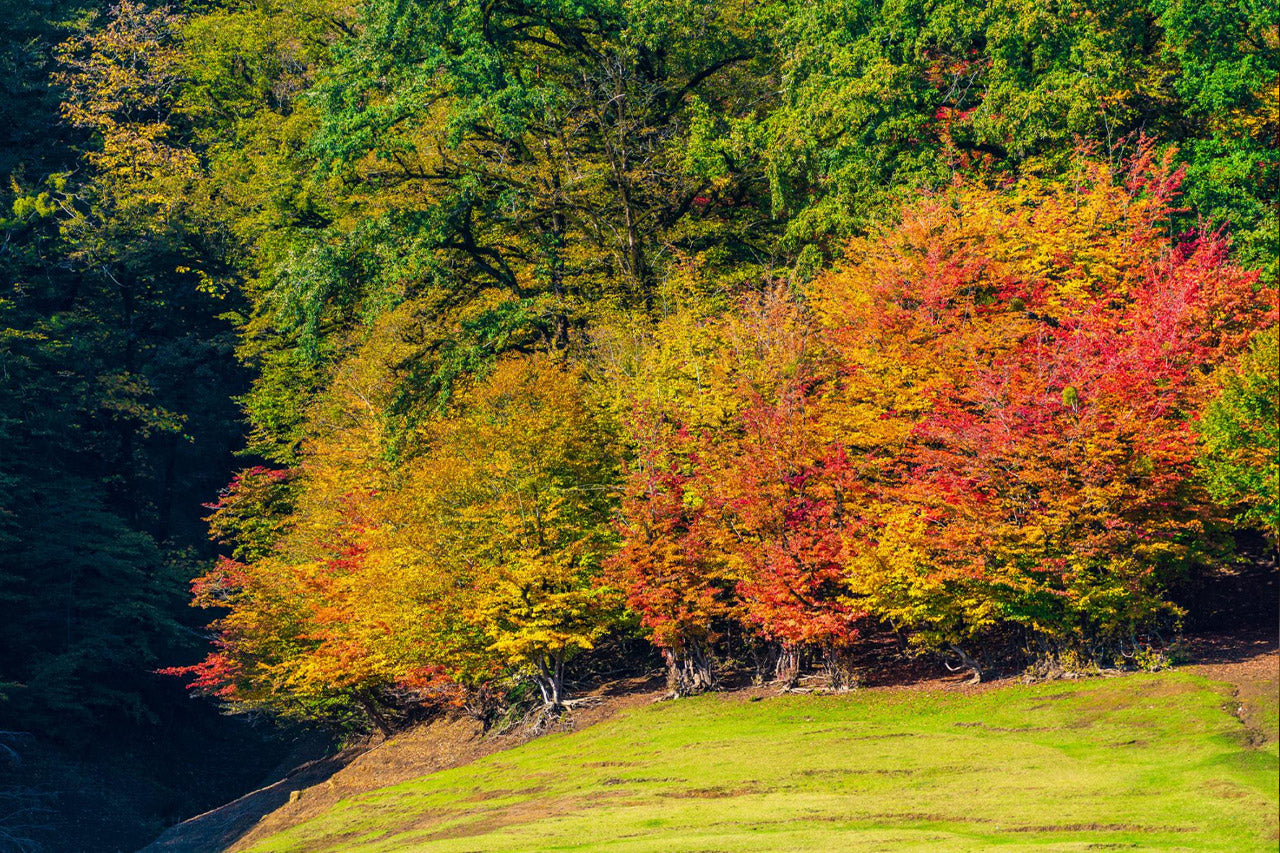
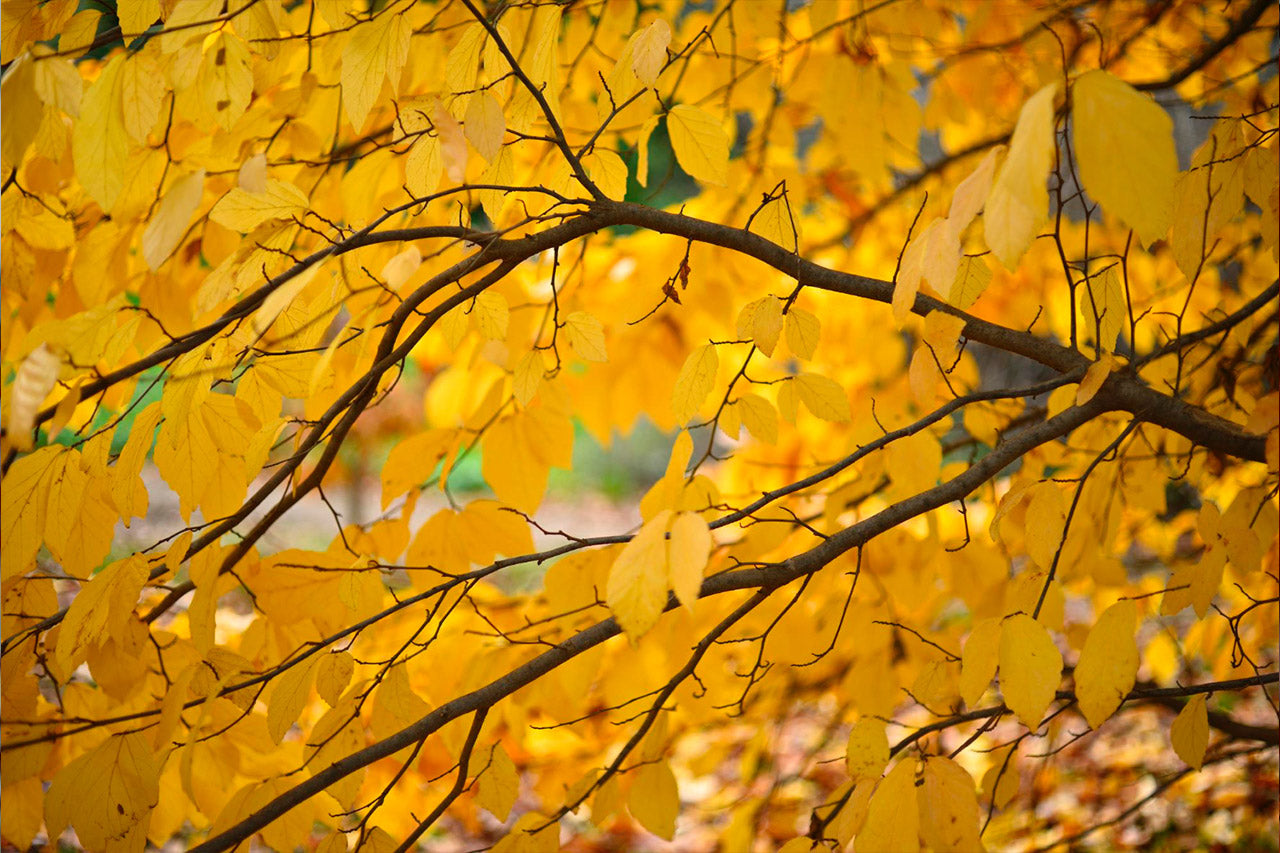
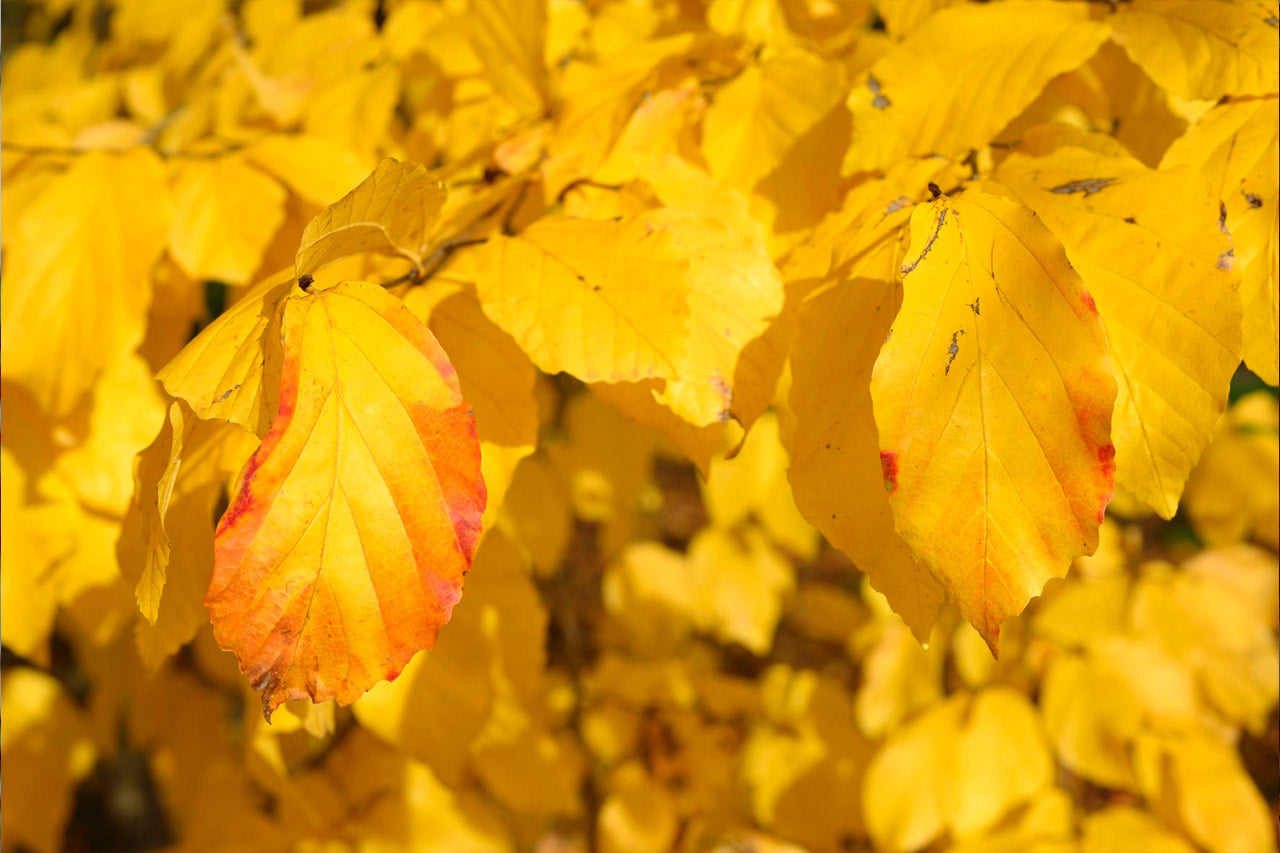
Parrotia persica, the Persian ironwood, is famed for its autumn display. Through September and October, the leaves shift from plain summer green into a patchwork of buttery yellows, glowing oranges, scarlets and rich wine tones, often all on the tree at once. Each leaf can show several colours, so the effect is almost like a stained‑glass window held up to the light. In a typical UK garden, you don’t need more than one Parrotia to make an impact – it can easily be “the” autumn tree in a small plot, drawing the eye the moment you look outside.
Common name: Persian Ironwood.
Latin name: Parrotia
Size in UK gardens: Typically around 4–8m tall and 3–6m wide over time, depending on cultivar and conditions; some named forms stay a little narrower.
Best position: A sunny or lightly shaded, reasonably sheltered spot with deep, moisture‑retentive soil – ideal as a lawn specimen or at the back of a wide border.
Soil: Fertile, moist but well‑drained, neutral to acidic soil; dislikes very shallow, dry or strongly chalky ground.
Flowering time: Small, witch‑hazel‑like red flowers in late winter to early spring on bare branches; subtle but charming.
Fragrance: Not noticeably scented – grown mainly for foliage colour, bark and overall shape.
Hardiness: Generally hardy in most UK gardens once established, especially in good soil with decent drainage.
Care level: Moderate – straightforward if you can offer the right soil and a bit of shelter, with light pruning rather than heavy shaping.

The Simpson’s team raises the majority of our trees here at the nursery. For varieties outside our own production, we work with independent local growers we trust - all chosen for UK climate suitability.
Planting time: As container‑grown trees, Parrotias can be planted in most months when the ground isn’t frozen or waterlogged; autumn and early spring are usually easiest, giving roots time to establish before summer heat or winter cold.
Watering: Water regularly in the first few years so the rootball and surrounding soil stay evenly moist, especially in dry spells or on lighter soils. Once established in deep, moisture‑retentive ground, Parrotia is fairly self‑reliant but will benefit from extra water in prolonged drought.
Feeding: In good garden soil, heavy feeding isn’t needed. A spring mulch of compost or leaf mould over the root area is usually enough to maintain fertility and soil structure; on very poor ground you can add a light balanced feed in early spring.
Pruning: Pruning needs are modest – mainly removing dead, damaged or crossing branches and, if desired, lightly shaping the framework when young. Parrotia looks best when its natural form is respected rather than clipped hard.
Winter: Established trees generally need no special winter protection beyond mulch and a quick check after storms. Young trees appreciate firm staking, a clear, weed‑free root zone and a watchful eye on soil moisture and drainage.
Availability is always changing, so please check with us if you have a particular variety in mind.


Persian ironwood is treasured for its rich autumn colour, often showing a tapestry of yellow, orange, red and purple all at once. The outline is neat and architectural, and the bark can develop a subtle, patchwork look with age. A superb specimen for year-round character and a truly glowing autumn show.
A selected Persian ironwood with a particularly tidy, well-shaped habit, making it easy to use as a small specimen. The leaves colour richly in autumn, often with a multi-toned display that looks almost hand-painted. A lovely choice when you want Persian ironwood drama in a slightly neater, garden-friendly form.
A more upright, columnar Persian ironwood, ideal when you want strong autumn colour without a wide spread. The foliage turns in rich, mixed shades, and the silhouette stays crisp and architectural. Excellent for framing views, adding height in tighter gardens, or repeating in lines for rhythm.