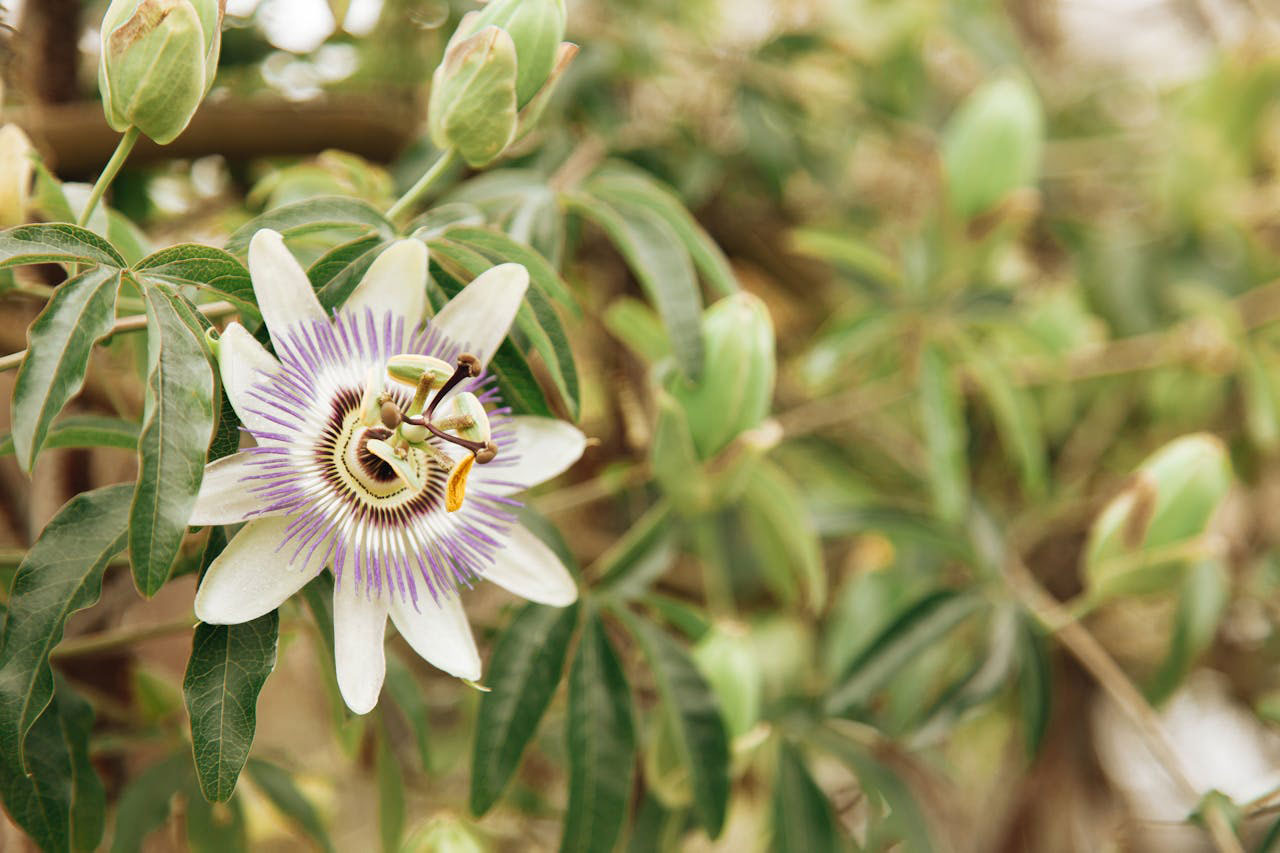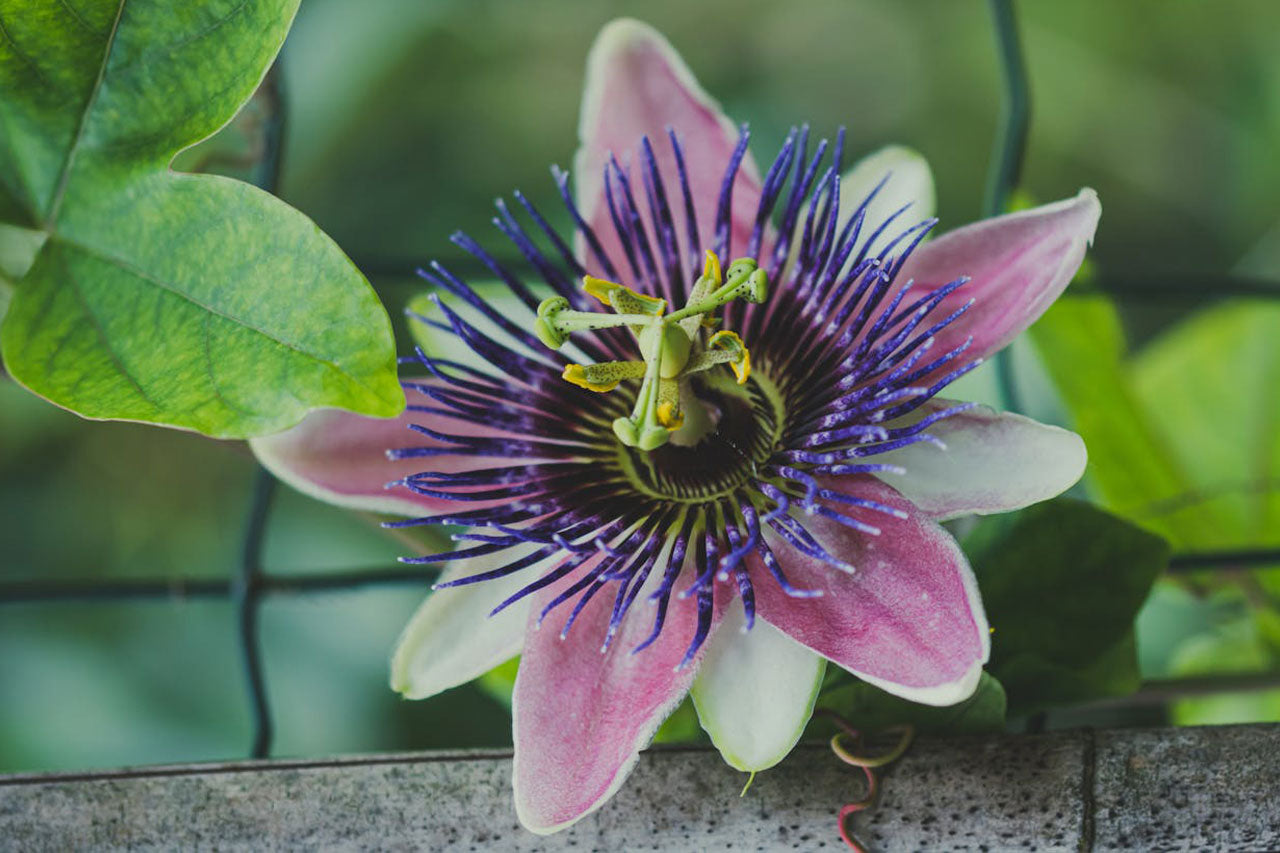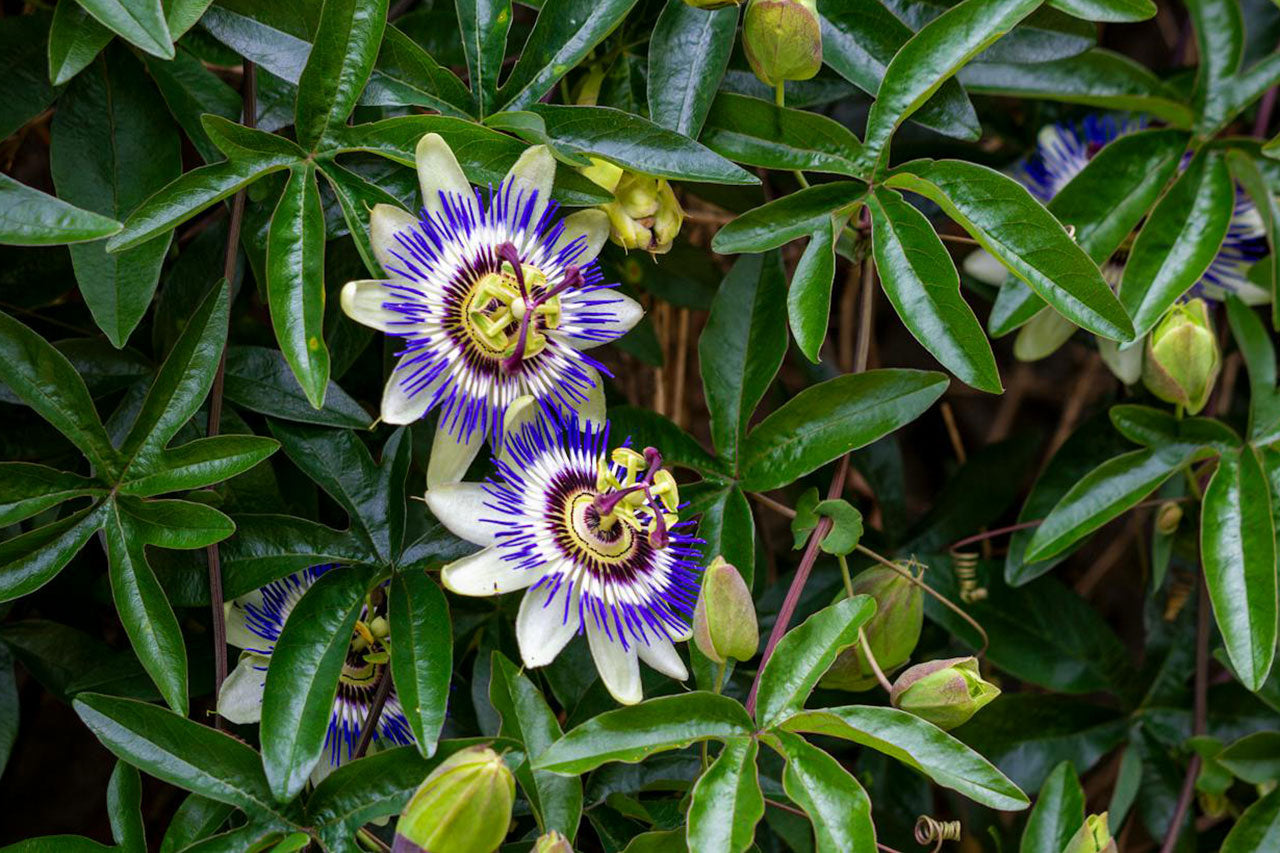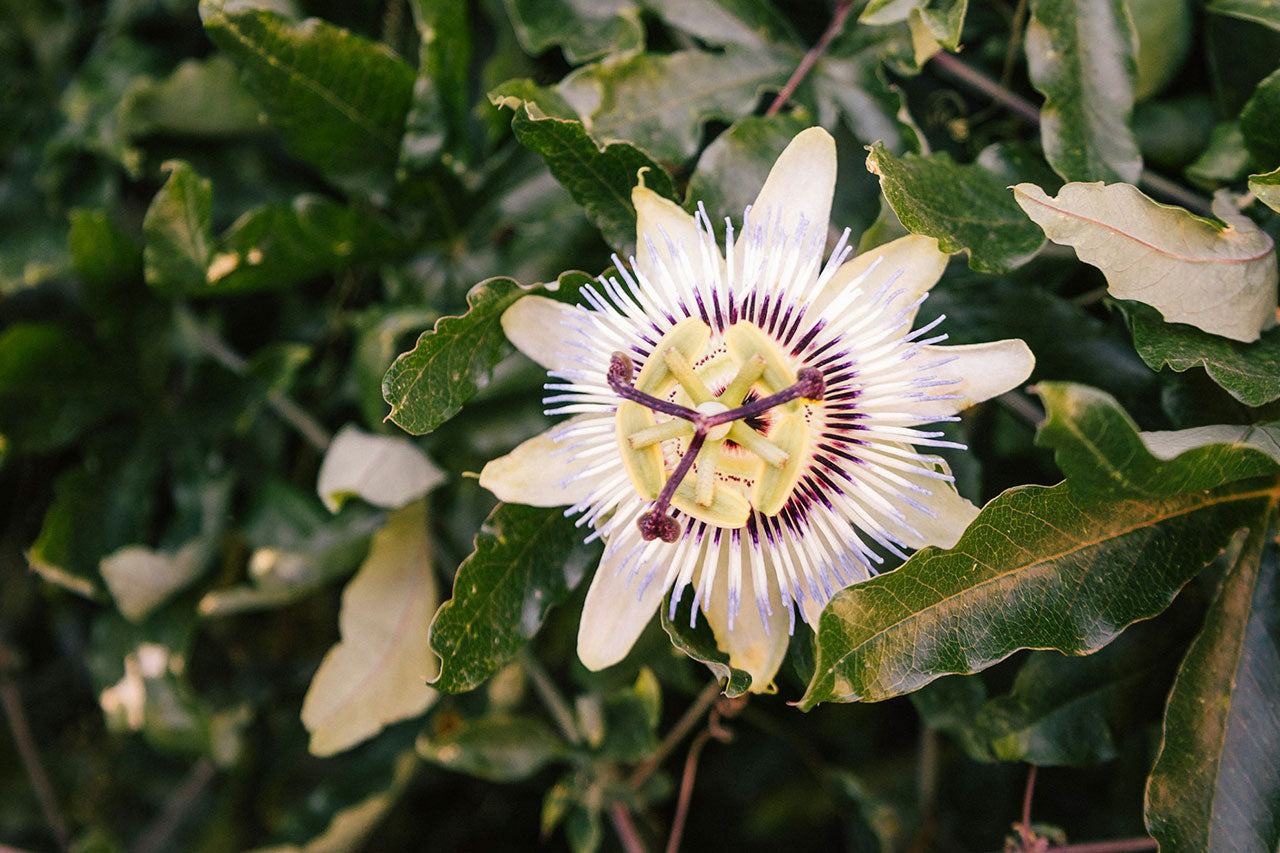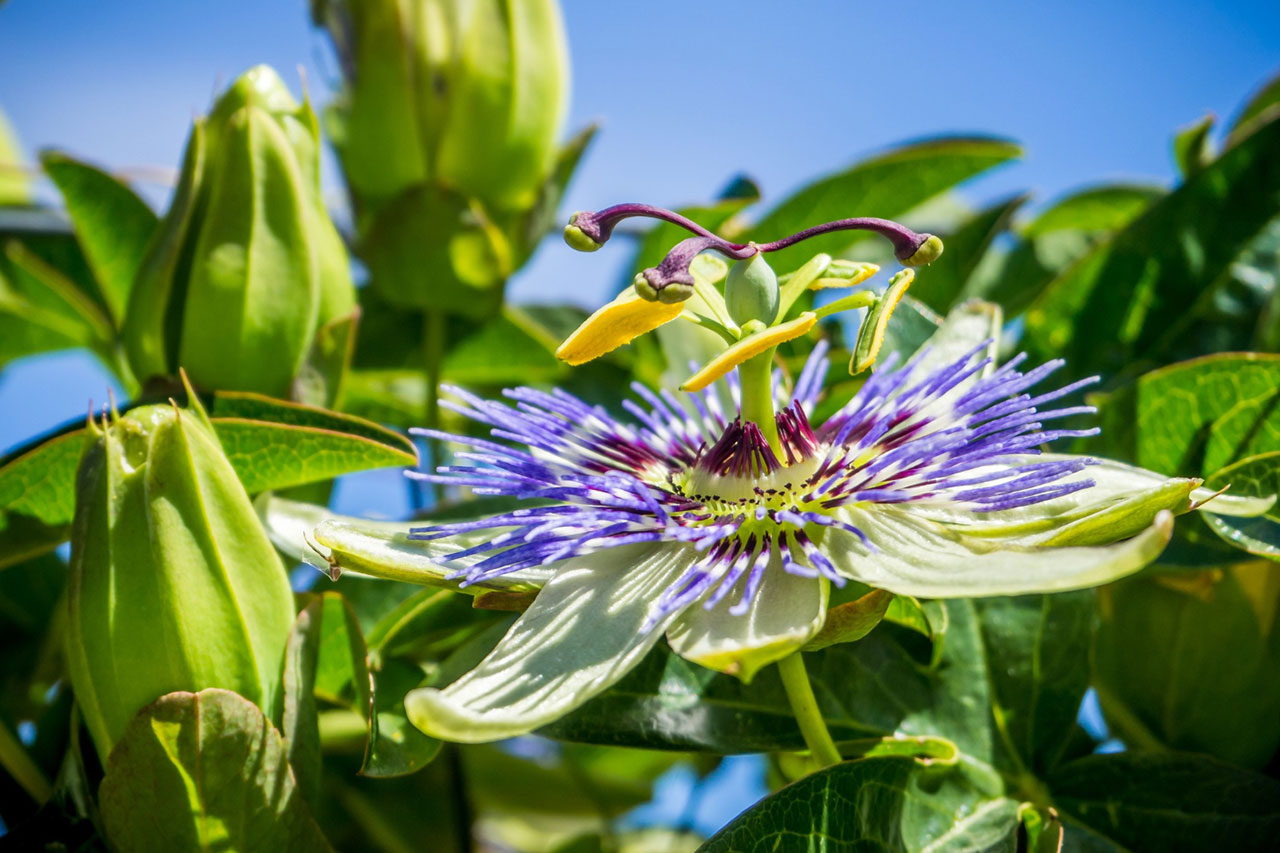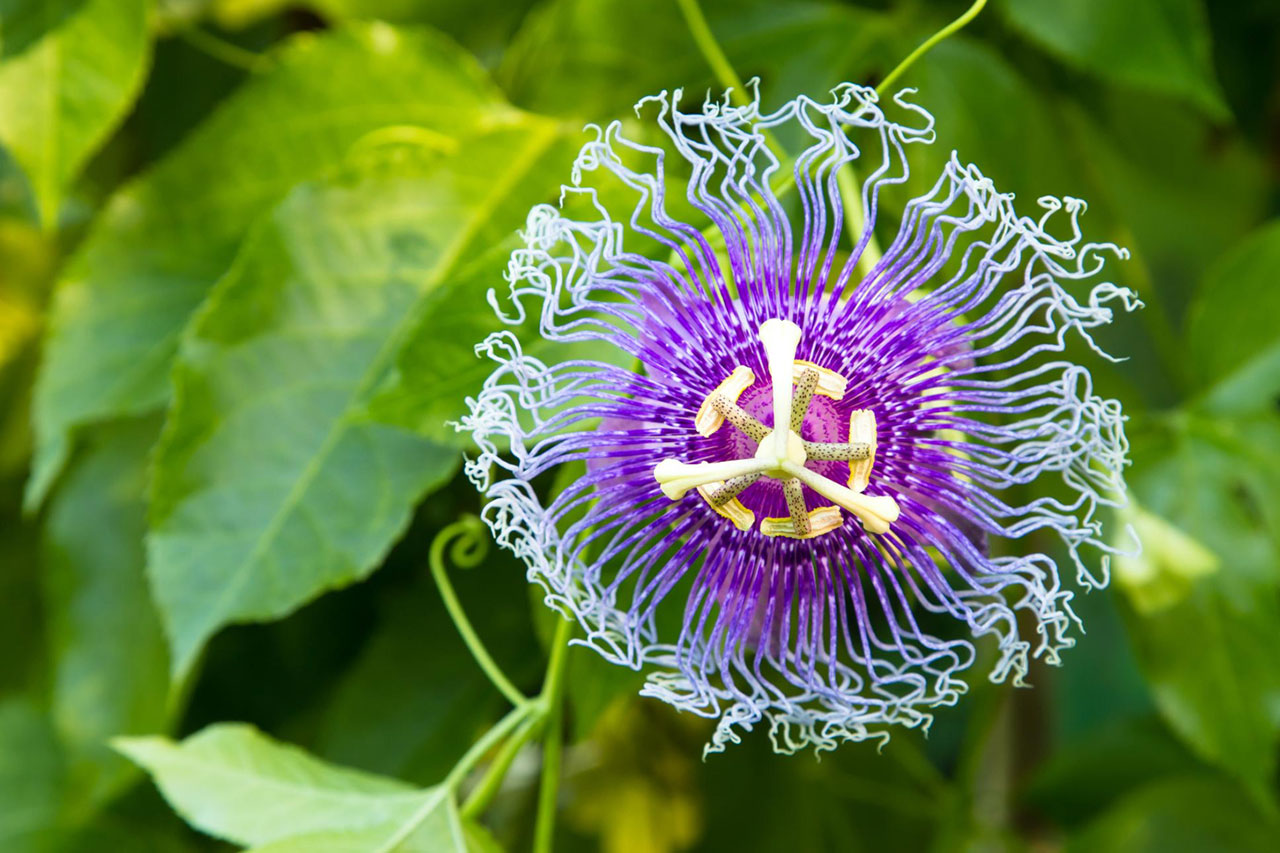

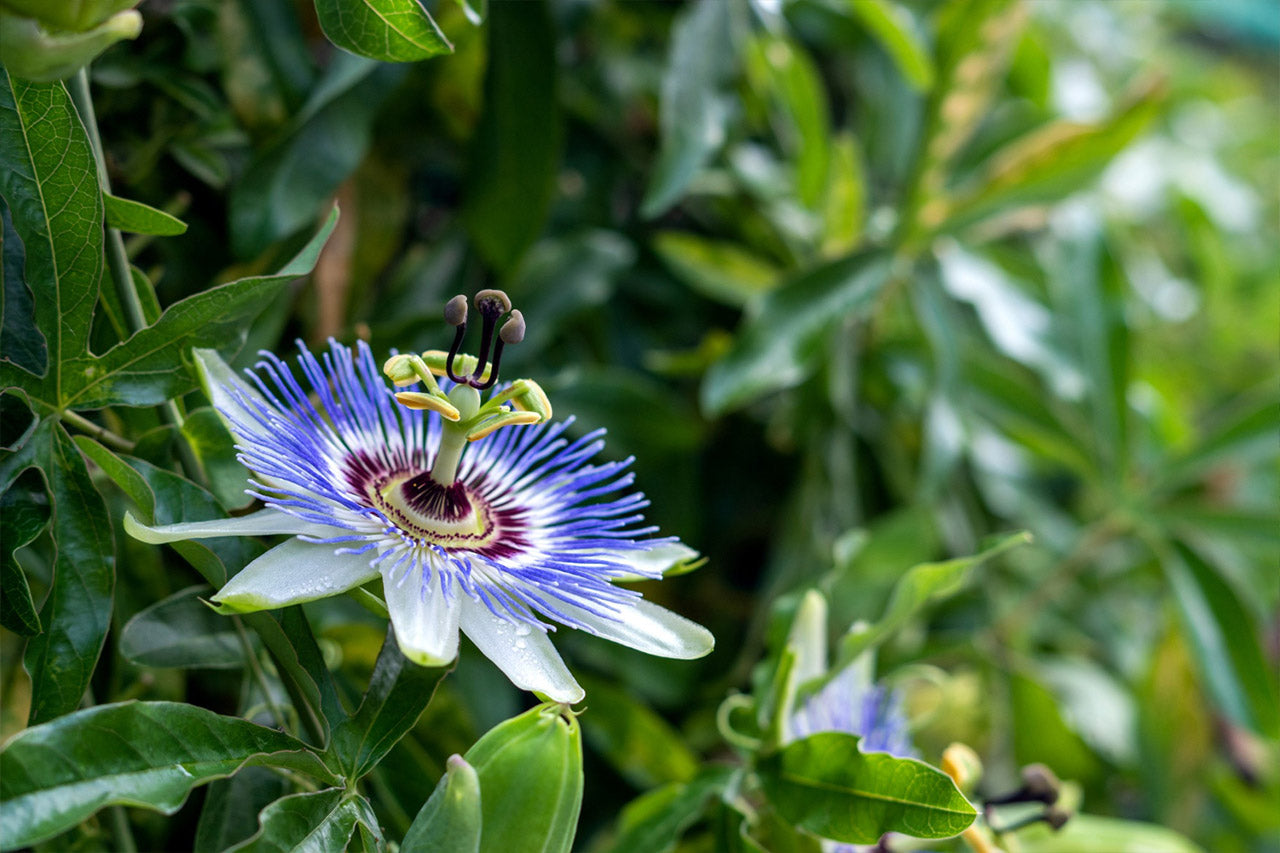
The first thing everyone notices about passion flowers is the blooms – large, almost other‑worldly discs in white, blue and purple (on Passiflora caerulea), with a frilled “halo” of filaments around a central crown. On a warm, sunny wall they appear steadily from early summer right into autumn, each bloom lasting a few days before making way for the next. Against ordinary brick or fencing they look surprisingly exotic, yet in much of the UK this species is hardy enough to live outdoors all year, so you get that “wow” factor without a heated glasshouse.
Common name: Passion flower or Passionflower.
Latin name: Passiflora
Size in UK gardens: Typically 6–10m tall and 2.5–4m wide on a good support, though it can be kept smaller with regular pruning.
Best position: A sunny, sheltered wall, fence or pergola – ideally south‑ or west‑facing – with something for the stems to twine around and protection from cold winds.
Soil: Moderately fertile, moist but well‑drained soil; happy in most ordinary garden soils if they aren’t permanently waterlogged. In pots, a loam‑based compost with some added grit is ideal.
Flowering time: Long‑flowering from early summer into autumn – roughly June to September, sometimes longer in a warm, sheltered year.
Hardiness: Borderline to reasonably hardy (around RHS H4) – usually fine in most of the UK against a sunny wall, but may lose top growth in severe winters and benefit from root protection.
Care level: Moderate – easy enough if you can offer warmth, sun and a support, with regular watering, feeding and pruning; less suited to very exposed or cold, soggy sites.

The Simpson’s team raises the majority of our trees here at the nursery. For varieties outside our own production, we work with independent local growers we trust - all chosen for UK climate suitability.
Planting time: As container‑grown climbers, passion flowers can be planted whenever the soil is workable and not frozen or waterlogged, though late spring and early autumn are usually kindest for new roots.
Watering: Water regularly during the first year or two, particularly in sunny, sheltered spots or against house walls where rainfall may not reach; once established in the ground they cope with normal dry spells but appreciate deep watering in prolonged drought.
Feeding: In decent soil a spring mulch of compost or well‑rotted manure is usually enough; on very poor or thin ground and in containers, a balanced feed in spring and a high‑potash liquid feed in summer help maintain strong growth and plenty of flowers.
Pruning: Prune in late winter or early spring, before growth really starts, to keep the plant to size, remove dead or damaged wood and encourage new flowering shoots; light summer trims can tidy wayward stems.
Winter: In milder UK gardens passion flower often overwinter outdoors with little fuss; in colder, more exposed spots, focus on a warm, sheltered position, good drainage and a protective mulch over the root area, with extra fleece for young plants if a hard frost is forecast.
Availability is always changing, so please check with us if you have a particular variety in mind.


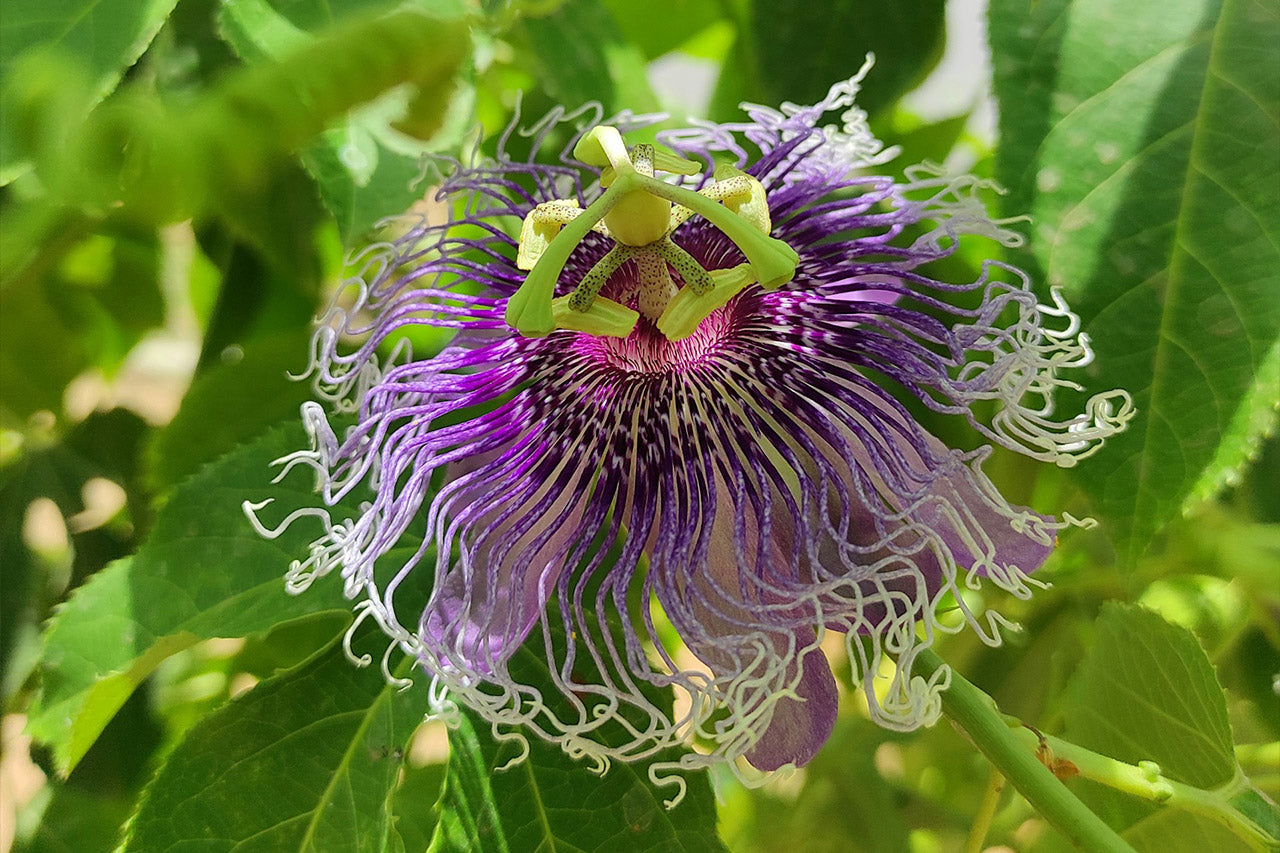
One of the most exotic-looking climbers you can grow, with intricate blue-and-white flowers that stop people in their tracks, followed by decorative fruits that add extra interest. It’s brilliant over pergolas and trellis panels as a bold, leafy screen, bringing a tropical note and plenty of summer theatre to the garden.
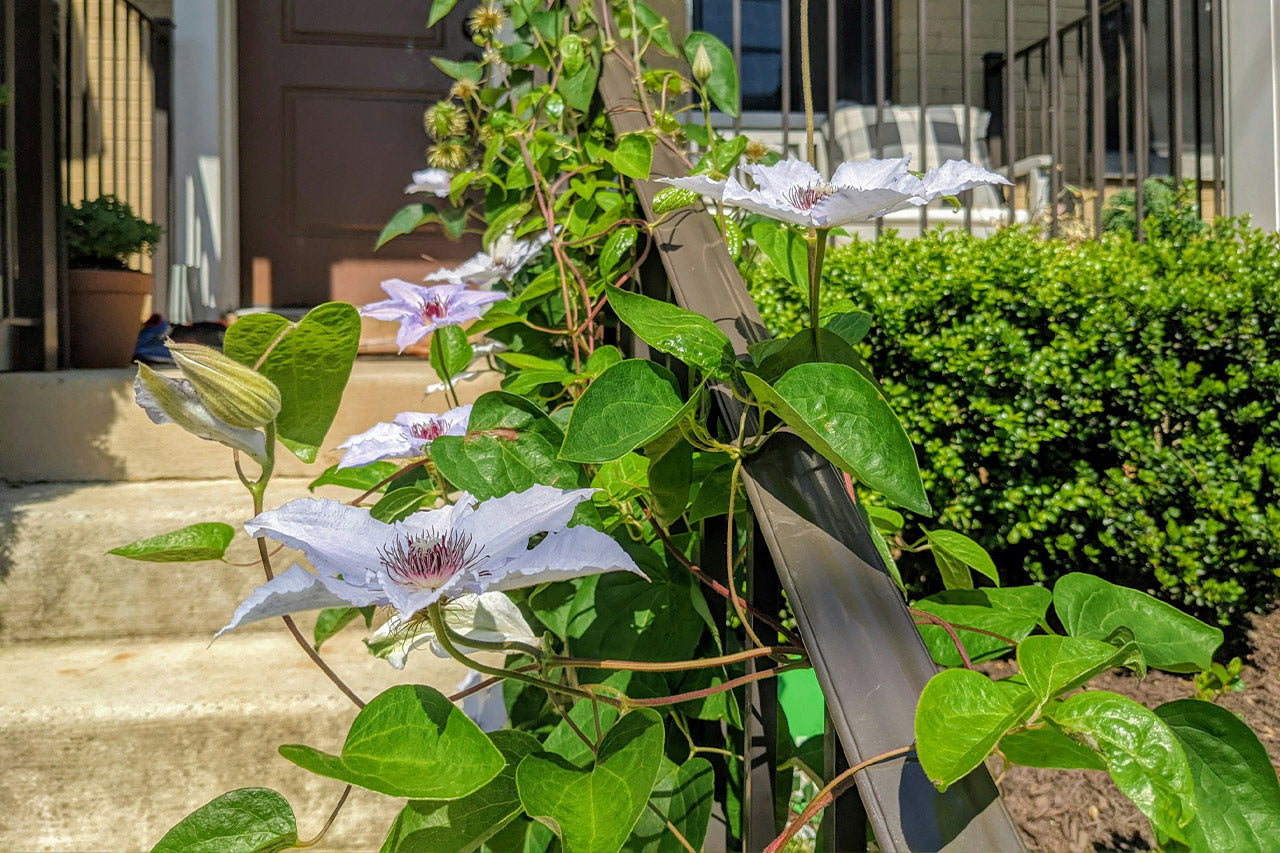
A cleaner, brighter take on the passion flower, with whiter blooms that show off the extraordinary clock-face detail even more crisply. It’s ideal when you want a climber that feels showy and striking, creating an impressive leafy screen for a pergola or fence and adding a real talking point through summer.