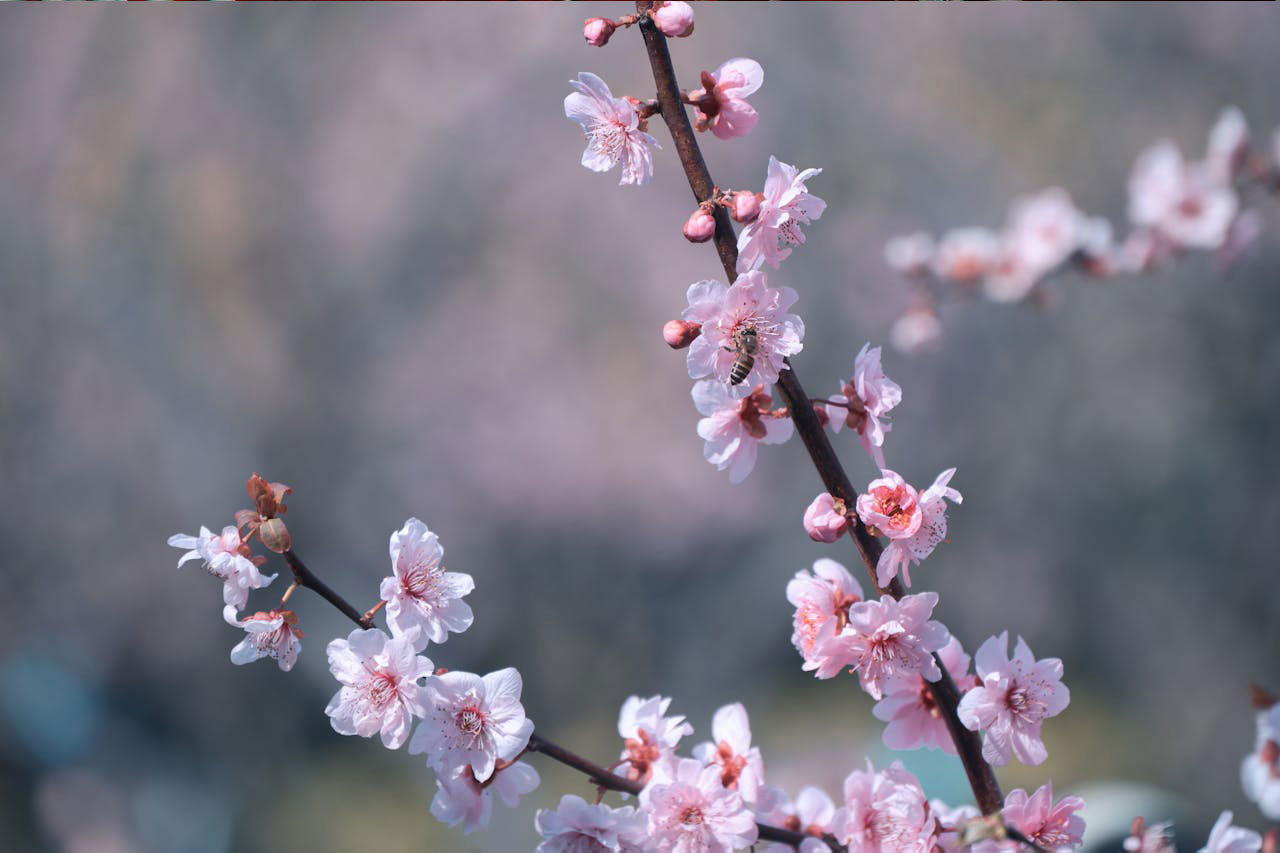

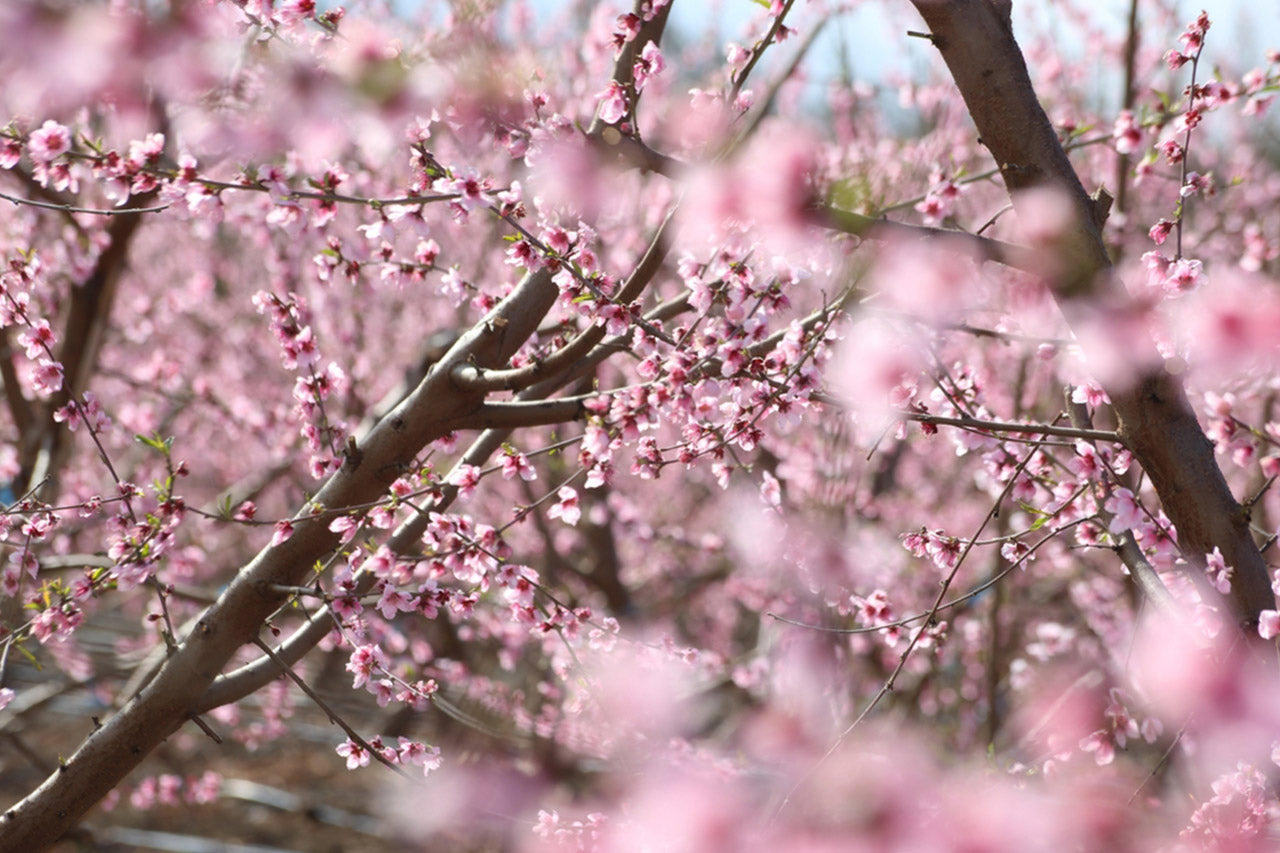
Peach blossom is one of the loveliest sights of early spring — soft pink flowers opening along bare branches, often before much else has properly woken up. In a UK garden, that timing matters: it brings a lift just as winter finally loosens its grip. If you grow peach as a fan against a warm wall, the flowers sit right at eye level, close enough to admire properly, and the whole tree feels like a little event in itself. Even in years when fruit is shy, the blossom alone earns it a place.
Common name: Peach tree.
Latin name: Prunus persica.
Size in UK gardens: Often 2–4m when trained as a fan; similar in pots if pruned to shape.
Best position: Full sun, ideally against a warm, sheltered south or south-west facing wall, or in a large pot on a sunny patio.
Soil: Fertile, well-drained soil; in pots use a loam-based compost with added grit for drainage.
Flowering time: Early to mid spring (timing varies with weather and position).
Fragrance: Blossom is usually lightly scented, but subtle.
Hardiness: Hardy once established, though blossom can be damaged by late frosts and wet weather.
Care level: Moderate – easy with good siting; benefits from training, careful watering, and some protection in tricky springs.

The Simpson’s team raises the majority of our trees here at the nursery. For varieties outside our own production, we work with independent local growers we trust - all chosen for UK climate suitability.
Planting time: As container-grown plants, peaches can be planted in most months when the soil isn’t frozen or waterlogged; spring and early autumn are usually easiest.
Watering: Water well in the first 1–2 seasons and during dry spells; regular moisture helps fruit swell and reduces stress.
Feeding: A spring mulch plus a balanced feed supports healthy growth and fruiting; pot-grown trees benefit from a little extra feeding.
Pruning: Best managed with annual pruning to keep shape and encourage fruiting wood; fan-trained trees need light summer attention too.
Winter: The tree is hardy, but blossom may need fleece in late frosts; shelter and good drainage are the biggest protections.
Availability is always changing, so please check with us if you have a particular variety in mind.


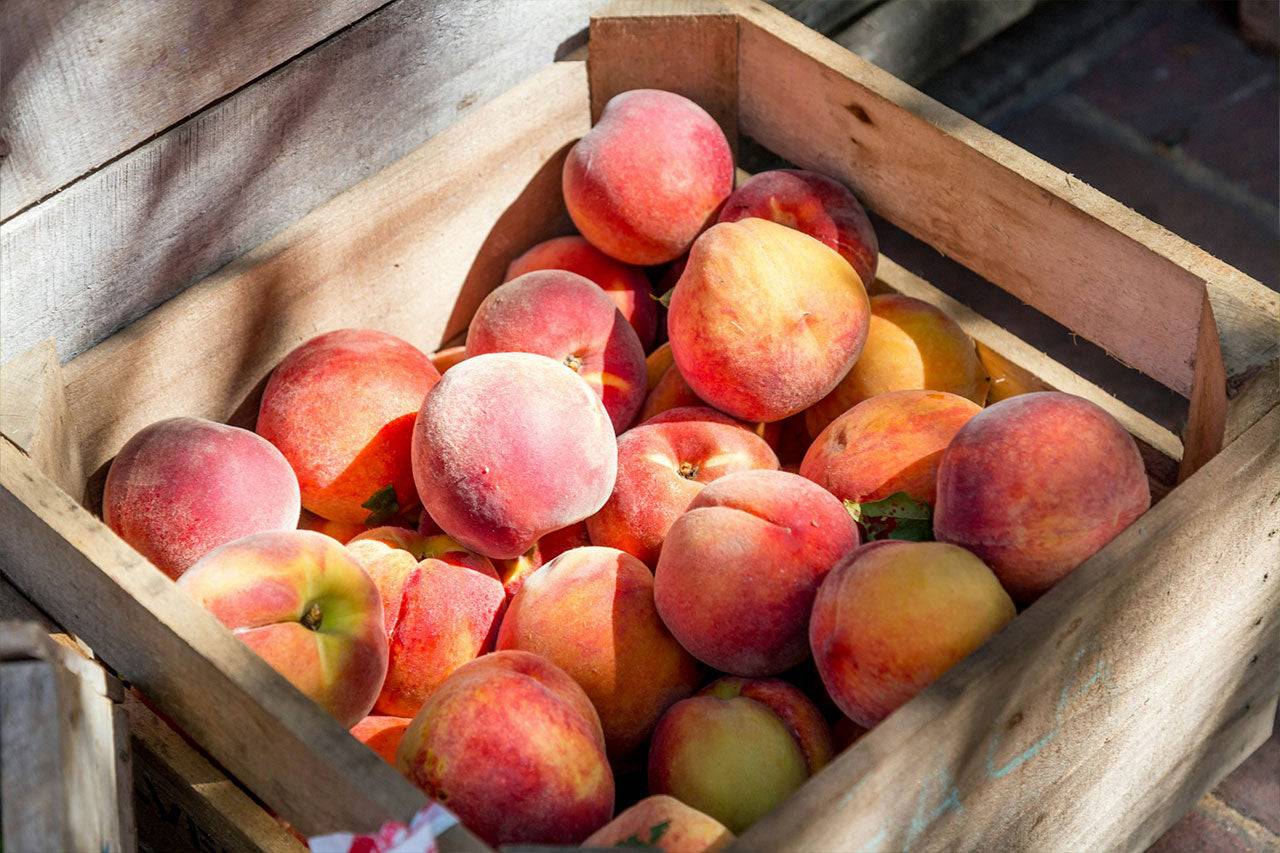
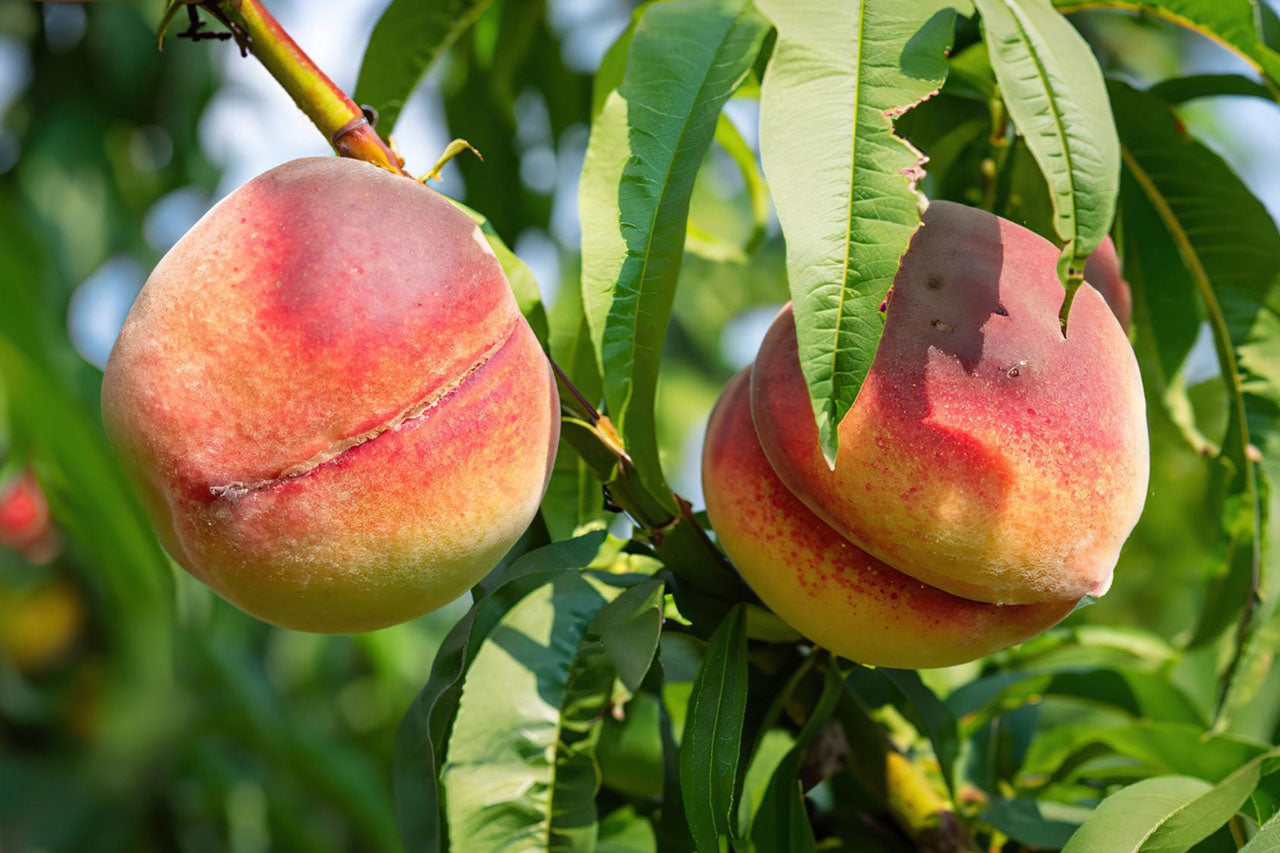
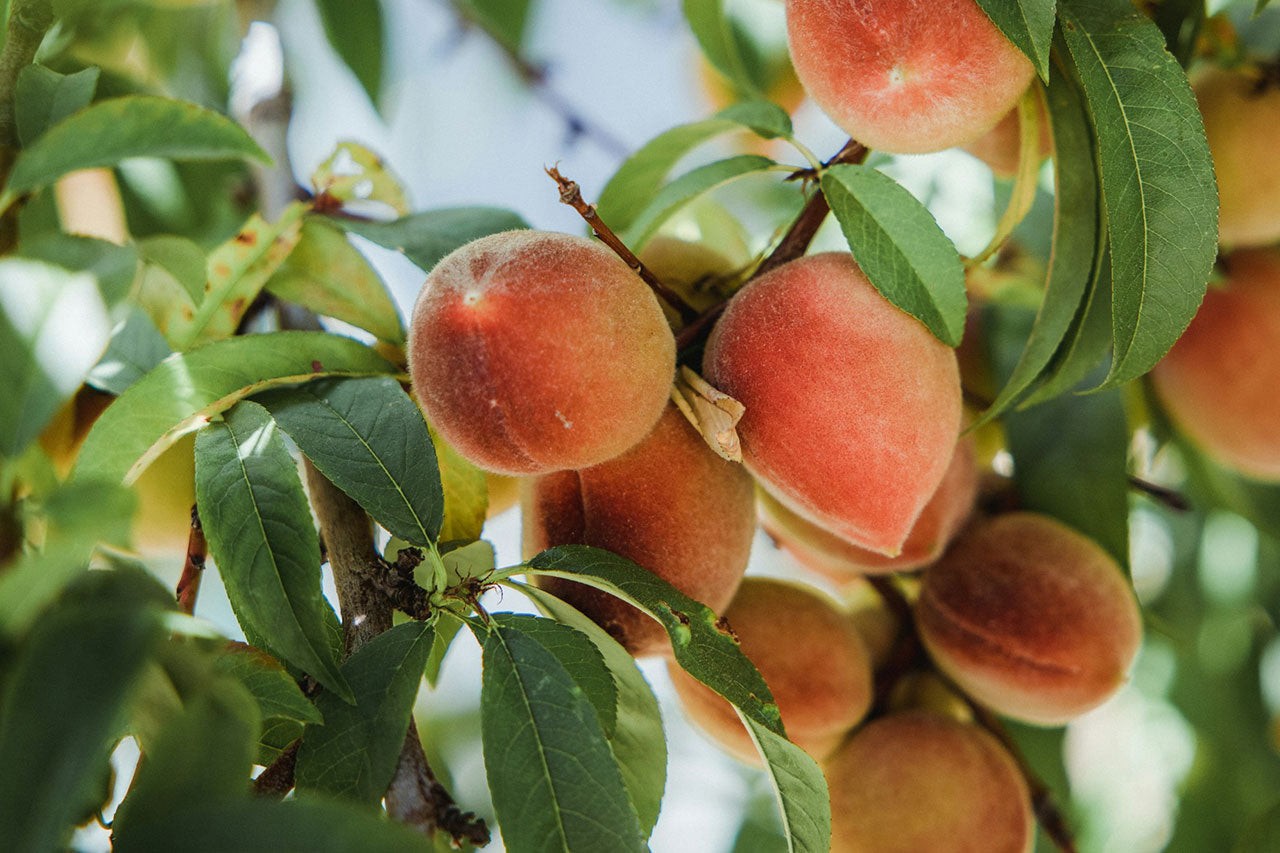
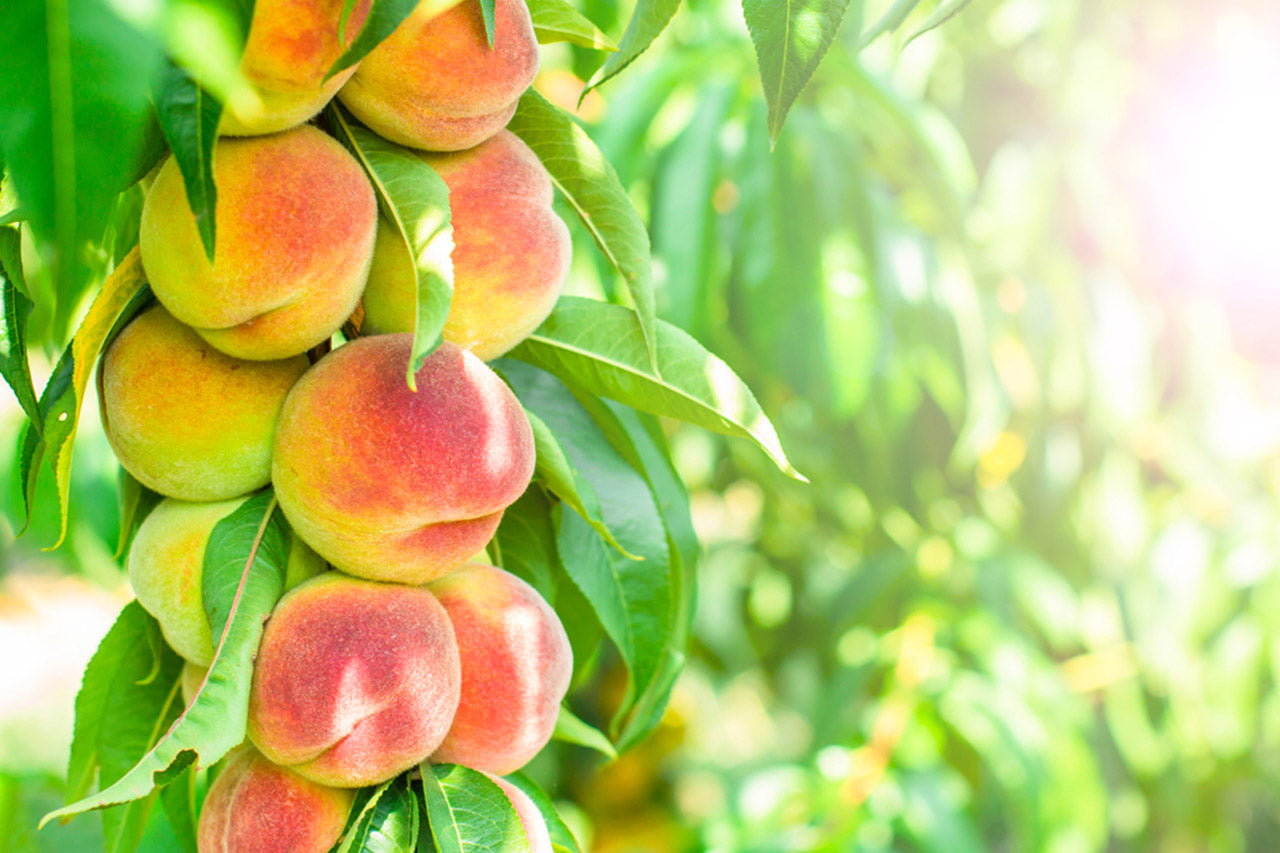
A classic peach with a warm, sunny-wall romance—fresh spring blossom, lush leaves, and fruit that feels like a little holiday at home. The flavour is sweet, fragrant, and softly juicy when fully ripe, with that proper peach perfume and a mellow finish. Best in a sheltered, sun-baked spot where it can ripen well.
A confident, modern peach with a productive, reliable feel—one of those varieties that’s become a favourite for good reason. The flavour is richly sweet with a balancing tang, juicy and full-bodied when ripened properly, with a more robust “true peach” taste than very delicate types. Ideal if you want a peach that feels dependable and rewarding.
A peach with a slightly old-fashioned, generous personality—lush foliage, pretty blossom, and fruit that feels properly traditional when it ripens. The flavour is sweet and fragrant with a gentle tang, juicy and softly textured when fully ready. Ideal if you want a classic peach for a warm, sheltered wall.
A real talking-point peach—flat “doughnut” fruit and a sunny, slightly playful personality on the tree. The flavour is sweet, aromatic, and richly juicy when ripened well, often feeling very dessert-like and easy to snack on. Ideal if you want a peach that feels a bit special and different.