
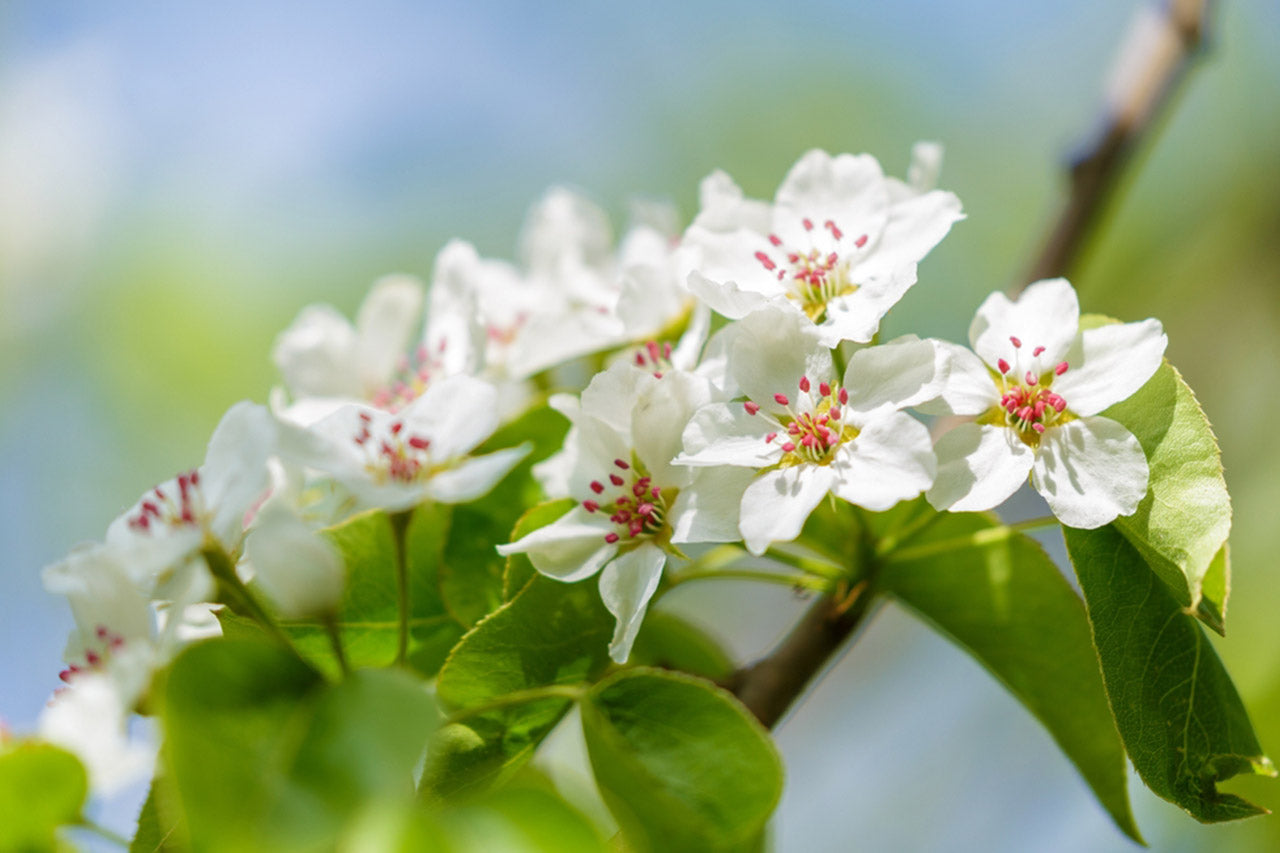
Pear blossom has a clean, luminous quality — clusters of white flowers that open as the garden is just beginning to stir. It’s not showy in a loud way, but it’s generous, and it looks beautiful against a bright blue spring sky. In a UK garden, that moment matters: it lifts the whole space and brings pollinators in early. Even if you’re growing pear primarily for fruit, the blossom is a real bonus — a gentle, hopeful start to the season that makes the tree feel like part of the garden’s rhythm.
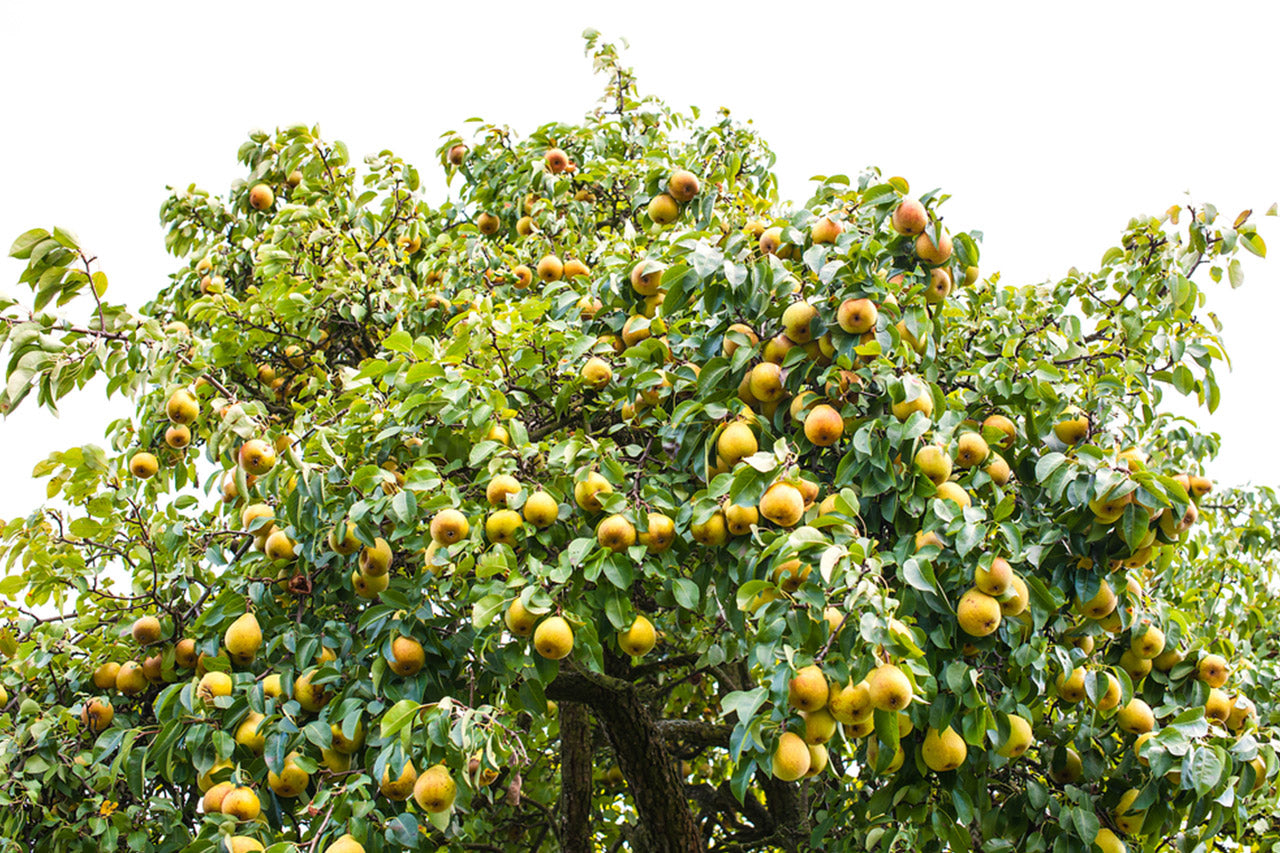
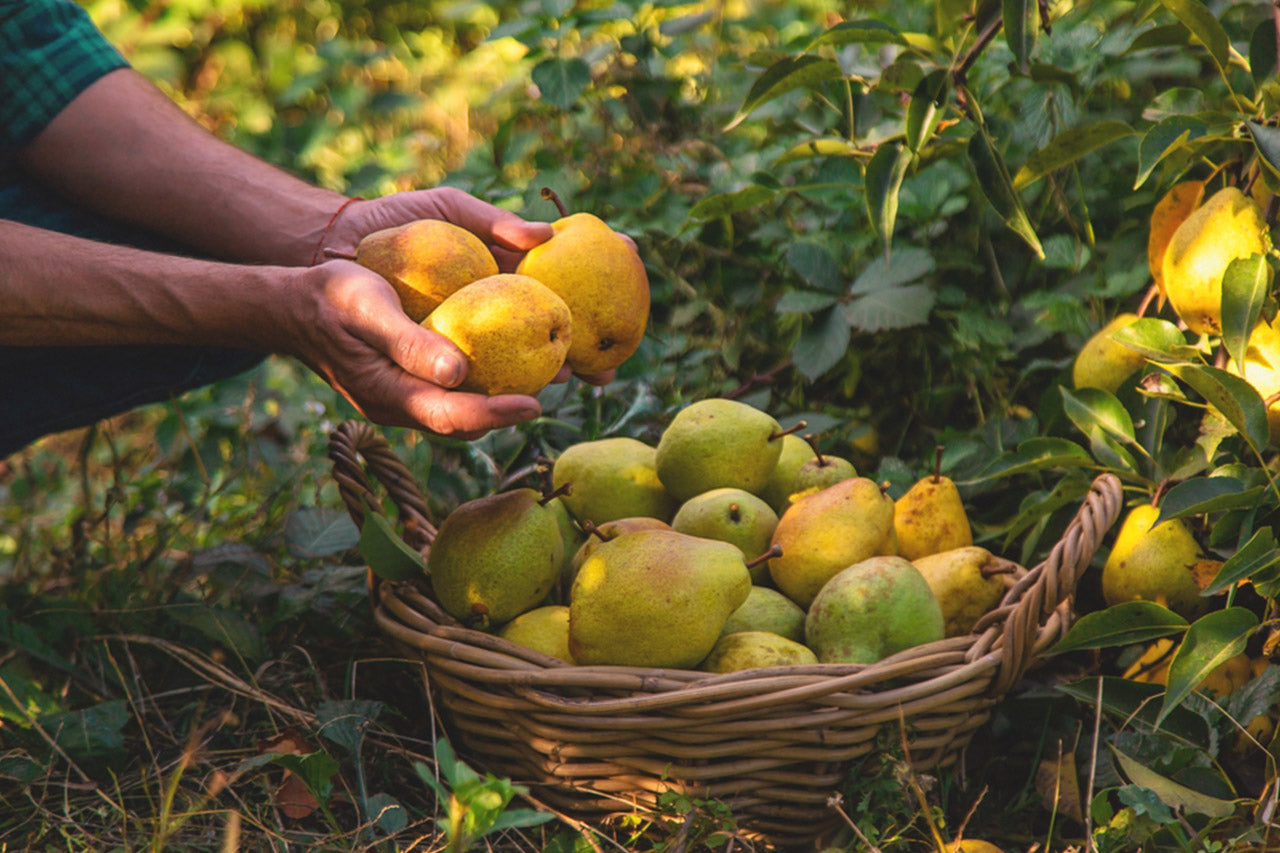
Common name: Pear tree.
Latin name: Pyrus communis (most garden pears).
Size in UK gardens: Often 3–5m depending on variety and rootstock; can be kept smaller with pruning or trained as an espalier.
Best position: Full sun for best blossom and fruiting, in a reasonably sheltered spot.
Soil: Fertile, moisture-retentive but well-drained soil; dislikes prolonged waterlogging.
Flowering time: Spring.
Fragrance: Blossom is usually lightly scented, but subtle.
Hardiness: Very hardy in UK gardens; blossom may be affected by late frosts in exposed sites.
Care level: Moderate – straightforward with good soil, occasional pruning, and consistent watering while establishing.

The Simpson’s team raises the majority of our trees here at the nursery. For varieties outside our own production, we work with independent local growers we trust - all chosen for UK climate suitability.
Planting time: As container-grown plants, pear trees can be planted in most months when the soil isn’t frozen or waterlogged; spring and autumn are usually easiest.
Watering: Water regularly in the first 1–2 years and during dry spells; steady moisture helps establishment and fruit development.
Feeding: Mulch in spring and use a balanced feed if growth is weak; a healthy soil usually does most of the work.
Pruning: Prune in winter for shape and fruiting spurs; summer pruning is useful for trained forms like espaliers.
Winter: Very hardy; protect blossom rather than the tree if late frosts are common in your spot.
Availability is always changing, so please check with us if you have a particular variety in mind.


A neat, early pear with a friendly, garden-orchard feel—quick to reward and nicely suited to smaller spaces. The flavour is sweet and juicy with a light, fresh tang, clean and straightforward rather than heavy and perfumed. Ideal if you want an early pear that’s easy to grow and lovely eaten straight.
A classic, old-orchard pear with a calm, traditional presence—handsome on the tree and quietly refined in fruit. The flavour is rich and aromatic, sweet with a gentle tang, and the texture can be beautifully melting when fully ripe. A lovely choice if you enjoy pears with depth and a slightly old-fashioned elegance.
A modern, reliable pear with a tidy, productive nature—very much a “plant it and it works” sort of tree. The flavour is sweet, juicy, and clean, usually less perfumed than Comice but very easy to enjoy, with a crisp bite that softens as it ripens. Great if you want a dependable dessert pear without fuss.
The classic UK garden pear—dependable, productive, and instantly familiar in character. The flavour is sweet with a gentle, refreshing tang, and the texture is typically juicy and slightly firm, becoming softer and more aromatic as it ripens. Ideal if you want a pear that feels reliably “right” in British gardens.


A truly luxurious dessert pear with a refined, almost indulgent feel—one of the great “eating pears” when it’s perfectly ripe. The flavour is richly sweet and perfumed, often with a honeyed depth, and the texture can be melting and exceptionally juicy. Ideal if you want pears that feel special rather than everyday.
A quirky, characterful pear with a slightly novelty feel—often grown as much for its talking-point nature as for sheer orchard tradition. The flavour is sweet and juicy with a fresh tang, generally pleasant and straightforward, making it a fun, friendly garden tree. Ideal if you like fruit trees with a bit of personality.
An Asian pear with a crisp, clean, modern feel—rounder fruit and a fresh, refreshing bite that’s very different from soft European pears. The flavour is sweet and lightly aromatic, often with a clean, watery-juicy crunch rather than a melting texture. Ideal if you want something a little different and wonderfully crisp for eating fresh.
A warm, traditional pear with a calm, productive orchard presence—steady, useful, and rewarding without being fussy. The flavour is sweet and juicy with a gentle tang, and it tends to feel classic and straightforward rather than intensely perfumed. A good choice if you want a reliable dessert pear for the family orchard.


A confident, full-bodied dessert pear with a generous, orchard-style character—often producing substantial fruit with a satisfying presence. The flavour is sweet and juicy with a mild tang, and the texture becomes soft and rich when properly ripened. Ideal if you like pears that feel abundant and comforting.
A pear with a slightly more “special” feel—often chosen for its distinctive look and a bit of extra character in the garden. The flavour is sweet and juicy with a gentle tang, generally easy and pleasant, with a crisp-to-soft texture depending on ripeness. A lovely option if you want something a touch different from the standard pears.
A crisp Asian pear with a bright, clean personality—round, golden fruit that feels refreshing and modern. The flavour is sweet with a light floral note, and the texture stays crunchy and juicy rather than melting. Ideal if you love that crisp, thirst-quenching bite straight from the tree.
A classic, traditional pear with a big, familiar orchard presence—often associated with that unmistakable pear perfume. The flavour is sweet and richly aromatic, and when ripe the flesh can be very juicy and soft. A great choice if you want a pear with strong, classic flavour and that real “proper pear” scent.

A late, old-orchard pear with a calm, storied feel—one that extends the season and brings a sense of depth and tradition. The flavour is rich, sweet, and aromatic, often with a deeper, slightly spiced note compared to lighter pears, and the texture becomes tender when fully ripe. Ideal if you want a pear that feels a little more connoisseur and late-season special.