

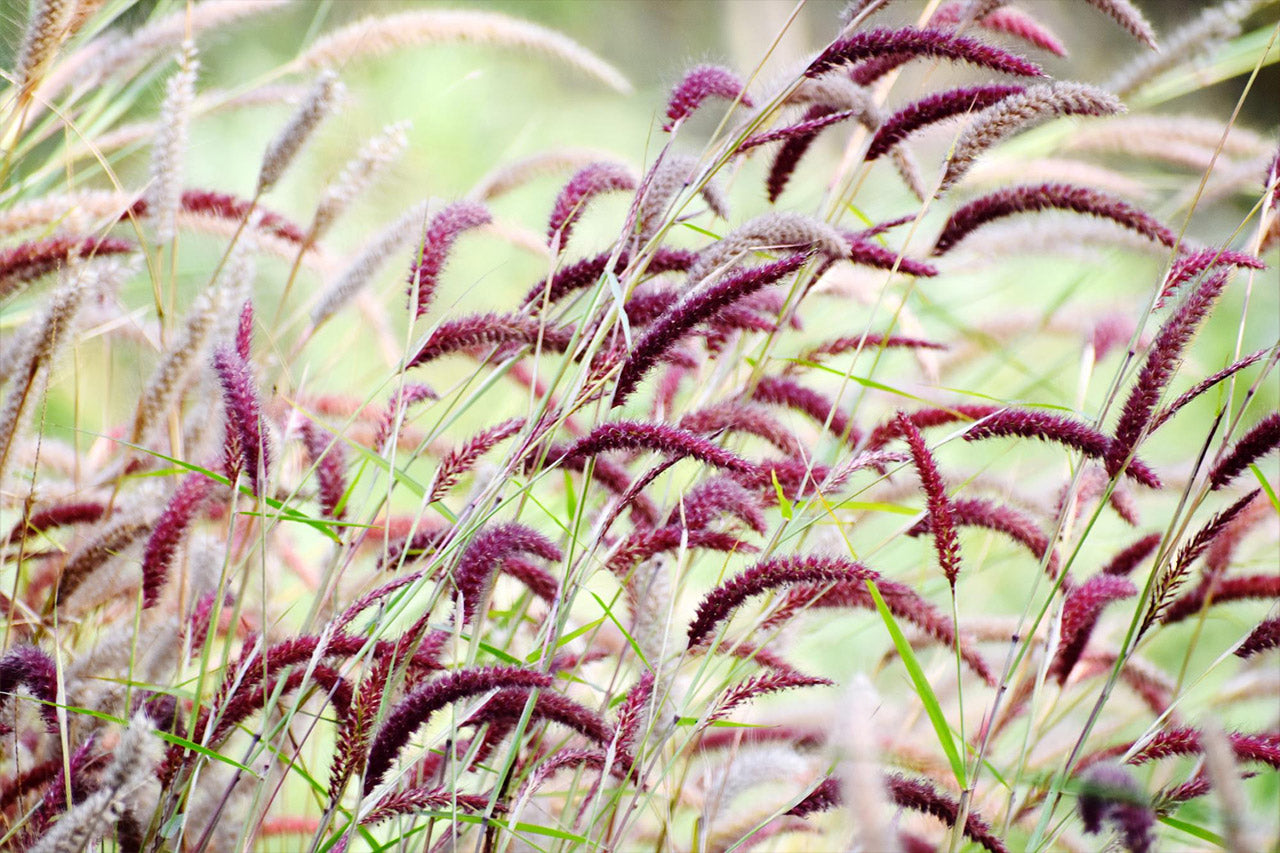
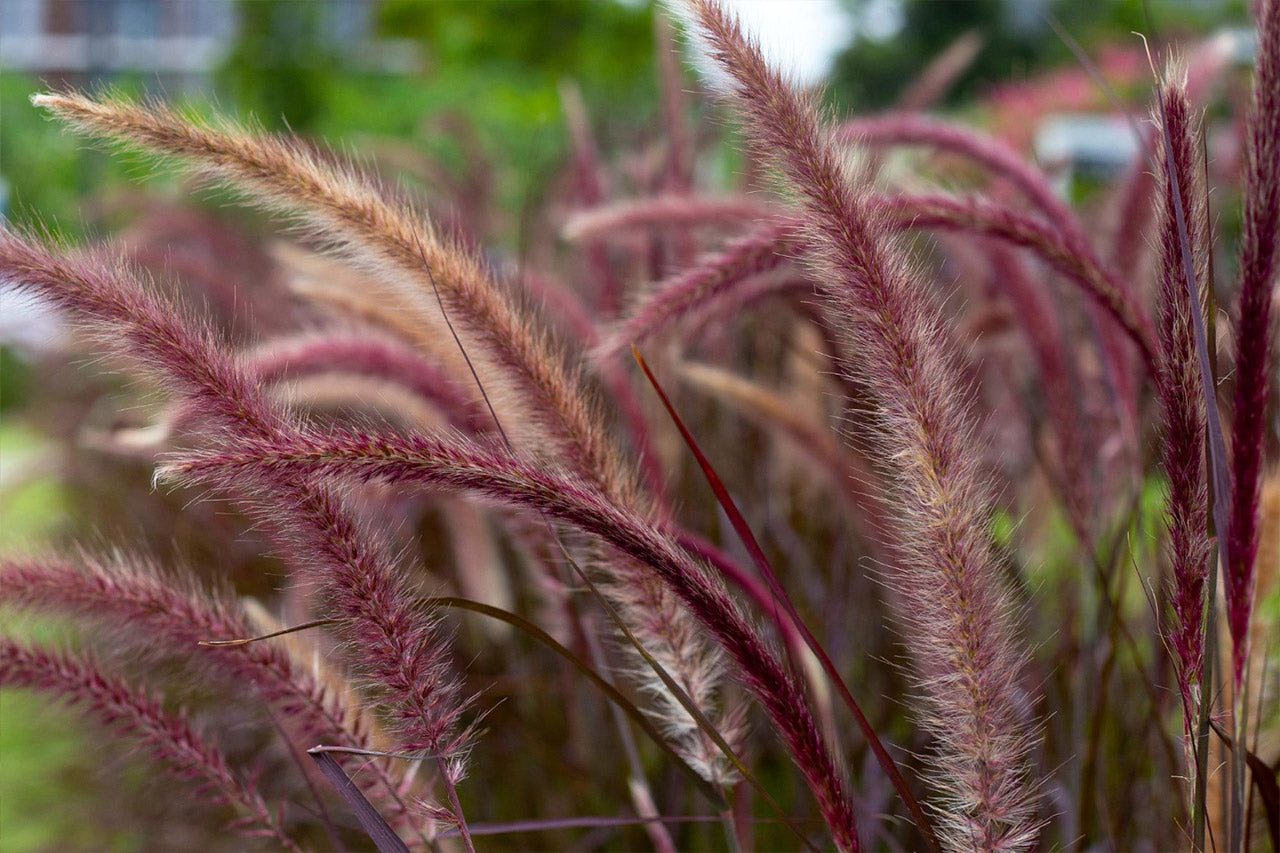
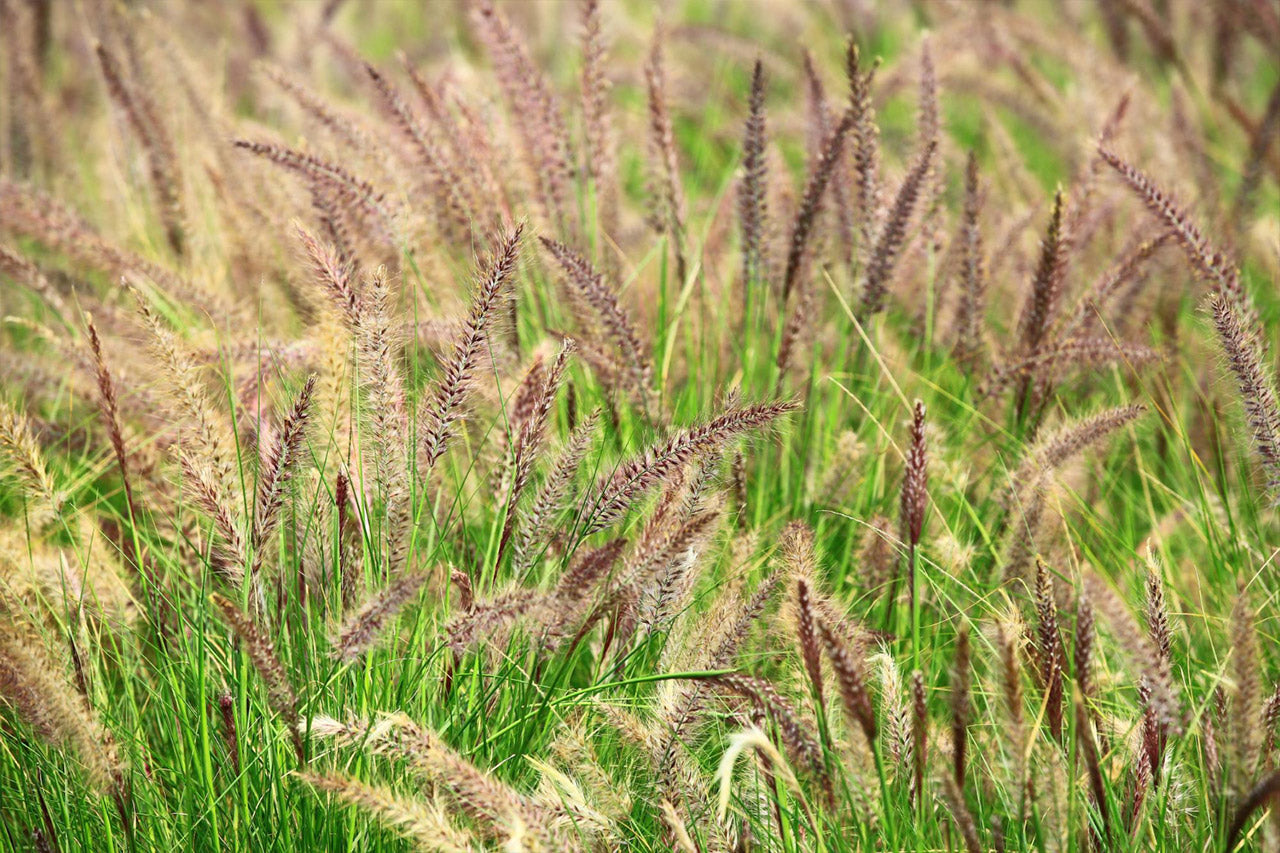
Pennisetum, often called fountain grass, is all about those irresistible, brush‑like flower heads. From late summer, arching stems rise above the foliage, each one topped with a soft bottlebrush plume that begs to be stroked as you pass. Colours range from pale straw and warm biscuit tones to richer pinkish shades, depending on the variety. In low evening light the seedheads glow beautifully, adding a gentle, romantic note to borders, gravel gardens and pots. In a typical UK season, especially in a sunny, sheltered spot, the show carries well into autumn, just when you need something fresh in the garden.
Common name: Fountain grass, sometimes Chinese fountain grass.
Latin name: Pennisetum
Size in UK gardens: Usually 50–100cm tall in foliage, with flower stems reaching 60–120cm; clumps often 40–80cm wide depending on variety.
Best position: A sunny, reasonably sheltered spot – ideal in the front or middle of a border, in gravel plantings, or in large containers.
Soil: Free‑draining, moderately fertile soil; dislikes cold, heavy, waterlogged ground in winter. In pots, use a good loam‑based compost with added grit.
Main interest: Arching mounds of narrow foliage and soft, bottlebrush flower heads from late summer into autumn, followed by attractive winter silhouettes.
Fragrance: Not grown for scent – appeal is in texture, movement and subtle colours.
Hardiness: Many Pennisetum alopecuroides forms are borderline hardy to hardy in milder UK gardens if kept well drained; tender species like P. setaceum ‘Rubrum’ are best treated as seasonal or given winter protection.
Care level: Moderate – easy to grow in the right spot, but needs sharp drainage, full sun and a simple yearly cut‑back to thrive.

The Simpson’s team raises the majority of our trees here at the nursery. For varieties outside our own production, we work with independent local growers we trust - all chosen for UK climate suitability.
Planting time: As container‑grown grasses, Pennisetum can be planted in most months when the ground isn’t frozen or waterlogged; late spring and early autumn are usually easiest, giving roots time to establish before extremes of heat or cold.
Watering: Water regularly in the first season so the rootball and surrounding soil don’t dry out completely, especially in very free‑draining or raised beds. Once established in the ground, they are fairly drought‑tolerant but appreciate an occasional deep soak in long dry spells.
Feeding: Fountain grasses don’t need heavy feeding – excessive fertiliser can make growth soft and floppy. A modest mulch of compost in spring is usually enough; on very poor soils, a light balanced feed in early spring can help.
Pruning: Leave the foliage and plumes standing through winter for structure and protection, then cut back the whole clump close to the base in late winter or very early spring, just before new growth starts.
Winter: In the ground, main winter care is about drainage and leaving the top growth on as a “coat”. In colder gardens, you can mulch around the base and be prepared for tender forms to be grown in pots and brought under cover.