
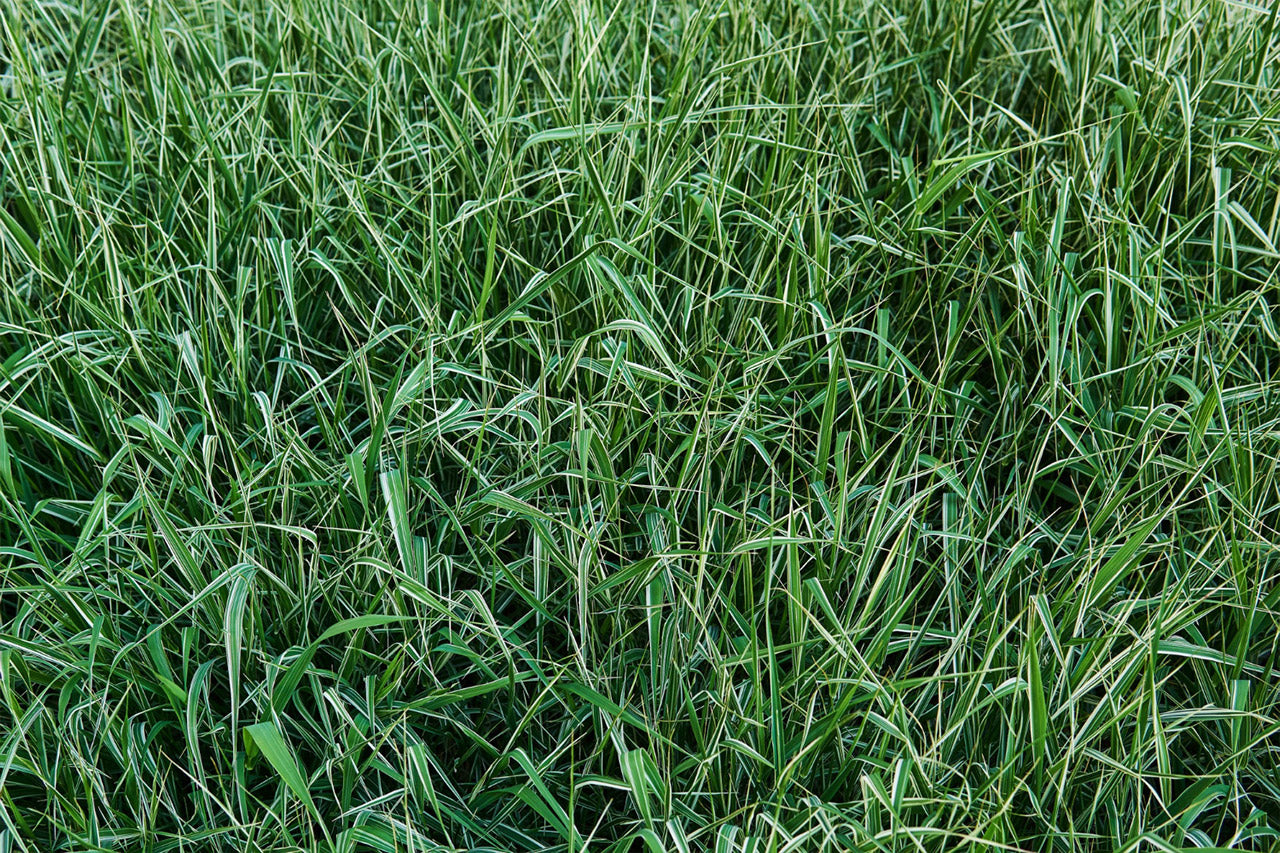
Phalaris arundinacea var. picta and its cultivars are grown first and foremost for their foliage. Narrow leaves boldly striped in white, cream and green make a clump that almost seems to give off its own light, especially on overcast days. In cool weather, some selections take on a soft pink blush along the stems and leaf edges, adding yet another layer of interest. Planted near plainer greens, dark shrubs or water, ribbon grass really pops, and even a small clump can brighten a tired corner. It’s one of those plants that earns its keep from the moment it emerges in spring.
Common name: Ribbon grass, gardener’s garters or reed canary grass.
Latin name: Phalaris
Size in UK gardens: Usually around 60–90cm tall, sometimes to about 1m, with a spreading clump 60–100cm or more across over time if not contained.
Best position: Sun or light shade in a spot where the soil doesn’t dry to dust – ideal near pond margins, in damp borders or in a large container.
Soil: Moist to wet, reasonably fertile soil; happily takes clay, loam and boggier spots if water still moves through the soil. Can also cope with ordinary garden soils once established.
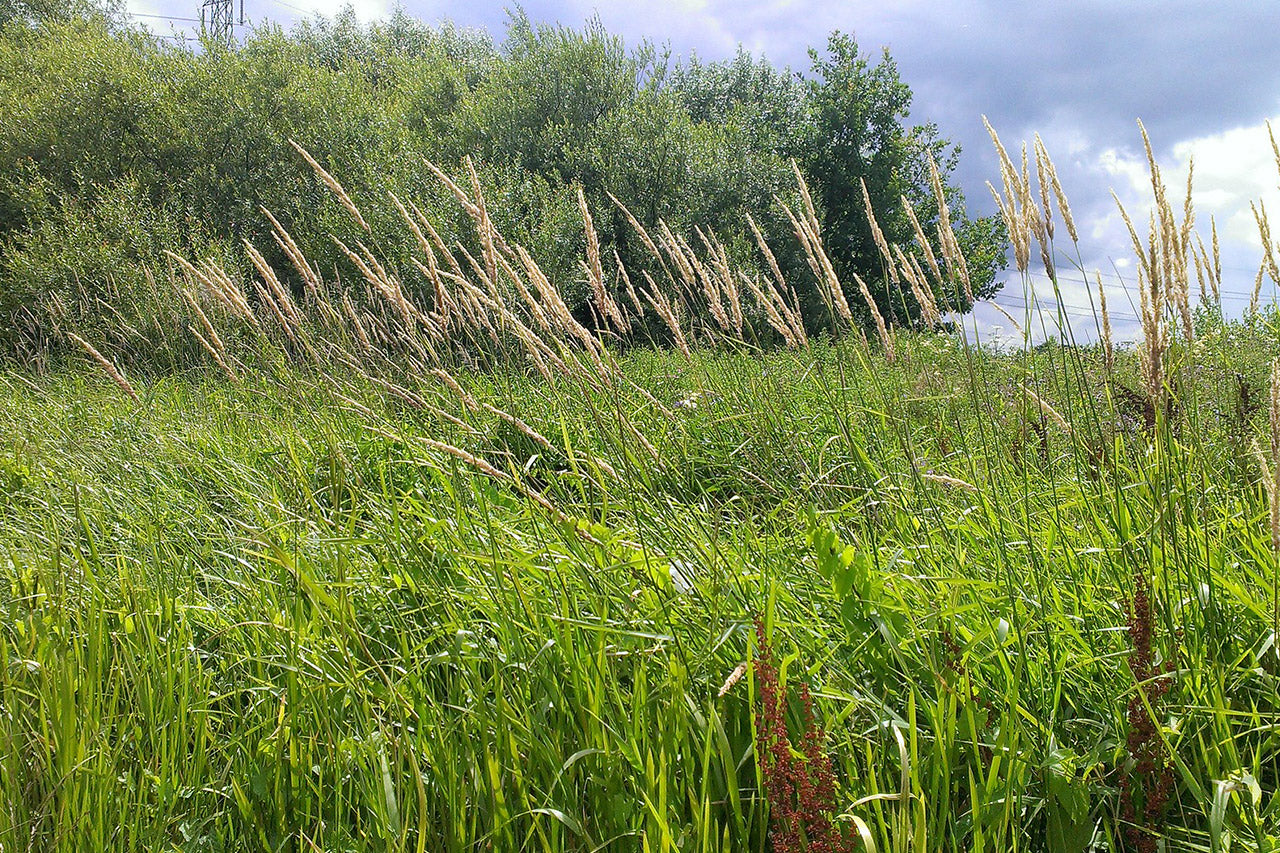
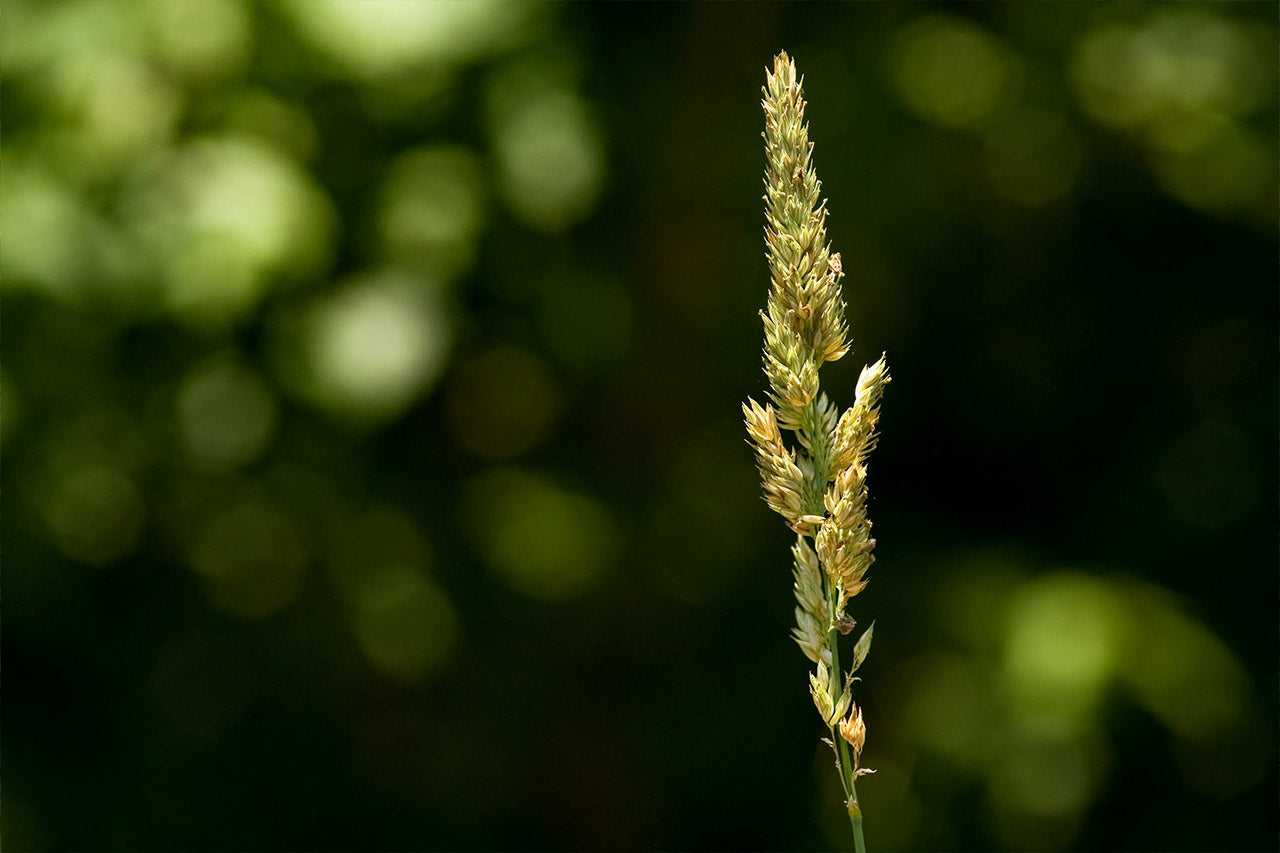
Main interest: Bold green‑and‑cream (often with pink tinges) striped foliage from spring to autumn; narrow, airy flower panicles in early summer.
Hardiness: Fully hardy across the UK; top growth dies back in winter and reshoots from the base in spring.
Care level: Moderate – easy if you can offer moisture and space, but the spreading habit needs occasional control in smaller gardens.

The Simpson’s team raises the majority of our trees here at the nursery. For varieties outside our own production, we work with independent local growers we trust - all chosen for UK climate suitability.
Planting time: As container‑grown plants, Phalaris can be planted in most months when the soil isn’t frozen or waterlogged; spring and early autumn are usually easiest, giving roots time to settle before summer heat or winter cold.
Watering: Water regularly in the first season so the rootball and surrounding soil don’t dry out completely, especially in lighter soils or raised beds. Once established in the ground, ribbon grass is quite tolerant of short dry spells but prefers not to be baked solid.
Feeding: In decent soil, it needs very little feeding – a spring mulch of compost or well‑rotted manure is usually enough. On very poor ground, a light balanced feed in spring can support growth, but there’s no need for heavy fertiliser.
Pruning: Cut old foliage down once a year in late winter or very early spring before new growth emerges. In midsummer you can also shear or trim tired clumps to encourage fresh, variegated leaves, and remove any plain green, non‑striped shoots to maintain the pattern.
Winter: Established plants in the ground usually need no winter protection beyond a mulch and sensible drainage. Old stems can be left standing for structure in wilder schemes, then tidied away before spring growth gets going.