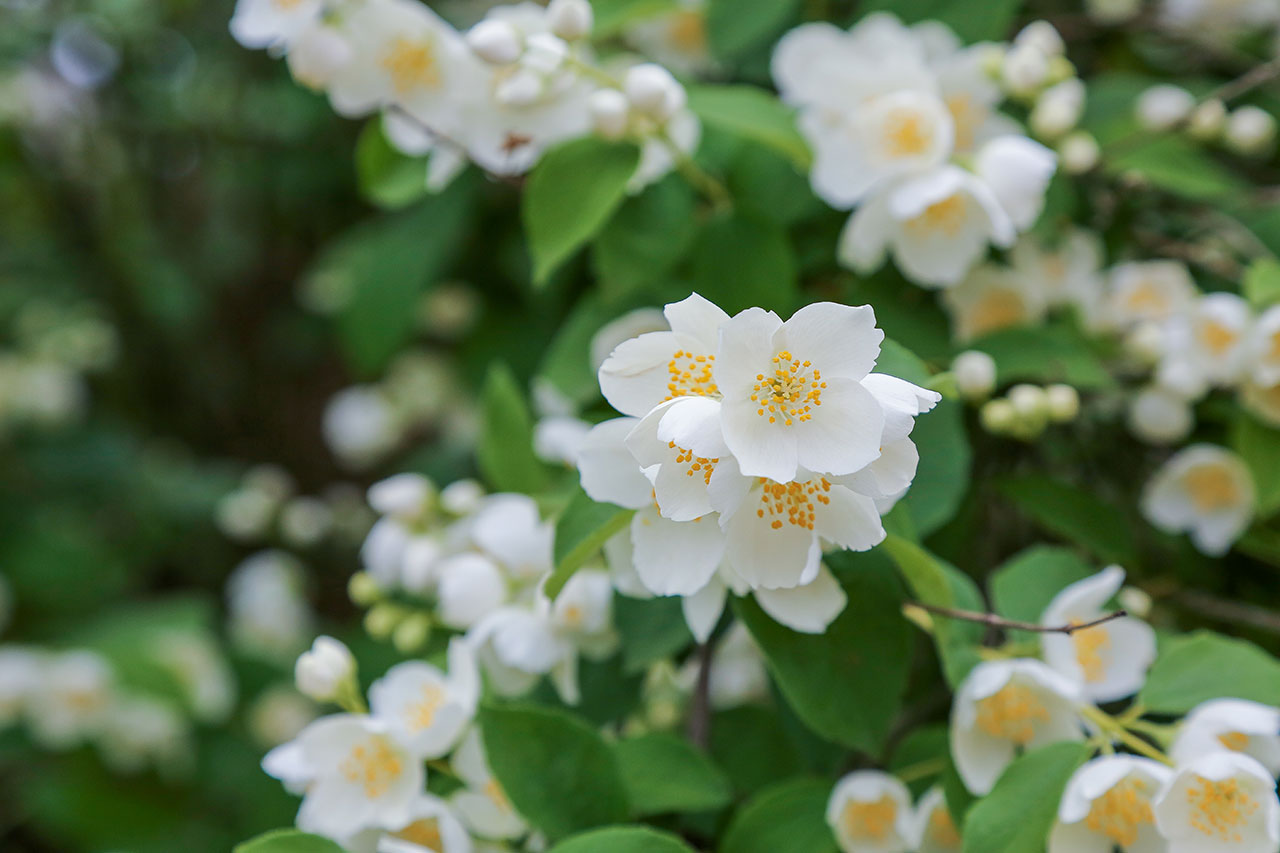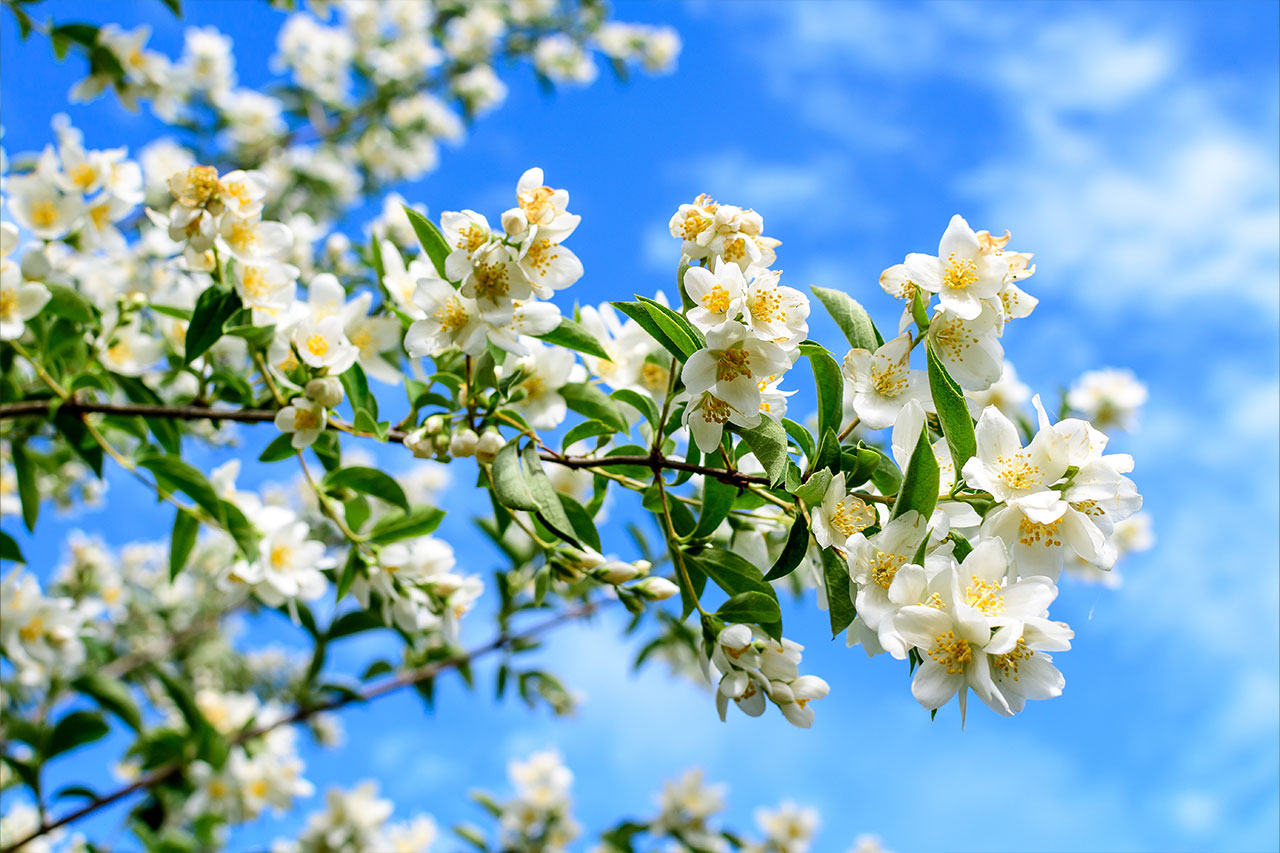

There’s something magical about rounding a corner in early spring and suddenly walking into a cloud of scent. Osmanthus flowers are tiny and often half‑hidden in the foliage, but their perfume can be astonishingly strong – sweet, rich and somehow both fresh and comforting. Different species and varieties lean towards jasmine, orange blossom or even apricot notes, but all bring a sense of luxury to the garden. Because the shrubs are evergreen, you can plant them in exactly the right spot for your nose and know they’ll quietly sit there, waiting for their scented moment each year.
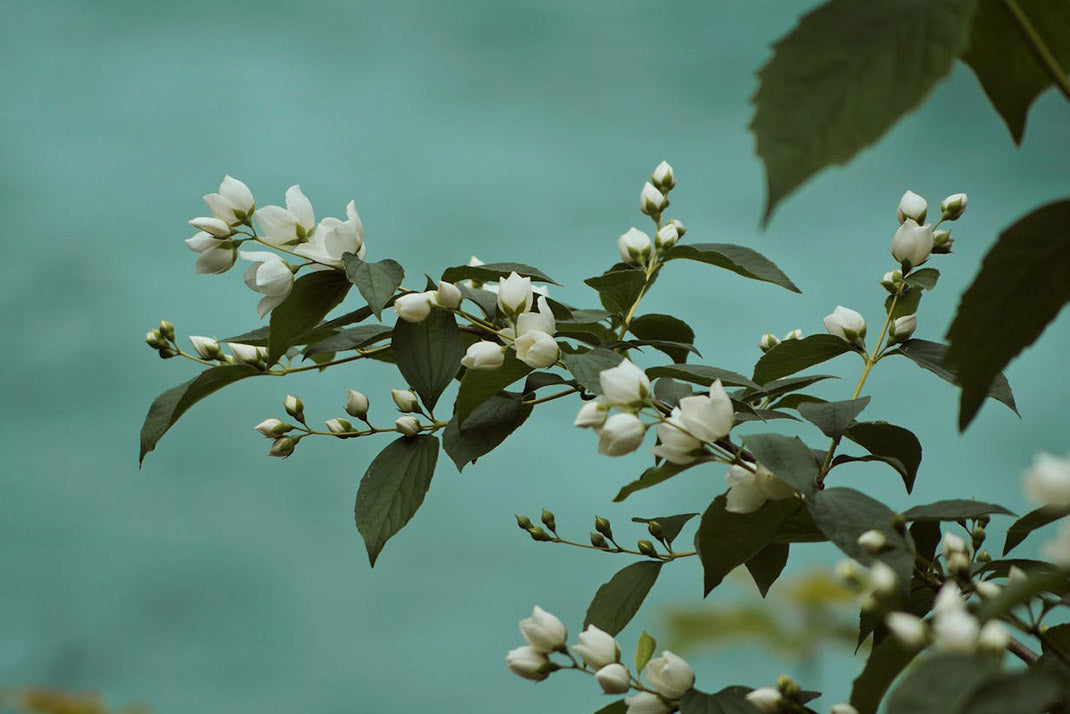
Common name: Mock Orange.
Latin name: Philadelphus
Size in UK gardens: Usually 1.5–3m tall and wide over time, depending on variety; dwarf and patio forms can stay nearer 1m, while vigorous older shrubs may top 3m if left unpruned.
Best position: Full sun to light shade; best flowering and scent are in a sunny, reasonably open spot, though many varieties will still perform well in light, dappled shade.
Soil: Moist but well‑drained, moderately fertile soil – from decent loam to improved clays or sands – avoiding very heavy, waterlogged ground or extremely dry, thin soils.
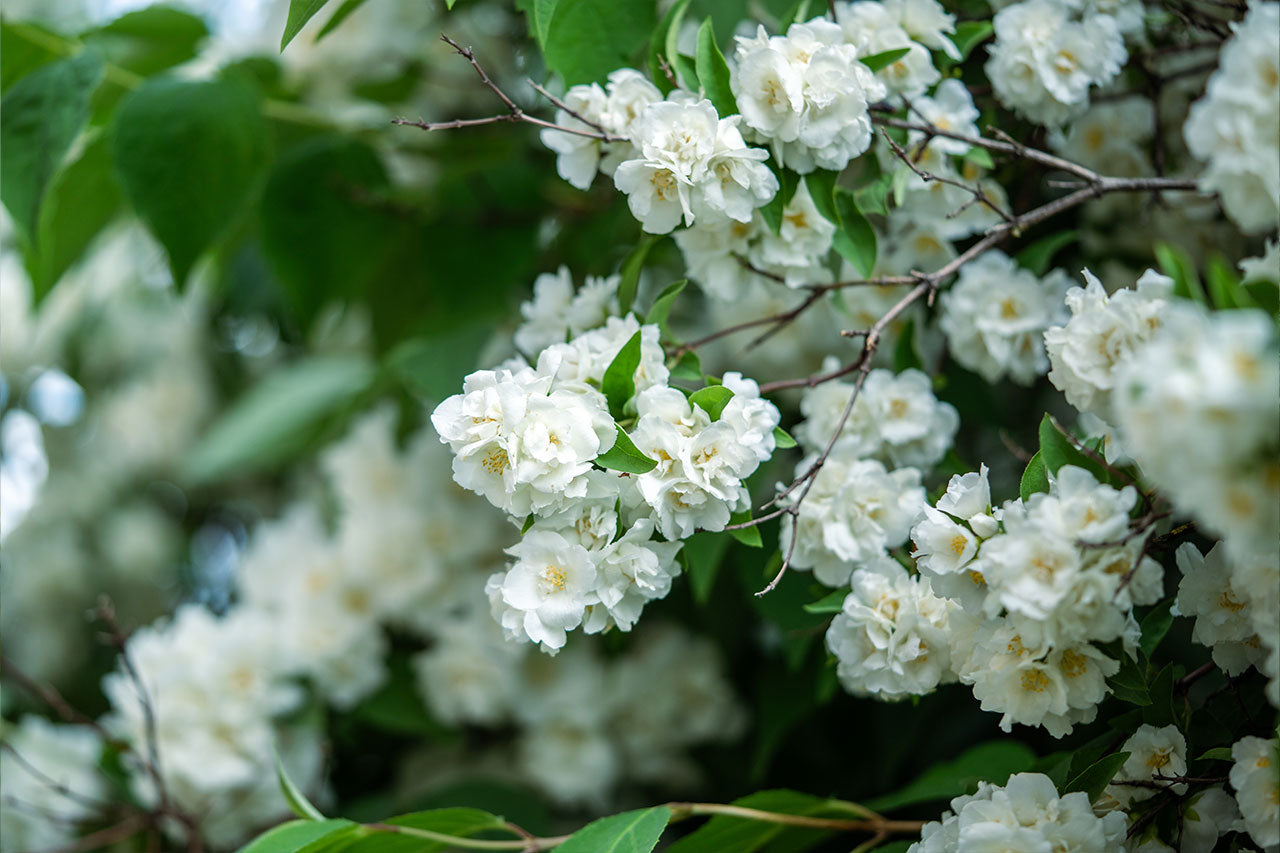
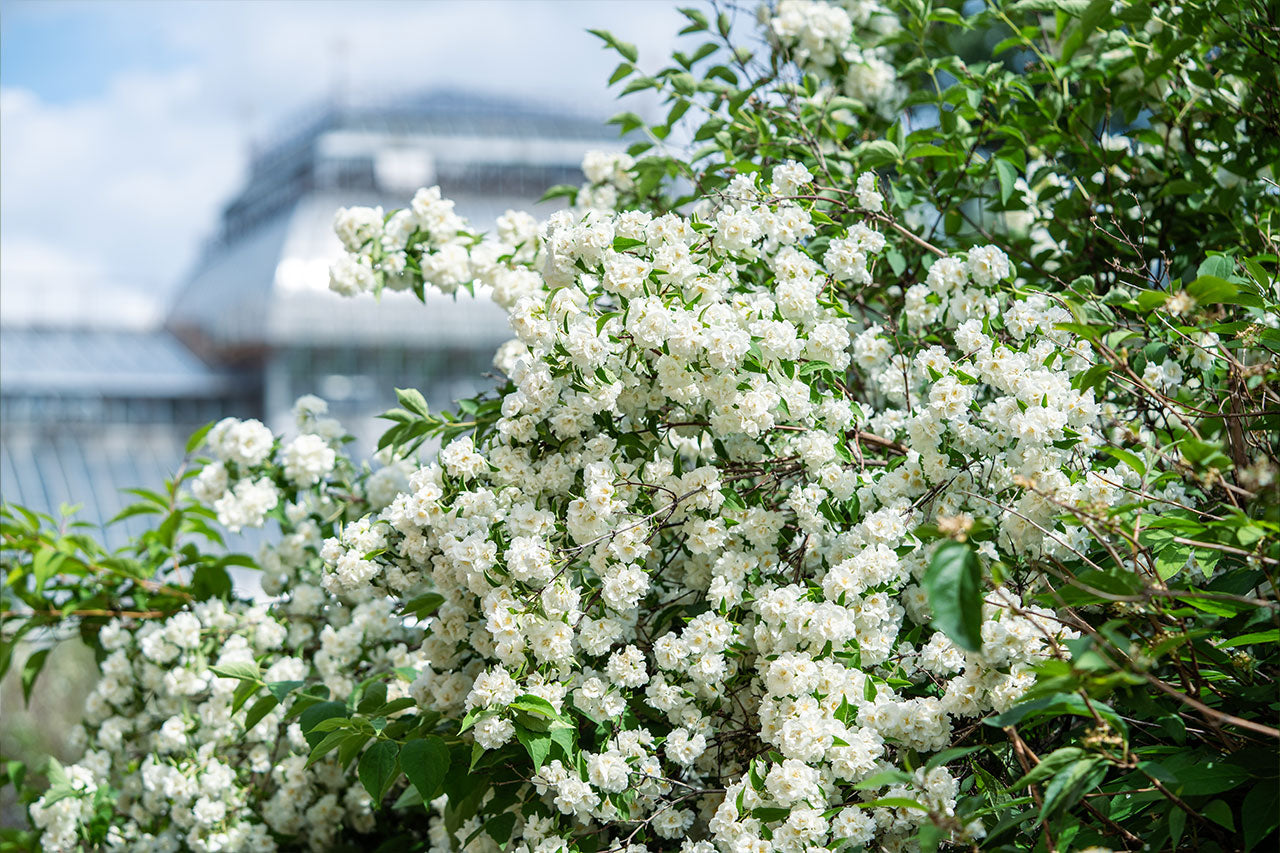
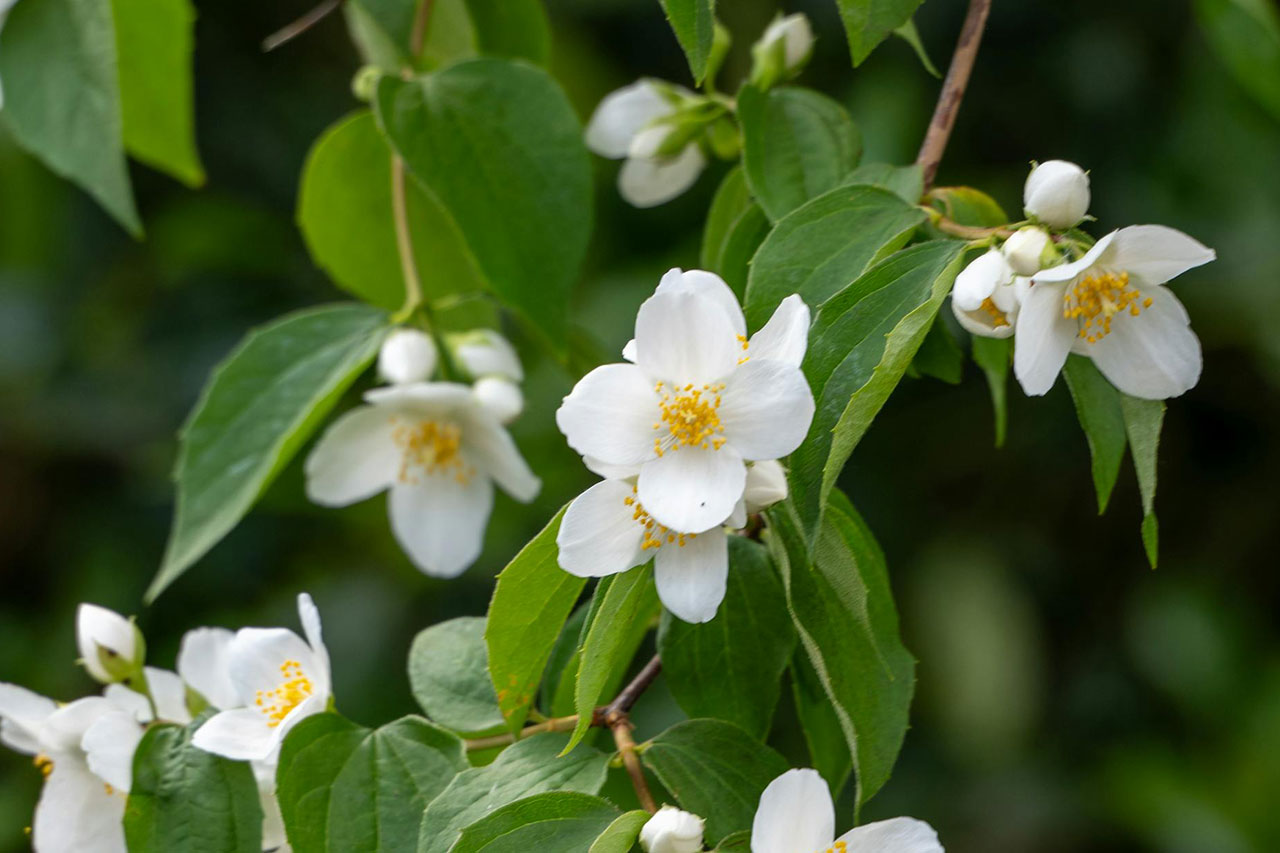
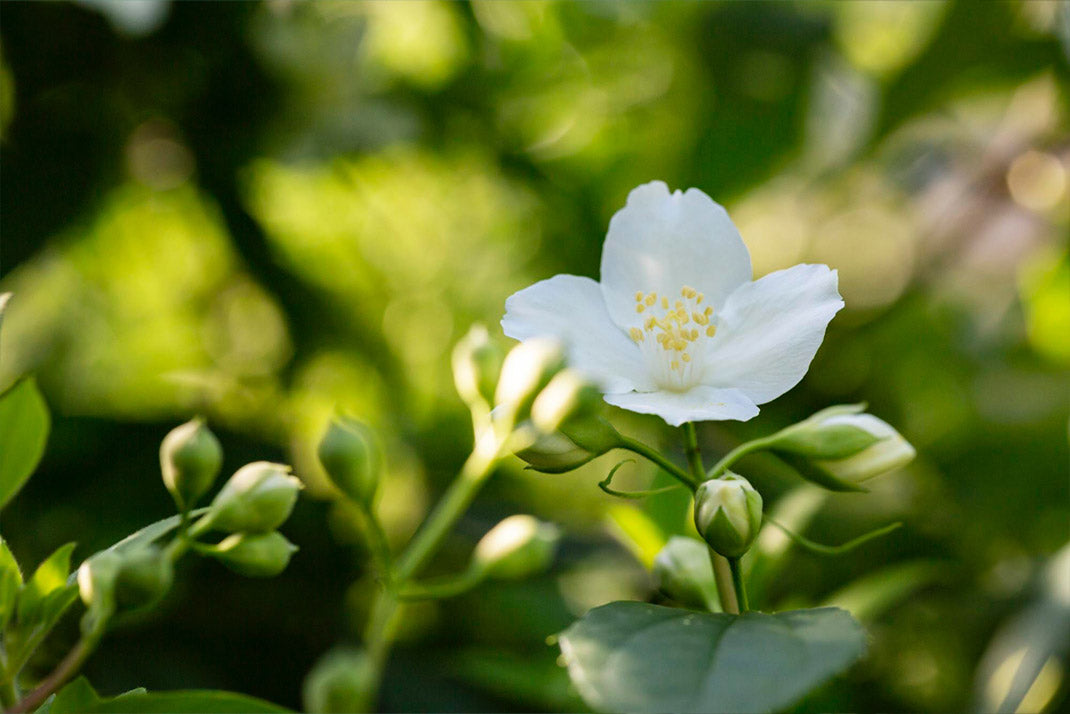
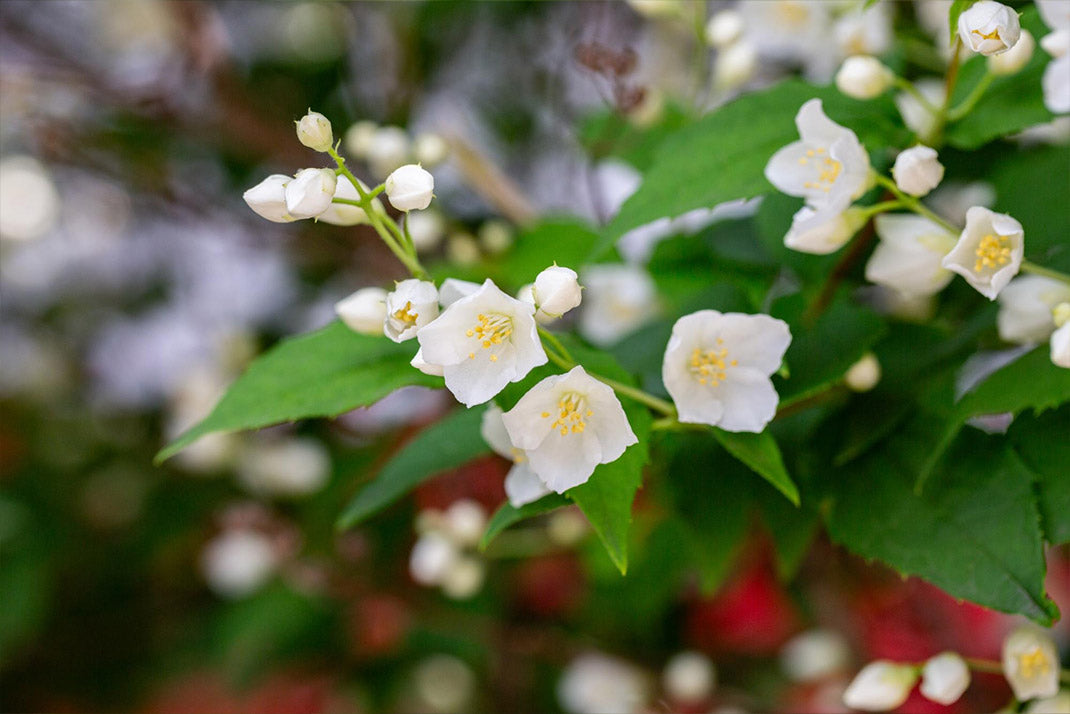
Main interest: Clouds of white, often strongly scented flowers in late spring and early summer, just when many shrubs are between seasons; foliage is deciduous and plain green (or golden on some forms) for the rest of the year.
Fragrance: Usually heavily scented – many forms carry a rich, sweet, orange‑blossom or citrus perfume that can fill a corner of the garden when in full bloom.
Hardiness: Very hardy across the UK (roughly RHS H6 or colder, down to at least –20°C), including exposed and coastal sites if drainage is good.
Care level: Easy – tolerant of most soils and aspects, with simple pruning after flowering and modest feeding; an ideal shrub for real‑world, low‑maintenance gardens.

The Simpson’s team raises the majority of our trees here at the nursery. For varieties outside our own production, we work with independent local growers we trust - all chosen for UK climate suitability.
Planting time: As container‑grown shrubs, philadelphus can be planted in most months when the soil isn’t frozen or waterlogged, with spring and early autumn usually the most forgiving times for both roots and gardener.
Watering: Water well in the first growing season and during dry spells in the second, so the rootball and surrounding soil don’t dry right out. Once established in decent soil, mock orange is reasonably drought‑tolerant but still appreciates the odd deep soak in a hot, dry spell.
Feeding: In borders, a spring mulch of garden compost or well‑rotted manure is usually all that’s needed. On very poor or sandy soils you can add a light sprinkling of a balanced, slow‑release fertiliser in early spring to support sturdy new growth and flowering.
Pruning: Philadelphus flowers on the previous year’s growth, so prune immediately after flowering – removing some of the oldest stems at the base and lightly shortening strong new shoots if needed to keep the shape tidy.
Winter: Fully hardy in the ground with no special winter protection required. A mulch over the root area is helpful on light soils, especially for newly planted shrubs, but mature plants generally sail through even cold winters without any fuss.
Availability is always changing, so please check with us if you have a particular variety in mind.
A refined mock orange with crisp white blossom and that wonderful orange-blossom scent that carries beautifully on warm evenings. Ideal near a path, patio or open window, where you’ll notice the perfume most. Lovely in mixed shrub borders as a “scent anchor” for early summer.
Compact and mound-forming, smothered in white flowers with a rich, sweet fragrance. Perfect for smaller gardens, front-of-border planting and large pots, where you can enjoy the scent up close. A great choice when you want classic mock orange perfume without a big shrub.
A smart, garden-friendly mock orange with plenty of clean white bloom and a deliciously sweet scent. Excellent for mixed borders, cottage-style planting and scent-led areas near seating. It brings that classic early-summer “jasmine-orange” feel and sits comfortably among roses and perennials.
A charming compact variety with delicately tinted pink-tinged flowers and a surprisingly strong fragrance for its size. Ideal for pots, small borders and courtyard gardens, especially near seating. A lovely way to add perfume and a softer colour note to early summer planting.
Neat and compact, with clean white flowers and a wonderfully concentrated mock orange scent. Perfect by patios, steps and doorways, or in pots where fragrance is the main event. It’s a brilliant small-space shrub for delivering that classic early-summer perfume in a tidy form.
A frothy, white-flowering mock orange with a relaxed, cottage-garden look and a lovely sweet fragrance. Excellent in mixed shrub borders where the flowers read as a soft, airy cloud. Beautiful near seating, and especially effective when planted where you’ll pass it often on warm summer days.
Golden foliage brings brightness from spring onwards, making this as valuable for leaf colour as for flower. When it blooms, the white flowers stand out strongly against the gold leaves and bring that classic mock orange perfume. Superb for brightening borders and pairing with darker evergreens.
A real classic, with white flowers often marked by a soft purple blotch at the centre—subtle, elegant and a little bit special. The fragrance is delicious, sweet and citrusy. Perfect near a path or patio, and wonderful in mixed borders where you want scent with a refined twist.
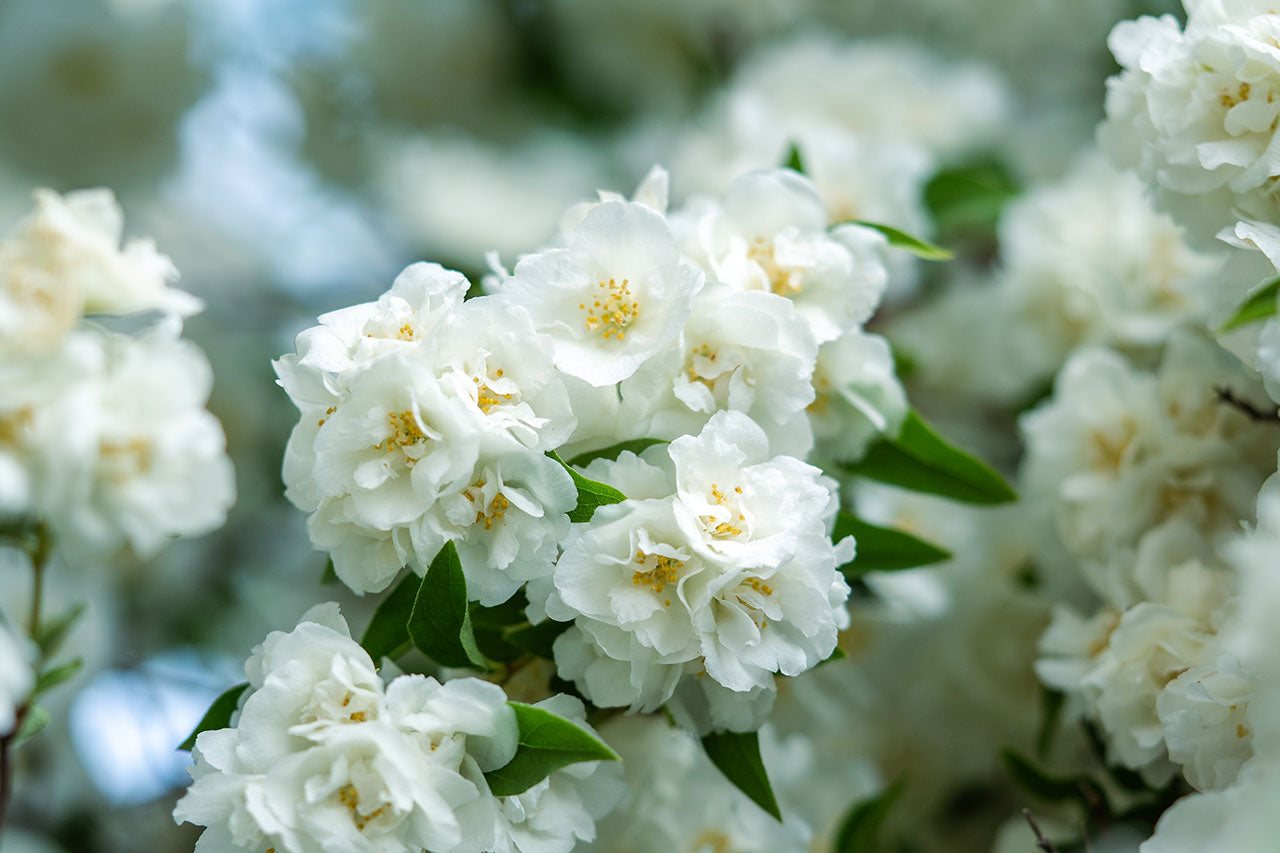
A compact, tidy mock orange with fuller, double white blooms that give a “snowy” look in early summer. The flowers sit nicely against green foliage and bring a lovely sweet scent. Ideal for smaller gardens and borders, especially where you want a neat shrub that still feels generous in flower.
A wonderfully generous, old-fashioned mock orange with large, double white blooms and strong perfume that fills the garden in early summer. Ideal for cottage-style borders and informal planting, where it creates a romantic froth of flower. A brilliant choice when fragrance is the priority and you want real impact.