

Phormium is one of those plants that gives you structure in all twelve months of the year. The long, sword‑like leaves grow in strong, upright fans that look good from every angle, bringing a clean, architectural feel to borders, gravel gardens and pots. Whether you choose a tall, statuesque variety or a compact form for the front of a bed, that fan of foliage acts like a living piece of sculpture, anchoring looser planting around it. In winter, when so much else has vanished, a well‑placed Phormium keeps the garden feeling designed rather than bare.


Common name: New Zealand flax
Latin name: Phormium
Size in UK gardens: Compact forms around 60–90cm tall and wide; larger cultivars 1–2m or more in height and spread over time.
Best position: A sunny, reasonably sheltered spot – ideal in gravel beds, mixed borders, near ponds, or in large containers on patios and drives.
Soil: Free‑draining but not bone‑dry soil – sandy loam or improved clay; dislikes cold, heavy, waterlogged conditions, especially in winter.
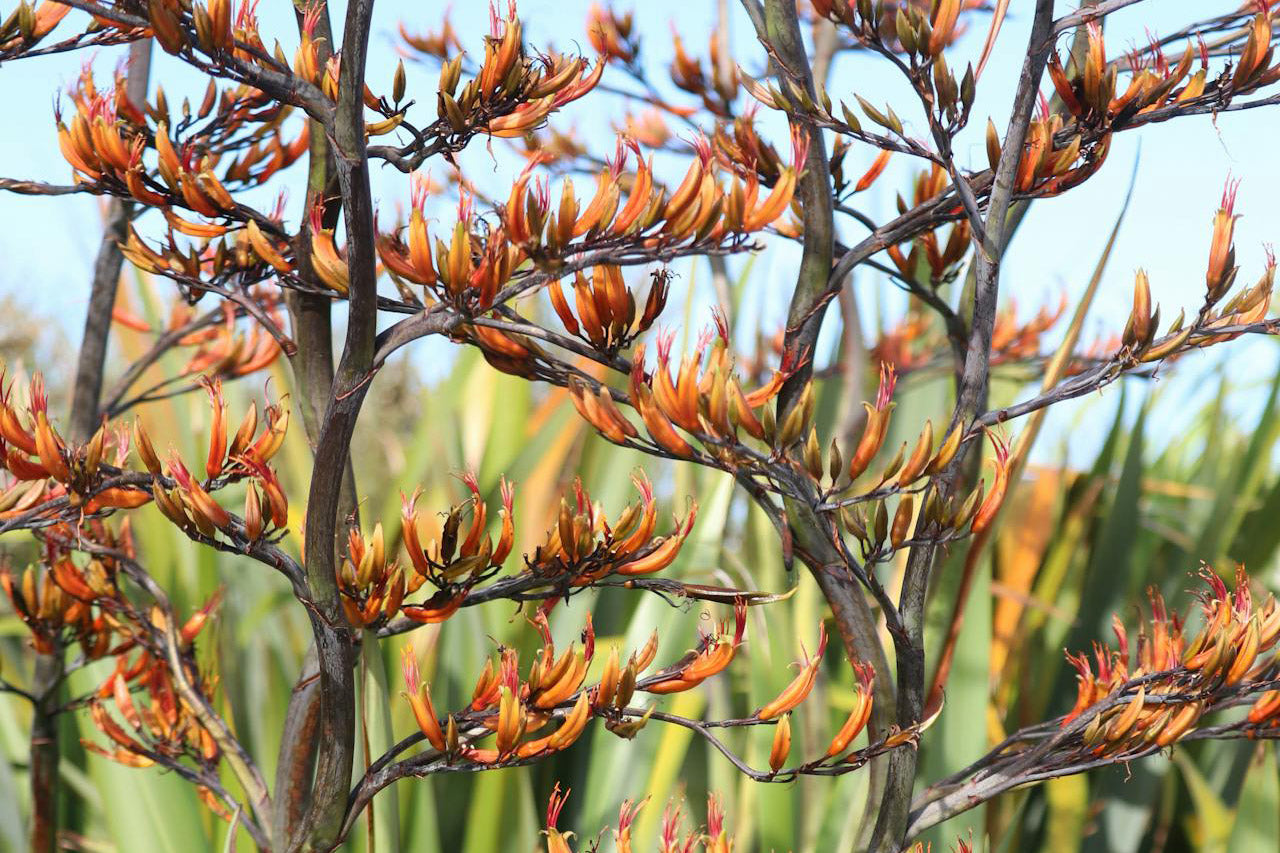
Main interest: Evergreen architectural foliage in a wide range of colours and stripes; tall flower spikes on mature plants in summer.
Fragrance: Not grown for scent – appeal is mostly visual and structural.
Hardiness: Generally hardy in milder parts of the UK and in sheltered gardens; can suffer in severe winters, especially on heavy, wet soil or very exposed sites.
Care level: Moderate – easy in the right spot, with simple maintenance but care needed in very cold or waterlogged conditions.

The Simpson’s team raises the majority of our trees here at the nursery. For varieties outside our own production, we work with independent local growers we trust - all chosen for UK climate suitability.
Planting time: As container‑grown plants, Phormiums can be planted in most months when the soil isn’t frozen or waterlogged; spring and early autumn are usually easiest, giving roots time to settle before summer heat or winter cold.
Watering: Water regularly in the first year or two so the rootball and surrounding soil don’t dry out completely, especially in very free‑draining or raised beds and in containers. Once established in the ground, New Zealand flax is fairly drought‑tolerant but will look fresher with the occasional deep soak during long dry spells.
Feeding: In decent soil, Phormium doesn’t need heavy feeding. A spring mulch of compost or well‑rotted manure is usually enough. On poor, sandy ground or in pots, a light balanced feed in spring and perhaps a mid‑summer top‑up will keep foliage looking strong and colourful.
Pruning: There’s no formal pruning – simply remove dead, damaged or badly scorched leaves at the base, cutting as low as you can. On older plants you can thin out the oldest fans if the clump becomes congested, and divide if the plant has clearly formed separate crowns.
Winter: In milder gardens, Phormium usually sails through with little attention beyond mulch and a spring tidy. In colder or more exposed spots, improve drainage, choose a sheltered aspect and consider fleece wrapping young or particularly showy cultivars during severe cold snaps.
Availability is always changing, so please check with us if you have a particular variety in mind.
A bold, architectural flax with bright striping that brings instant colour and structure, even in winter. Perfect for pots, gravel gardens and contemporary borders where strong foliage does the design work. It looks especially good against stone, brick and darker evergreens for crisp contrast.
Deep, rich foliage gives this flax a dramatic, modern feel—like living sculpture in the border. Ideal as a statement plant in a pot or as a strong accent in mixed planting, where it adds depth and contrast. Particularly striking alongside silvers, grasses and pale paving.
Warm apricot and peach tones bring a softer, more glowing look than many flaxes, adding colour without harshness. It’s superb in pots and sunny borders, especially paired with grasses and grey foliage where the warm striping feels luminous. A lovely choice for patios and courtyards.
Compact and well behaved, with bronzy foliage that gives year-round structure in smaller spaces. Perfect for containers, front borders and gravel planting where you want architectural form without a huge plant. It’s an excellent “small accent” flax that keeps a scheme looking smart through every season.
Bold golden striping gives strong definition and a sunlit feel, even in winter. Excellent as a feature in a pot, or as a bright accent among deeper greens in the border. It’s a confident, architectural plant that helps a scheme look designed and deliberate without relying on flowers.
A brilliantly coloured flax with strong striping that reads like a little firework of foliage, bringing energy and structure year-round. Perfect for pots, contemporary borders and gravel planting where you want a real focal point. It pairs beautifully with grasses and simple planting that lets it shine.
A dramatic flax with bold pink tones that add a glamorous, modern edge to planting. Ideal as a statement plant in a pot, or used sparingly in borders as a colour accent. It looks superb against dark foliage, pale stone and minimalist planting where its colouring feels crisp and intentional.
One of the darkest flaxes, with near-black leaves that bring real drama and a strong architectural silhouette. Perfect for contemporary gardens, pots, and as a contrast plant among paler foliage. It gives year-round structure and looks especially striking beside silver plants and light paving.
A colourful, strongly striped flax that brings instant structure and a confident splash of foliage colour. Excellent as a pot feature or planted in drifts through modern borders, where it creates rhythm and definition. It’s a great choice when you want year-round impact without flowers.
Slightly softer and more refined in feel, with bright striping that still brings plenty of lift and interest. Ideal for pots and mixed planting where you want architectural foliage that doesn’t feel too heavy. It pairs beautifully with grasses and airy perennials for a modern, relaxed look.
A classic choice with warm pink and bronze tones that look especially good in evening light. It brings year-round colour and strong upright form, making it perfect for patios, pots and sunny borders. A wonderful plant for adding warmth and structure to contemporary planting schemes.
A crisp, variegated flax with strong striping that gives borders and containers an instant “designed” feel. It’s brilliant in gravel gardens and modern schemes, adding bright contrast and architectural form all year. Particularly effective against dark evergreens, where the stripes read cleanly and clearly.