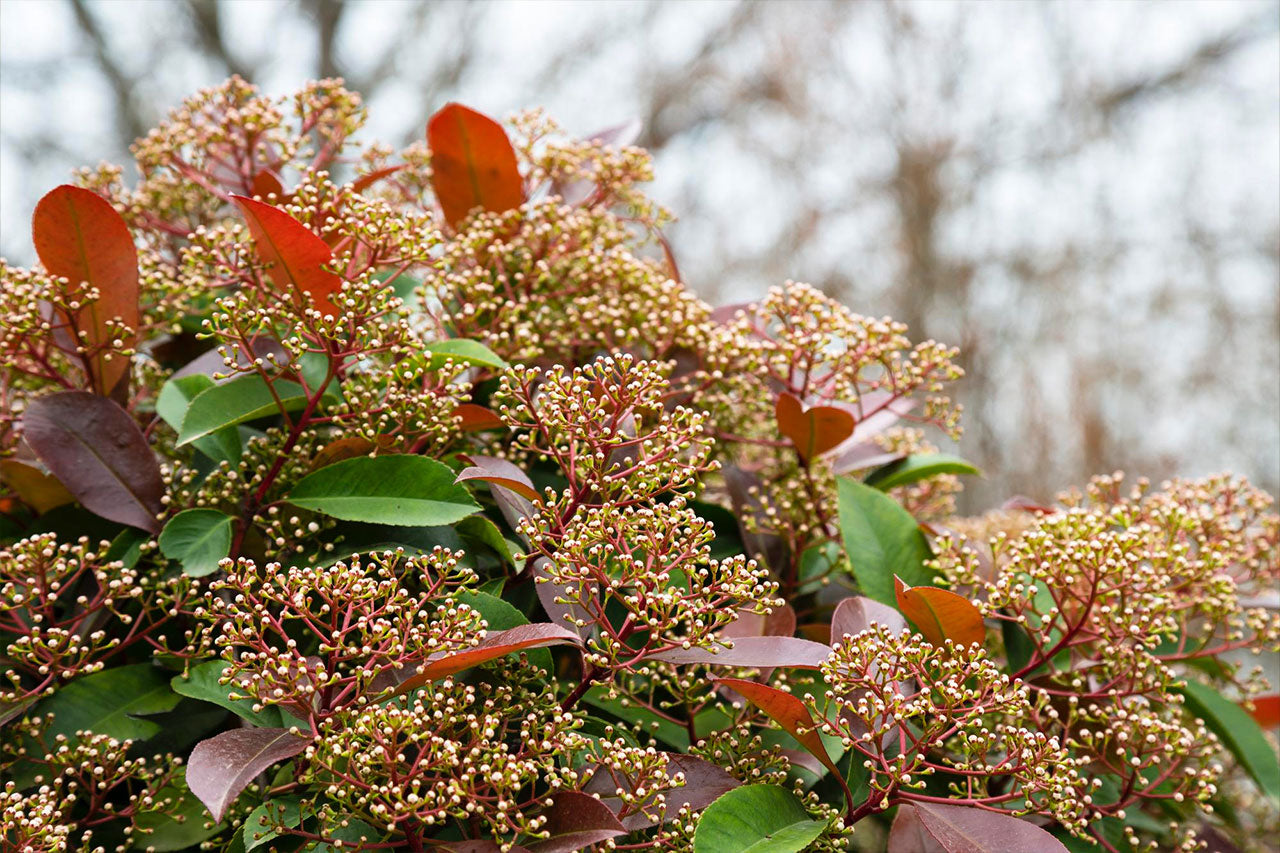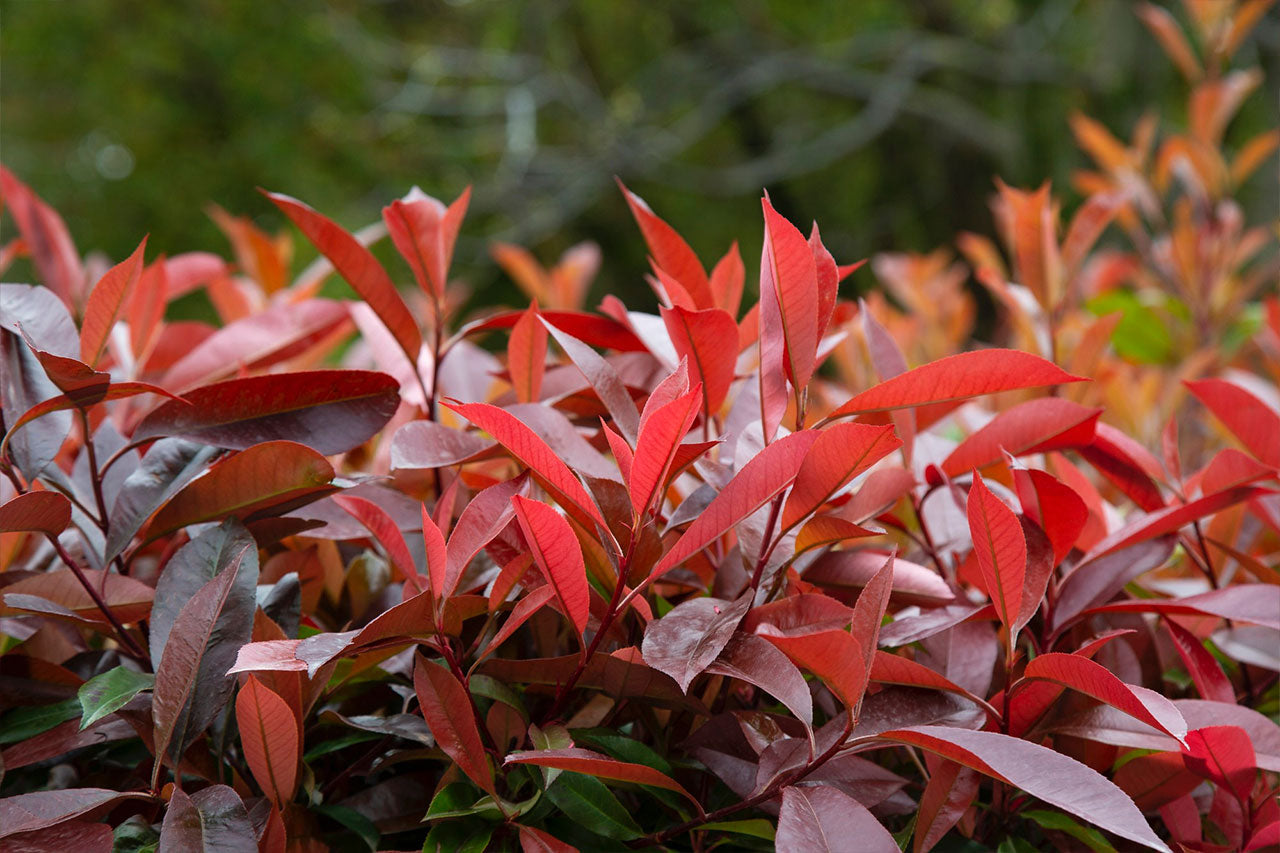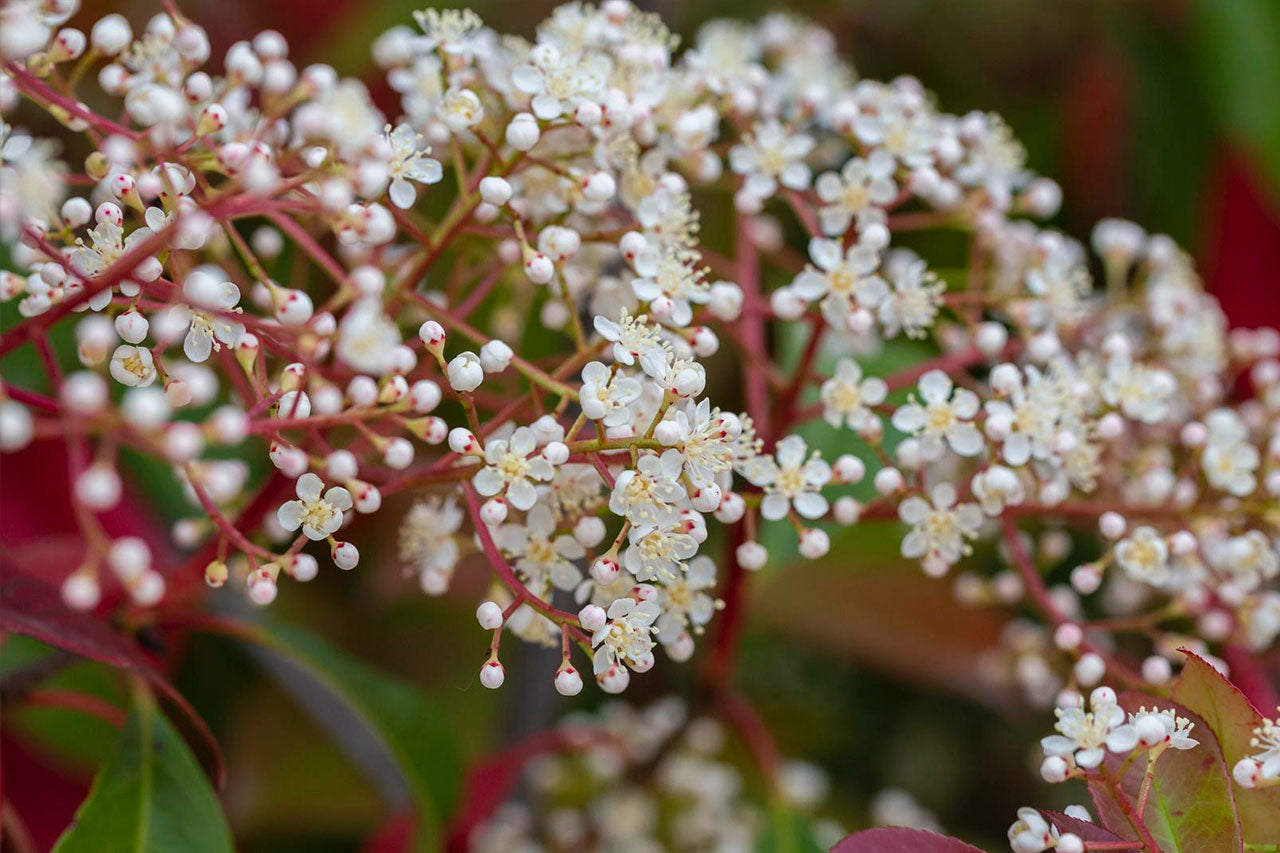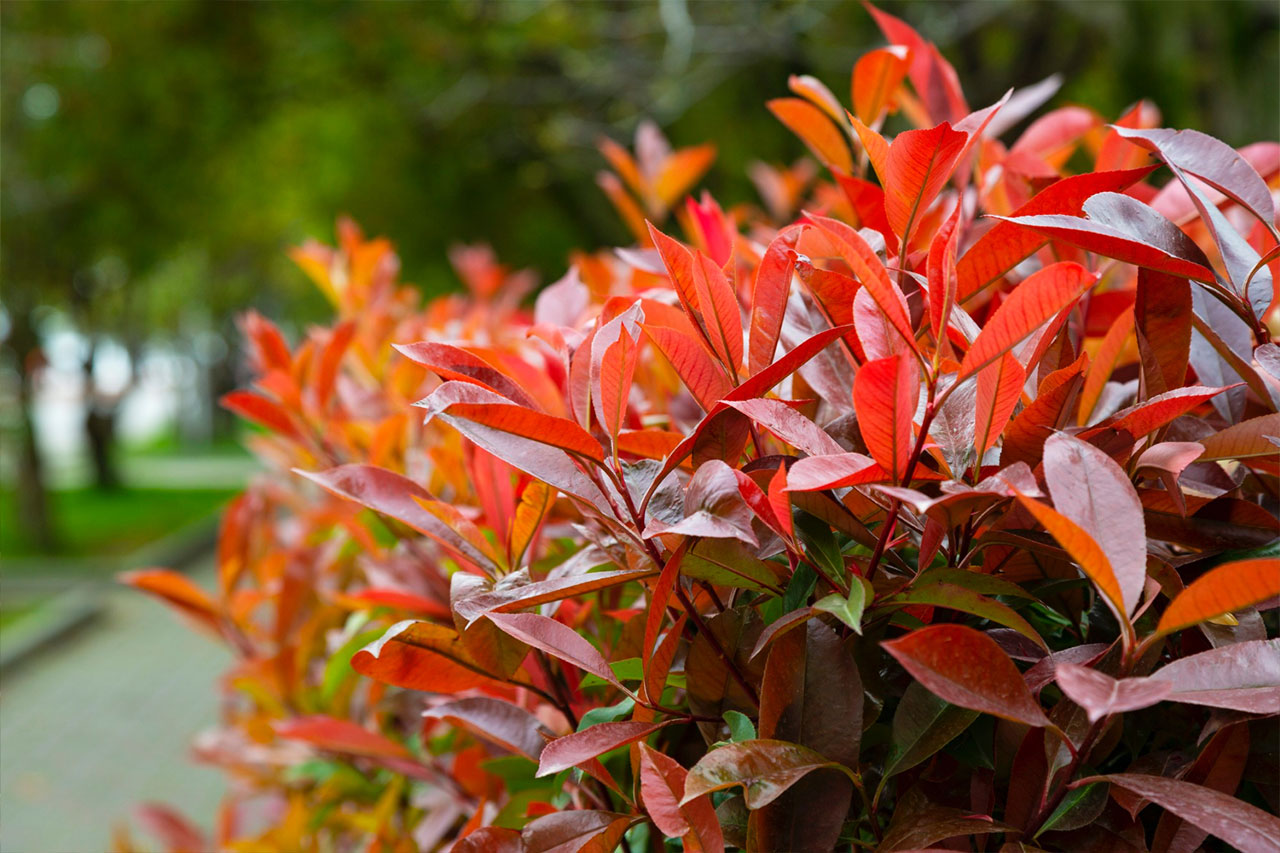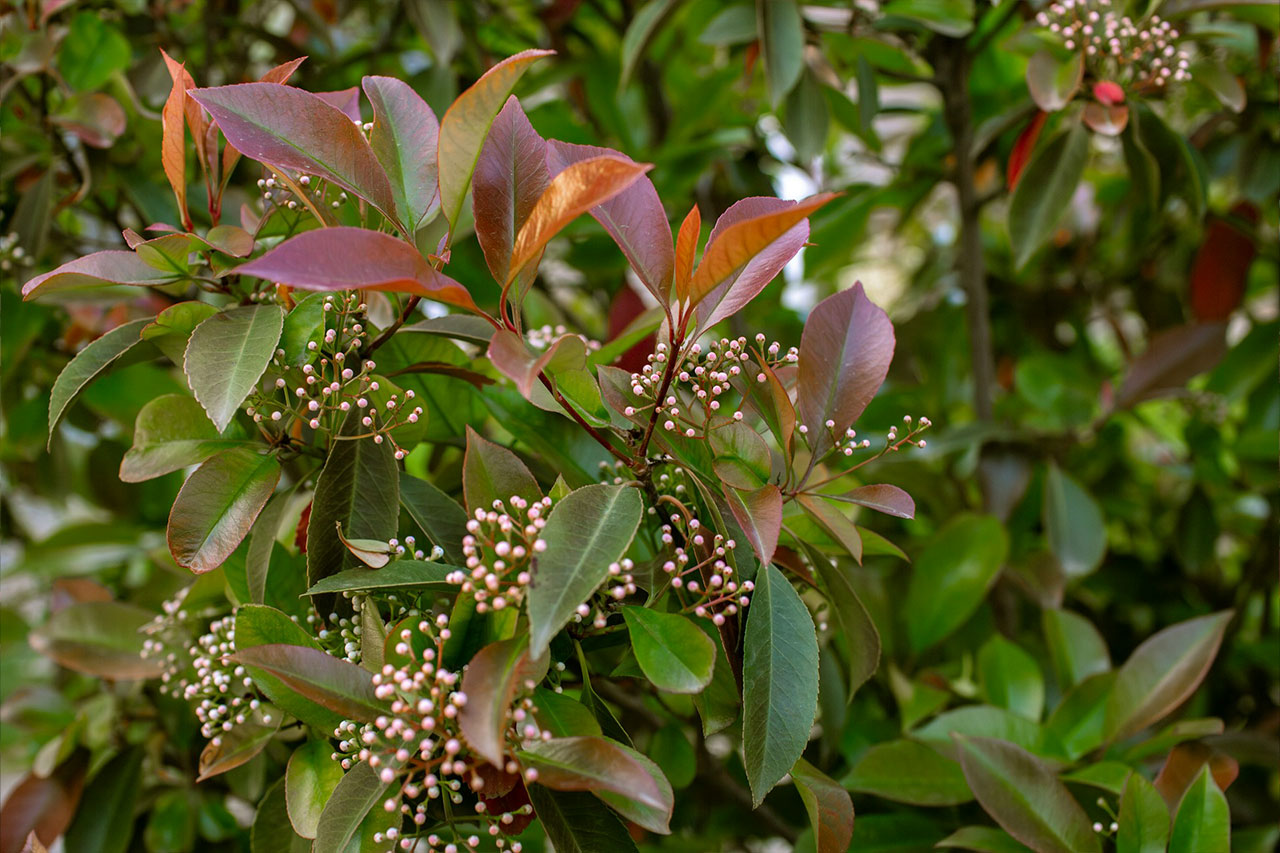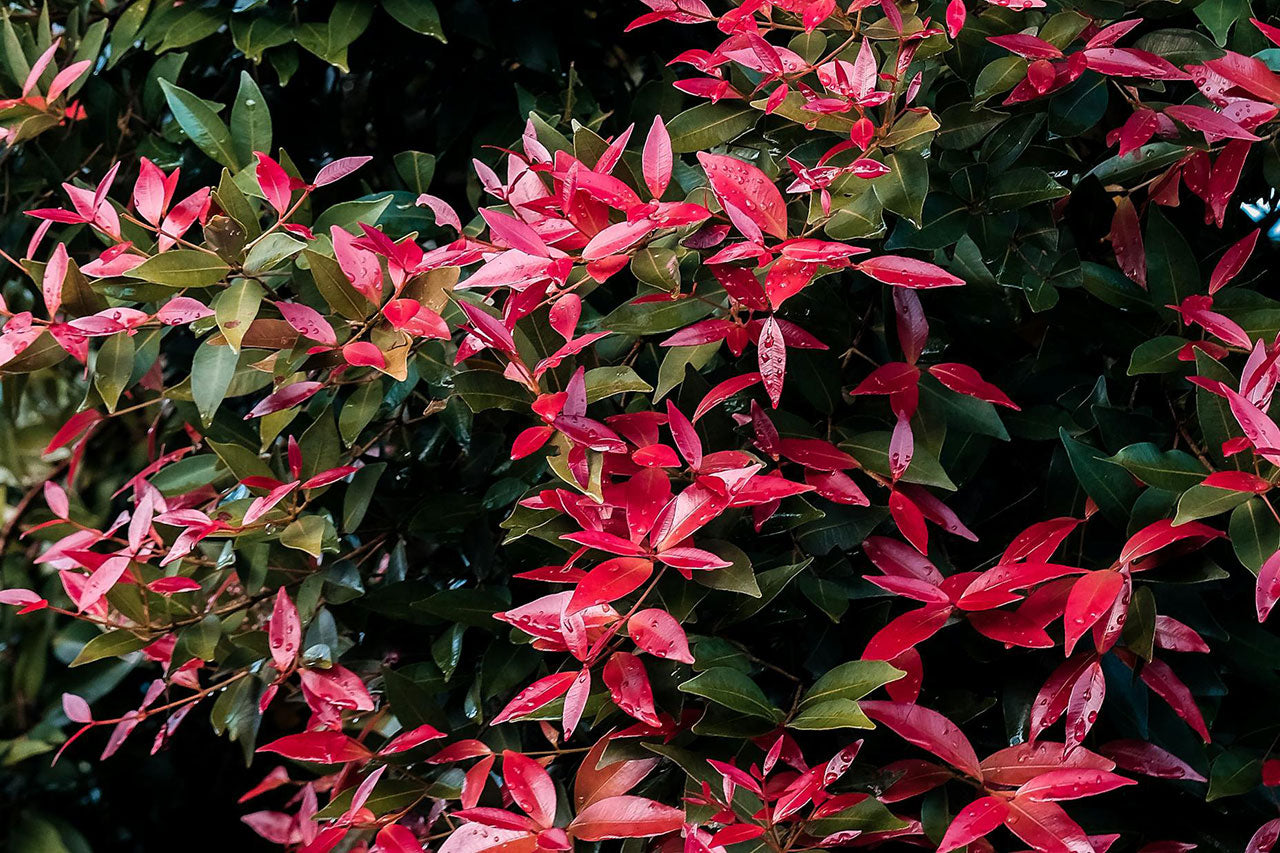

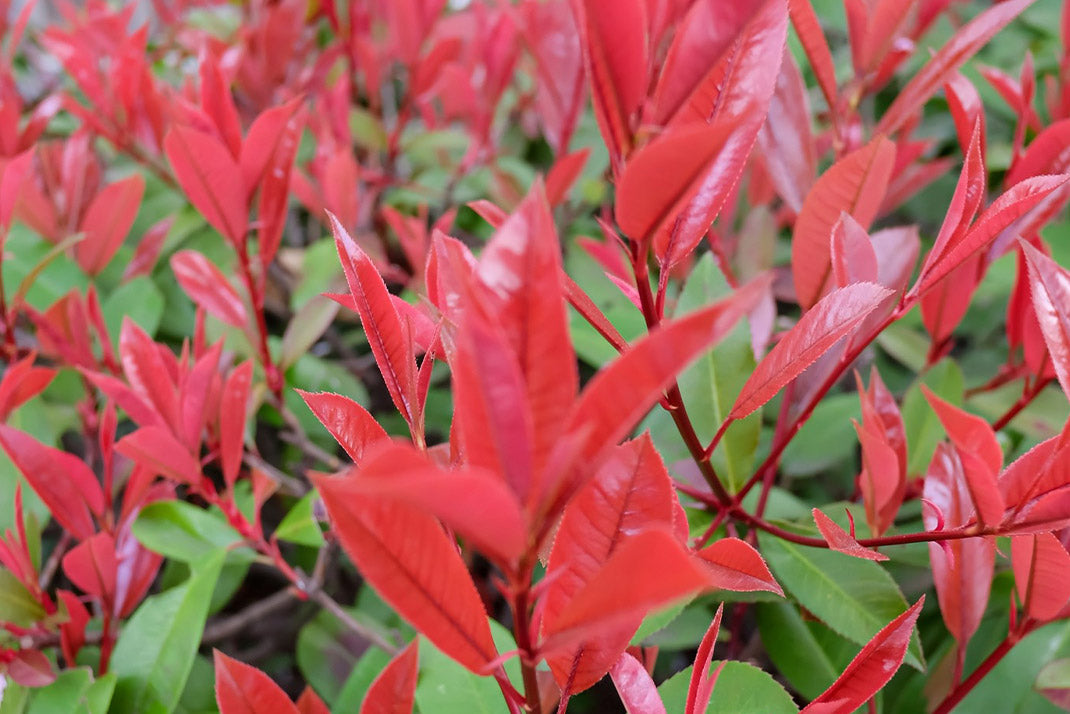
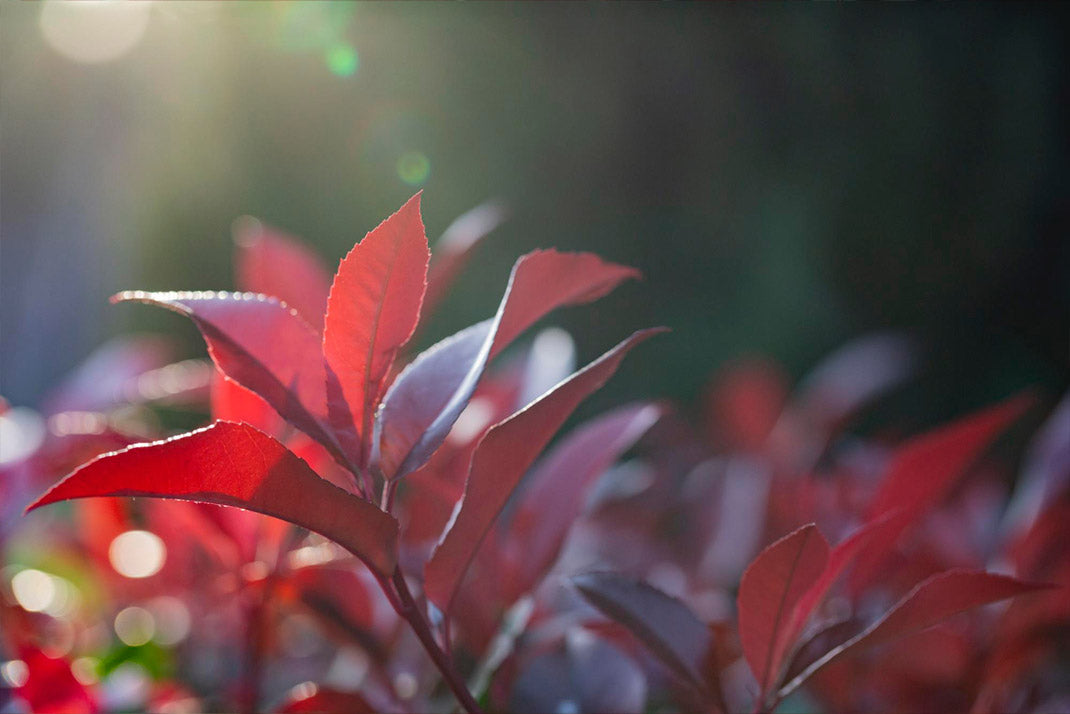
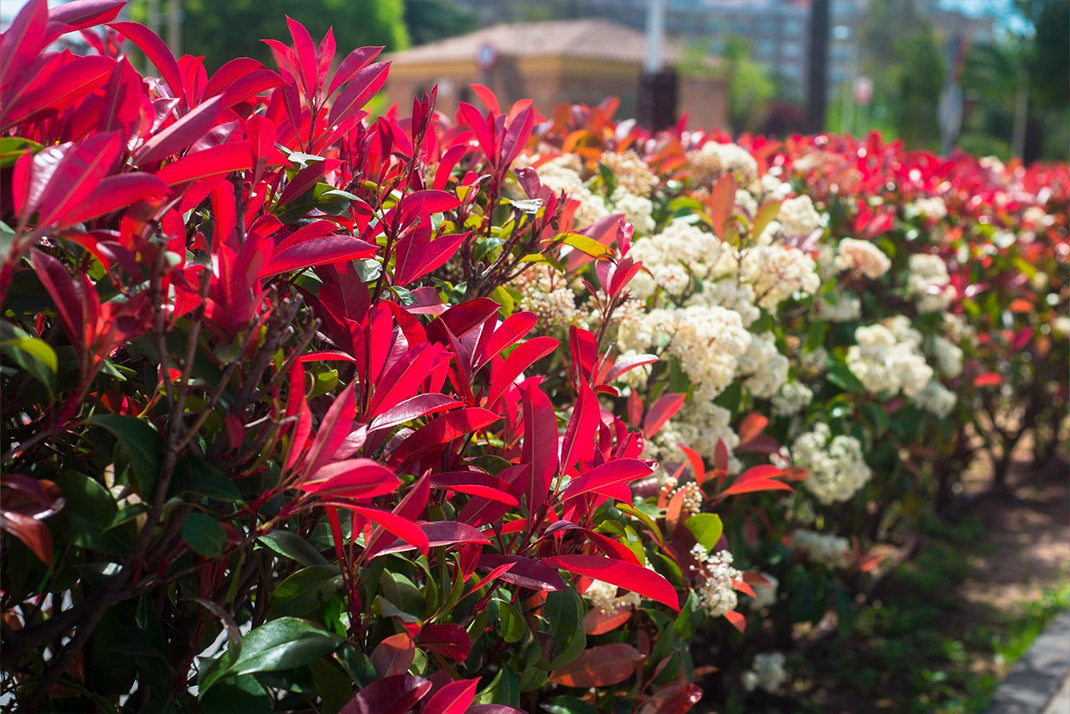
The real joy of photinia is that moment in spring – and again after a timely trim – when the whole plant seems to light up with fresh red growth. Those young leaves glow against the older dark green foliage, catching low sun and instantly lifting a dull boundary or driveway. Because the colour comes from the foliage rather than flowers, it lasts far longer than a brief blossom show. Even on a grey Cambridgeshire day, that bright flush can make a small garden feel suddenly more alive and cheerful.
Common name: Photinia
Latin name: Photinia
Size in UK gardens: Commonly 2.5–4m tall and wide if left to develop, but easily maintained anywhere between about 1–4m for hedges, screens and specimens; very old or tree‑trained plants can grow taller.
Best position: Full sun or light partial shade, with the brightest red foliage and most flowers in a sunny, reasonably sheltered spot.
Soil: Fertile, humus‑rich, moist but well‑drained soil – from decent loam to improved clay or sand – avoiding spots that stay waterlogged in winter.
Main interest: Striking flushes of red young foliage in spring and again after pruning, maturing to glossy dark green leaves, plus clusters of small white flowers in late spring that may be followed by berries.
Fragrance: Flowers are lightly scented close up, but photinia is grown mainly for its foliage colour and evergreen presence rather than strong perfume.
Hardiness: Generally fully hardy across the UK (RHS H5, roughly –15°C to –10°C) once established, especially in well‑drained soil and a reasonably sheltered position.
Care level: Easy to moderate – vigorous enough to establish well, but not difficult; responds well to pruning, with most of the work simply keeping the size and shape you want.

The Simpson’s team raises the majority of our trees here at the nursery. For varieties outside our own production, we work with independent local growers we trust - all chosen for UK climate suitability.
Planting time: As container‑grown plants, photinias can be planted in most months when the soil is workable and not frozen or waterlogged, with spring and early autumn usually the kindest times for quick establishment.
Watering: Water thoroughly through the first growing season and during dry spells in the second, so the rootball and surrounding soil don’t dry out completely. Established plants in decent soil cope with ordinary dry spells but will perform and resist disease better if not left bone‑dry for weeks.
Feeding: In borders, a spring mulch of garden compost or well‑rotted manure is usually enough. On poor soils, or for hedges under pressure, a light scattering of a balanced, slow‑release fertiliser in spring can help maintain good colour and strong growth.
Pruning: Clip or prune in spring and again in late summer if you want to keep a neat hedge or encourage extra red flushes. Avoid very hard pruning in late autumn, as soft new growth may be caught by frost; major renovation is best done in late winter or early spring.
Winter: In the ground, established photinias normally need no special winter protection beyond a mulch on light soils. Container plants benefit from a sheltered position and pots raised on feet so they don’t sit in cold, saturated compost.
Availability is always changing, so please check with us if you have a particular variety in mind.


A compact photinia with vivid red new growth that appears in flushes, giving regular bursts of colour against the glossy green leaves. Neat and dense, it looks smart all year and suits smaller spaces beautifully. A great choice for low, colourful structure and evergreen polish without the bulk.
A striking variegated photinia, with leaves marbled in cream and green and flushed with pink on new growth. The effect is bright and decorative, like a shrub already dressed for the season. It brings instant colour and pattern, making it ideal as a feature in borders or a standout evergreen statement.
The classic photinia, loved for its glossy evergreen foliage and its dramatic flush of bright red new leaves. The colour effect is bold and cheerful, giving structure with a splash of drama. A superb choice for smart, modern planting—excellent as a specimen shrub or repeated for a strong visual rhythm.
A tighter, more compact photinia with glossy evergreen leaves and rich red new growth, but in a neater, denser outline. It gives the same bold colour contrast as ‘Red Robin’ while staying more controlled and tidy. Ideal when you want evergreen structure and red flushes, but with a more compact presence.