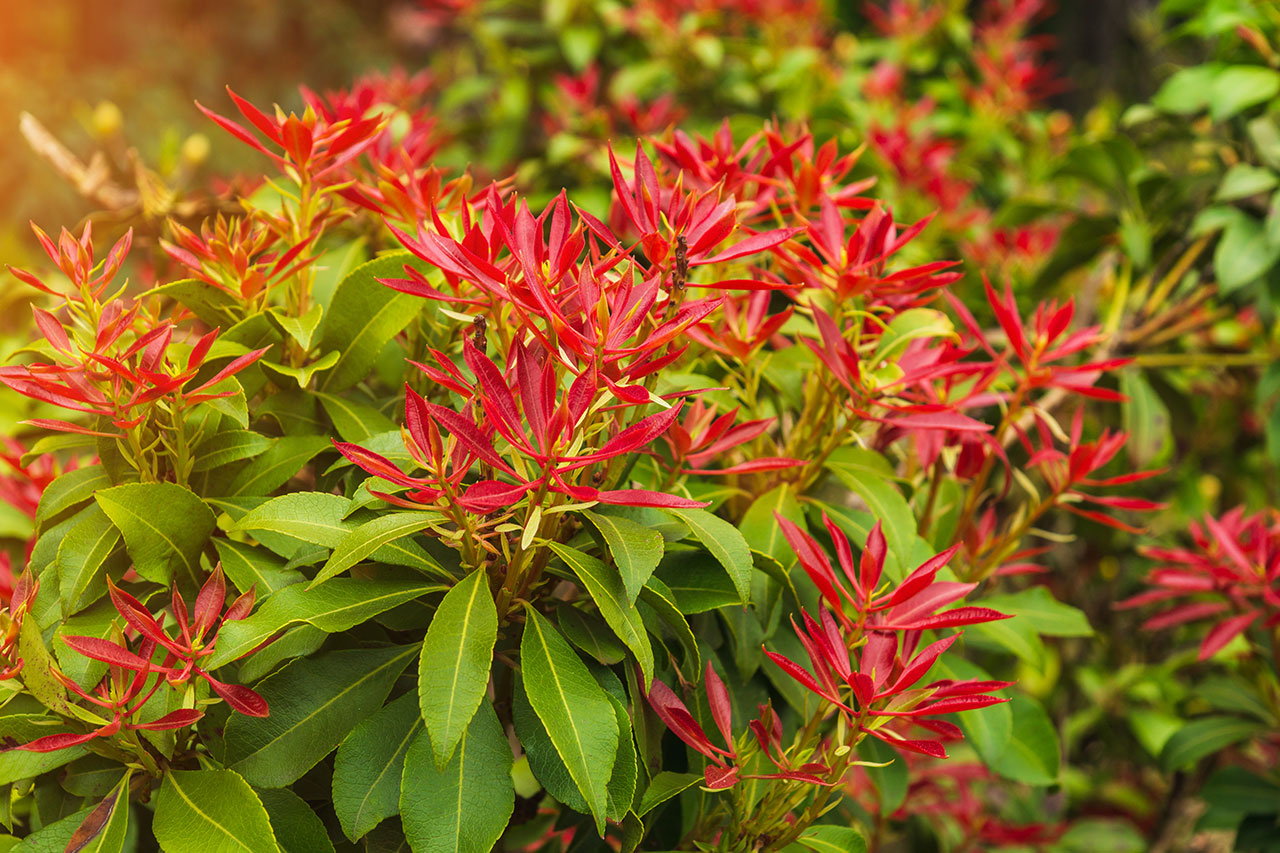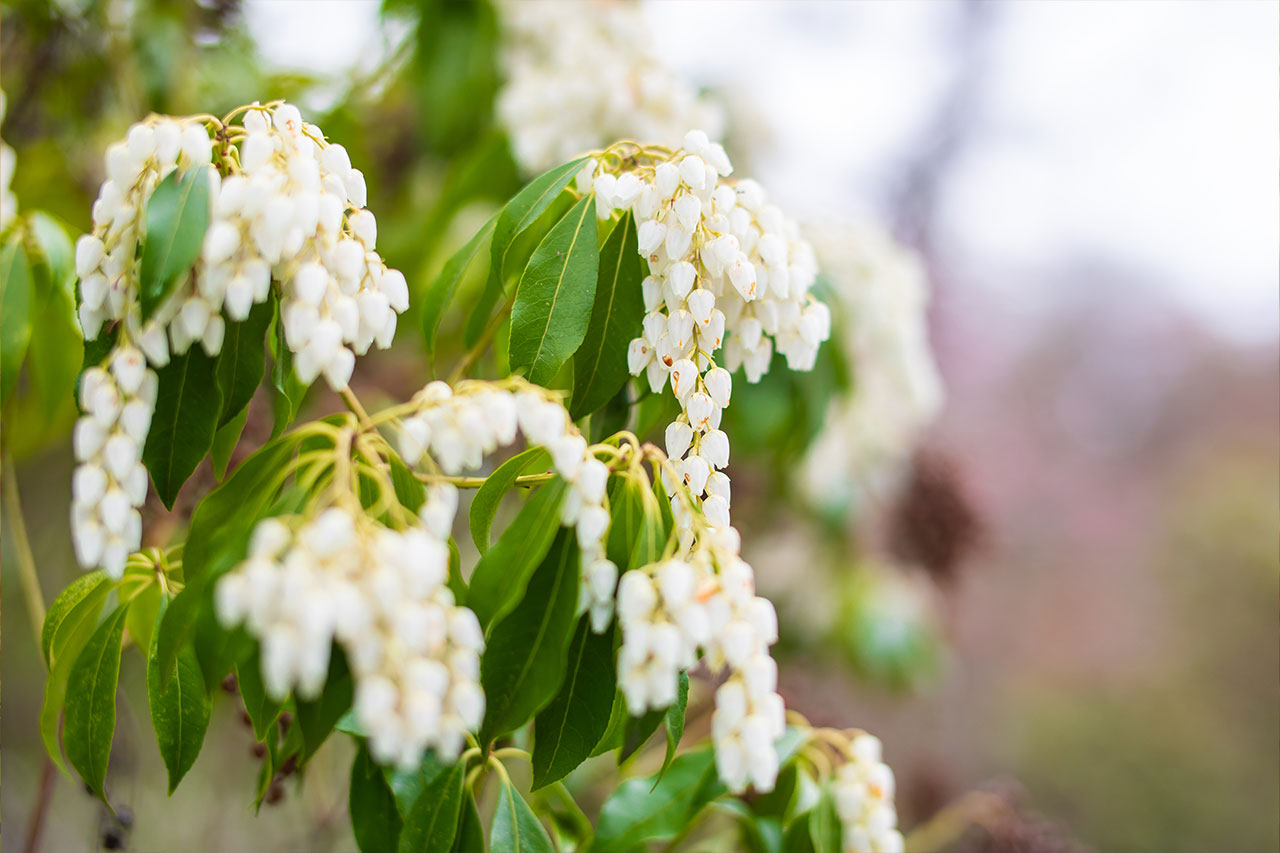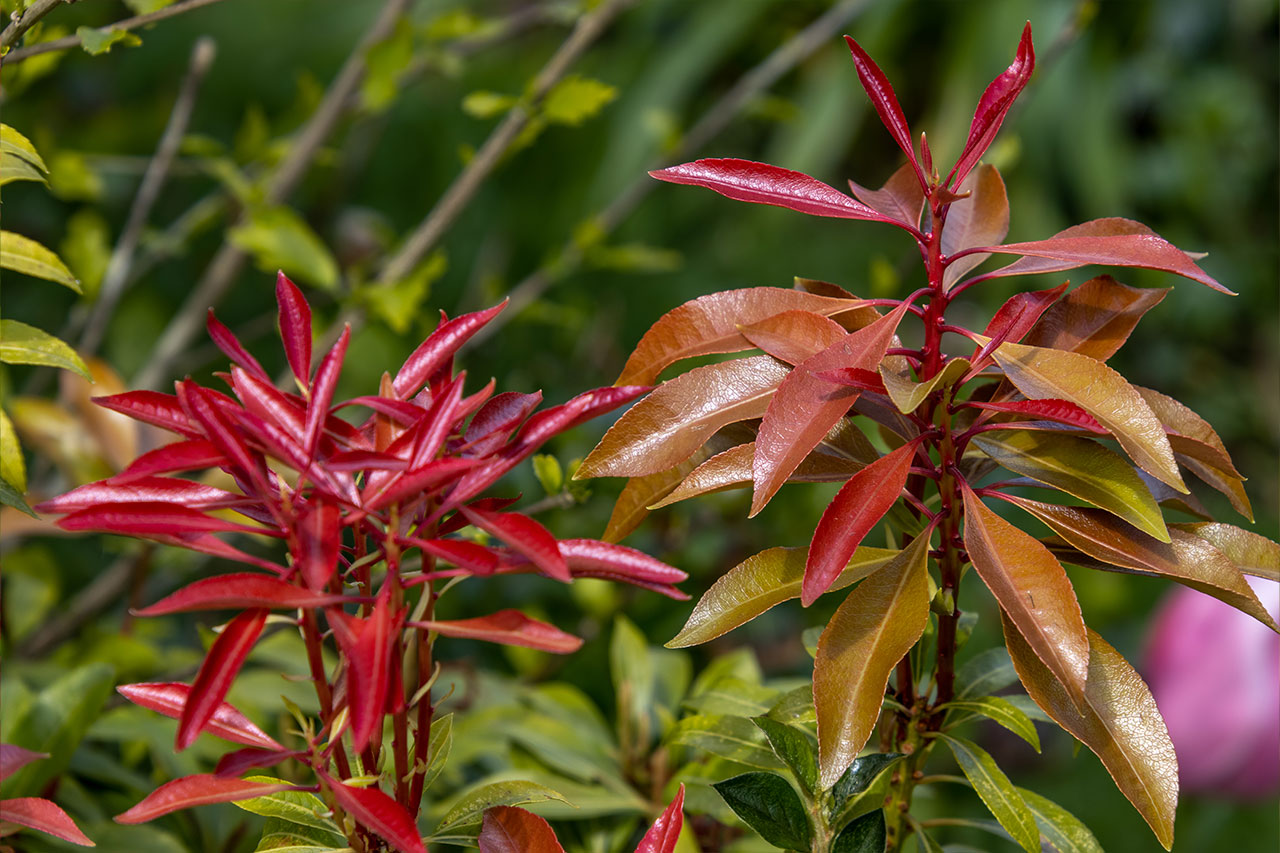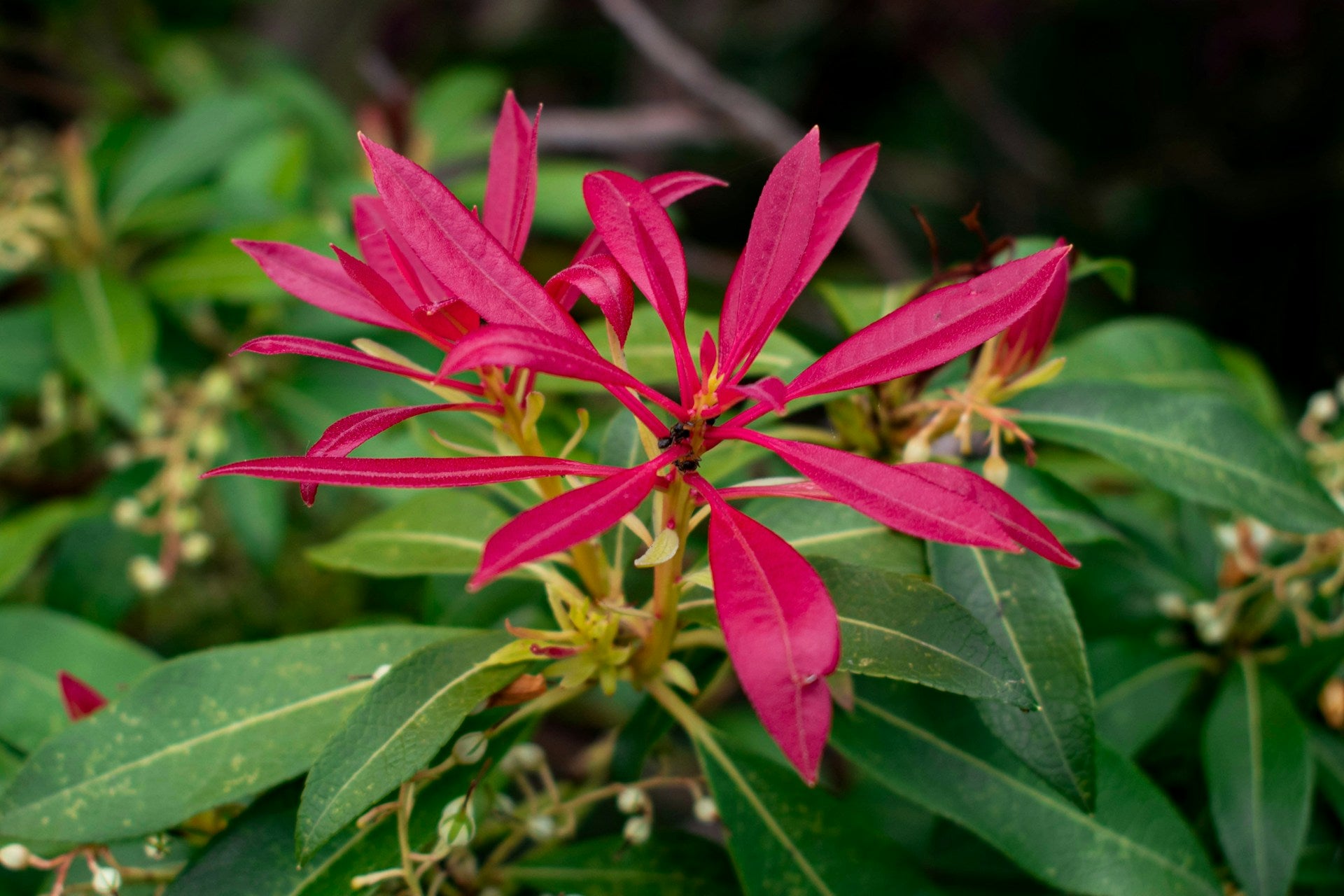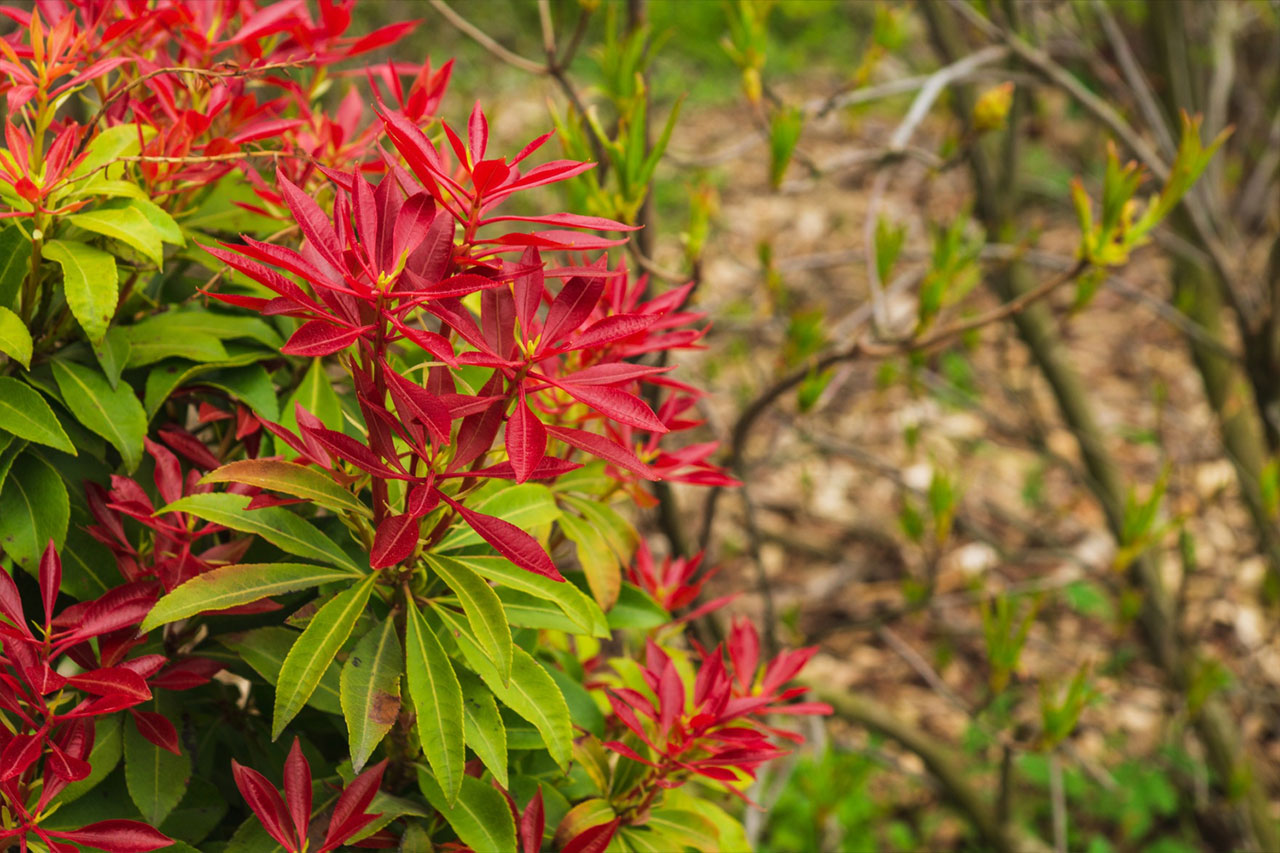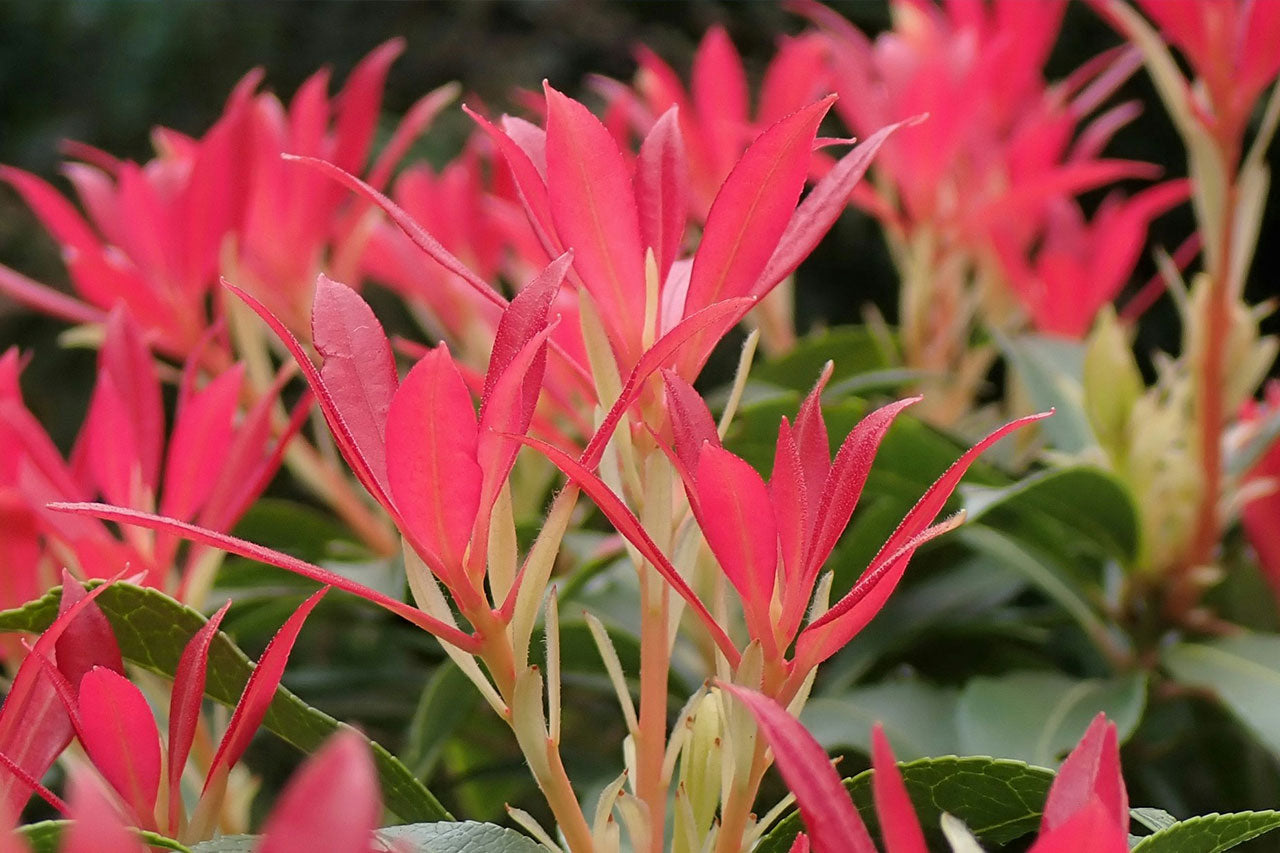

Pieris is one of those shrubs that rewards you for looking closely. In spring, the new leaves often emerge a brilliant scarlet or copper, gradually softening through pinks and creams before settling to rich green. At the same time, strings of white or pink bells dangle from the branch tips like jewellery. Because each shoot is at a slightly different stage, you can have several colours on the same plant at once, giving a wonderfully layered effect just when the garden most needs a lift.
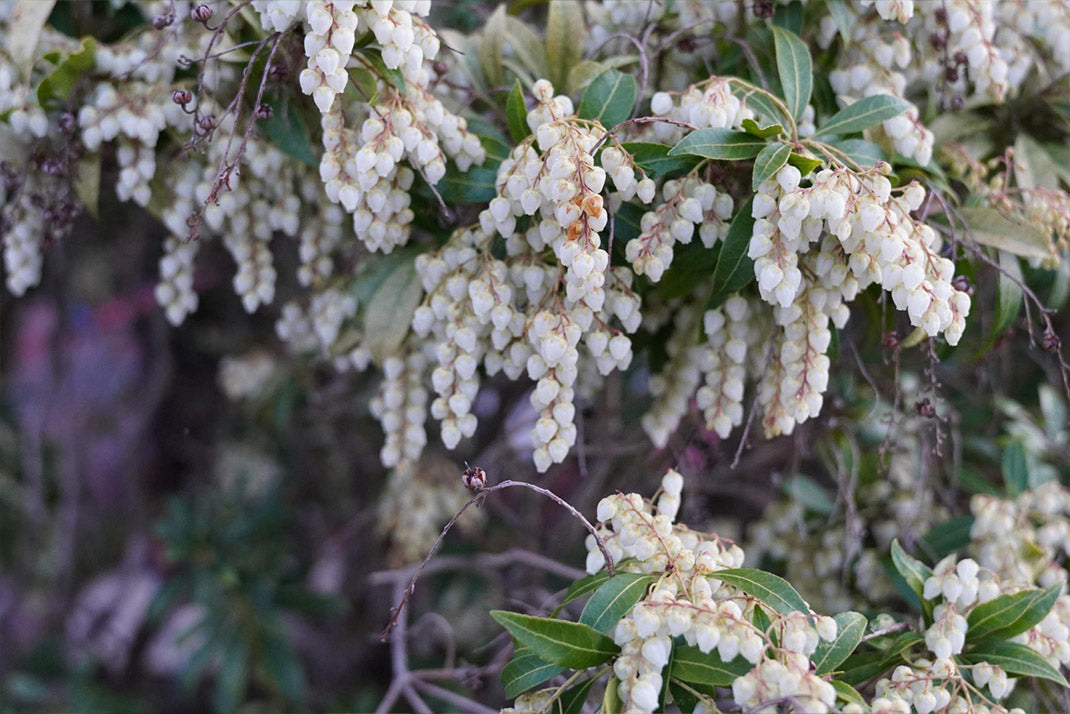
Common name: Lily‑of‑the‑valley
Latin name: Pieris
Size in UK gardens: Typically 1–3m tall and wide over time, depending on variety; compact forms may stay around 1–1.5m, while larger selections can eventually reach 2.5–4m after 10–20 years.
Best position: A sheltered spot in partial shade or dappled light is ideal, with protection from cold, drying winds and strong early morning sun; many varieties also cope with full sun if the soil stays reliably moist.
Soil: Moist but well‑drained, humus‑rich, acidic soil – very similar to conditions preferred by rhododendrons – or ericaceous compost in containers where garden soil isn’t lime‑free.
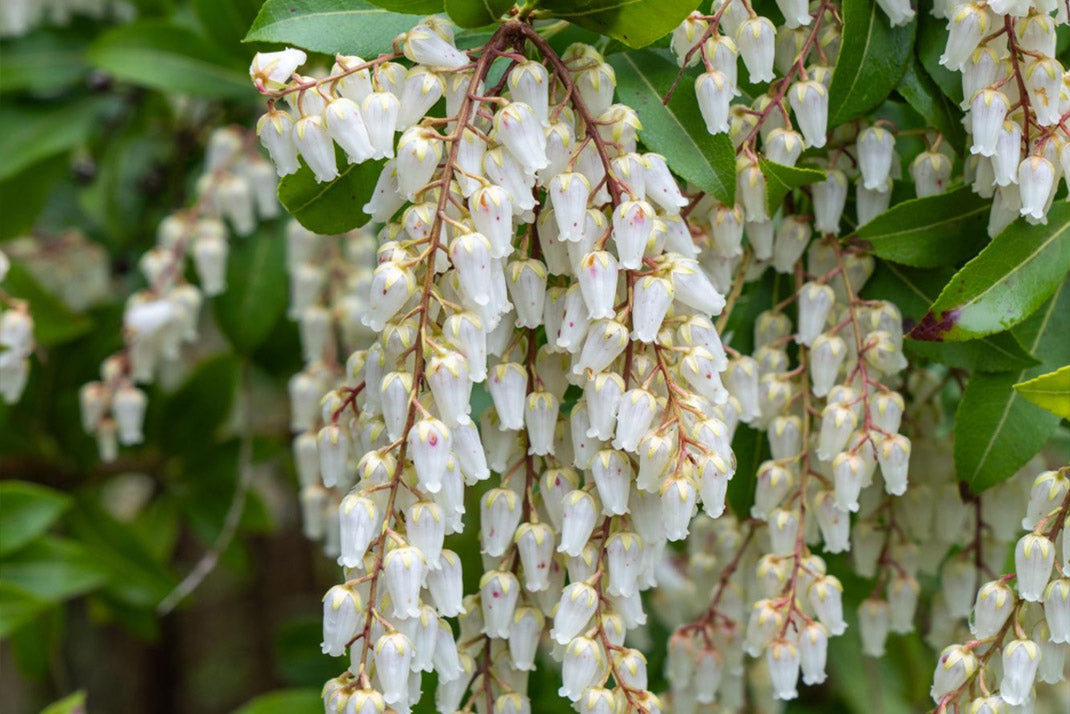
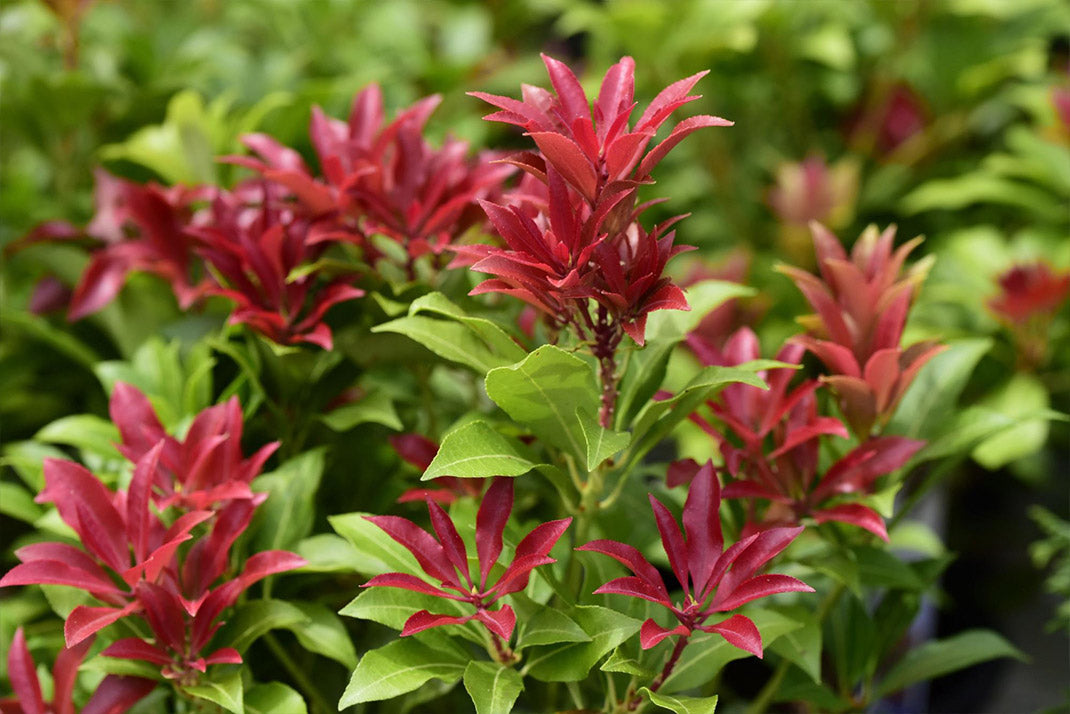
Main interest: Brilliant red, bronze or pink young foliage in spring that slowly matures to glossy green, combined with hanging clusters of white or pink, lily‑of‑the‑valley‑like bells from late winter into mid‑spring.
Fragrance: The flowers are lightly scented and very attractive to bees, but Pieris is grown mainly for its foliage colour and all‑year structure rather than strong perfume.
Hardiness: Generally fully hardy across most of the UK (around –10°C to –15°C once established), though young plants and some more tender varieties appreciate a sheltered, not overly exposed position.
Care level: Moderate but straightforward – it has a couple of clear likes (acid soil and moisture without waterlogging), but once those are met, Pieris is slow‑growing, long‑lived and needs only light pruning.

The Simpson’s team raises the majority of our trees here at the nursery. For varieties outside our own production, we work with independent local growers we trust - all chosen for UK climate suitability.
Planting time: As container‑grown shrubs, Pieris can be planted in most months when the soil isn’t frozen or waterlogged, with spring and early autumn usually the easiest times for both establishment and watering.
Watering: Keep Pieris evenly moist while it establishes, especially on lighter soils or in containers. Once settled, it prefers soil that never quite dries out completely but is also never boggy – think consistently damp woodland, rather than pond edge.
Feeding: In the ground, a yearly spring mulch of ericaceous compost, leafmould or pine needles is usually enough. Container plants benefit from a slow‑release ericaceous fertiliser in spring or occasional liquid feeds through the growing season.
Pruning: Little pruning is needed beyond removing spent flower trusses and any dead or straggly shoots after flowering. You can lightly trim back leggy stems at the same time to keep a neat, bushy shape.
Winter: In the ground, established plants usually cope well with UK winters; a mulch helps on light soils. Container plants appreciate a sheltered position out of the worst winds so their roots don’t freeze and thaw repeatedly.
Availability is always changing, so please check with us if you have a particular variety in mind.
A lovely, light-lifting pieris with creamy variegation that brightens shady corners all year. New growth often flushes pink, then settles into smart evergreen foliage, with spring flower clusters adding extra charm. Perfect for pots, woodland borders and alongside rhododendrons for a refined, evergreen look.
Crisp silver-edged foliage gives year-round brightness, then the new growth arrives with warm, fiery tones that really catch the eye. It’s excellent in pots near entrances, or in sheltered borders where you want dependable evergreen structure and a strong foliage moment without relying on flowers.
Compact and tidy, with neat variegated foliage that brings a clean, fresh look through every season. Ideal for smaller gardens and containers, especially in part shade where it keeps its poise. Spring flowers are a bonus, but the real value is that steady, well-kept evergreen presence.
Famous for its vivid red new growth, which looks like a little blaze against the evergreen leaves in spring. It’s superb as a feature shrub in a woodland border or a pot, where that fresh colour can be enjoyed up close, and the spring flower clusters add to the early-season interest.
A charming pieris with soft pink flower clusters that bring a gentle, springtime glow, set against handsome evergreen foliage. Perfect for pots and sheltered borders in part shade, where it pairs beautifully with ferns, heucheras and other woodland-style plants for a calm, elegant effect.
A beautifully clean, refined pieris with bright white flower clusters that look especially fresh against glossy evergreen leaves. It’s ideal for bringing light to shady borders and woodland planting, and it works wonderfully in pots near entrances where the spring display can be appreciated. A calm, elegant shrub with year-round structure.