

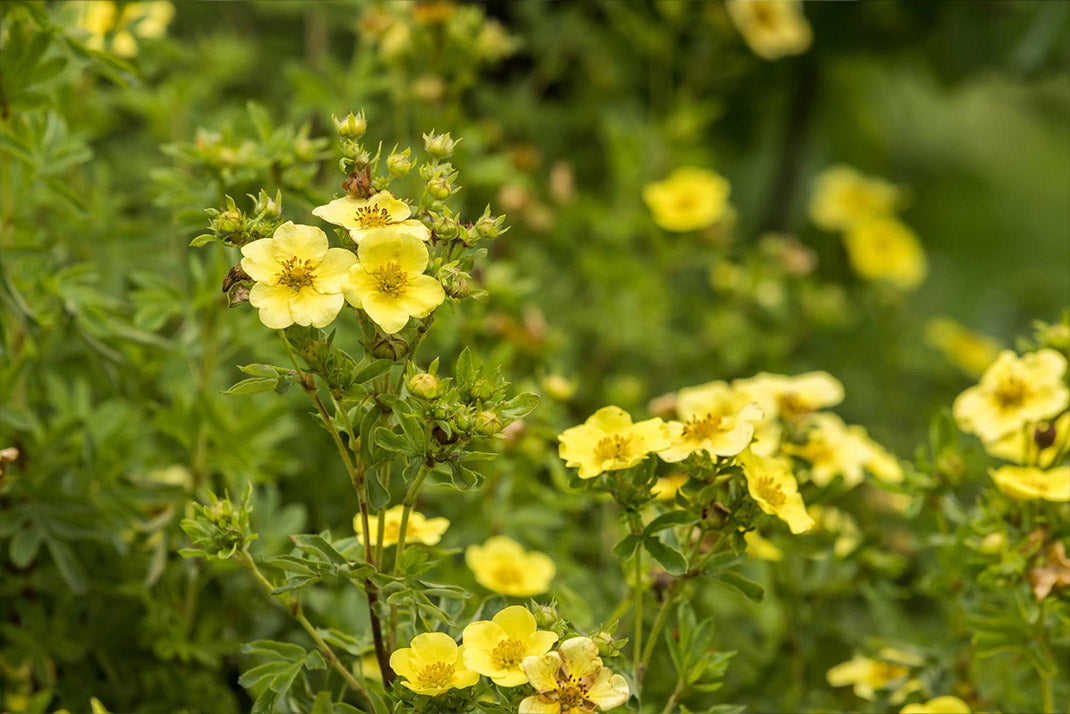
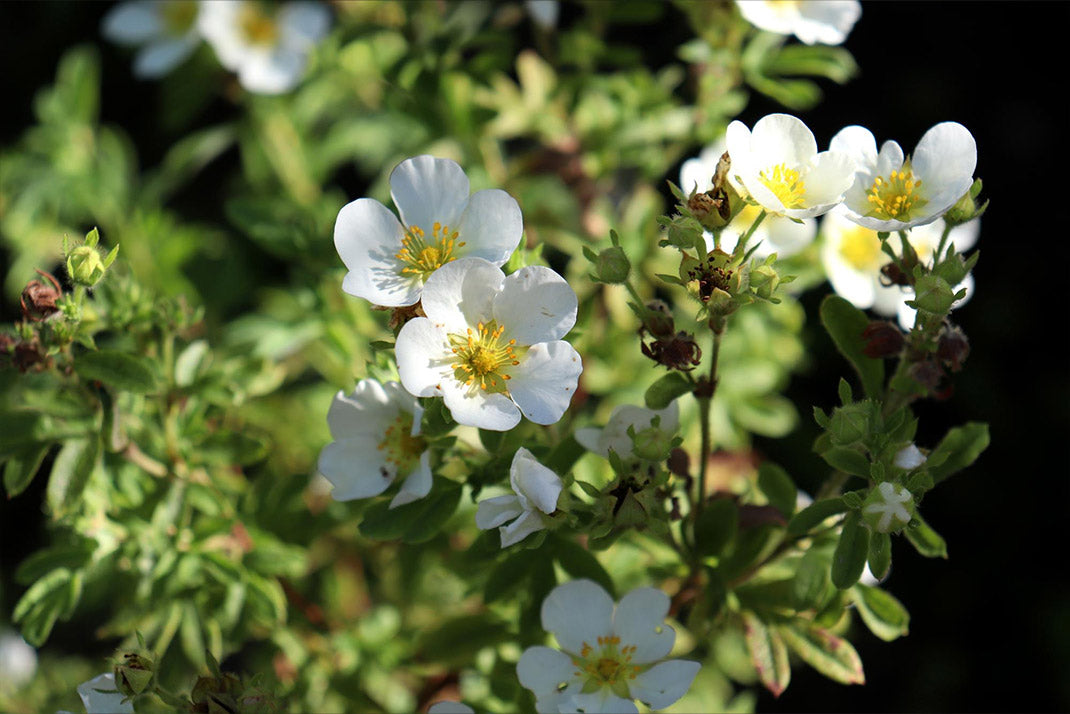
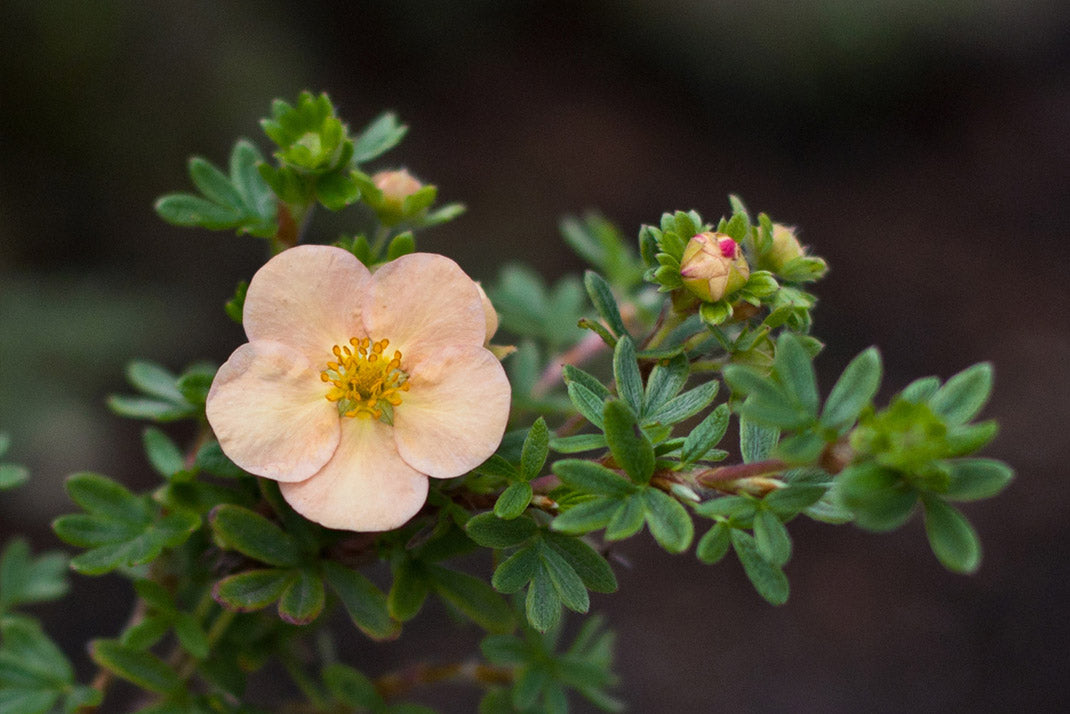
Potentilla is one of those plants that quietly keeps going long after others have given up. Once it really gets into its stride, usually from late spring or early summer, it can produce flowers for months on end, often right up to the first proper frosts. Different cultivars bring whites, primrose yellows, clear golds and warm oranges and reds, but they all share that long, generous season. In a normal UK garden – whether in Ely or elsewhere – a few Potentillas dotted about can make the borders feel colourful for far longer than you’d expect.
Common name: Potentilla
Latin name: Potentilla
Size in UK gardens: Typically 0.6–1.2m tall and wide, with some compact forms staying around 0.5m and others eventually reaching about 1.5m in good conditions.
Best position: Full sun gives the best flower display and compact growth, though plants will still perform in light partial shade, especially in hot, dry gardens.
Soil: Well‑drained soil of almost any type – from light, slightly poor ground to improved clay – as long as it doesn’t sit wet; tolerant of alkaline and chalky conditions.
Flowering time: Very long‑flowering; many varieties bloom from late spring or early summer right through to early autumn, often May to October in a good year.
Fragrance: Flowers are usually not noticeably scented – Potentilla is grown for its colour, resilience and long season rather than perfume.
Hardiness: Exceptionally hardy (typically RHS H7), happy in cold winters across the UK and well suited to exposed, inland climates as well as milder areas.
Care level: Genuinely low maintenance once settled – a little watering in the first year or two, a yearly trim, and it will flower away for years with very little fuss.

The Simpson’s team raises the majority of our trees here at the nursery. For varieties outside our own production, we work with independent local growers we trust - all chosen for UK climate suitability.
Planting time: As container‑grown shrubs, Potentillas can be planted in most months when the soil isn’t frozen or waterlogged, with spring and early autumn usually giving the smoothest establishment.
Watering: Water regularly during the first season or two so the rootball and surrounding soil don’t dry right out. Once established on reasonable soil they’re fairly drought‑tolerant and usually only need water in prolonged dry spells.
Feeding: Potentillas grow best on soil that isn’t overly rich; a light mulch of compost in spring is normally plenty. Heavy feeding is unnecessary and can actually encourage soft growth over flowers.
Pruning: A simple annual trim in late winter or early spring keeps them neat – removing dead wood and lightly shortening stems is usually all that’s needed. Older, tired plants can be cut back harder every few years to rejuvenate them.
Winter: Fully hardy in the ground, so no special winter protection is needed. In very exposed spots, a mulch over the root area of young plants is reassuring, especially on light soils, but generally they take winter in their stride.
Availability is always changing, so please check with us if you have a particular variety in mind.
A wonderfully reliable shrub that flowers for months, covering itself in soft, cheerful blooms and keeping a neat, bushy shape. It’s perfect for sunny borders, low hedging and mixed planting, bringing long-season colour without fuss. A great “filler and finisher” shrub that keeps going when others pause.
A compact, free-flowering potentilla with a steady run of soft blooms that brighten the garden from early summer right through into autumn. Ideal for border fronts and small shrubs beds, it gives a tidy, well-mannered outline and mixes beautifully with grasses and perennials for a relaxed look.
Warm, tangerine-toned flowers bring a sunny, uplifting glow over a long season, making this a brilliant shrub for adding warmth to borders. It’s perfect near the front of a bed where the colour can be enjoyed up close, and it pairs beautifully with blues, purples and silvery foliage for crisp contrast.
A classic white-flowering potentilla that’s valued for its long, dependable display and neat habit. It’s excellent for sunny borders and low shrubs planting, bringing a clean, fresh note that works with any colour scheme. A very easy-going plant that quietly keeps the garden looking bright for months.
A bold, golden-yellow potentilla that gives a long season of cheerful colour and a tidy, rounded shape. Ideal for sunny borders, mixed shrub beds and informal edging, it’s tough, dependable and wonderfully free-flowering. It’s particularly effective planted in small groups for a generous drift of colour.
Soft pink flowers bring a gentle, romantic note, and the plant keeps flowering steadily through summer and into autumn. Perfect for sunny borders and mixed planting where you want long-lasting colour without constant attention. It sits beautifully with pale grasses and silvery foliage for a light, airy feel.
A lively potentilla with warm, tropical-toned flowers that bring a playful splash of colour for months. Excellent for sunny borders and front-of-bed planting, where it adds warmth and energy without overwhelming the scheme. It looks especially good with cool blues and purples, which make the colour sing.
A bright, garden-friendly potentilla that gives a long season of fresh colour, keeping the border lively from early summer onwards. It forms a tidy, compact shrub that’s easy to place in mixed planting, and it’s especially useful where you want reliable, repeat flowering without fuss.
Soft primrose-yellow blooms bring a gentle, flattering colour that sits beautifully with pastels and cool-toned planting. It flowers for months, making it ideal for sunny borders and mixed shrub beds where you want steady colour and a neat, well-mannered shape. A lovely choice for a softer palette.
A richer-toned potentilla with warm red flowers that add depth and contrast over a long flowering season. Perfect for sunny borders and mixed shrub planting, where it provides colour without fuss and keeps a tidy outline. It’s particularly striking paired with silver foliage and pale grasses for a more modern look.