

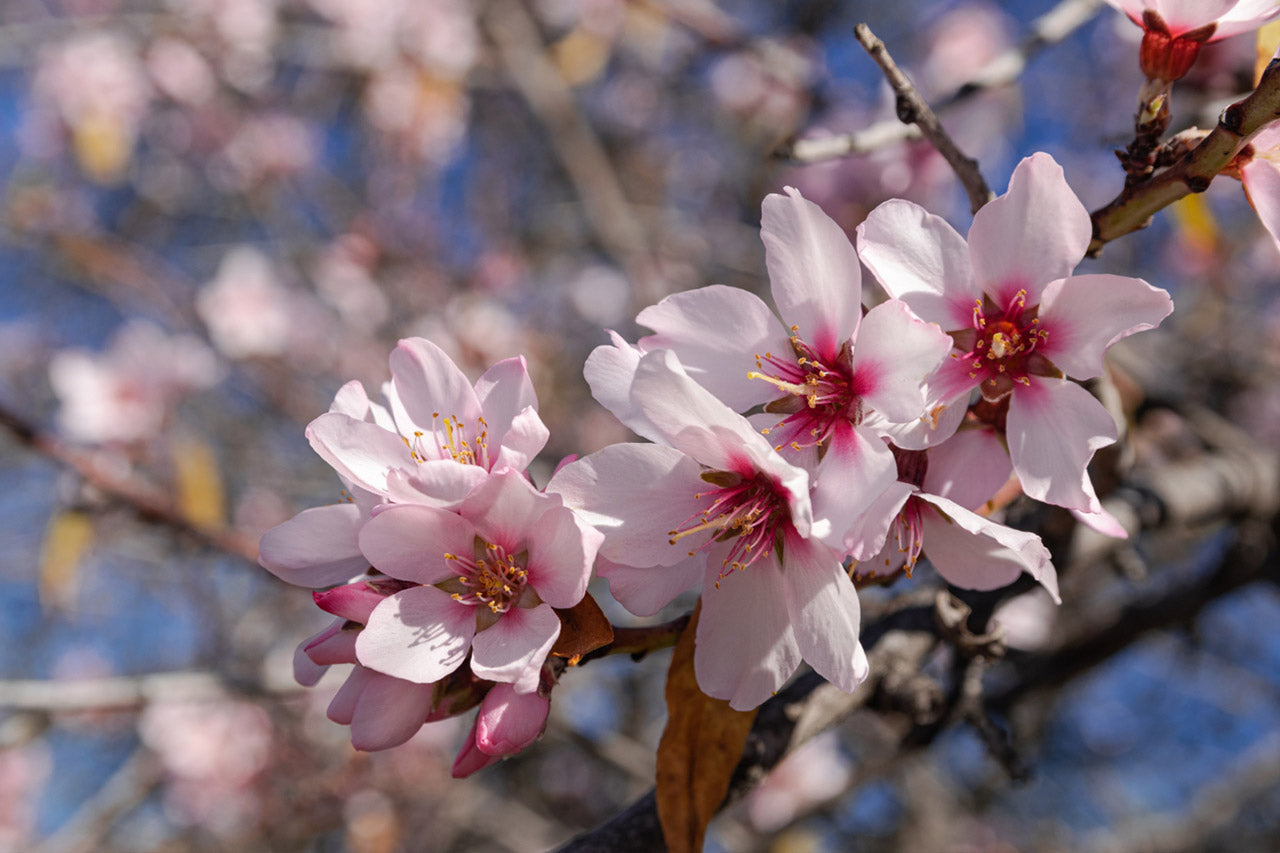
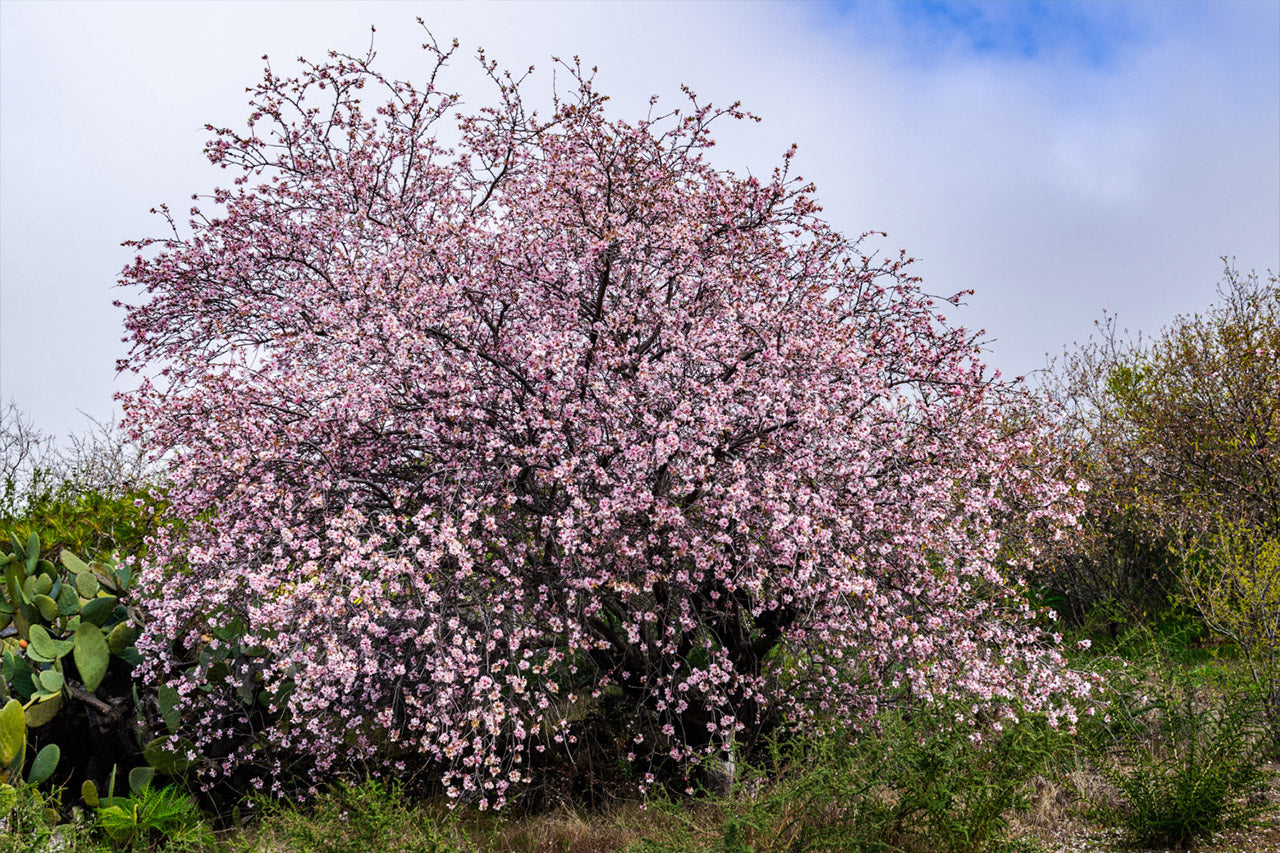
Ornamental almonds are all about timing. Just when the garden is still half‑asleep, they bloom — often in March and April — with rose‑pink, sometimes double flowers that sit close to the stems like tiny rosettes. The effect is joyful and a little nostalgic, like a traditional spring garden scene you want to step into. Plant it where you’ll see it often, and you’ll notice how it lifts the mood on grey days as well as sunny ones. Even a young plant can flower generously, and as the framework matures, the blossom becomes more and more of a “proper moment” each year.
Common name: Ornamental Almond or Flowering Almond.
Latin name: Prunus
Size in UK gardens: Often 1.5–3m tall and 1.5–2.5m wide, depending on variety and pruning; some dwarf forms stay nearer 1–1.5m.
Best position: Full sun or light shade, with a little shelter so blossom isn’t battered by cold wind.
Soil: Moist but well‑drained soil with good structure; dislikes long‑term waterlogging.
Flowering time: Usually March to April (sometimes into early May in cooler springs).
Fragrance: Usually only lightly scented, if at all — it’s mainly a visual treat.
Hardiness: Generally hardy in UK gardens; flowers can be affected by late frost or very cold winds.
Care level: Low to moderate – easy overall, with a single important prune after flowering to keep it at its best.

The Simpson’s team raises the majority of our trees here at the nursery. For varieties outside our own production, we work with independent local growers we trust - all chosen for UK climate suitability.
Planting time: As container‑grown plants, ornamental almonds can be planted in most months when the soil isn’t frozen or waterlogged; spring and early autumn are usually easiest for quick establishment.
Watering: Water regularly in the first year, especially in dry spells; once established, the plant is fairly resilient but benefits from an occasional deep soak in prolonged drought.
Feeding: A spring mulch of compost is usually enough; on poor soil, a light balanced feed in early spring can support healthy growth and bud formation.
Pruning: Prune after flowering to encourage new shoots that will carry next year’s blossom; remove a little old wood to keep the plant fresh and full.
Winter: Generally hardy; winter care is mainly about good drainage and choosing a sheltered spot so spring blossom isn’t battered by wind and late frost.
Availability is always changing, so please check with us if you have a particular variety in mind.


A springtime delight, opening soft, blossom-laden branches that feel instantly optimistic after winter. The flowers sit thickly along the stems, creating that classic “pink cloud” effect. A charming feature for lawns, borders, and the sort of garden where spring should feel like an event.
A more decorative almond with richly coloured blossom that gives a brighter, more eye-catching spring display. The flowers arrive in generous numbers, turning the branches into a flourish of colour. A lovely choice for a feature spot where you want early-season glamour without needing a large tree.