

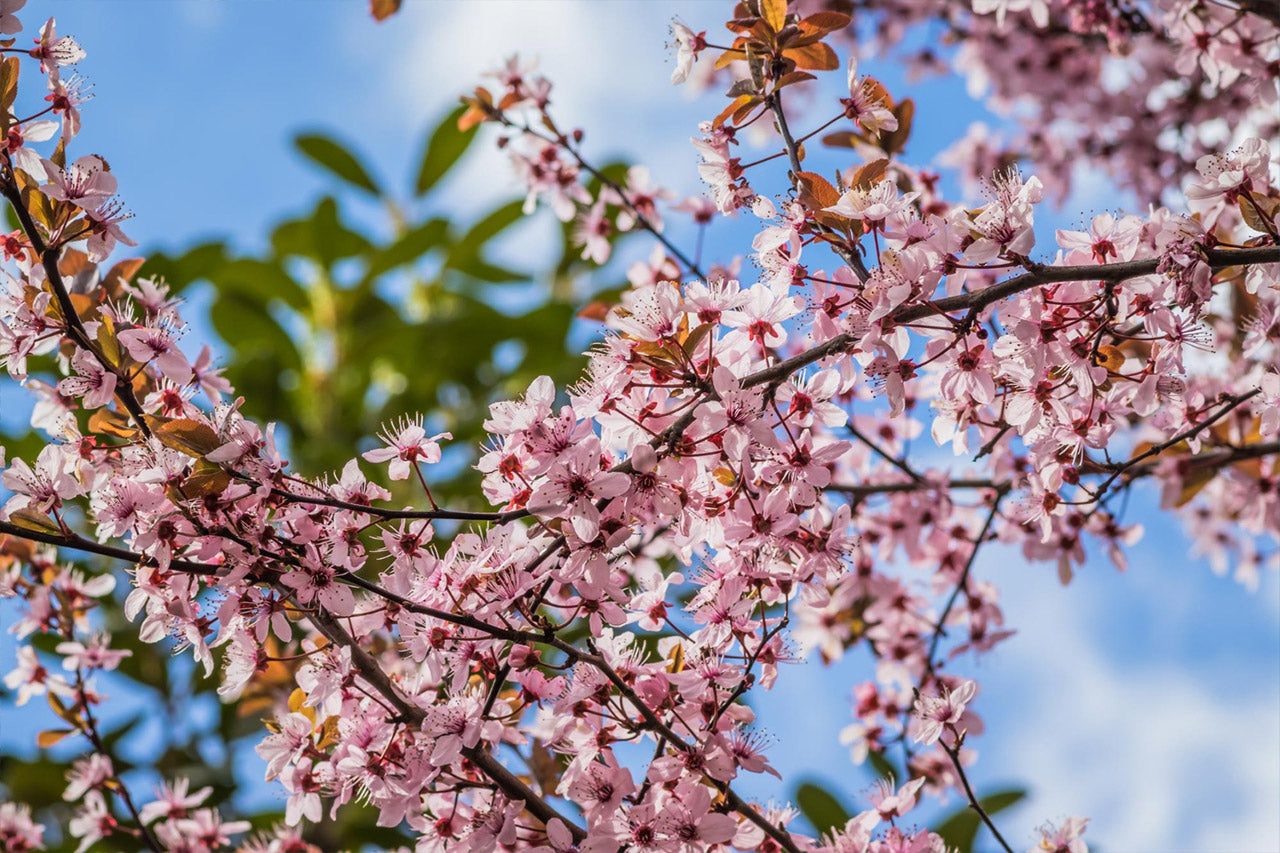
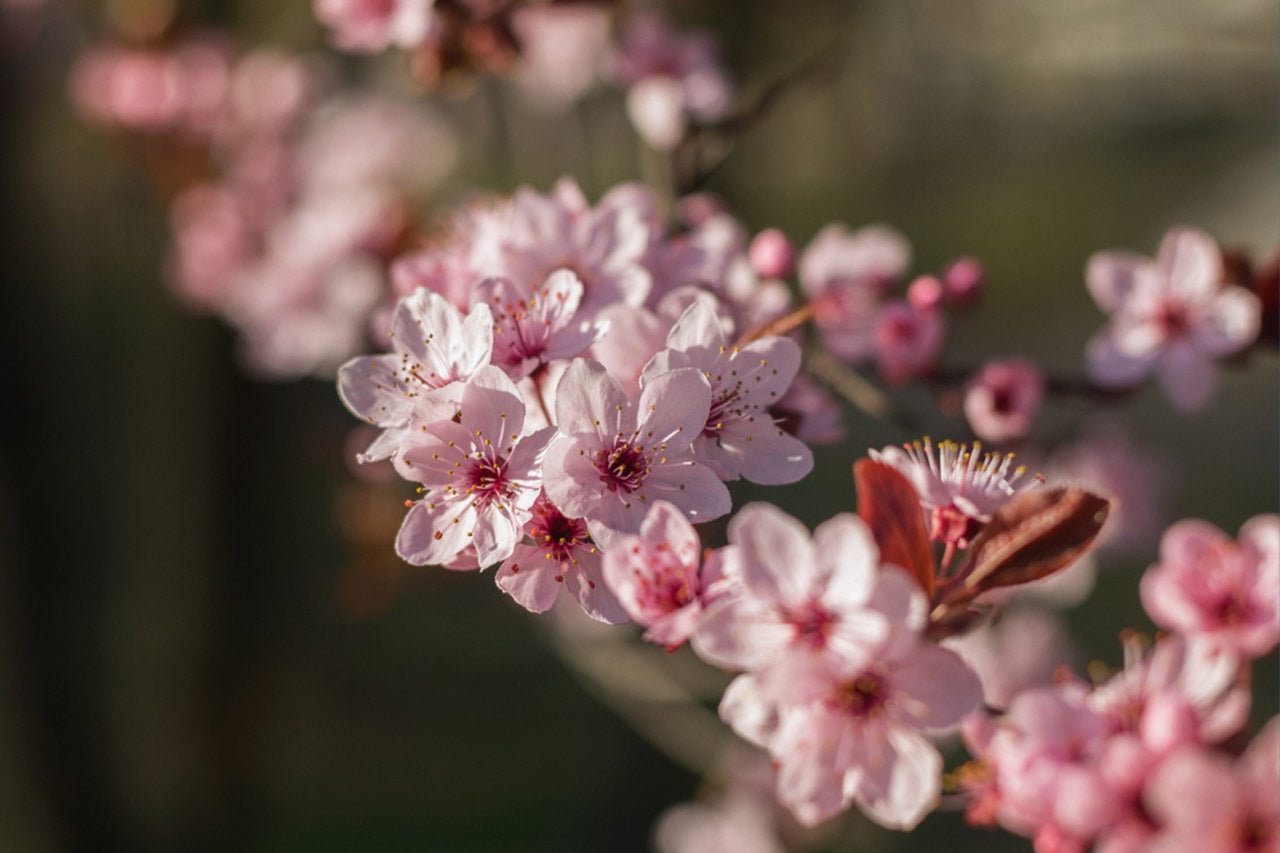
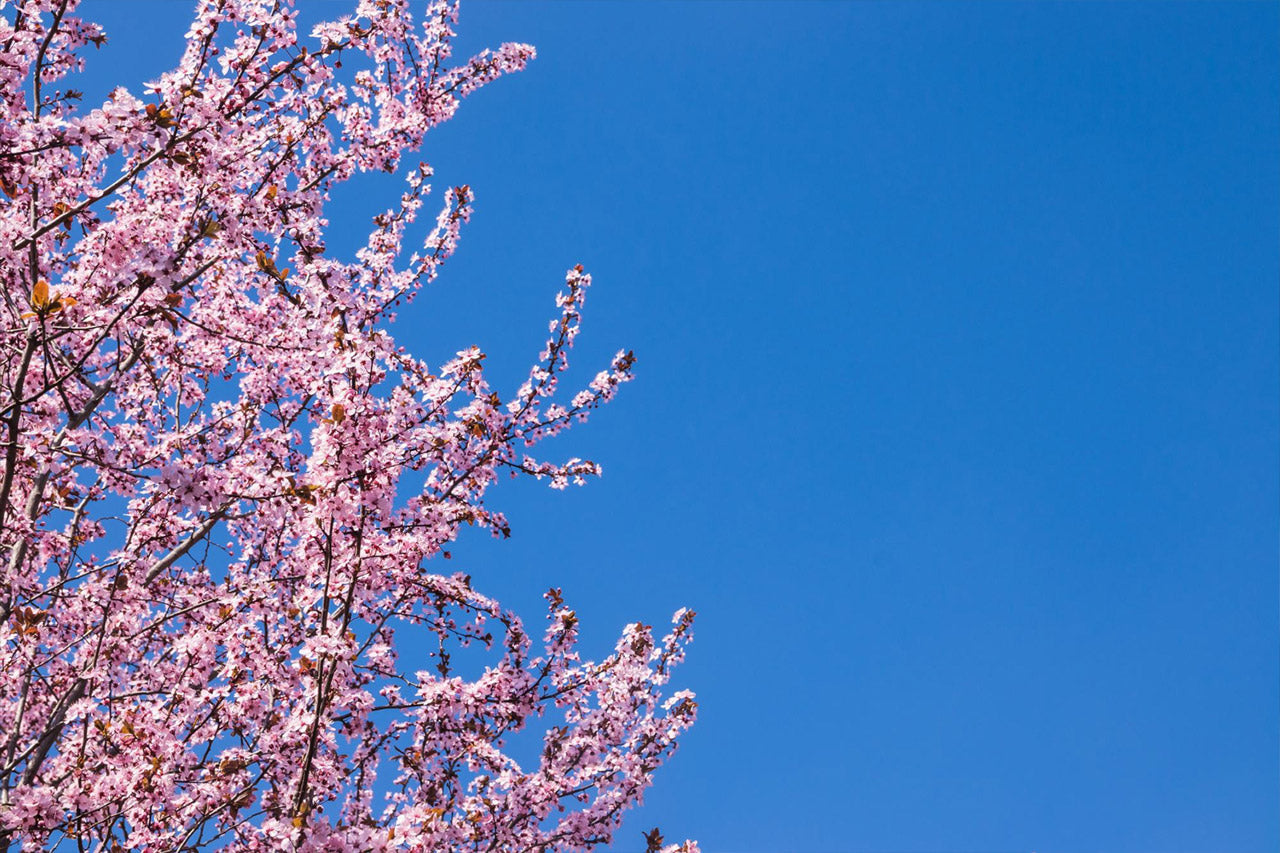
Ornamental plum is one of those trees that gets in early, flowering while the garden is still half‑asleep. In March and April, bare or lightly leafed branches carry clouds of soft pink blossom, often just as the first bulbs are finishing. It’s a real mood‑lifter, especially in smaller gardens where you want one plant to create a “moment”. Planted where you’ll see it from a window, path or patio, it turns an ordinary spring morning into something a bit more hopeful.
Common name: Ornamental plum
Latin name: Prunus
Size in UK gardens: Typically 4–7m tall and around 3–5m wide, depending on the variety and how it’s grown.
Best position: Full sun (or very light shade) so blossom is strong and foliage colour stays rich.
Soil: Moist but well‑drained soil with good structure; improved clay or loam is ideal, and water-logging is best avoided.
Flowering time: Usually March to April, sometimes into early May in cooler springs.
Fragrance: Usually not strongly scented – the beauty is mostly visual.
Hardiness: Hardy in most UK gardens; late frosts can shorten the blossom display in exposed spots.
Care level: Low to moderate – mostly good planting, watering while establishing, and light, well‑timed pruning if needed.

Rather than travelling halfway across Europe, our mimosa trees are grown on site by the Simpson’s team. They’re toughened to local conditions, properly potted, and ready to get growing the moment you plant them.
Planting time: As container‑grown trees, ornamental plums can be planted in most months when the soil isn’t frozen or waterlogged; spring and early autumn are usually easiest.
Watering: Water well through the first 1–2 growing seasons, particularly in dry spells; established trees cope better, but still appreciate a deep soak in prolonged drought.
Feeding: A spring mulch of compost or well‑rotted manure is usually enough; on poorer soils, a light balanced feed in early spring can help.
Pruning: Keep pruning light and tidy, mainly removing dead, damaged or crossing branches; if shaping is needed, summer is usually the safest time for Prunus.
Winter: Generally hardy; winter care is mostly about good drainage, mulch, and choosing a position that protects spring blossom from harsh wind.
Availability is always changing, so please check with us if you have a particular variety in mind.


The classic purple-leaved plum, with a canopy of deep wine-coloured foliage that brings instant contrast and a smart, contemporary feel. Pale spring blossom shows beautifully against the dark leaves. A strong choice for adding colour and structure in one elegant, garden-sized tree.
A lively ornamental plum that earns its keep in spring, when blossom lights up the branches and the tree looks freshly awakened. The overall habit is neat and ornamental, so it sits easily in borders and front gardens. A cheerful way to bring a clear spring highlight into the garden.
A bold, garden-worthy ornamental plum with a tidy outline and plenty of spring sparkle. It reads well from a distance as a shapely feature tree, then settles into a handsome canopy for the rest of the season. A dependable focal point for lawns, corners, and planting schemes needing a lift.
A truly romantic flowering plum, producing masses of soft, double pink blossom that look like little rosettes along the branches. In spring it’s unashamedly decorative, bringing a generous, dressy display. Perfect as a feature tree where you want blossom to feel abundant and celebratory.