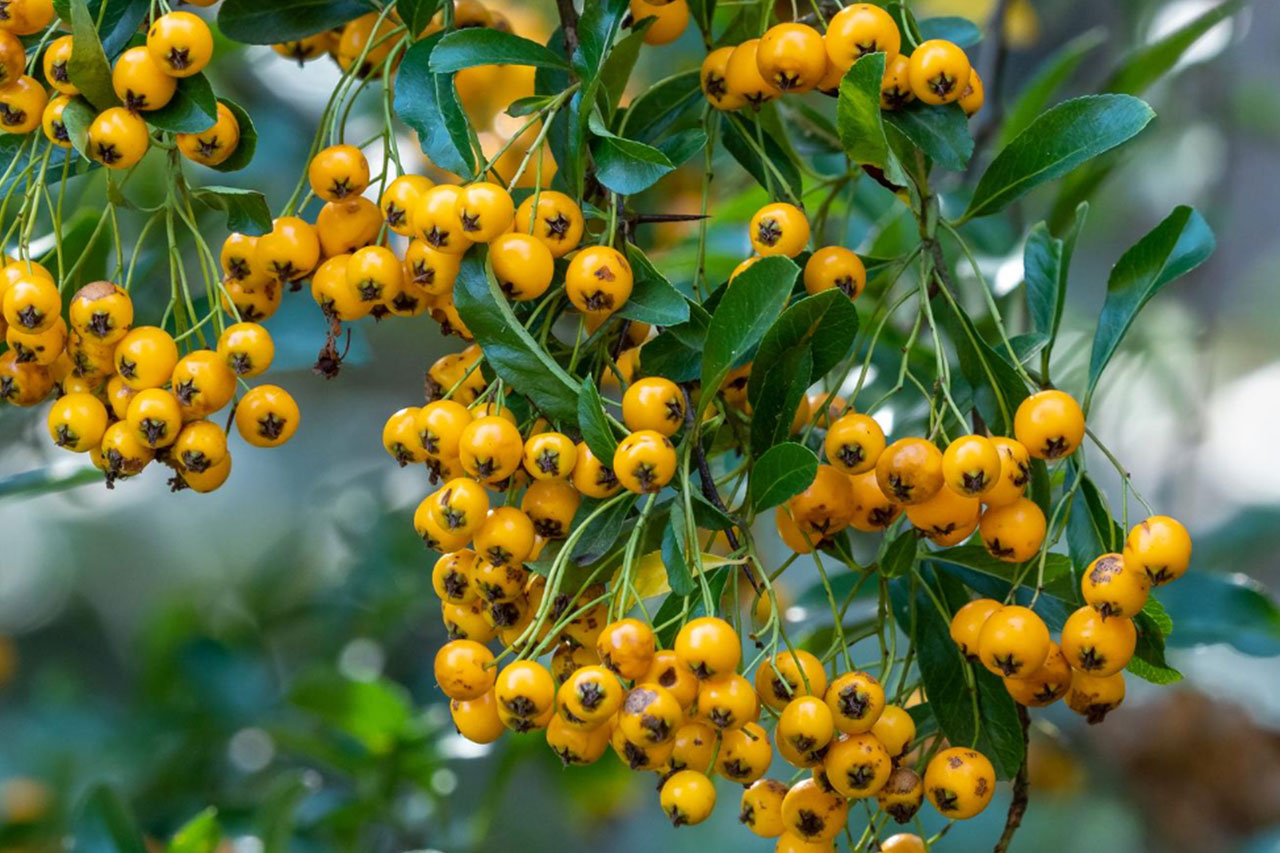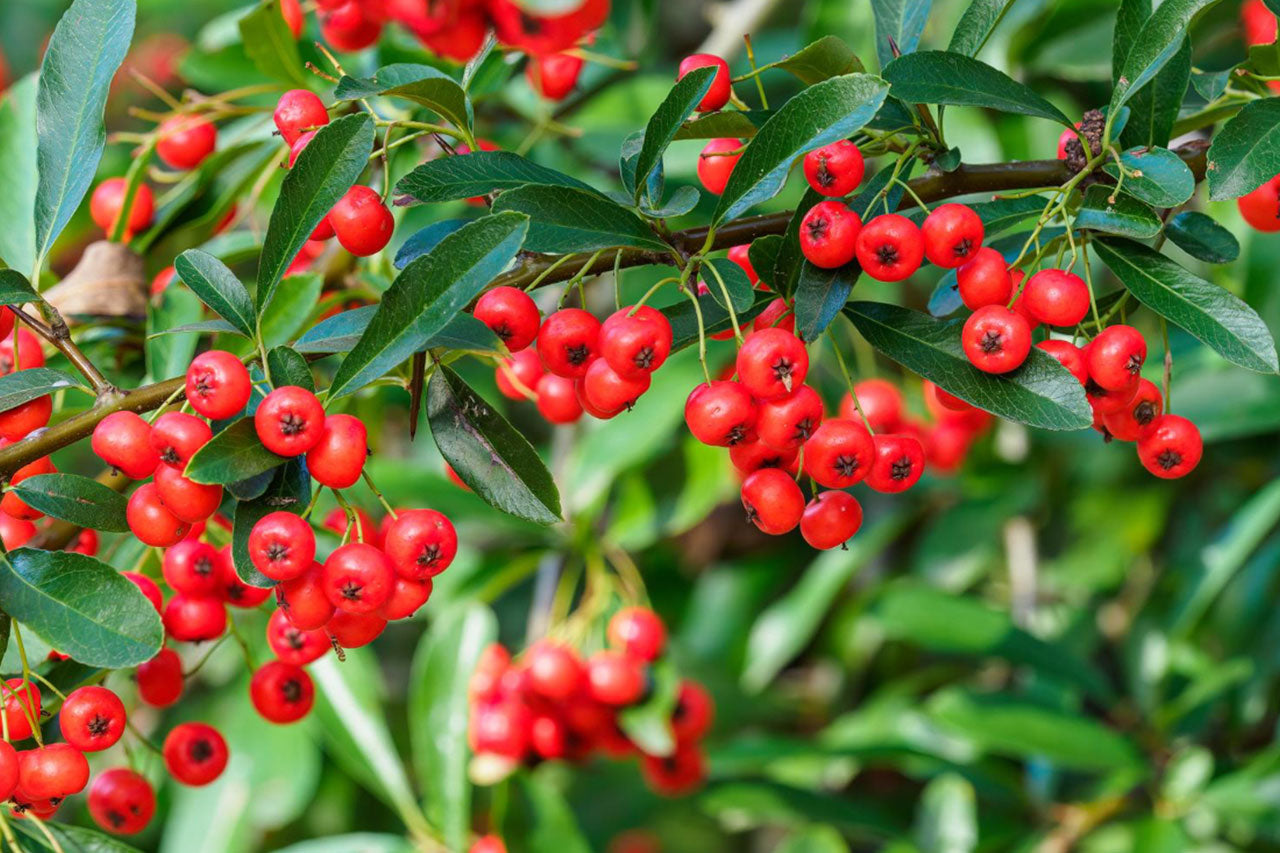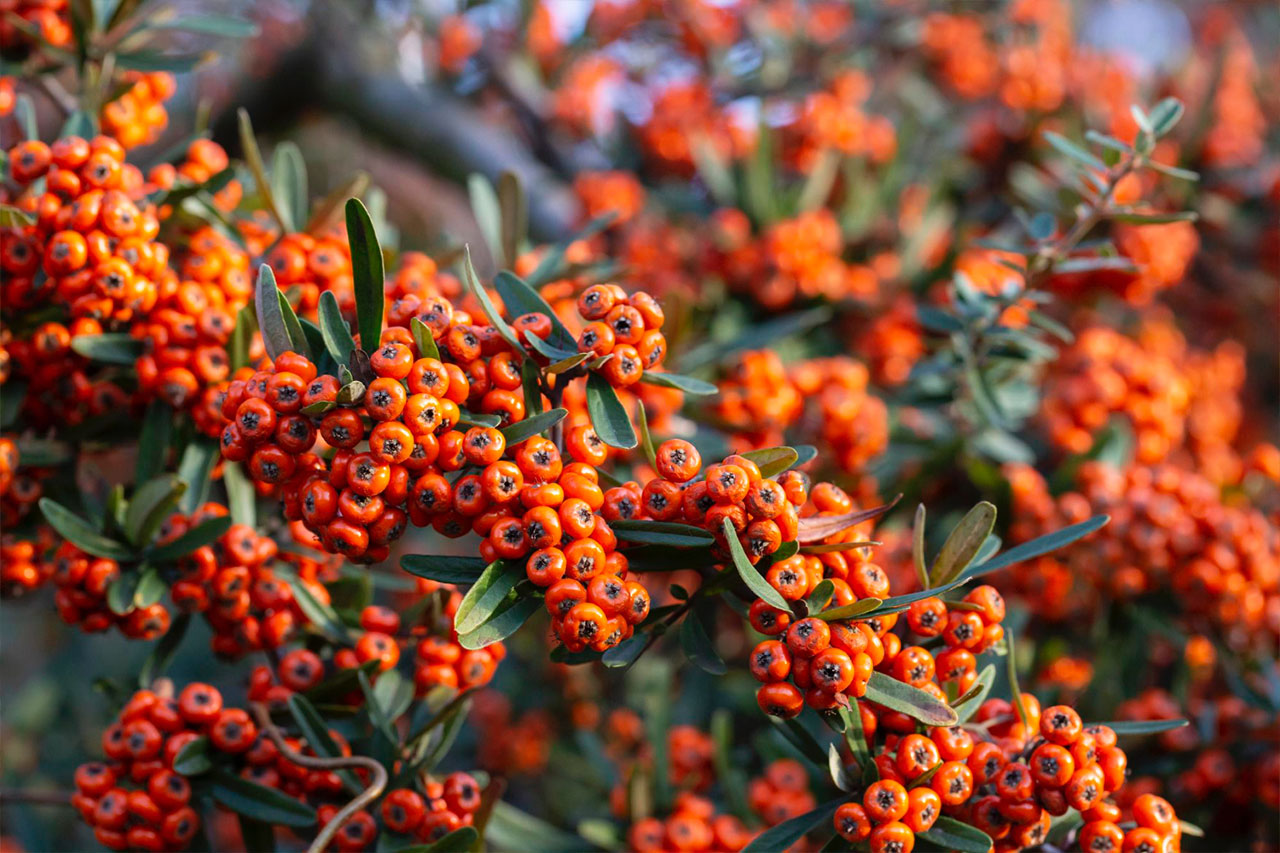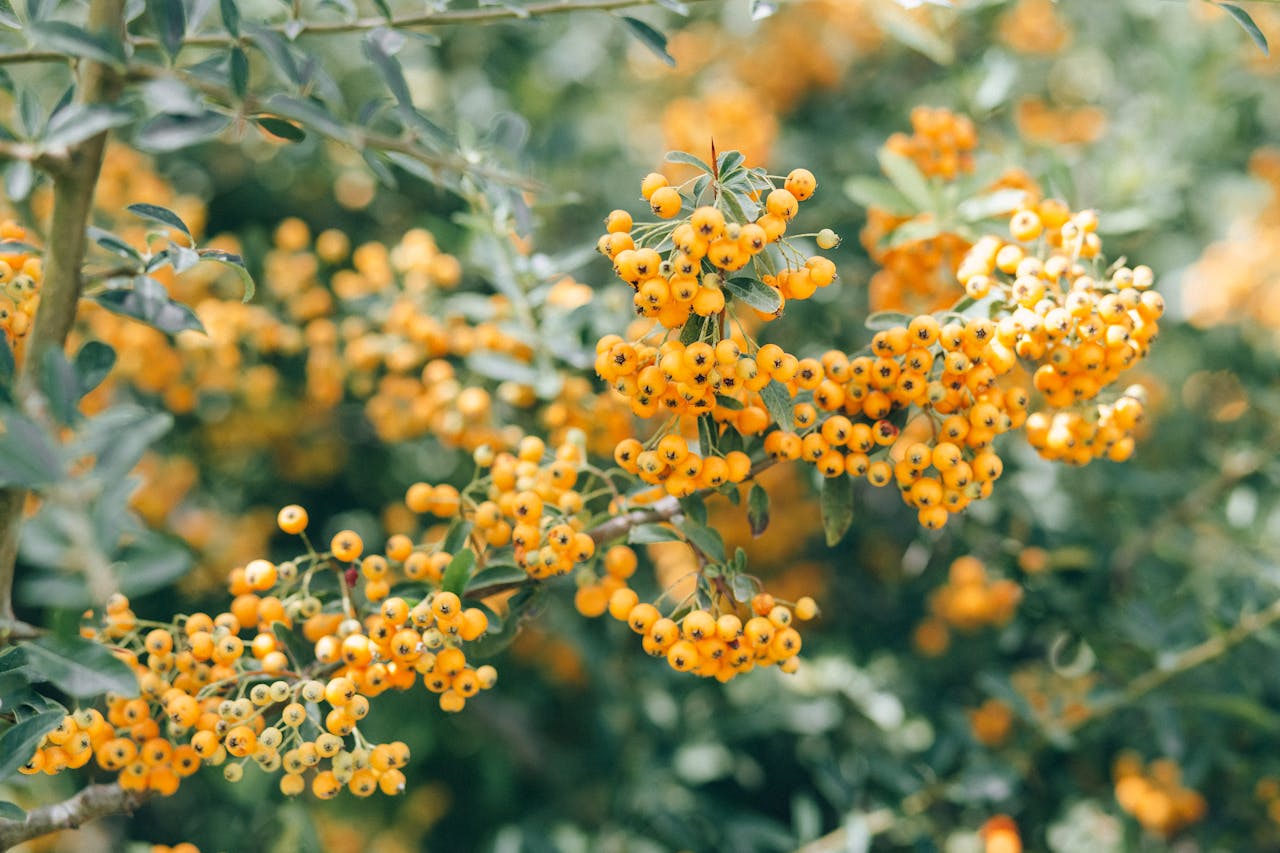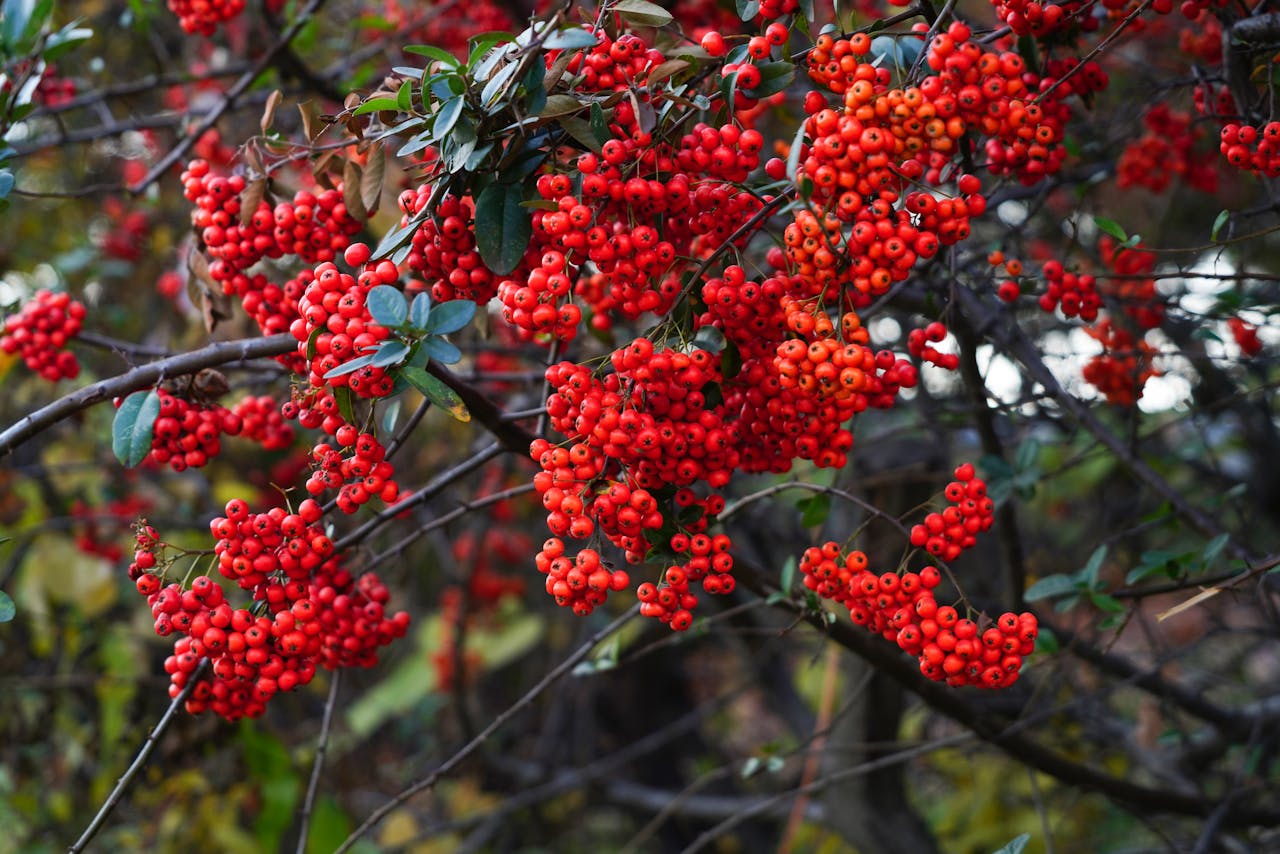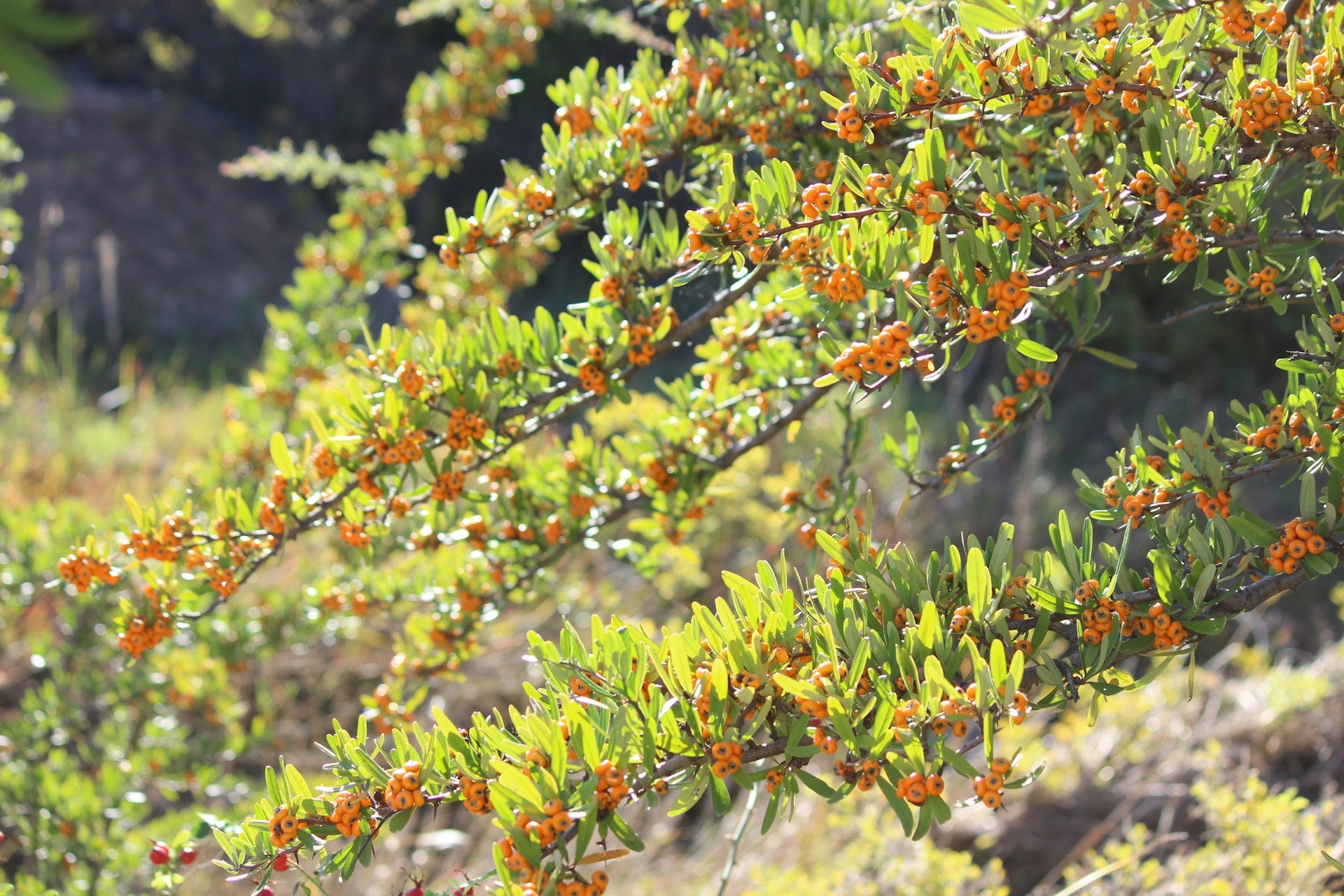

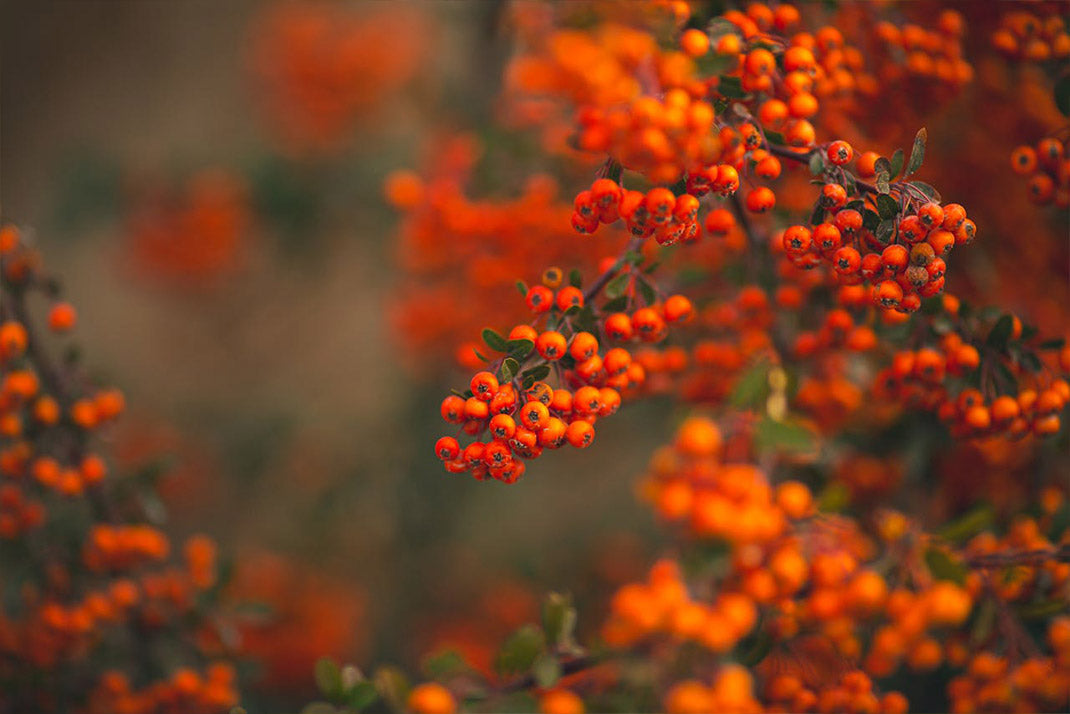
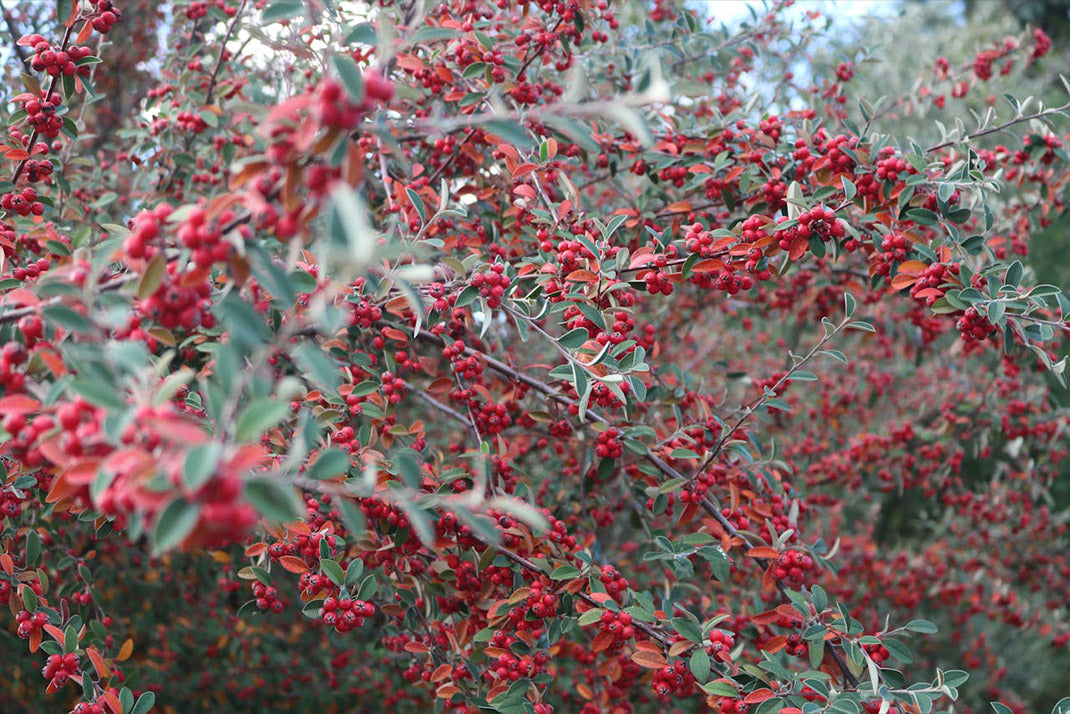
Once autumn arrives, Pyracantha really earns its keep. Those long sprays of berries ripen to rich reds, fiery oranges or glowing yellows and hang on well into winter, turning an ordinary fence or hedge into something that looks positively festive. Against brick or timber the colours really sing, and on a dull December day the glowing clusters can be enough to lift the spirits. In many gardens the berries last just long enough before the birds move in and feast, so you get the best of both worlds – decoration and wildlife value.
Common name: Firethorn
Latin name: Pyracantha
Size in UK gardens: Typically 2–4m tall and wide if left free‑standing, but easily kept smaller or trained flat against a wall or fence; dwarf and compact forms are also available.
Best position: Sun or light partial shade; you’ll get the heaviest flowering and best berrying in a bright, open spot with a little shelter from the sharpest winds.
Soil: Any moderately fertile garden soil in sun or part shade, from very dry, free‑draining ground to heavy clays, so long as it isn’t permanently waterlogged.
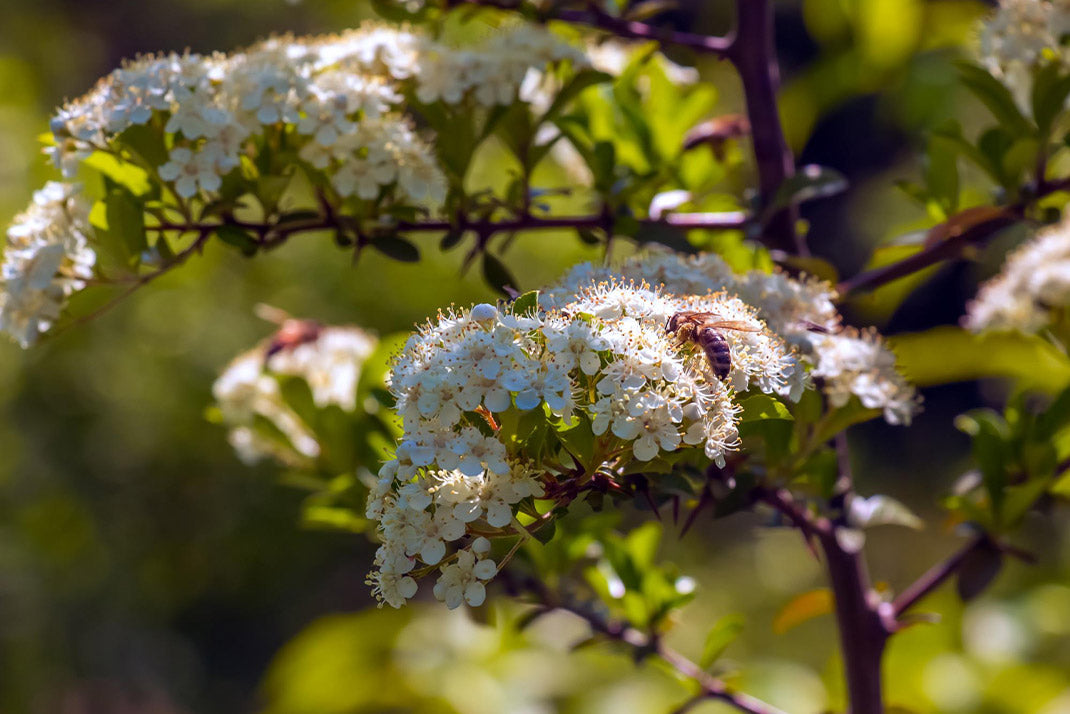
Flowering time: Small, creamy‑white, hawthorn‑like flower clusters in late spring and early summer, followed by heavy crops of red, orange or yellow berries that last well into winter.
Fragrance: Flowers can have a slightly musky, rather than sweet, scent at close quarters; this soon passes and the shrub is grown for its blossom, berries and structure rather than perfume.
Hardiness: Fully hardy across the UK, including colder inland areas; many cultivars are rated “hardy – very cold winter”.
Care level: Generally easy – once established it’s a rugged, low‑maintenance shrub, though the thorns mean you’ll want decent gloves and a bit of care when pruning.

The Simpson’s team raises the majority of our trees here at the nursery. For varieties outside our own production, we work with independent local growers we trust - all chosen for UK climate suitability.
Planting time: As container‑grown shrubs, Pyracanthas can be planted in most months when the soil isn’t frozen or waterlogged, with spring and autumn usually offering the easiest conditions for new root growth.
Watering: Water regularly through the first season or two so the rootball and surrounding soil don’t dry right out. Once established in the ground they’re fairly drought‑tolerant, but will always appreciate an occasional deep soak in a prolonged dry spell.
Feeding: On ordinary garden soil, a light mulch of compost or well‑rotted manure in spring is usually all they need. On very poor or thin ground, a modest handful of balanced slow‑release fertiliser in spring can help younger plants get away strongly.
Pruning: Prune to shape once or twice a year, wearing sturdy gloves. Wall‑trained plants are usually trimmed after flowering to tidy growth and show off berries; hedges can be lightly clipped in early to mid‑summer. Always remove badly scabbed or diseased shoots as you go.
Winter: Fully hardy shrubs in the ground need no special winter protection. Young or container plants benefit from a mulch around the root area and a sheltered position out of the worst of the wind.
Availability is always changing, so please check with us if you have a particular variety in mind.
A wonderfully useful firethorn with bright, golden-yellow berries that glow against the evergreen foliage, giving months of colour when the garden needs it most. Perfect for training on a wall or fence, or used as a boundary shrub, it also brings valuable cover and food for birds through winter.
A tough, reliable firethorn with a strong, upright habit and generous clusters of rich orange-red berries that hang on well. Brilliant for walls, fences and boundaries where you want year-round structure and winter colour, and it’s excellent for wildlife too—bringing shelter, nesting sites and food in one go.
As the name suggests, this one lights up autumn and winter with vivid orange berries that look particularly striking against glossy evergreen leaves. Ideal for training against a sunny wall or for creating a bold, thorny screen, it adds real seasonal impact and is a superb choice for supporting garden birds.
A classic, upright firethorn with heavy crops of bright red berries that give a strong, traditional winter display. Excellent for training on walls, forming a security hedge, or adding evergreen structure to boundaries. It’s also a real wildlife shrub, offering shelter and a valuable winter food source for birds.
A modern firethorn with vivid orange berries that colour up strongly and hold well into winter, giving a clean, bright display. Perfect for walls, fences and boundary planting where you want evergreen structure with a big seasonal payoff. Excellent for wildlife too, providing both cover and food.
A richly coloured firethorn with deep red berries that create a dramatic winter show against evergreen foliage. Ideal for training against walls and fences or using as a dense, thorny screen, it brings both beauty and practicality. A brilliant wildlife plant too, offering shelter and winter food.
A cheerful firethorn with bright yellow berries that bring a softer, sunlit look through autumn and winter. It’s excellent trained against a wall, where the berries can be seen clearly, or used in boundary planting for evergreen structure. A very good shrub for birds, providing cover and food when it’s most needed.