

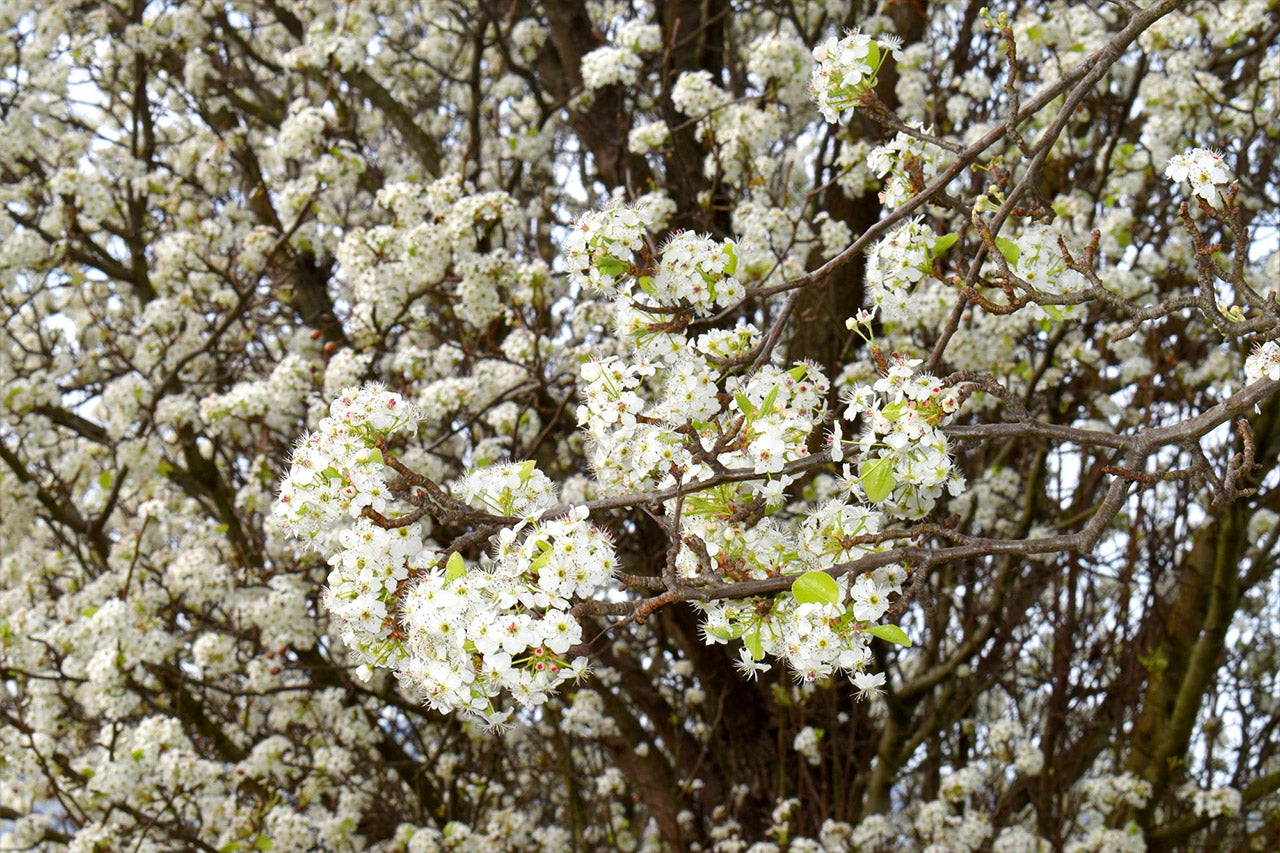
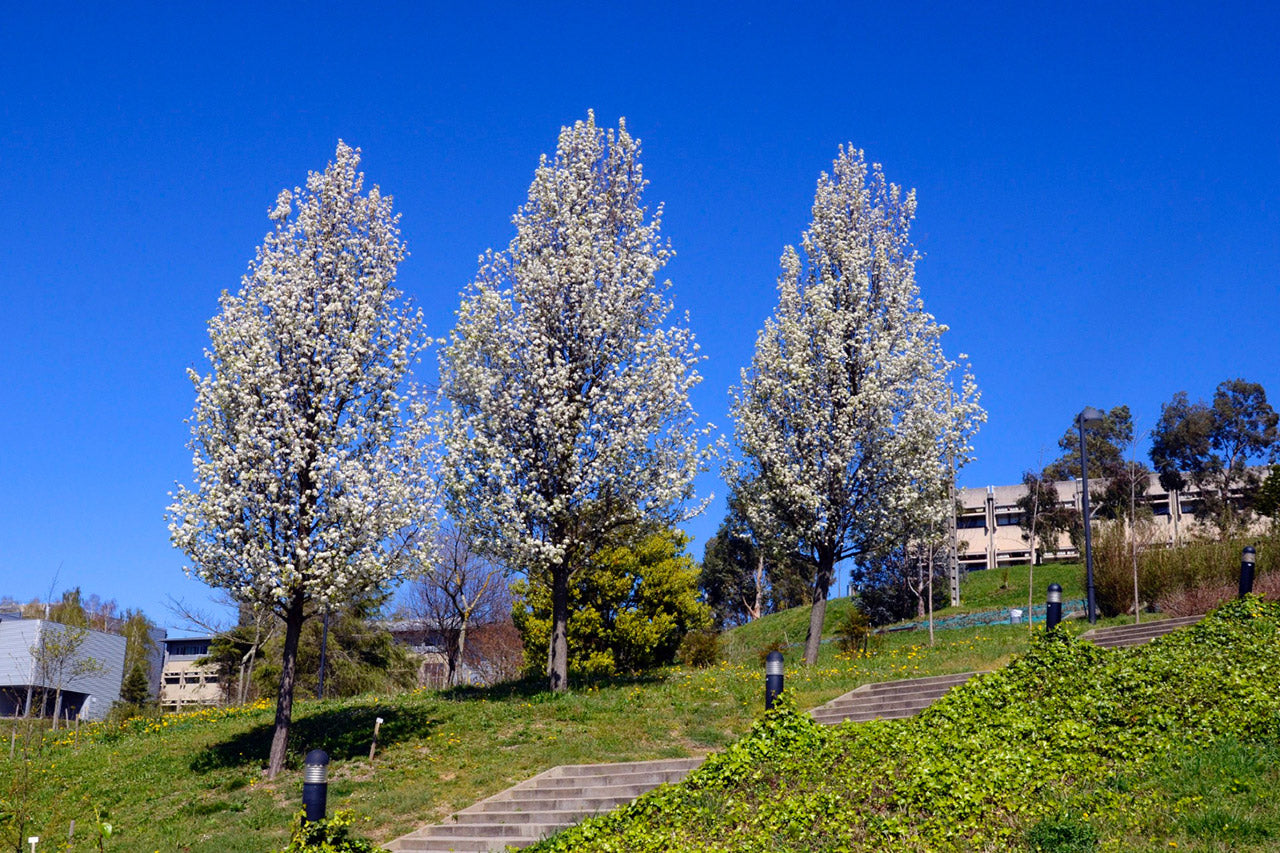
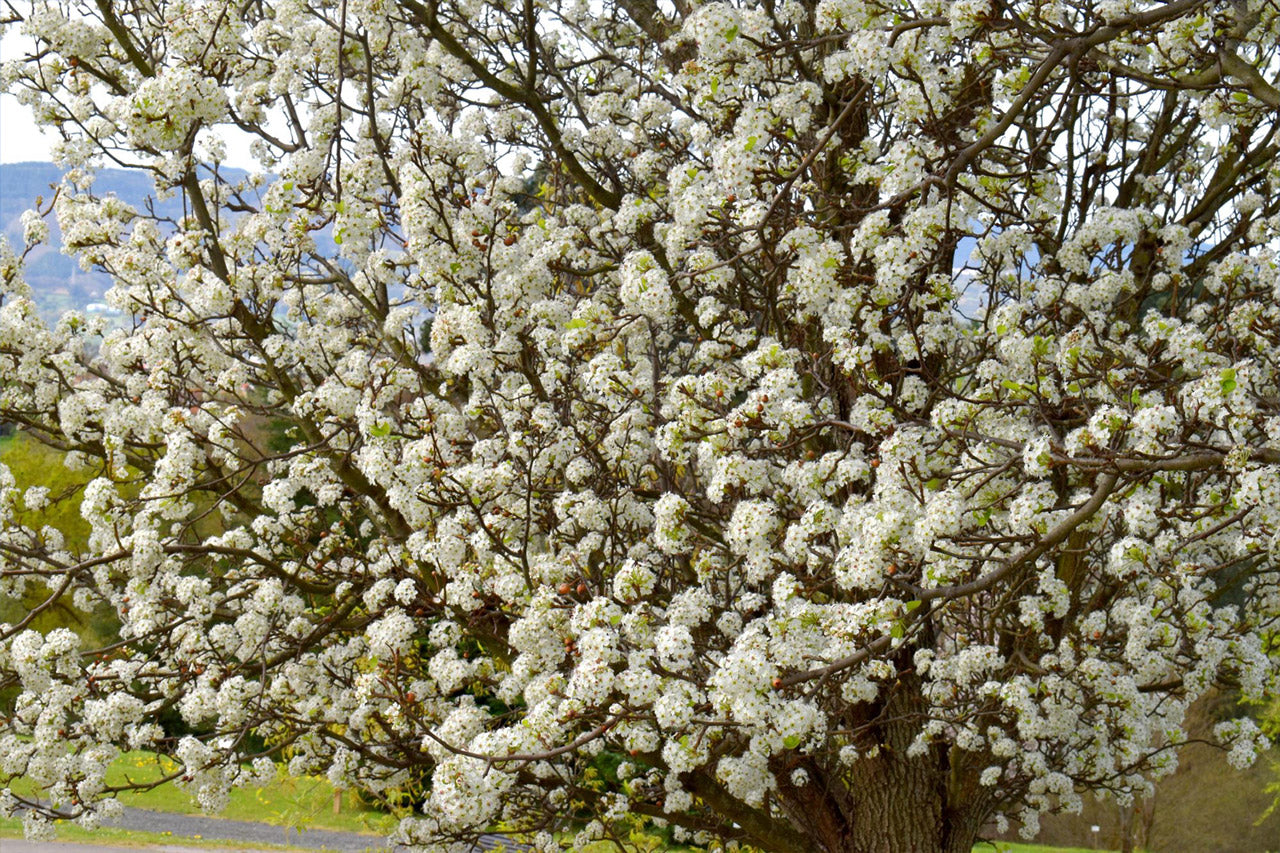
Ornamental pears are brilliant for that “first proper spring” moment. In April, neat branches are covered in clusters of white blossom, often just as the garden is beginning to wake up. The flowers are not usually heavily scented, but they’re wonderfully crisp and bright, especially against a blue sky or a dark evergreen hedge. Plant one where you can see it from a window or as you come and go, and it’s like having a small annual celebration in the garden. Even young trees can flower well, and as the framework matures, the display becomes more and more impressive.
Common name: Ornamental pear
Latin name: Pyrus
Size in UK gardens: Often 6–10m tall and around 3–6m wide (many upright forms stay narrower), depending on the variety and conditions.
Best position: Full sun (or very light shade) in an open but not wind‑tunnel spot, where it can flower well and colour strongly in autumn.
Soil: Moist but well‑drained soil; tolerant of many soils if drainage is reasonable.
Flowering time: Usually April (sometimes late March or into early May depending on spring and variety).
Fragrance: Usually not noticeably scented.
Hardiness: Generally very hardy in the UK once established; blossom can be affected by late frosts in exposed spots.
Care level: Low to moderate – mostly about good planting, watering while establishing, and light, sensible pruning when needed.

The Simpson’s team raises the majority of our trees here at the nursery. For varieties outside our own production, we work with independent local growers we trust - all chosen for UK climate suitability.
Planting time: As container‑grown trees, ornamental pears can be planted in most months when the soil isn’t frozen or waterlogged; spring and early autumn are usually easiest.
Watering: Water well through the first 1–2 growing seasons, especially in dry spells; established trees are more resilient but still appreciate a deep soak in prolonged drought.
Feeding: A spring mulch of compost or well‑rotted manure is usually enough; on poor soils, a light balanced feed in early spring can help.
Pruning: Minimal pruning is usually needed; remove dead, damaged or crossing branches and keep the shape tidy, ideally with small, thoughtful cuts rather than heavy cutting.
Winter: Very hardy overall; winter care is mostly good drainage, a mulch, and firm staking for young trees in windy sites.
Availability is always changing, so please check with us if you have a particular variety in mind.


A wonderfully upright ornamental pear with a clean, architectural outline that suits modern gardens beautifully. Spring brings a bright white blossom display, then the tree carries a neat canopy that always looks composed. Excellent for adding height, structure, and a “designed” feel without bulk.
A graceful weeping pear with narrow, silvery foliage that shimmers and softens the scene. The drooping shape creates a gentle, fountain-like silhouette that looks elegant even from a distance. A beautiful focal point beside lawns, paving, or seating—calm, stylish, and full of movement.
A smart ornamental pear with an upright habit and a tidy crown that keeps its shape in the landscape. White spring blossom gives a crisp seasonal moment, then the tree holds a well-mannered canopy through the year. A strong choice where you want structure that feels refined rather than heavy.
A neat, upright ornamental pear with a light, airy canopy that feels clean and modern. Spring blossom brings a fresh highlight, then the tree carries itself with poise and clarity. Lovely for avenues, boundaries, or as a single specimen where a slim, elegant silhouette matters.