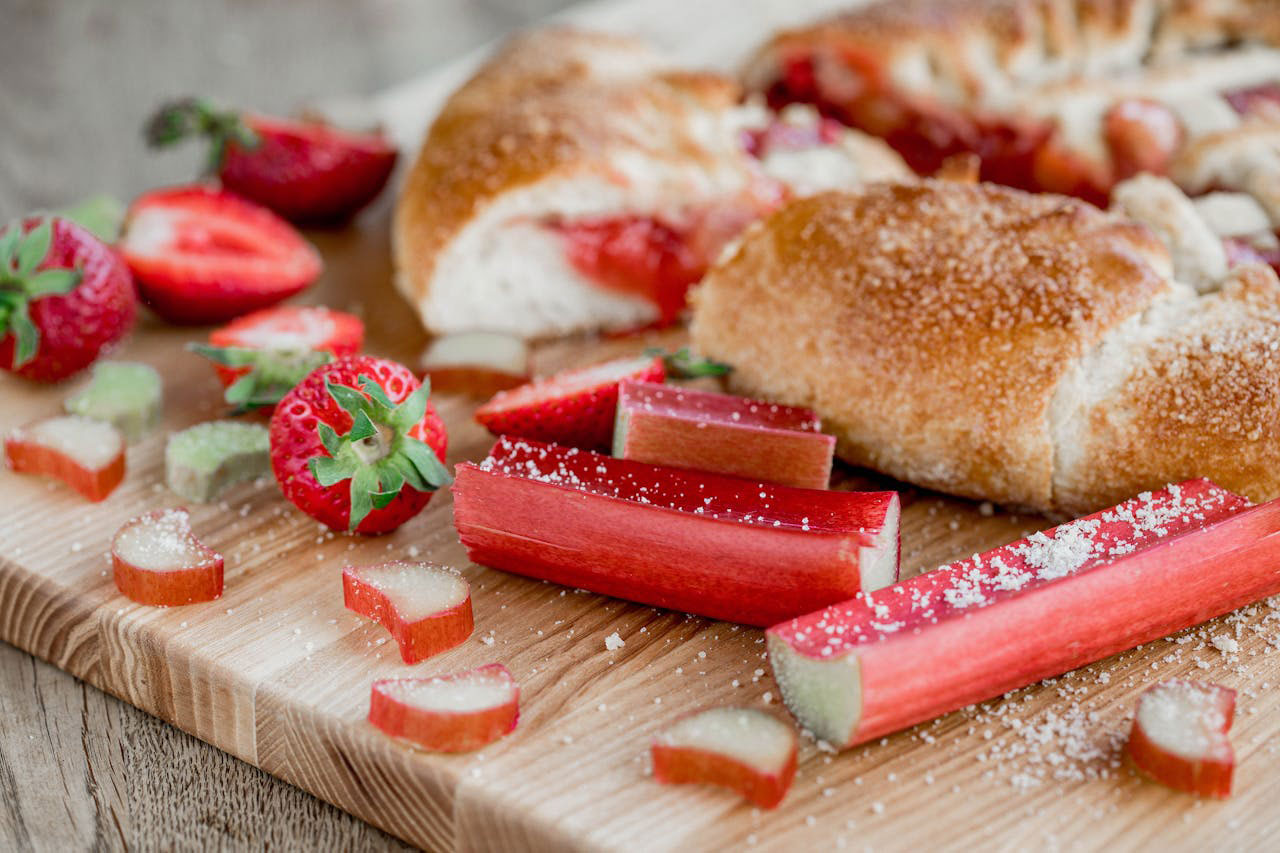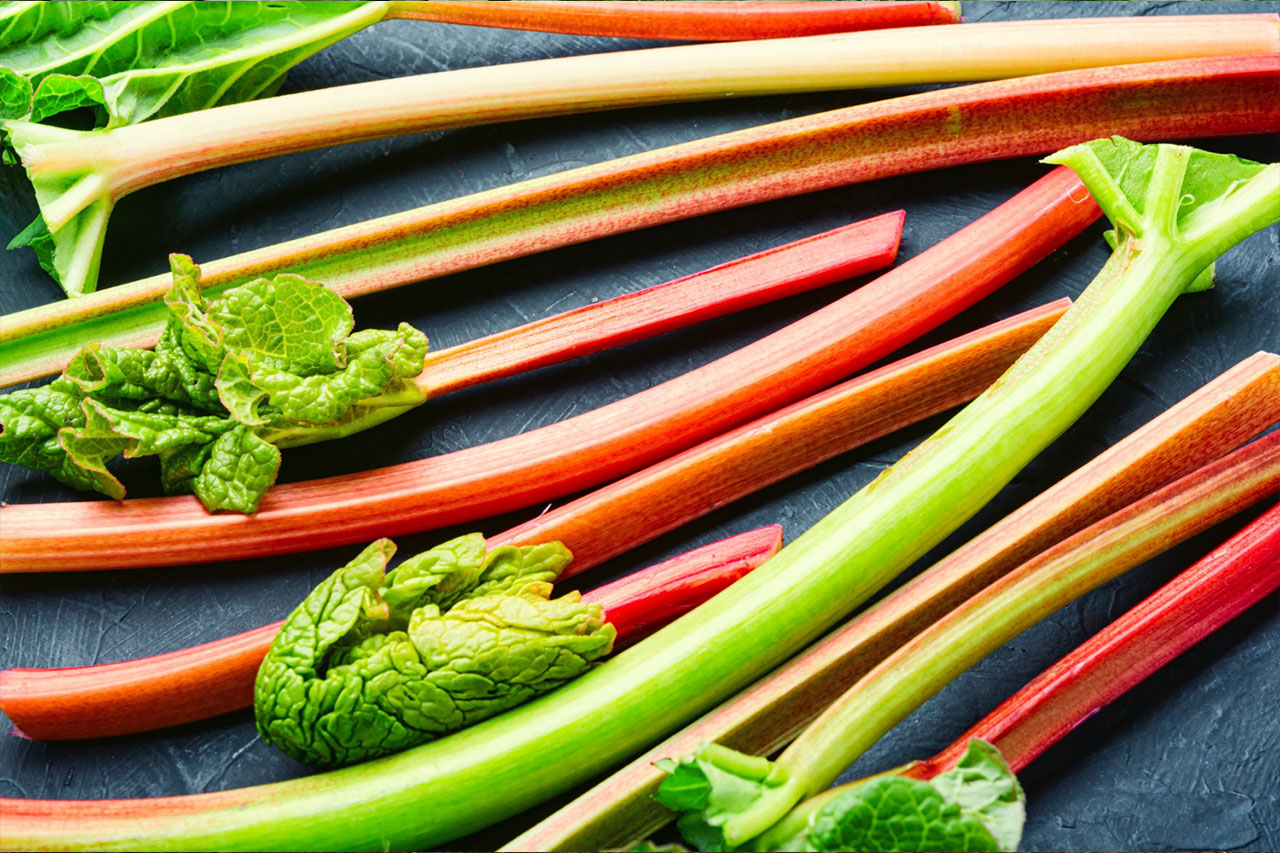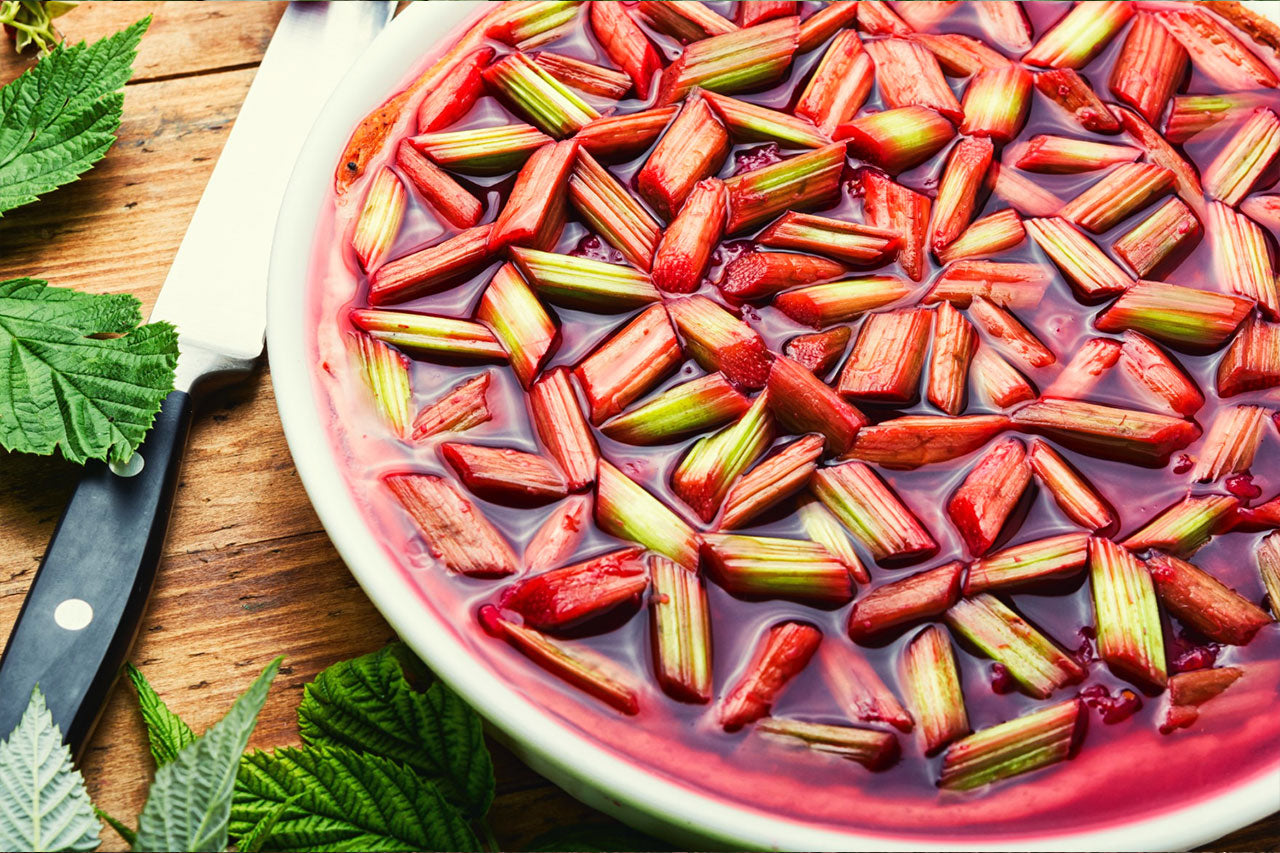

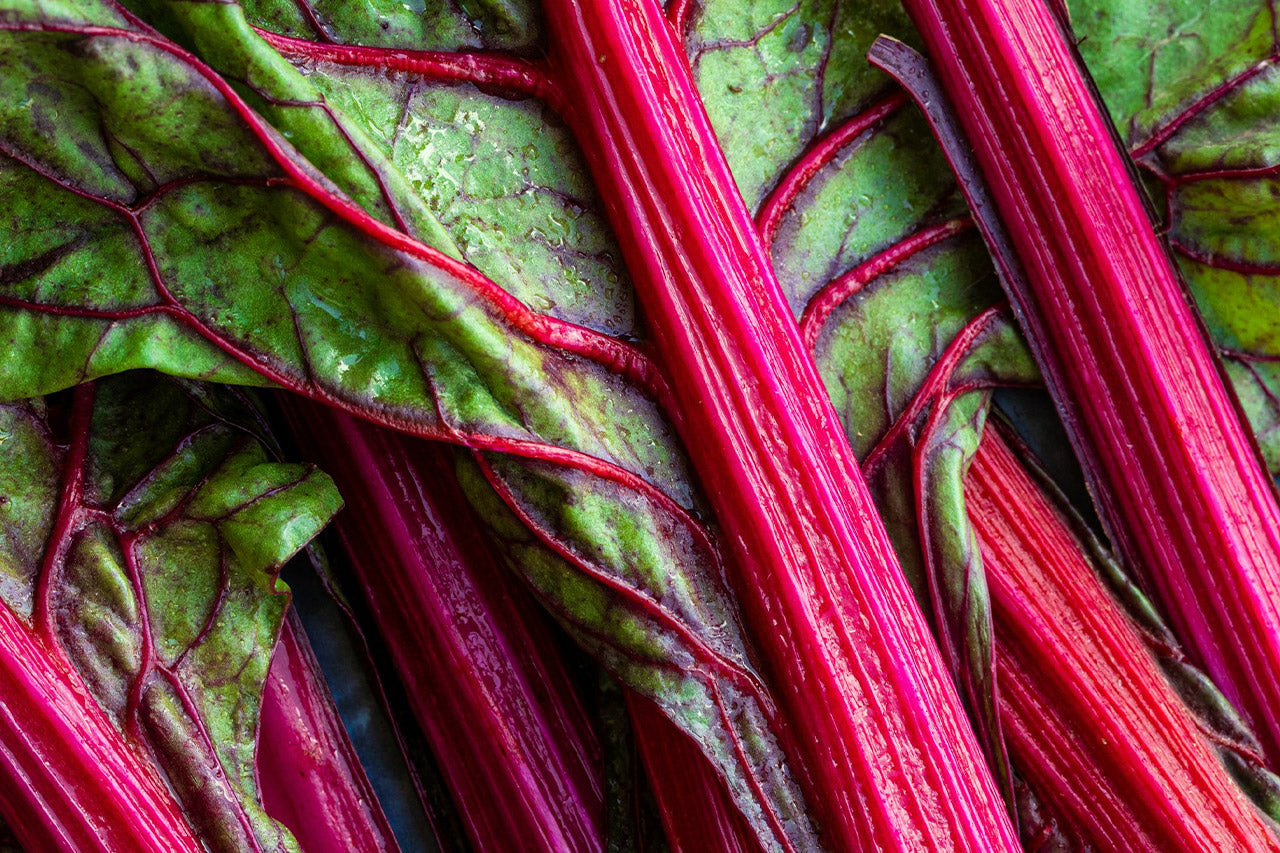
Rhubarb (Rheum rhabarbarum) is one of the very first “proper” crops of the year, often ready to pick in spring while most of the garden is still rubbing its eyes. Fat pink, red or green stems push up from the crown just as you’re starting to crave something fresh and home‑grown. You can take a few stems for crumbles and compotes as soon as they’re thick enough to use, and carry on harvesting lightly into early summer. In a typical Cambridgeshire garden, a well‑established rhubarb clump can give bowl after bowl of stems at a time when fruit bushes and apples are only just thinking about it.
Common name: Rhubarb
Latin name: Rheum rhabarbarum
Size in UK gardens: Typically around 60–90cm tall in leaf, with a spread of 90cm–1.2m once mature, depending on variety and soil.
Best position: A sunny or lightly shaded, reasonably open spot, with space for the clump to expand without crowding paths or smaller plants.
Soil: Deep, fertile, moisture‑retentive but well‑drained soil with plenty of organic matter; dislikes very shallow, dry or waterlogged ground.
Flowering time: Main interest is in the edible leaf‑stalks from early spring to early summer; tall flower spikes sometimes appear in late spring but are usually removed.
Fragrance: Usually not noticeably scented; the cut stems have a fresh, sharp “rhubarb” aroma.
Hardiness: Fully hardy across the UK once established, dying back in winter and re‑sprouting in spring.
Care level: Easy to moderate – straightforward if you prepare the soil well, water in dry spells and harvest thoughtfully.

The Simpson’s team raises the majority of our trees here at the nursery. For varieties outside our own production, we work with independent local growers we trust - all chosen for UK climate suitability.
Planting time: As container‑grown plants, rhubarb crowns can be planted in most months when the soil isn’t frozen or waterlogged; late autumn and early spring are usually easiest, giving roots time to settle before summer heat or winter cold.
Watering: Water regularly in the first couple of years, and during dry spells thereafter, especially on lighter soils and in the drier East Anglian climate. Soil should stay evenly moist through spring and early summer while stems are developing.
Feeding: Each spring, mulch generously around the clump with compost or well‑rotted manure to feed the plant and improve soil structure. On very poor soils, a balanced granular fertiliser can be added in early spring before growth really gets going.
Pruning: There’s no true pruning, but you should pull (not cut) stems for harvest, remove any flowering spikes as they appear on younger plants, and clear away old, collapsing leaves in autumn to keep the crown clean and discourage pests and disease.
Winter: In winter, rhubarb dies back completely above ground. Leave the crowns in place, top up the mulch, and let cold weather do its work; there is no need to lift or cover established plants in normal UK conditions.
Availability is always changing, so please check with us if you have a particular variety in mind.

A superb early rhubarb that gets the season going quickly, producing tender, pink-flushed stems when you’re itching for the first crumbles of the year. It’s ideal for the kitchen garden, giving generous harvests with that lovely balance of sharpness and sweetness once cooked. A real spring favourite, and wonderfully reliable.