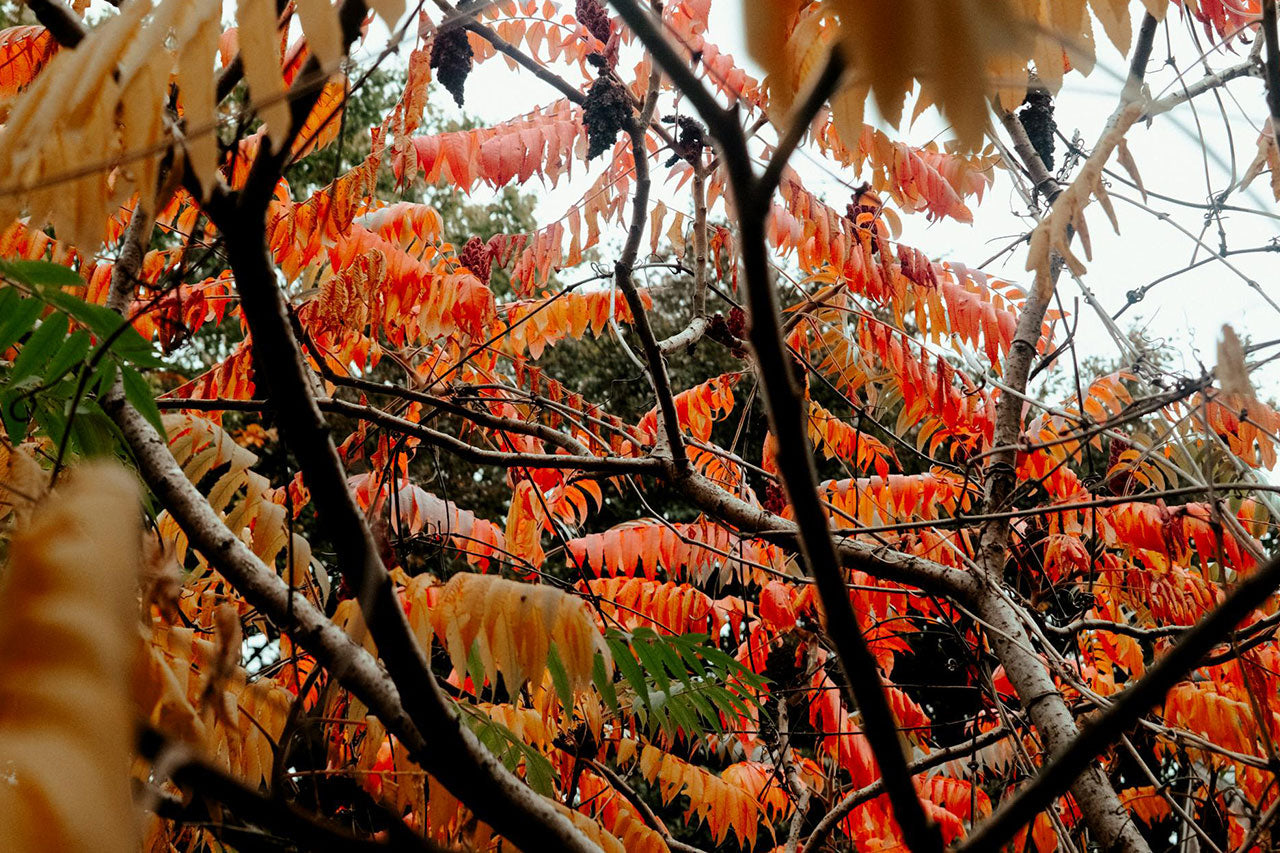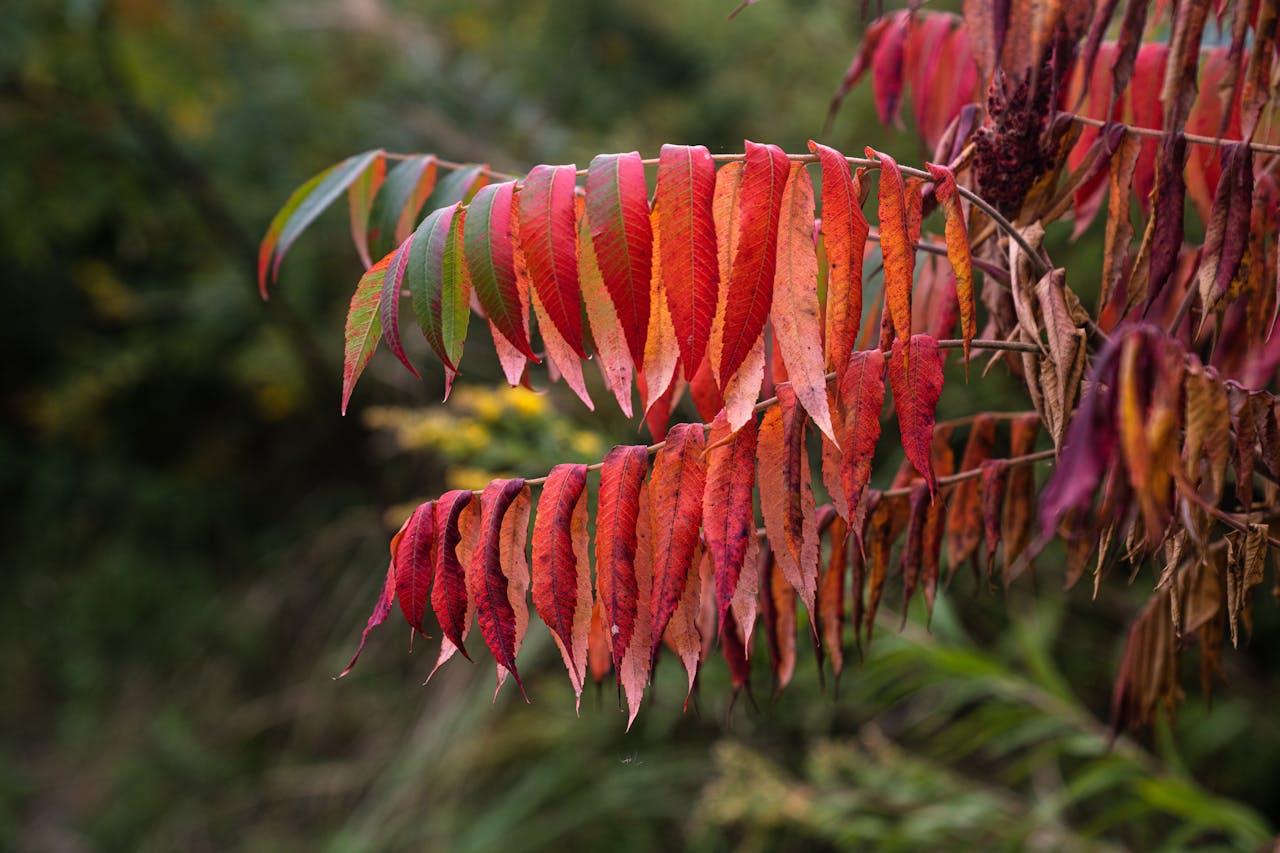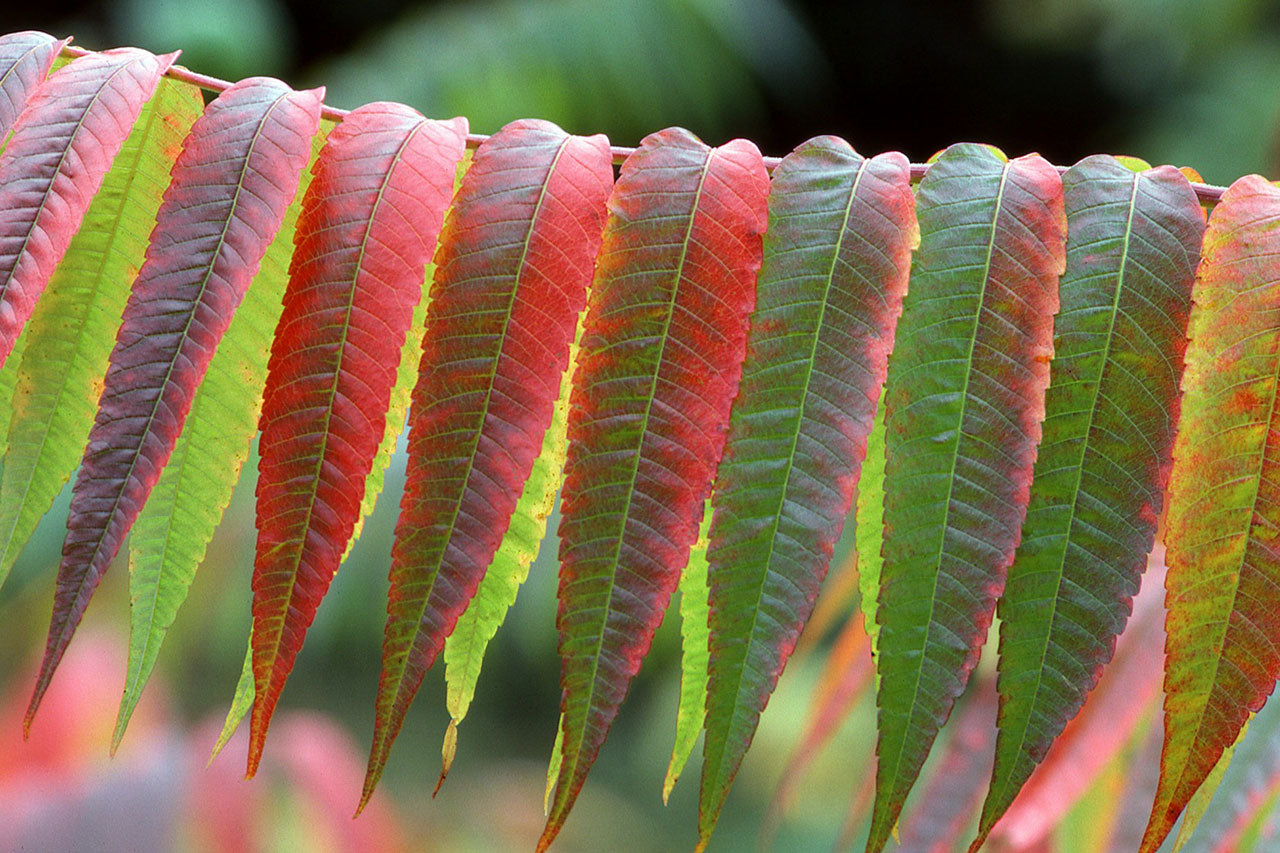

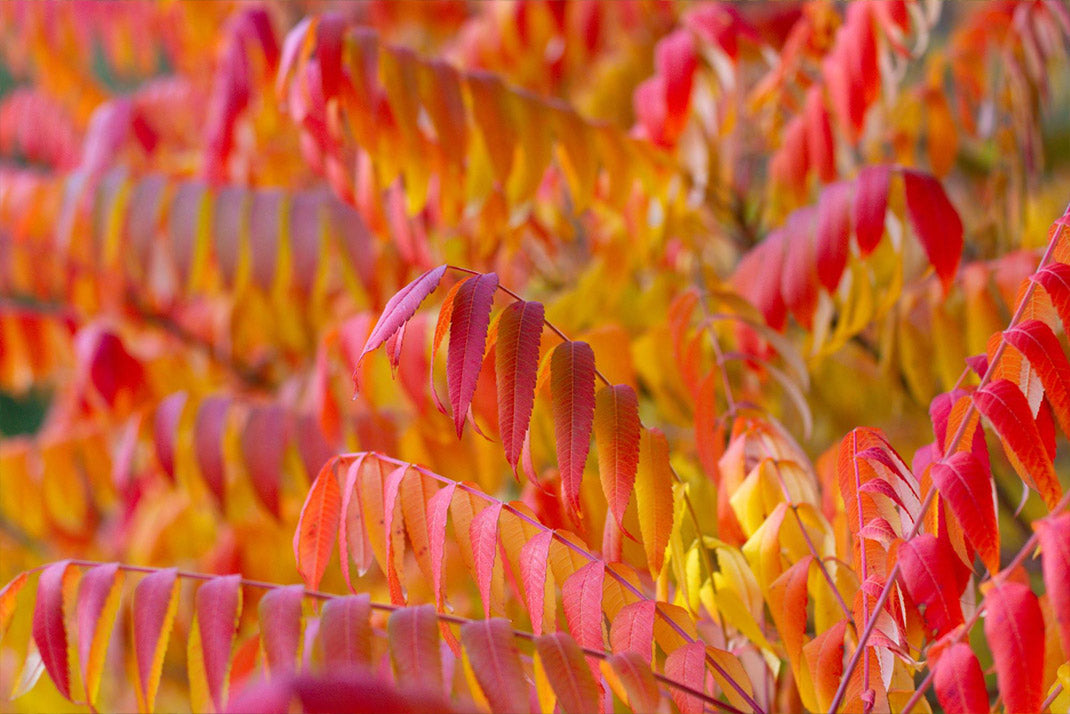
Sumach is one of those plants that really earns its place in autumn. As the days shorten, those big, feathery leaves turn through glowing yellow, orange and scarlet, often with several shades on one plant. On a bright afternoon the whole canopy seems to light up, bringing real drama to even an ordinary back garden. Because the tree itself is not massive in most gardens, you can enjoy that blaze of colour at eye level rather than just as a distant accent.
Common name: Sumach, Stag’s Horn
Latin name: Rhus
Size in UK gardens: Most garden sumachs form shrubs or small trees around 3–5m tall and wide; some compact cultivars stay nearer 2.5m, while Rhus potaninii can reach about 10–12m tall in time where given space.
Best position: Full sun to light partial shade; brightest autumn colour and strongest shape develop in a sunny, open position with a little shelter from the harshest winds.
Soil: Moderately fertile, moist but well‑drained soil of almost any type – from improved clay to lighter, sandy ground – as long as it doesn’t sit waterlogged for long periods.
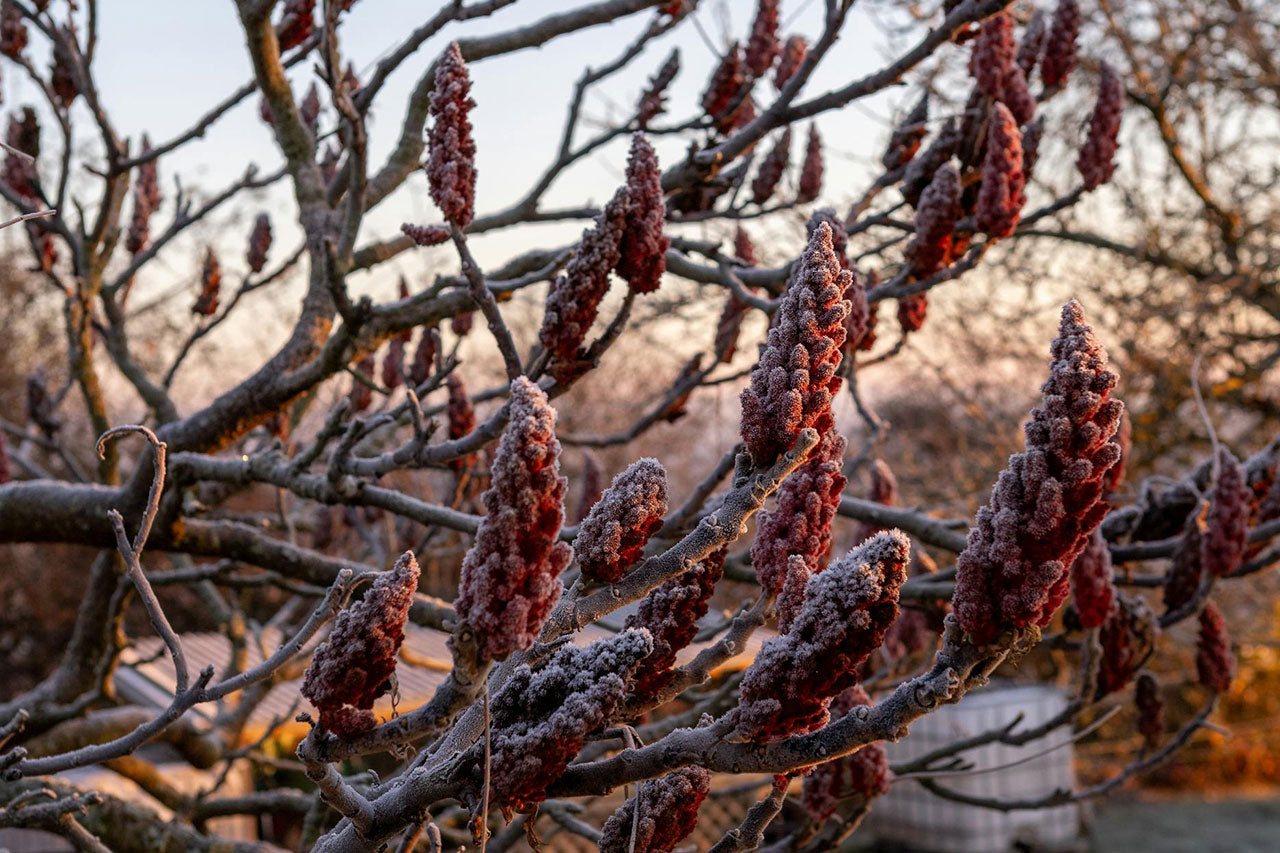
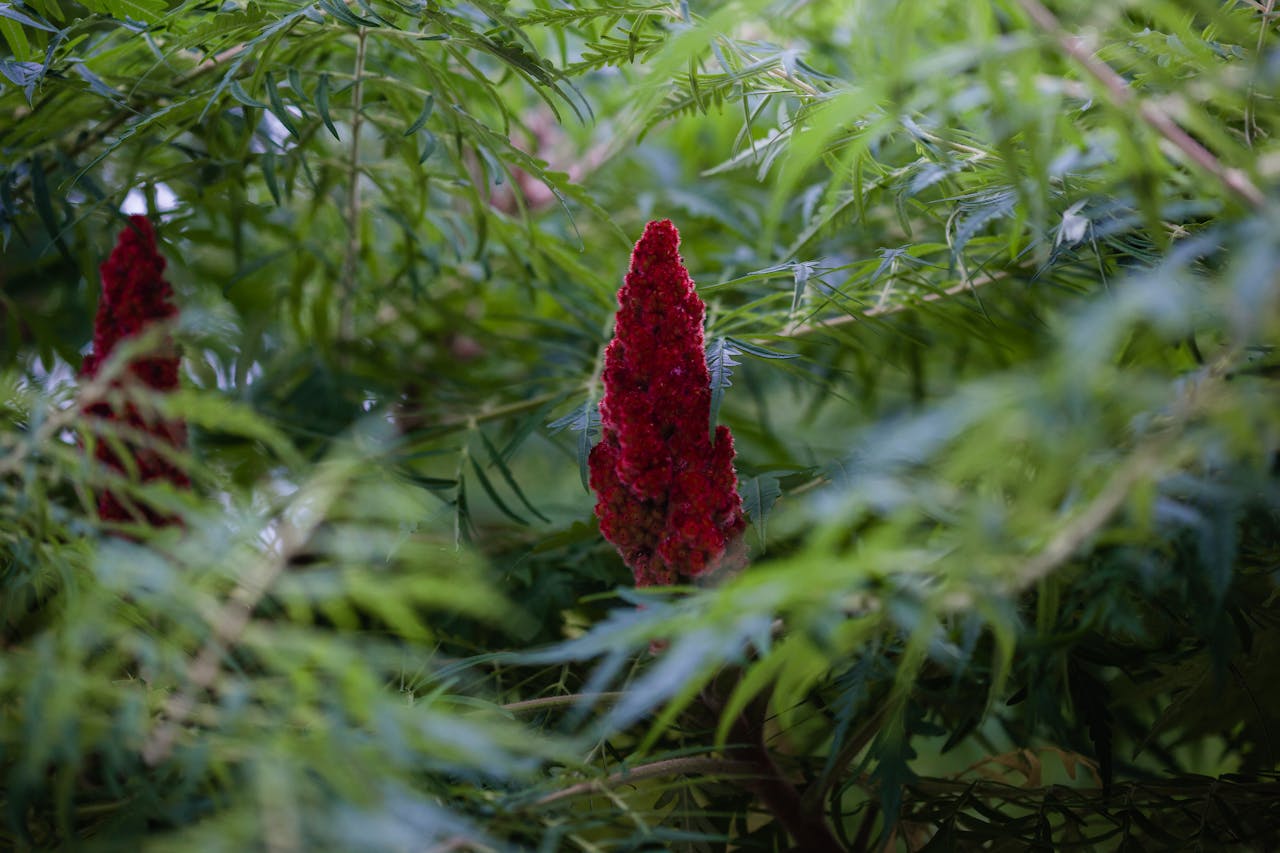
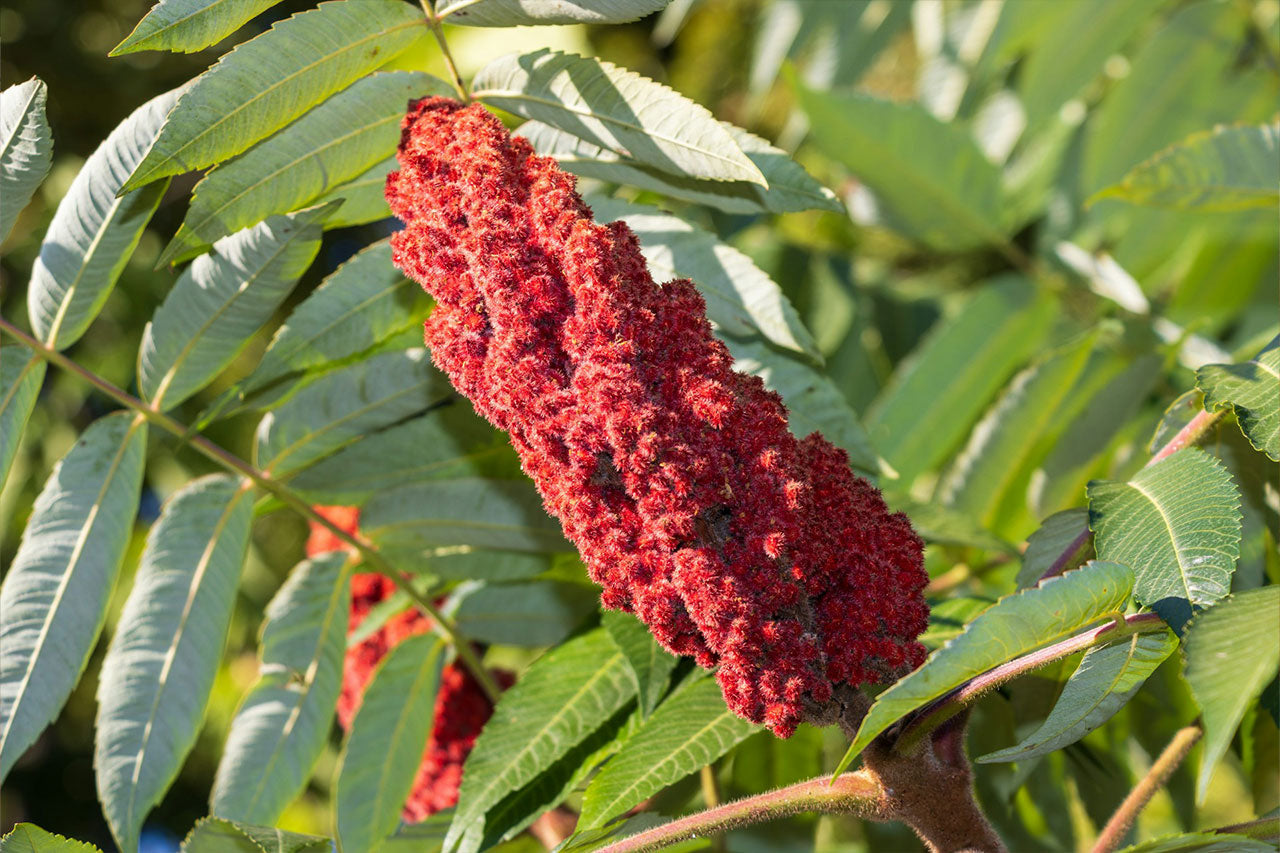
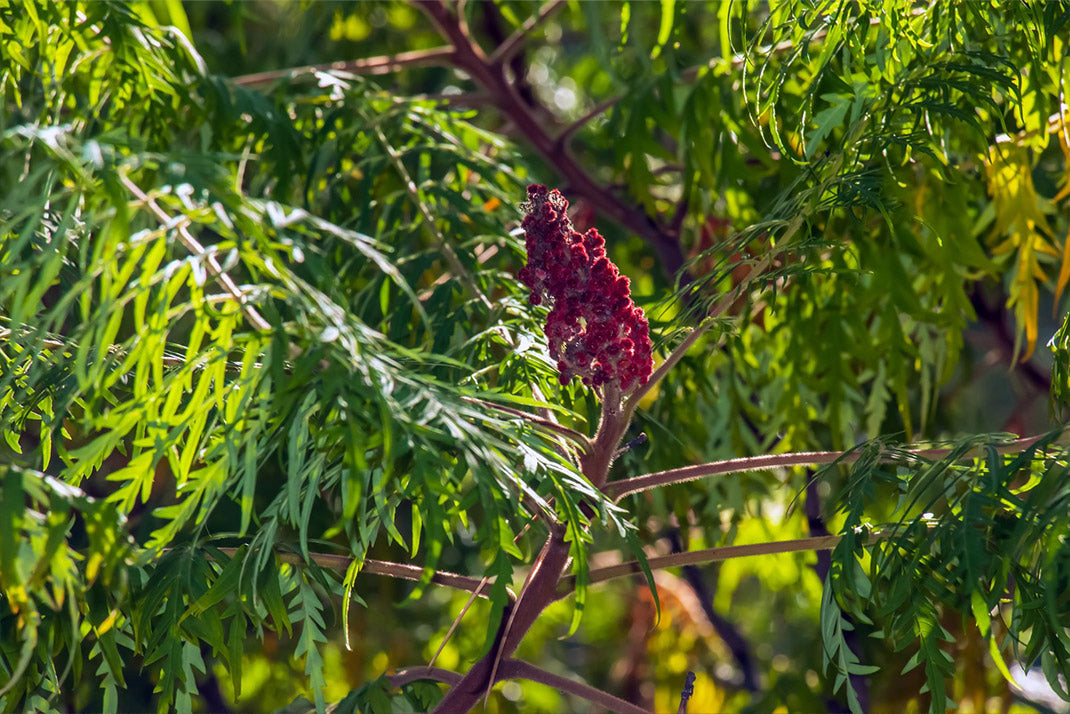
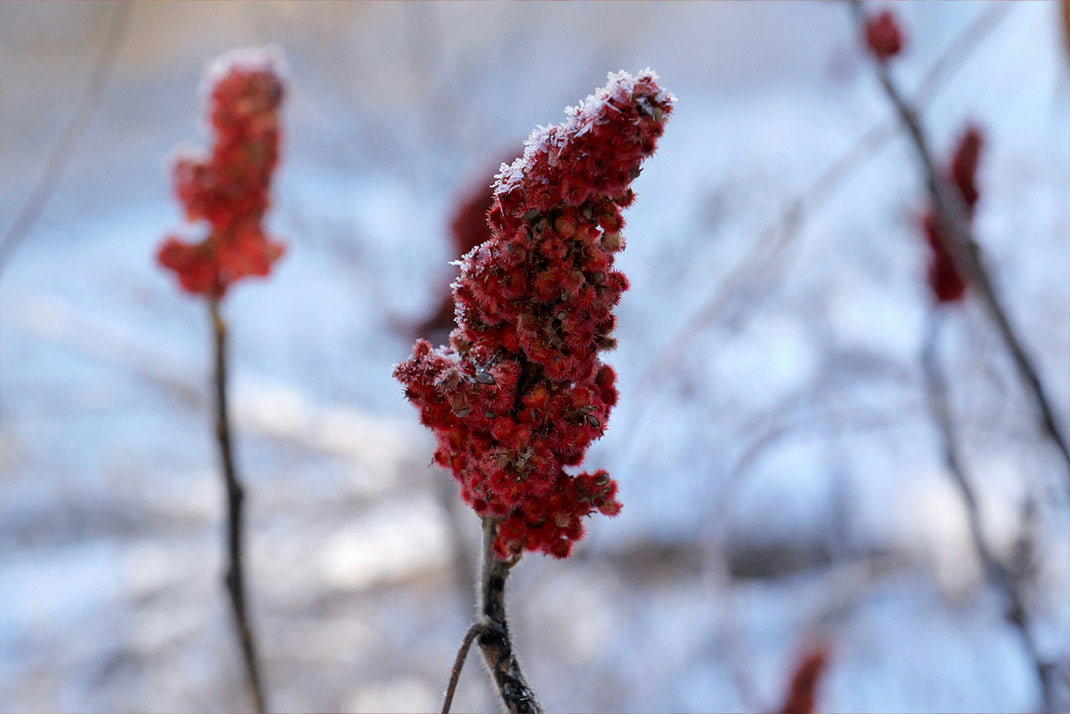
Main interest: Fresh, fern‑like foliage in spring and summer, followed by spectacular orange‑red autumn colour and, on some species, furry upright cones of red fruit that stand into winter.
Fragrance: Flowers are small and not grown for scent; ornamental sumachs are chosen for their foliage, autumn display and structural form rather than fragrance.
Hardiness: Fully hardy across the UK; species like Rhus typhina and Rhus potaninii are rated hardy and cope well with typical British winters.
Care level: Easy to moderate – they’re tough plants once established, but you do need to allow for (and manage) suckering in the shrubby types and give them enough space for their eventual spread.

The Simpson’s team raises the majority of our trees here at the nursery. For varieties outside our own production, we work with independent local growers we trust - all chosen for UK climate suitability.
Planting time: As container‑grown shrubs or small trees, sumachs can be planted in most months when the soil isn’t frozen or waterlogged, with spring and early autumn usually giving the smoothest establishment.
Watering: Water regularly through the first season or two so the rootball and surrounding soil don’t dry right out; after that, plants in the ground usually cope well with normal summer dry spells, needing extra water only in prolonged drought.
Feeding: On ordinary garden soil, a light mulch of compost or well‑rotted manure in spring is usually plenty. On very poor or sandy sites, you can add a modest scattering of a balanced fertiliser in early spring to help young plants get away.
Pruning: Pruning is generally light – removing suckers, tidying dead or awkward branches, and, if you like, cutting back hard every few years to encourage strong new shoots with fresh foliage. Late winter is often the preferred time for rejuvenation pruning.
Winter: Fully hardy once established, so no special winter protection is needed in the ground. A mulch over the root area is helpful on light soils, and potted plants are best moved somewhere a little more sheltered in very hard weather.
Availability is always changing, so please check with us if you have a particular variety in mind.


A sumach with finely cut, ferny foliage that adds beautiful texture and a slightly exotic feel through summer. When the season turns, the colour can be wonderfully warm and dramatic. Brilliant for bold planting schemes where leaf shape and movement matter as much as flower.
A bold, architectural plant with large leaves that give an almost tropical look in summer. In autumn it often turns spectacular shades of orange and red, putting on one of the showiest seasonal performances around. Perfect for adding drama, texture, and a wilder edge to the garden.
A real head-turner, with finely cut golden foliage that looks luminous from spring onwards. The colour brings instant lift, and the leaf texture adds an airy, exotic quality. As autumn arrives it can flame into oranges and reds—ideal as a feature plant where you want colour with attitude.