

Climbing roses bring one of the loveliest qualities a garden can have: height clothed in flowers. Where a shrub fills the border, a climbing rose transforms the space above it, covering trellis, pergolas, arches, fences and walls in leaf and bloom. That means they can soften hard boundaries, frame entrances and draw the eye upward without demanding much planting space at ground level.
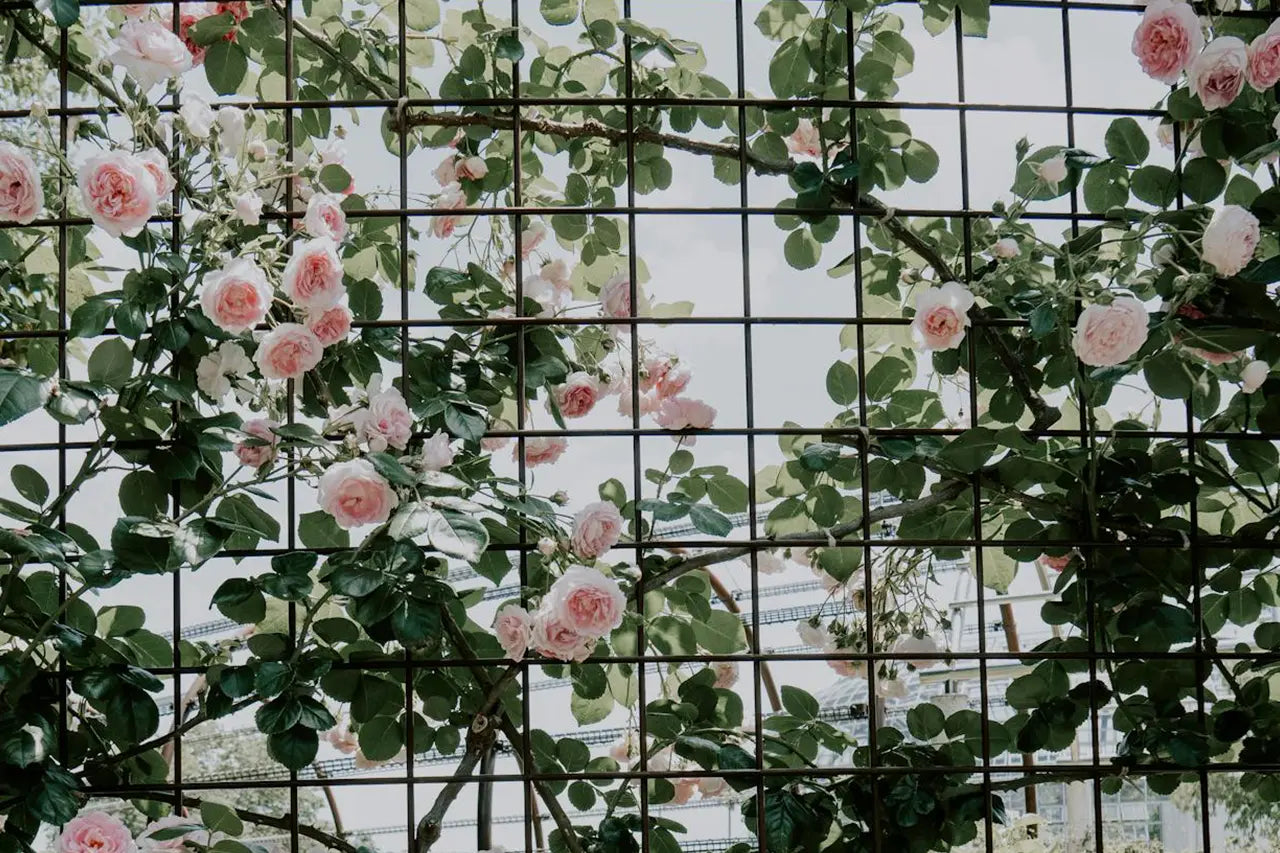
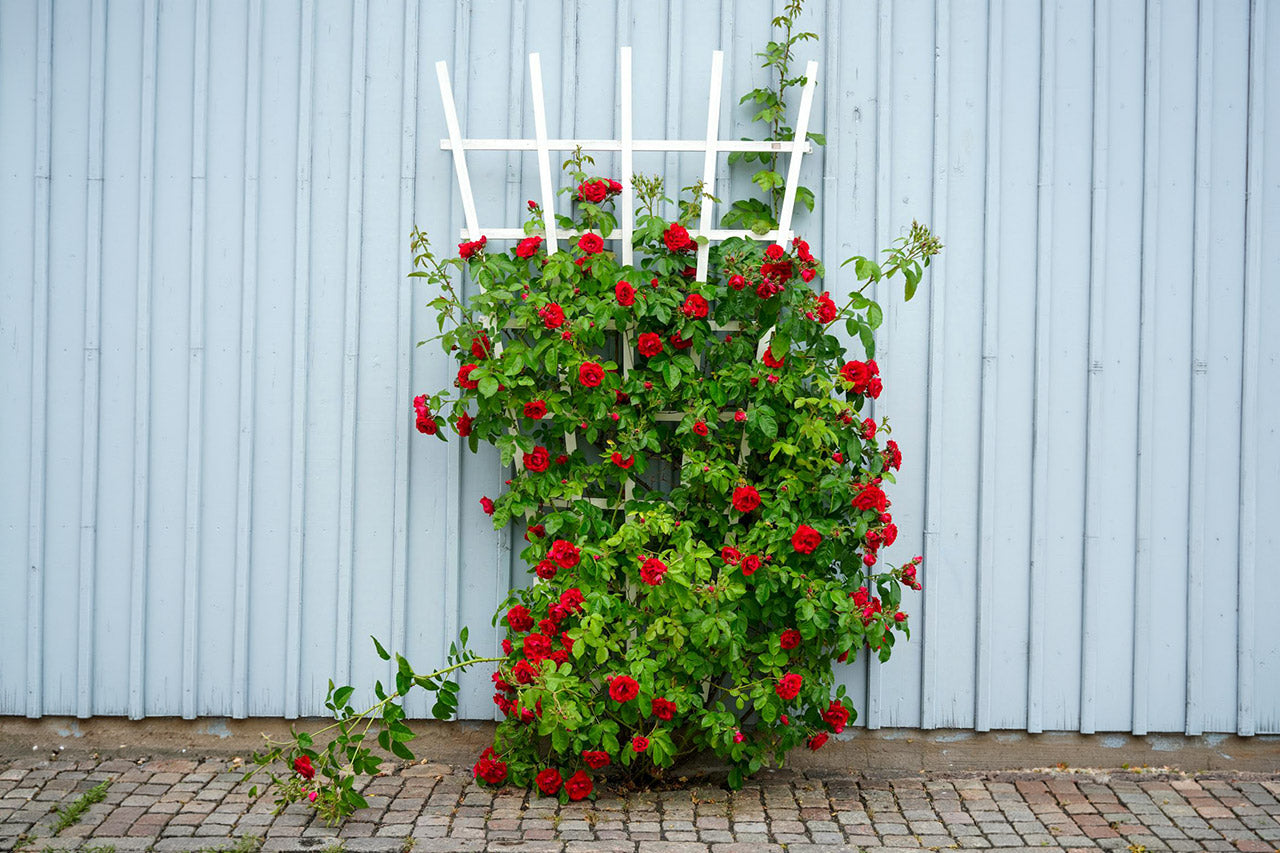
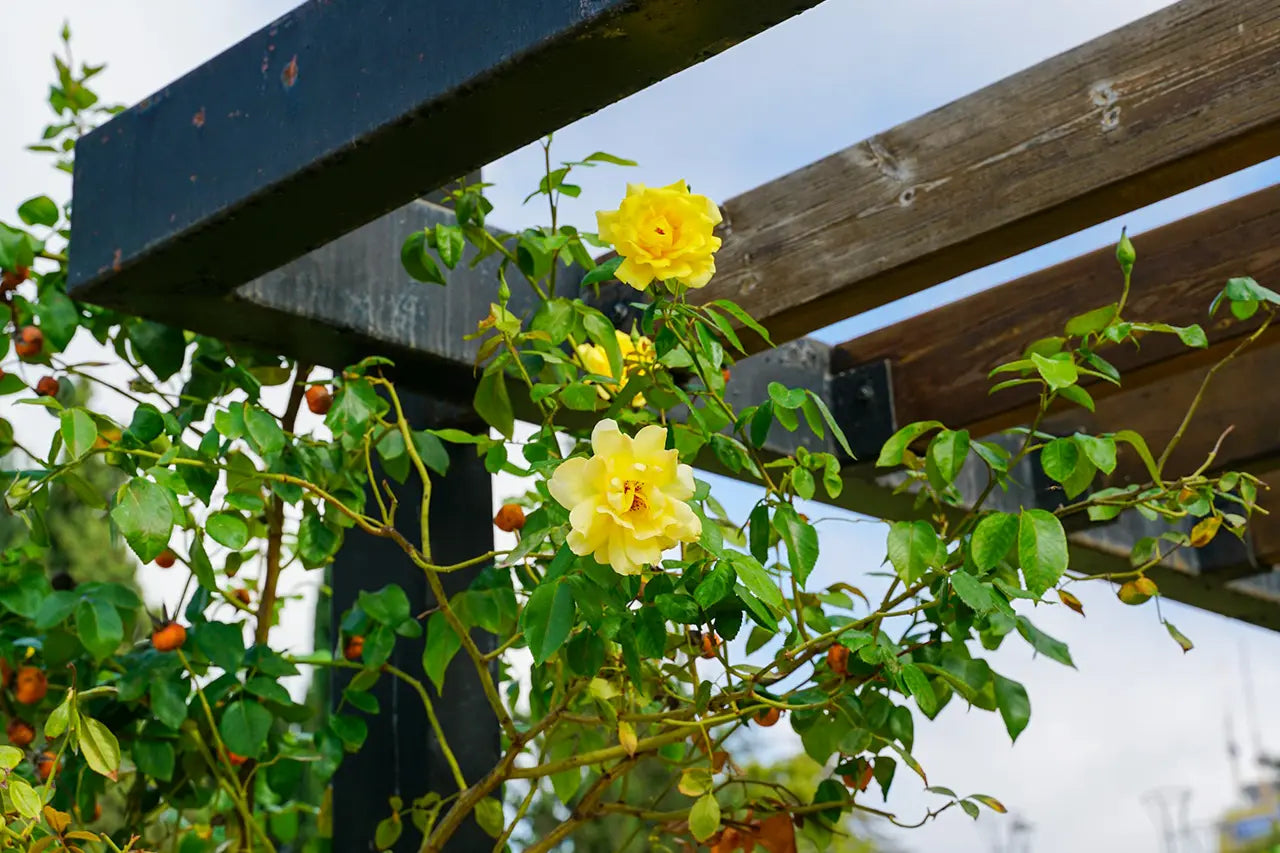
Common name: Climbing rose.
Latin name: Rosa (Climber Group)
Size in UK gardens: Typically 2.5–5m high, sometimes more on a warm wall or established support, with a spread of around 1.5–3m depending on variety and training.
Best position: Full sun is best, though some varieties tolerate light partial shade; ideal on walls, fences, arches, pergolas and obelisks with sturdy support.
Soil: Deep, fertile, moisture‑retentive but well‑drained soil enriched with organic matter. In large containers, a loam‑based compost works best.
Flowering time: Usually from June into August or September, with many modern climbers repeating well into autumn if deadheaded and fed.
Hardiness: Fully hardy in most UK gardens once established, though young shoots may be checked by late frosts in exposed areas.
Care level: Moderate — they need tying in, feeding and annual pruning or thinning, but reward the effort with spectacular displays.

The Simpson’s team raises the majority of our trees here at the nursery. For varieties outside our own production, we work with independent local growers we trust - all chosen for UK climate suitability.
Planting time: Bare‑root climbing roses are best planted from late autumn to early spring while dormant; container‑grown plants can be planted for much of the year when the soil is workable.
Watering: Water deeply in the first season and during dry spells, especially if planted beside walls, fences or in light East Anglian soils where the ground dries quickly.
Feeding: Apply a rose fertiliser in spring and usually again after the first main flush of flowers, with a mulch of compost or well‑rotted manure to keep the soil rich and moisture‑retentive.
Pruning: Tie in main stems and prune or thin side shoots each year, usually in late winter, with summer deadheading where repeat flowering is desired.
Winter: No elaborate winter care is needed in most of the UK, but it is sensible to check ties, tidy fallen leaves and make sure long canes are secure before winter gales arrive.
Availability is always changing, so please check with us if you have a particular variety in mind.


A generous climber that quickly turns fences and pergolas into something romantic, with clusters of bloom that soften hard lines and create a flower-filled backdrop. Perfect for training near a seating area, where the garden feels instantly more enclosed and welcoming.
A bold, vigorous climber that’s made for covering arches, walls and screens with a real sense of abundance. It brings height, flower and that lovely “garden room” feeling, especially when allowed to frame a path or doorway with a flourish.
A much-loved climber that brings a romantic, flower-filled look to walls, arches and pergolas, softening hard lines with abundance. Perfect for framing a doorway or creating a garden “entrance,” where it gives height, structure and that lovely sense of an enclosed, welcoming space.
A lively climber that brings real impact to walls, fences and pergolas, quickly turning a plain backdrop into something romantic and flower-filled. Ideal for framing entrances and creating a sense of garden “rooms,” where height and bloom soften hard lines and add a welcoming, generous feel.


A climber with a softer, more romantic presence, ideal for dressing a wall or pergola with a gentle, flower-filled look. Perfect near a seating area where you’ll appreciate the blooms at eye level, and wonderful for giving a garden that enclosed, sheltered feel that makes outdoor spaces more inviting.
A romantic climber that brings soft pink flower to walls and arches, creating a gentle, cottage-garden feel and a lovely sense of enclosure. Perfect for training around doorways and pergolas, where the blooms soften hard lines and give the garden a more intimate, welcoming atmosphere.