

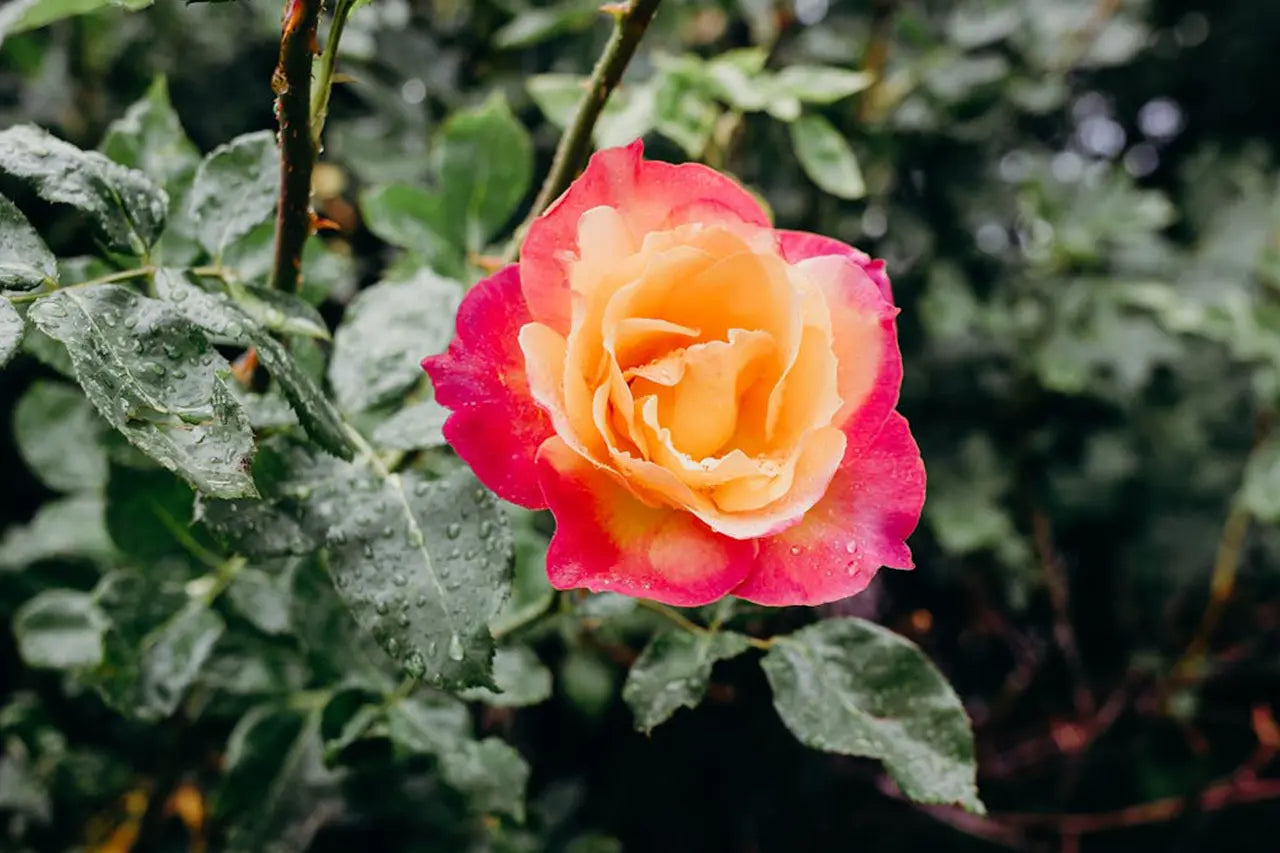
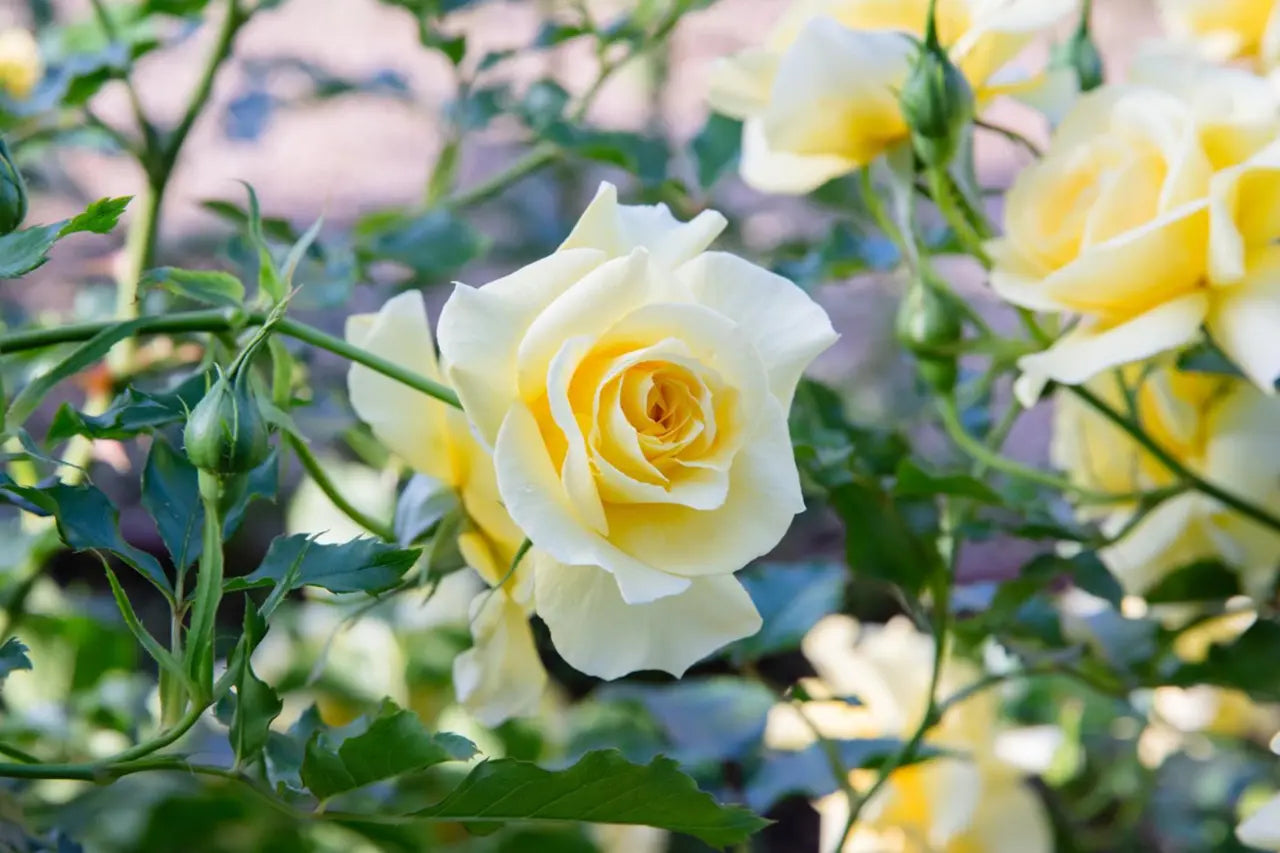
Hybrid tea roses are the classic rose of the flower arranger and the sunny border alike. Their pointed buds open into large, shapely blooms, often carried one to a stem, with that refined, high‑centred form people instantly associate with traditional roses. Whether you love creamy whites, shell pinks, rich crimsons, warm apricots or glowing yellows, hybrid teas bring a sense of polish and occasion that few other garden plants can match. In a UK garden, even two or three well‑chosen bushes can give a bed a far more established and carefully composed look.

Common name: Hybrid tea rose.
Latin name: Rosa (Hybrid Tea Group)
Size in UK gardens: Typically 75cm–1.5m high and around 60–90cm wide, depending on variety, soil and pruning.
Best position: Full sun in an open, airy position with shelter from the very worst winds; ideal in rose beds, mixed borders and cutting gardens.
Soil: Deep, fertile, moisture‑retentive but well‑drained soil enriched with organic matter. In pots, a loam‑based compost is usually best.
Flowering time: In flushes from June into October, sometimes later in mild autumns if deadheaded and fed well.
Hardiness: Fully hardy in most UK gardens, though the tips of stems may die back a little in very cold or exposed winters.
Care level: Moderate — not difficult, but they do appreciate feeding, deadheading and a proper yearly prune to perform at their best.

The Simpson’s team raises the majority of our trees here at the nursery. For varieties outside our own production, we work with independent local growers we trust - all chosen for UK climate suitability.
Planting time: Bare‑root roses are best planted from late autumn to early spring while dormant; container‑grown roses can be planted almost any time the ground is workable, though autumn and spring are usually easiest.
Watering: Water deeply in the first season and during dry spells, especially in light East Anglian soils or in beds close to walls where rain misses the roots.
Feeding: Apply a rose fertiliser in spring and usually again after the first flush of flowers, with a mulch of compost or well‑rotted manure to keep roots cool and soil fertile.
Pruning: Deadhead through summer to encourage repeat flowering, then prune properly in late winter or early spring to shape the plant and stimulate strong new stems.
Winter: Little special winter care is needed beyond tidying fallen leaves, checking mulch and leaving any hard pruning until the worst of the cold has passed.
Availability is always changing, so please check with us if you have a particular variety in mind.


A classic, upright hybrid tea with that “one perfect bloom on a stem” elegance. Ideal for cutting and posies, and brilliant when you want a rose that feels formal and refined in a border, standing tall among softer perennials.
A beautifully poised hybrid tea, prized for its elegant flower form and refined presence. Ideal for a dedicated rose bed or as a feature in a mixed border, where it adds a touch of classic romance and provides lovely stems for vases.
A rose with a classic, heartfelt feel—elegant blooms on good stems, ideal for cutting and for creating a more traditional rose-border look. Perfect when you want something that feels timeless and special, whether as a gift plant or a focal point in a border.
A classic rose grown for sheer perfume and presence—one of those that makes you pause as you walk past. Ideal near the house, a path, or seating, where the scent can be enjoyed properly, and wonderful for cutting when you want fragrance indoors as well.


A classic hybrid tea with that elegant, show-rose look—poised blooms on strong stems that are perfect for cutting. Ideal for a dedicated rose bed or as a refined feature in a mixed border, where it brings a touch of traditional romance and a more formal, upright presence.
A famous classic for good reason—large, beautifully formed blooms in warm, soft tones that feel romantic and luxurious. Perfect for cutting and for giving a border a touch of show-rose elegance. Ideal where you can appreciate the flower form up close, because this one really is a stunner.
A classic hybrid tea with a formal, upright habit and that poised, single-bloom elegance. Ideal for cutting and for giving a border a more traditional rose-bed feel, especially when planted where you can appreciate the flower form up close and enjoy the clean, composed silhouette.
A rose with a softer, more atmospheric feel—cooler tones that bring a touch of intrigue and a slightly contemporary edge. Perfect as a feature in a border or a pot where the colour can be appreciated, and especially effective paired with silvers and pale greens for a calm, modern palette.


A refined hybrid tea with that classic, elegant bloom form—ideal for cutting and for bringing a touch of traditional romance to borders. Perfect where the flowers can be appreciated up close, and a lovely choice when you want a rose that feels poised, calm and quietly special.
One of the world’s most famous roses, loved for its large, elegant blooms and classic hybrid tea form. Perfect for a traditional rose bed or as a feature in a mixed border, where it brings timeless romance and lovely stems for cutting. A rose that always feels special, even in a small garden.
A classic hybrid tea with beautifully formed pink blooms that feel elegant and traditional, especially as a cut flower. Perfect for a dedicated rose bed or as a refined feature in a border, where it brings that “one perfect bloom on a stem” look and a touch of old-fashioned romance.
A classic hybrid tea with bold, showy blooms that make a real statement in the garden and in a vase. Perfect for a traditional rose bed where you want that formal elegance, and ideal near a path where you can admire the flower form up close—very much a “proper rose” in character.


A bright, uplifting hybrid tea with that classic, elegant bloom form—perfect for cutting and for adding a touch of sunshine to a traditional rose bed. Ideal where the flowers can be admired up close, bringing a calm, refined presence and a cheerful note through the flowering season.
A bold, showy hybrid tea with a warm, sunset palette that brings real drama to a rose bed and makes superb stems for cutting. Perfect as a feature rose where you can admire the bloom form up close, adding that classic “single spectacular flower” elegance with a more modern, vibrant colour twist.