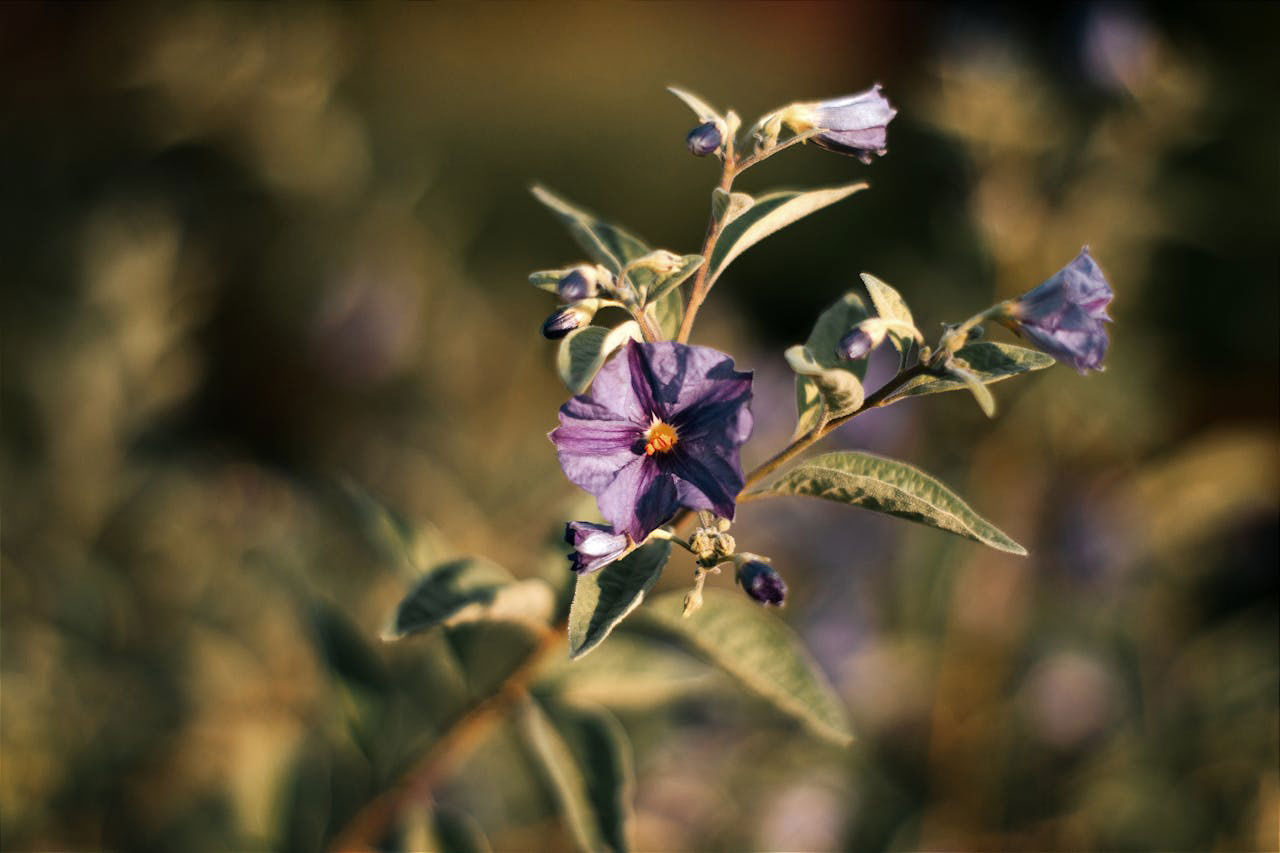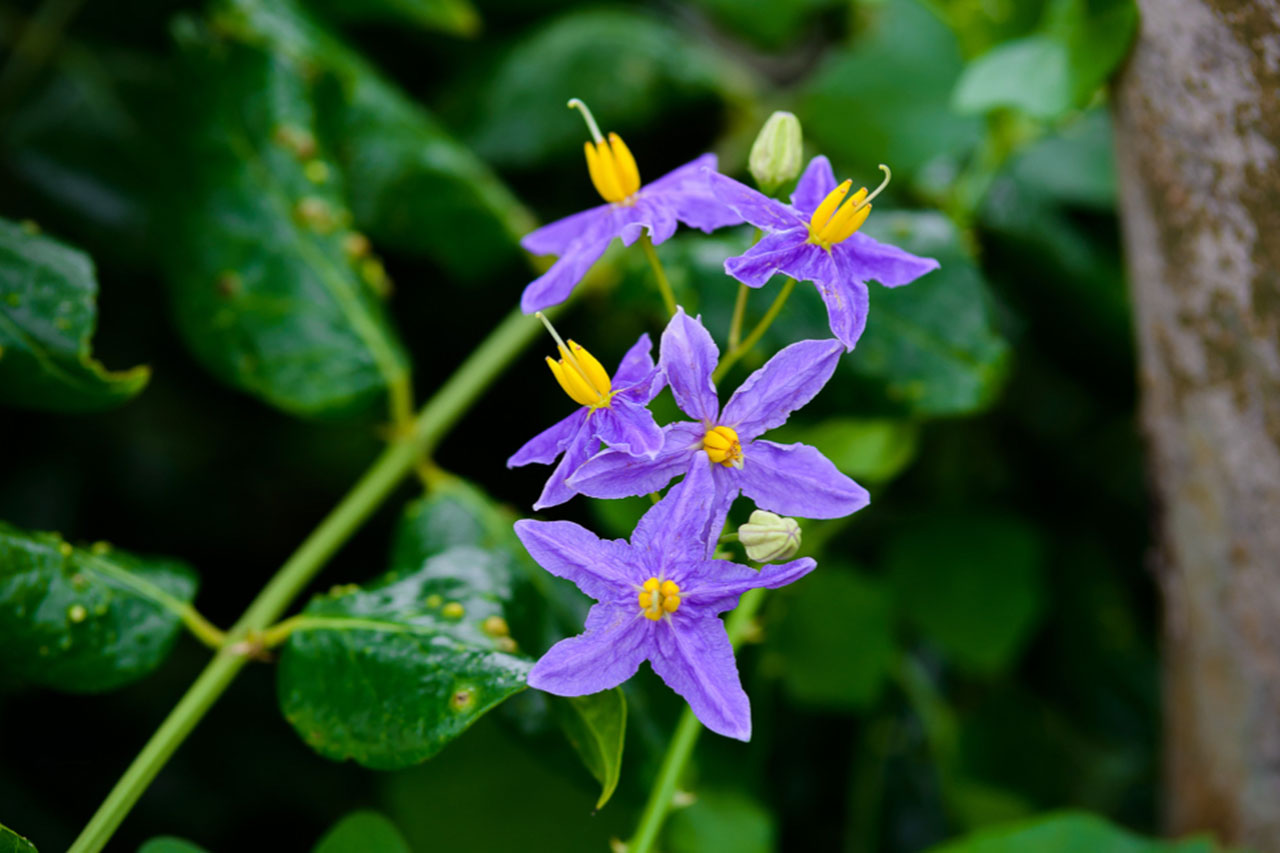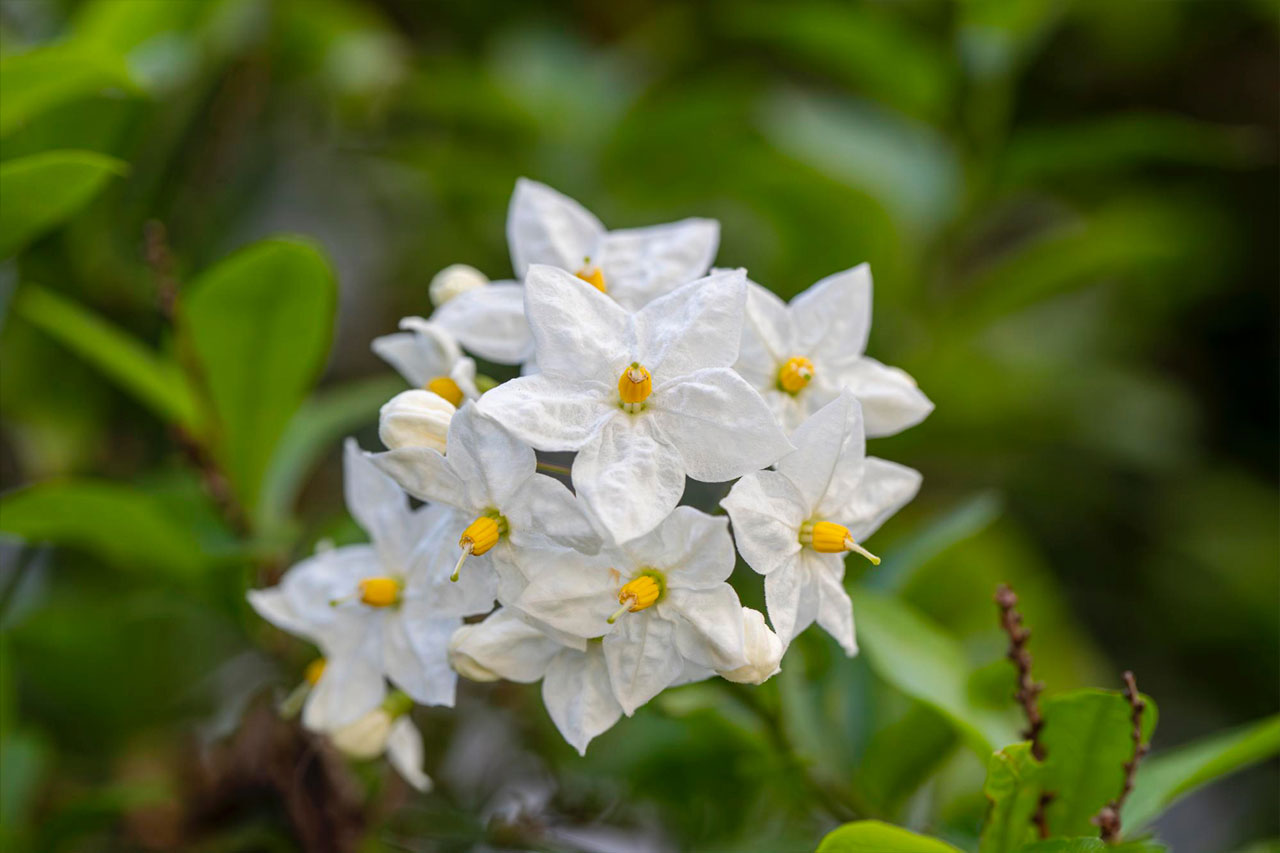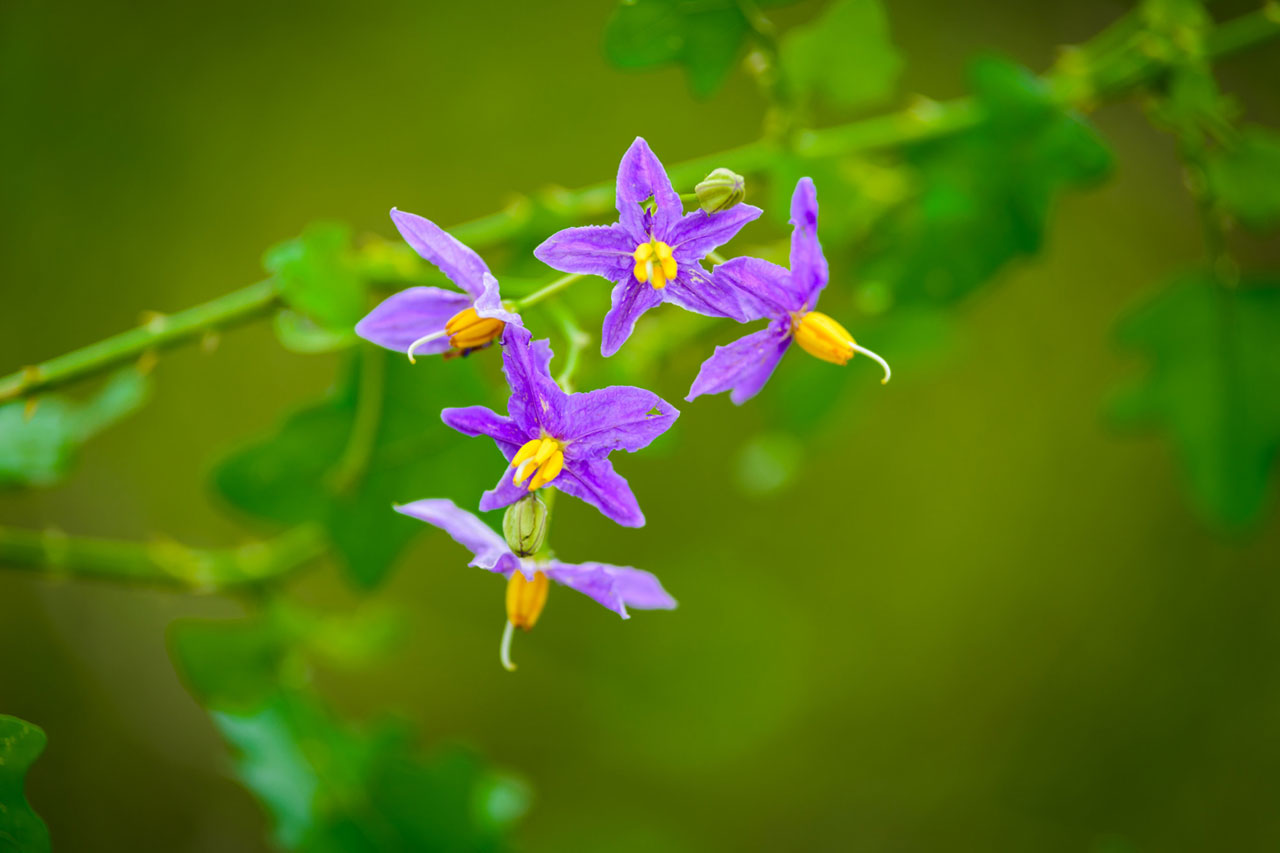

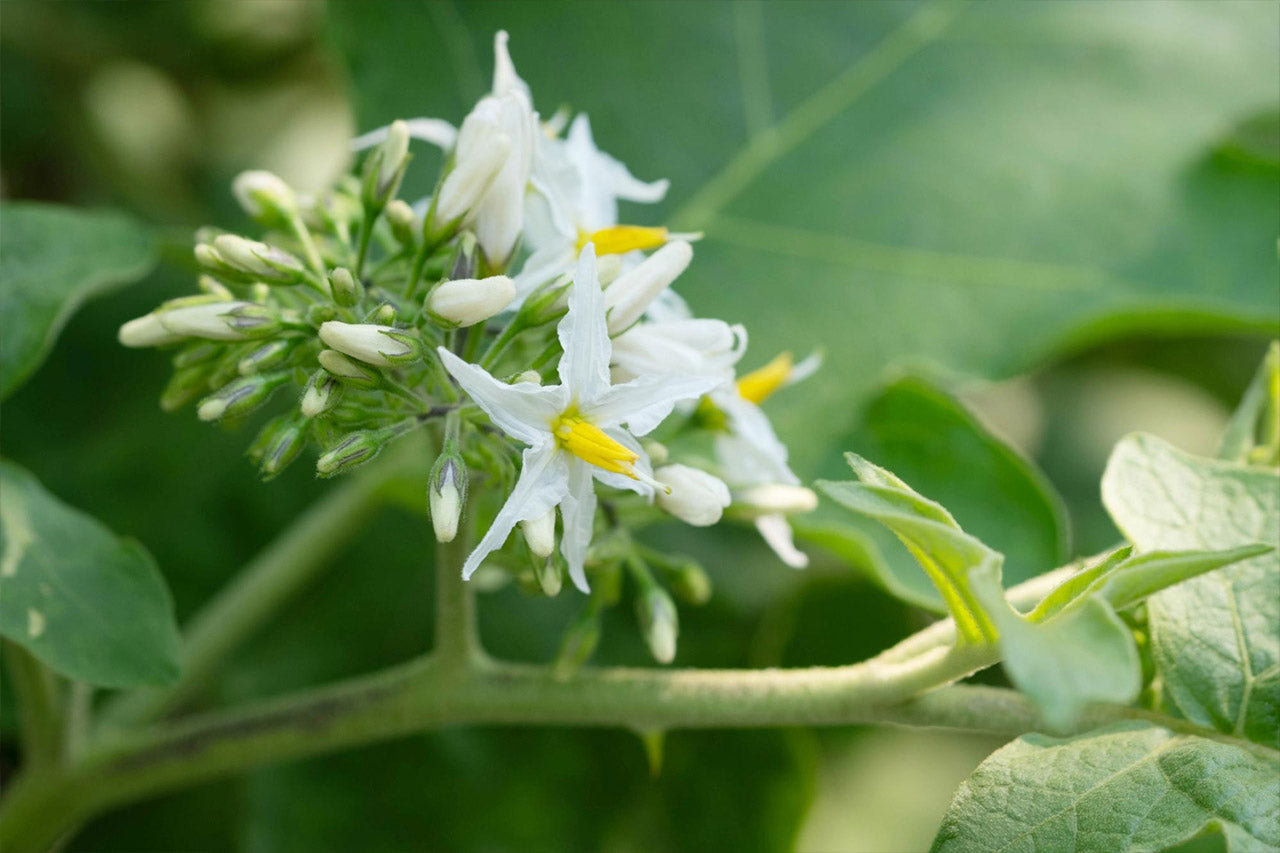
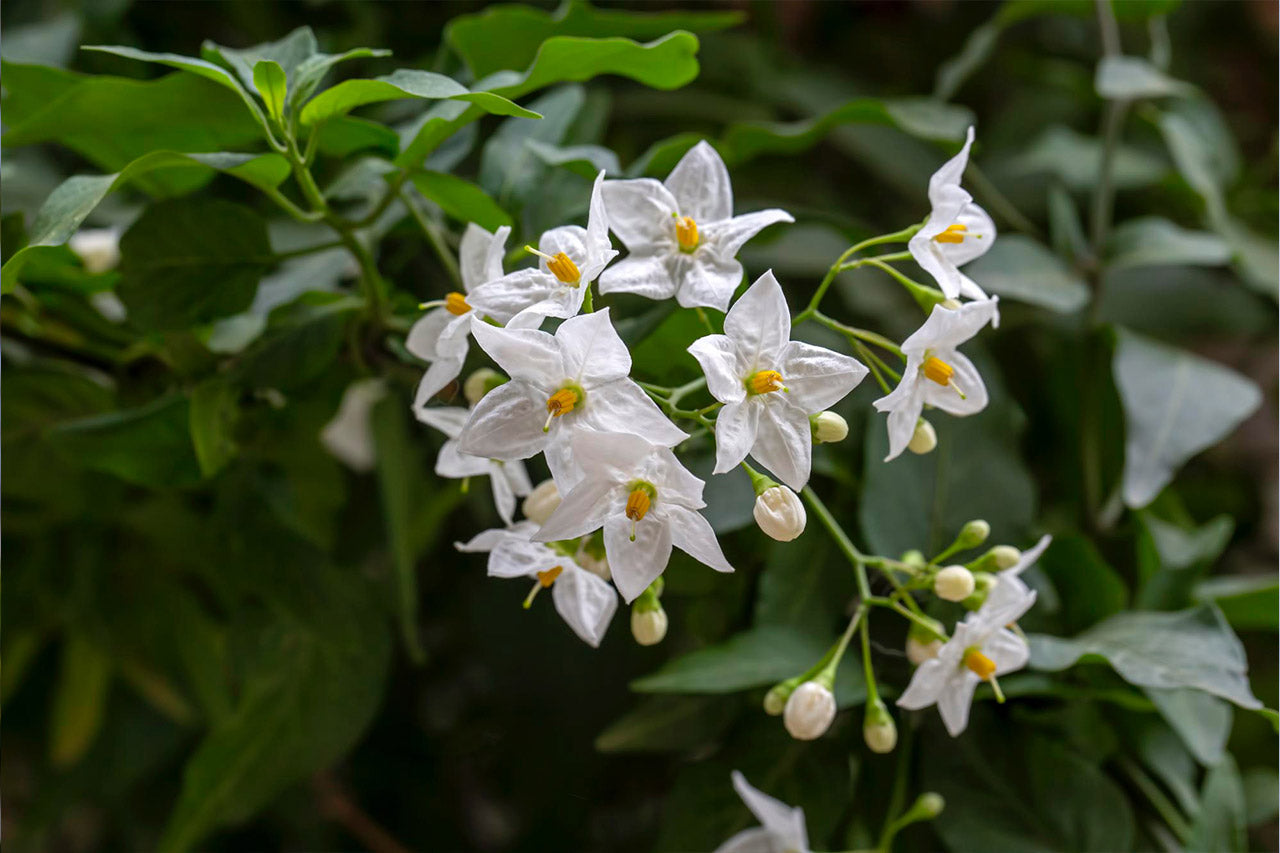
The ornamental Solanum climbers – especially Solanum crispum ‘Glasnevin’) – are grown for their generous trusses of starry flowers. Violet‑blue or white blooms with bright yellow centres appear from early summer right through to late summer or early autumn, especially on a warm wall. Each flower may be small, but they appear in clusters, so the overall effect is a soft, shimmering veil of colour. Against brick, render or dark fences they look surprisingly exotic, yet they’re perfectly happy in an ordinary UK garden as long as you can offer sun and shelter.
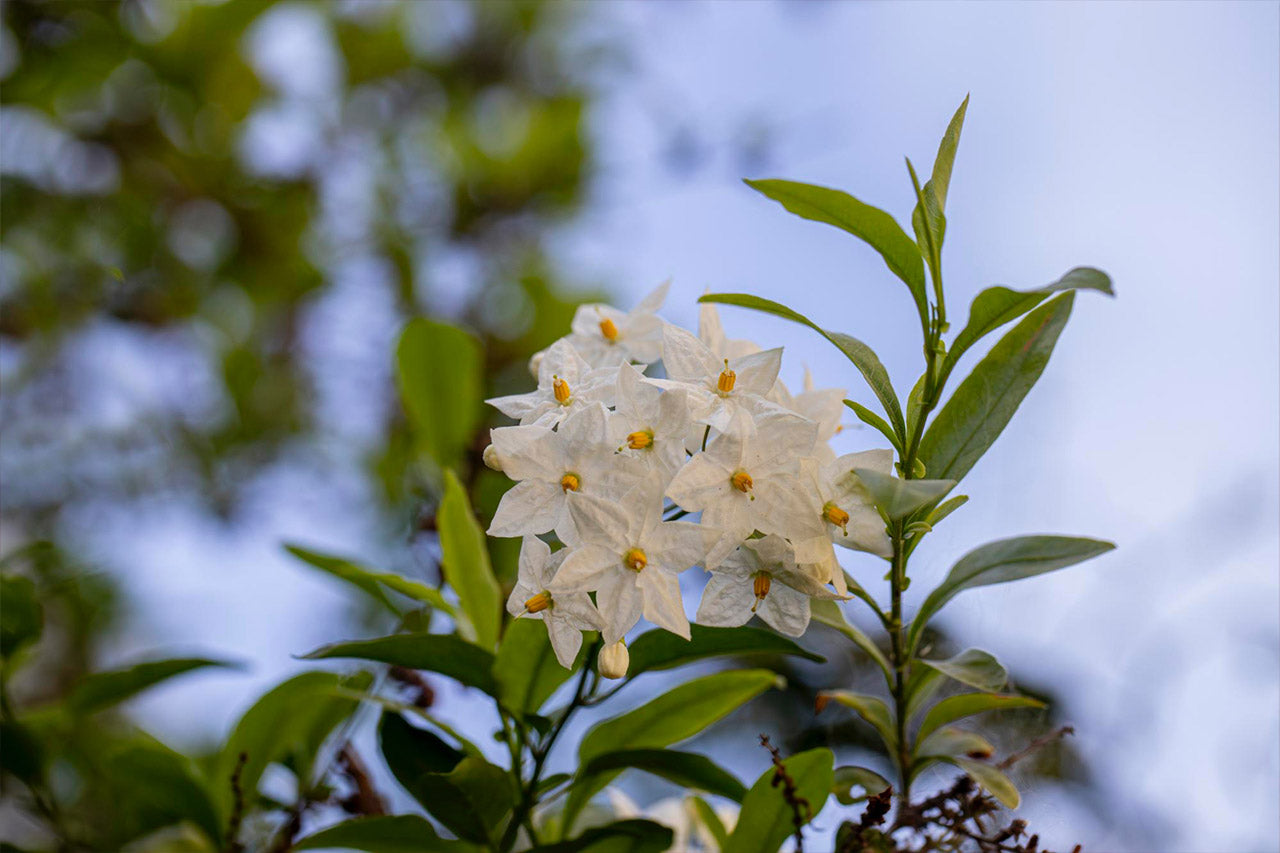
Common name: Potato Vine or Chilean Potato Tree.
Latin name: Solanum
Size in UK gardens: Typically 3–6m tall and 2–3m wide on a warm wall or sturdy fence, though very mild gardens may see stems longer than this if left unpruned.
Best position: A sunny, sheltered, south‑ or west‑facing aspect with a wall, fence, pergola or arch for support; more frost‑prone areas benefit from the extra warmth and protection of a house wall.
Soil: Moderately fertile, moist but well‑drained soil – clay, loam or improved light soil are all fine; tolerates slightly alkaline, chalky conditions if drainage is good.
Flowering time: Usually June to September, sometimes stretching into October in a warm season, with clusters of violet‑blue or white star‑shaped flowers.
Hardiness: Borderline hardy to mostly hardy – broadly around RHS H4 in a sheltered, sunny spot; may lose top growth below about –5°C but often reshoots from the base if roots are protected.
Care level: Moderate – easy enough if you can provide a warm wall, decent soil and a support, with regular tying in and pruning; less suited to very exposed or cold, waterlogged gardens.

The Simpson’s team raises the majority of our trees here at the nursery. For varieties outside our own production, we work with independent local growers we trust - all chosen for UK climate suitability.
Planting time: As container‑grown plants, Solanum can be planted whenever the soil is workable and not frozen or waterlogged; late spring and early autumn are usually easiest, giving new roots time to establish before high summer or winter cold.
Watering: Water regularly in the first year, especially in dry East Anglian summers or where walls and eaves cast a rain shadow; once established in the ground, plants usually cope with normal dry spells but appreciate a deep soak in prolonged drought.
Feeding: In average soil, a spring mulch of compost or well‑rotted manure is usually enough; on very poor soils and in containers, a balanced feed in spring and an occasional high‑potash liquid feed in summer will support flowering.
Pruning: Prune in late winter or very early spring to remove dead or damaged wood and shorten back last year’s growth, then lightly trim after flowering if needed to keep plants within their allotted space.
Winter: In sheltered gardens, established plants often overwinter with minimal fuss; in colder or more exposed plots, root mulching and good drainage are key, and some top growth may be lost but replaced from the base in spring.
Availability is always changing, so please check with us if you have a particular variety in mind.


A lighter, frothier climber that gives fences and trellis a veil of white, starry flowers, creating a fresh, airy look rather than a heavy block of foliage. It’s excellent for softening boundaries and weaving through other climbers to add sparkle, especially near patios where the long flowering display can be enjoyed day to day.
A generous, flower-packed climber with bold sprays of violet-blue stars that read brilliantly from a distance, giving a lush, summery feel. Use it to turn pergolas and fences into a leafy feature, adding privacy and colour in one go, with an easy, abundant look that feels slightly exotic.