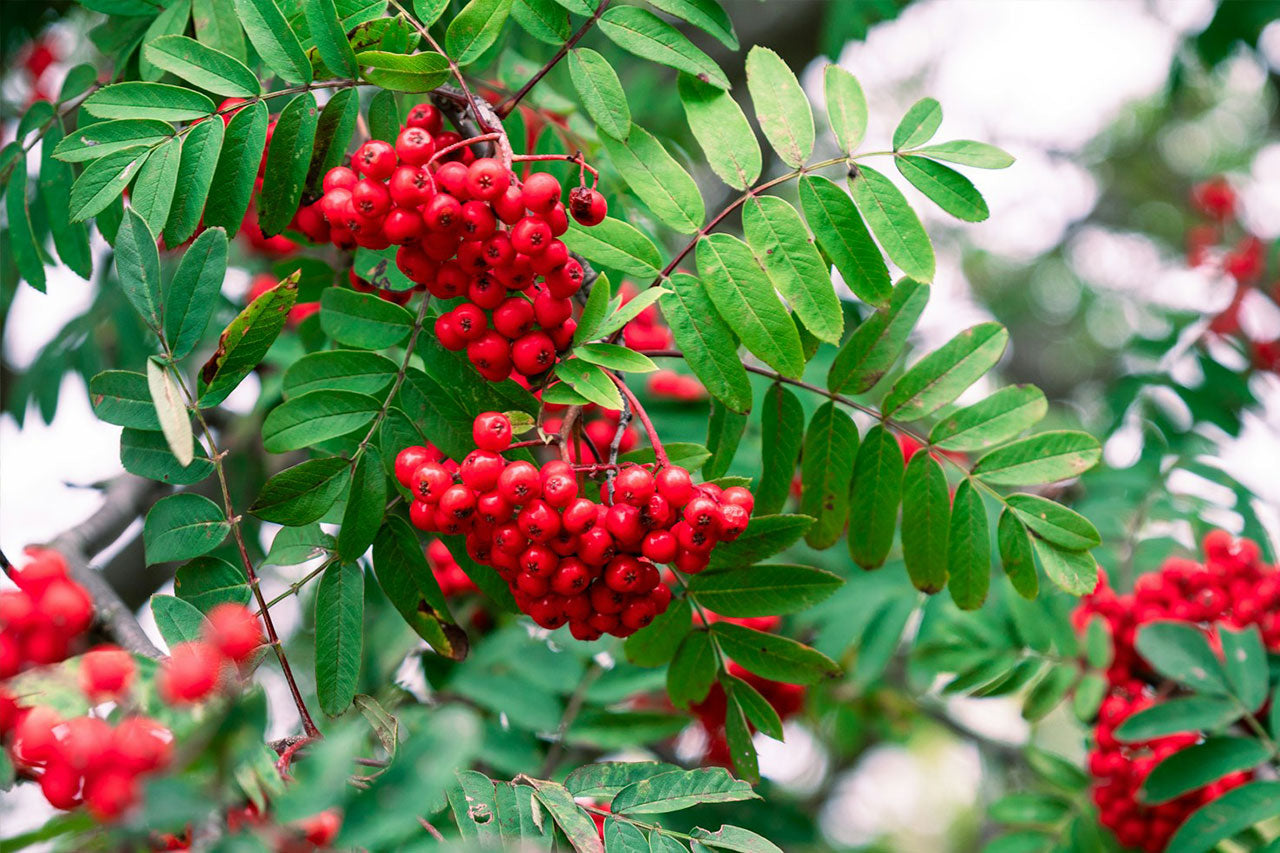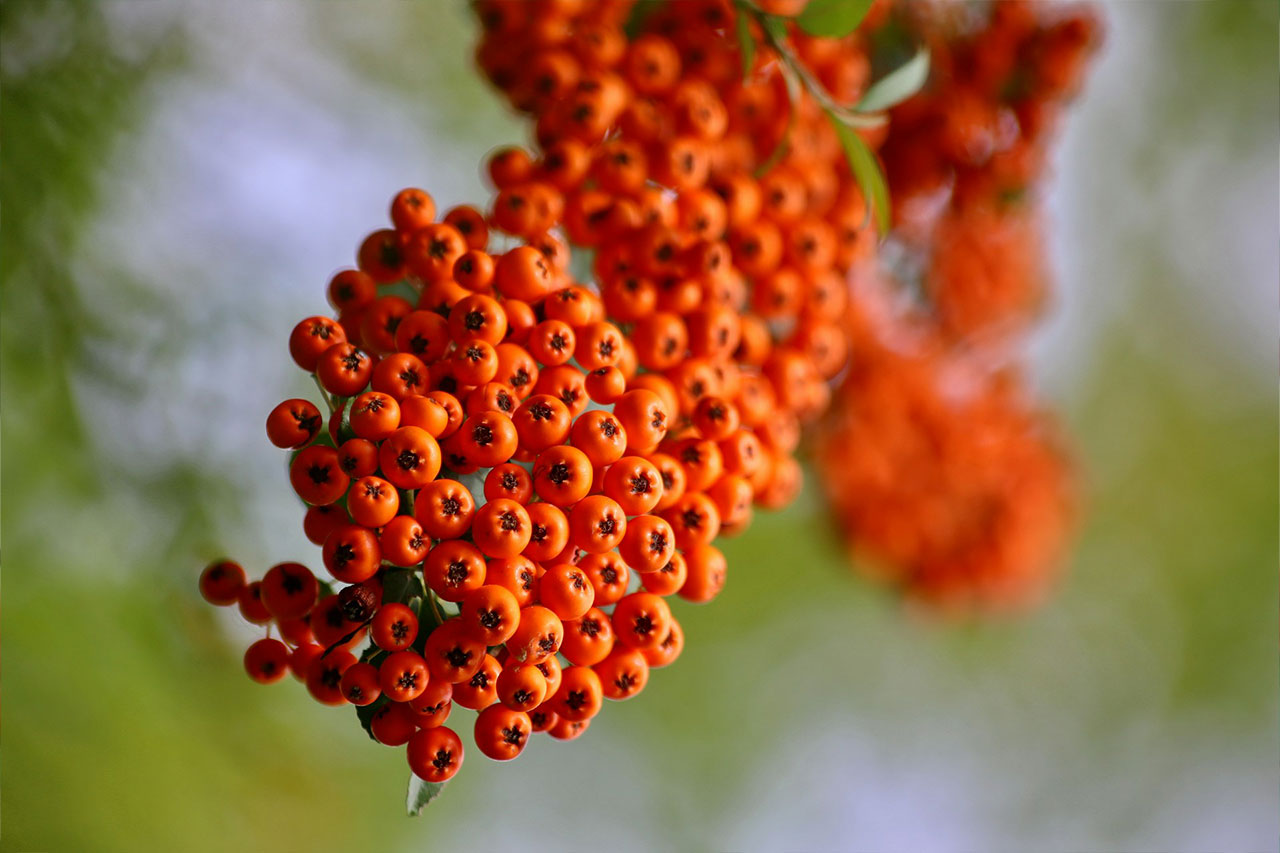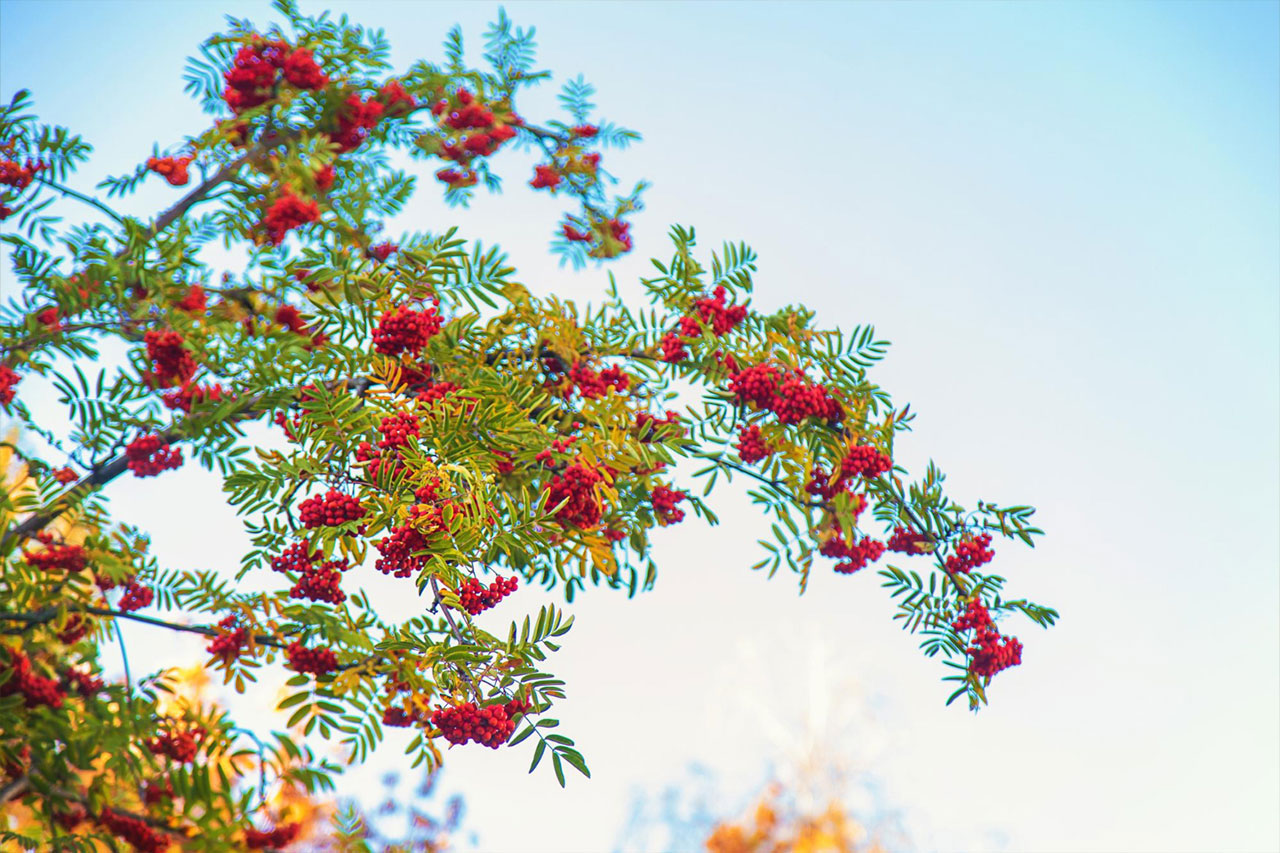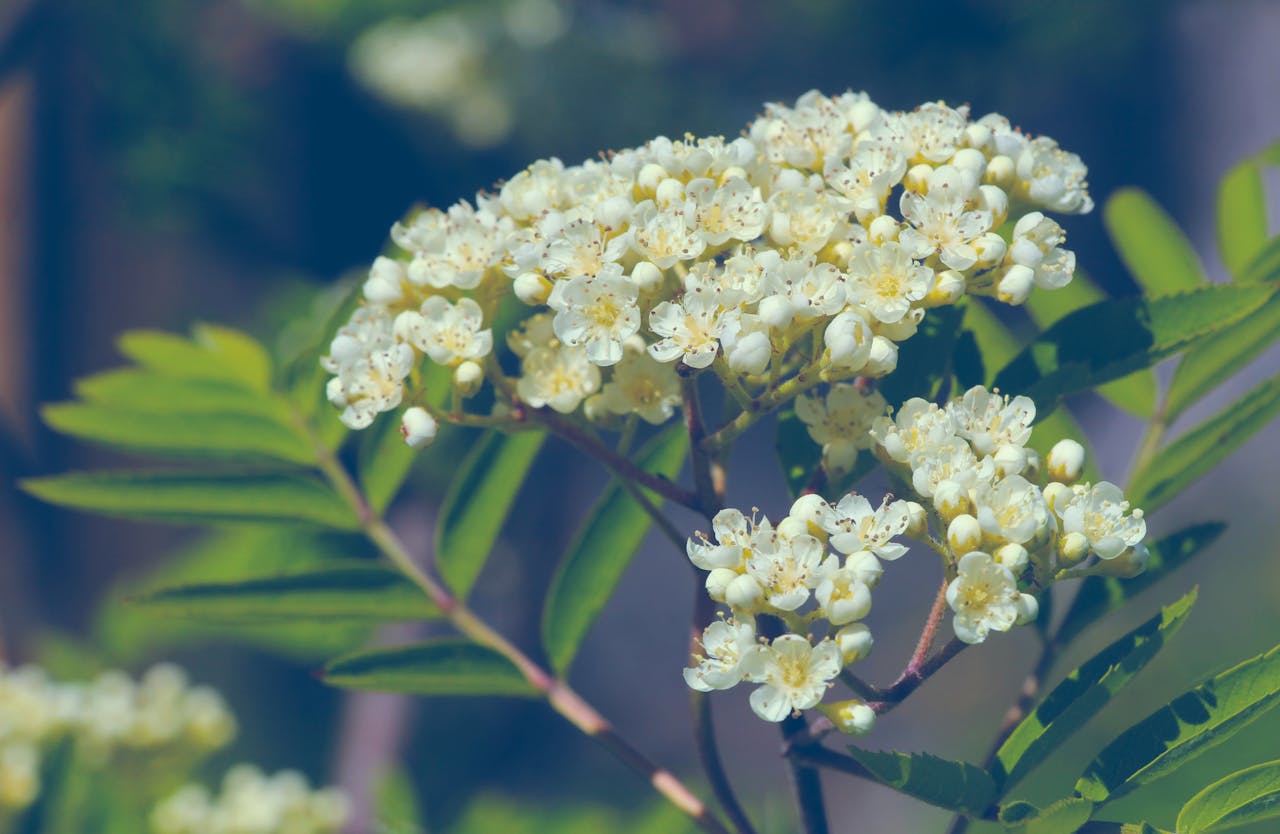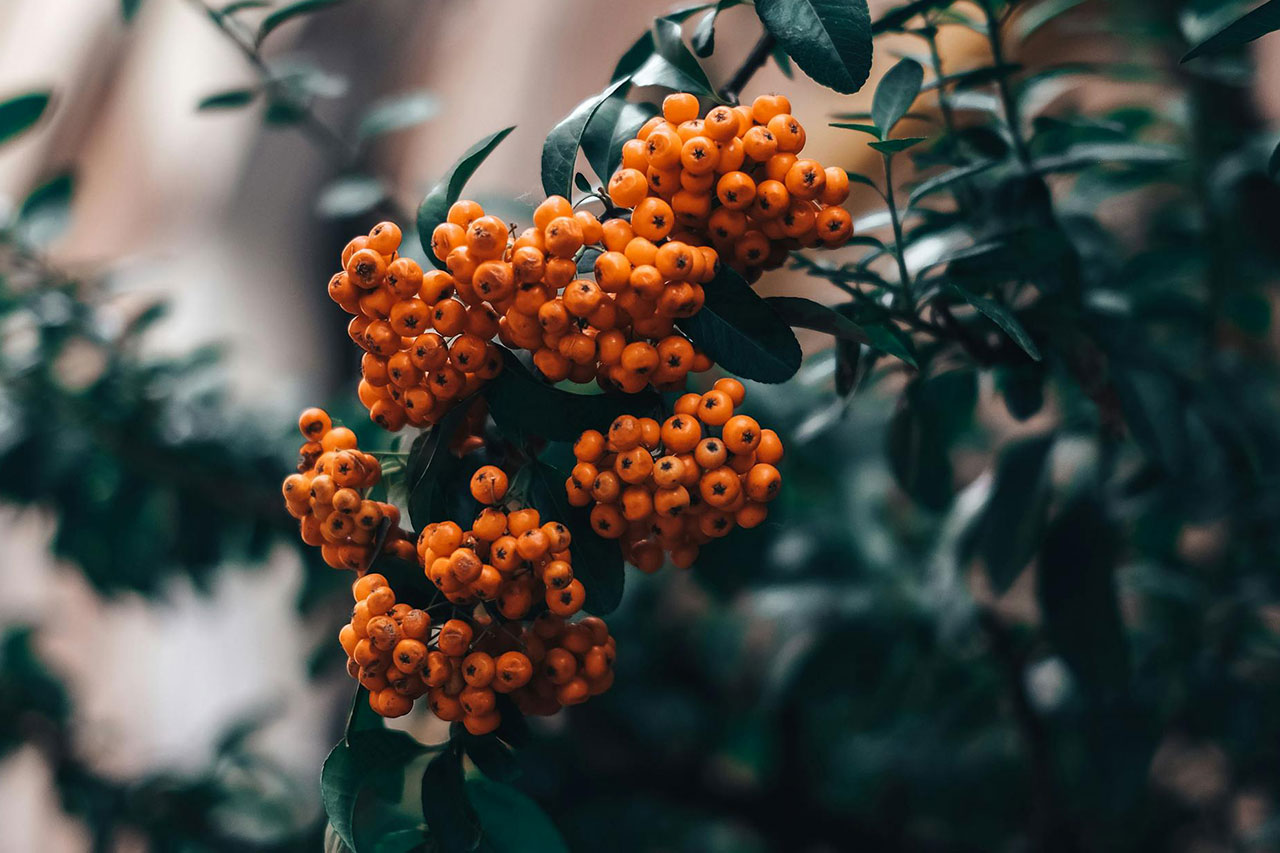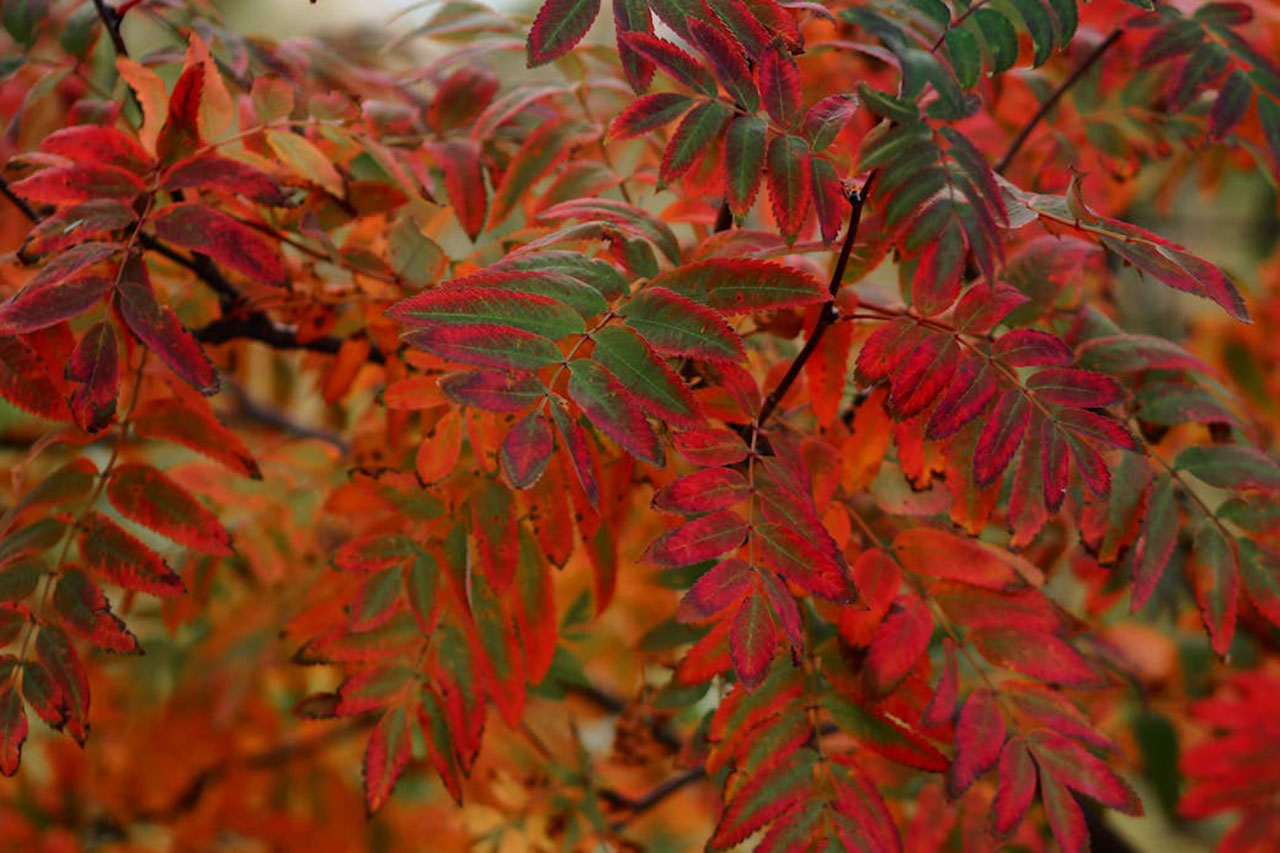

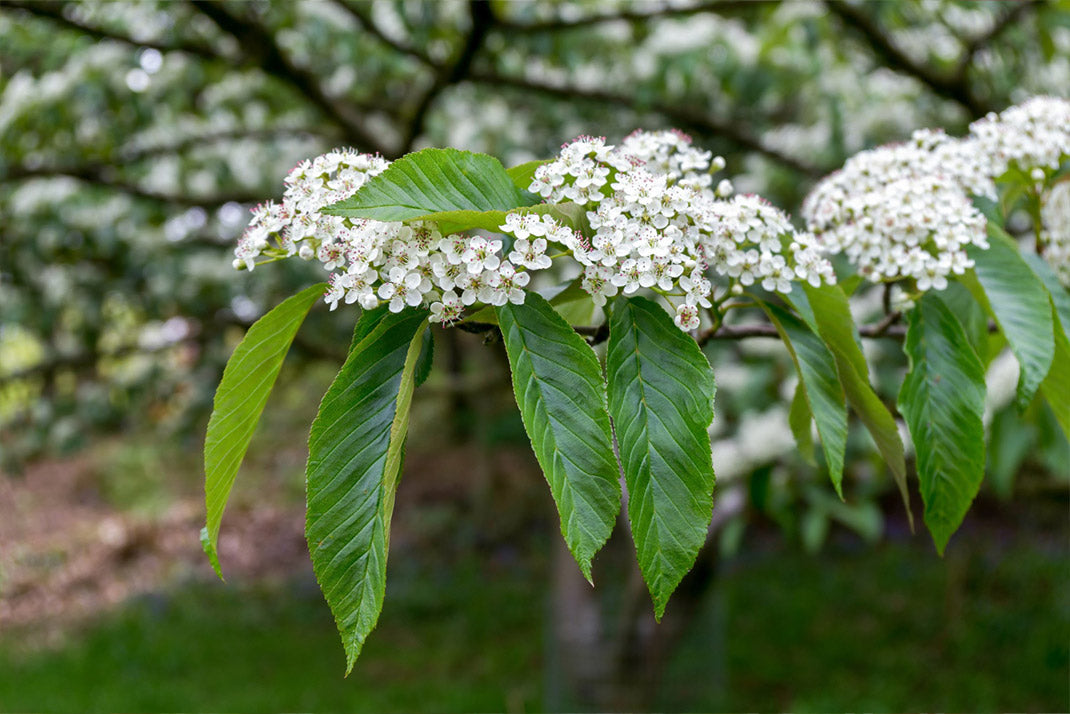
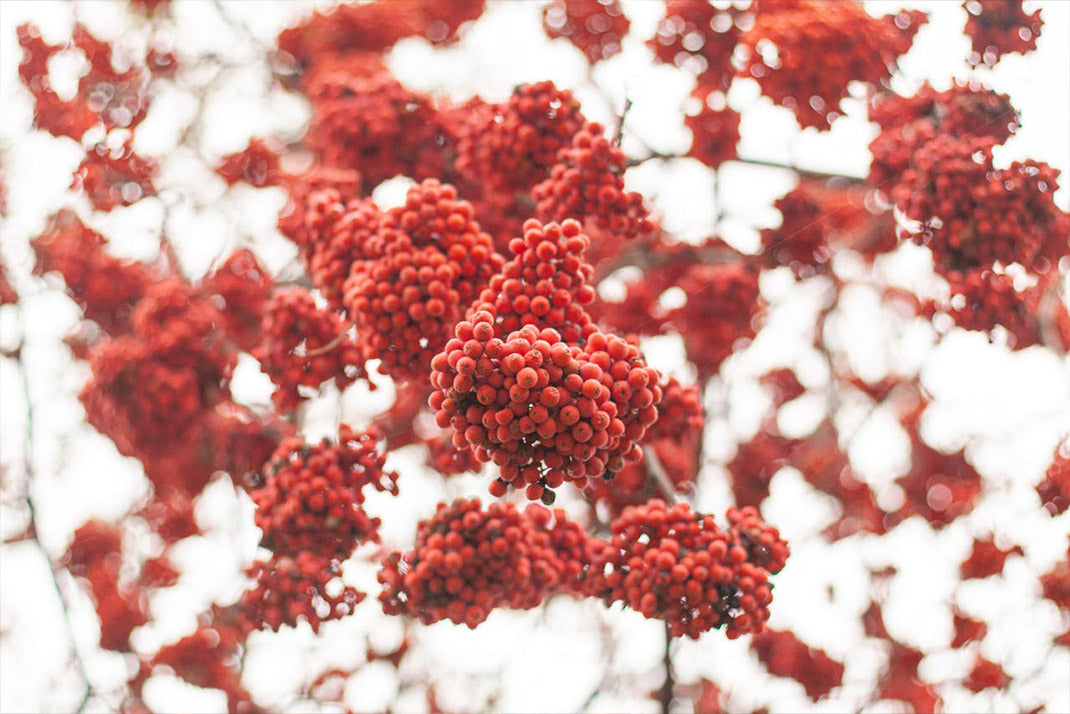
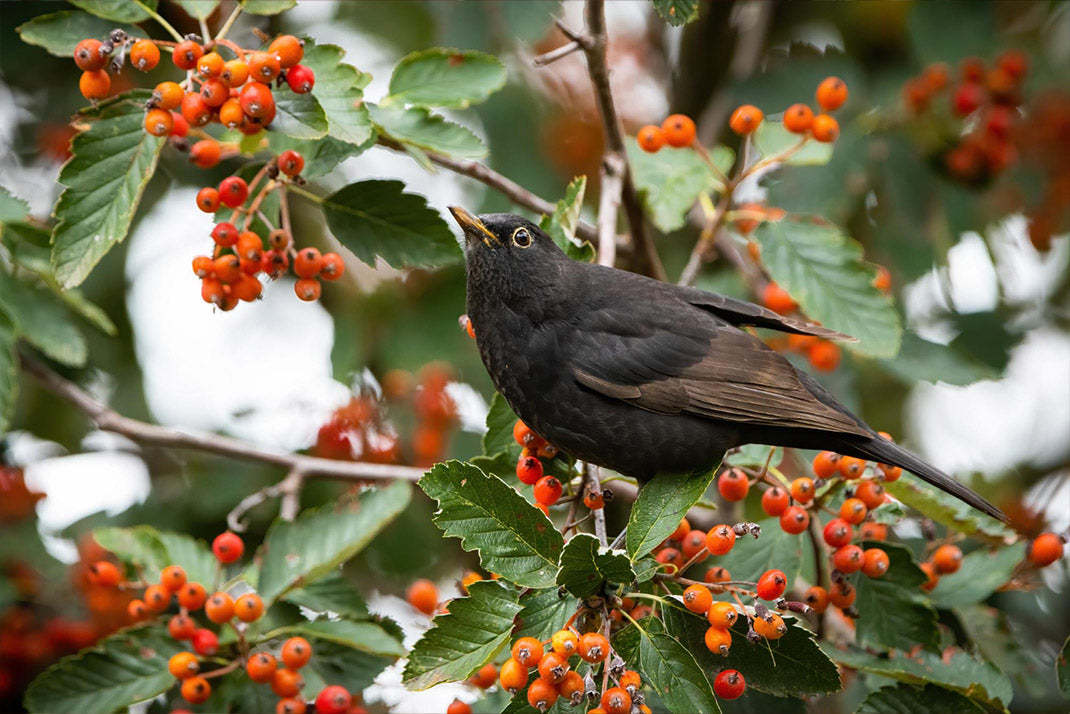
Sorbus trees quietly offer three shows for the price of one. Spring brings flat heads or corymbs of creamy blossom that hum with insects. In late summer and autumn, dangling bunches of berries light up the branches in shades of scarlet, amber, pink or even white, often lingering into early winter. At the same time, many cultivars colour their foliage in gold, orange or red, so you get blossom, fruit and autumn tints from the same compact tree. It’s a lot of performance from a relatively modest footprint.
Common name: Rowan, Mountain Ash and Whitebeam.
Latin name: Sorbus
Plant type: Deciduous ornamental tree, usually small to medium sized.
Size in UK gardens: Many garden Sorbus make elegant trees around 3–6m tall with a similar spread; the plain species can reach 8–10m+ if given space.
Best position: Full sun to light dappled shade, ideally with a little shelter and space for the crown to develop.
Soil: Moderately fertile, moist but well‑drained soil; most rowans prefer neutral to acidic loams, while whitebeams are very happy on chalk and limey ground.
Flowering time: Creamy white flower clusters in spring, followed by heavy bunches of berries from late summer into autumn and often good autumn leaf colour.
Fragrance: Flowers are usually lightly scented and busy with pollinators; foliage is only faintly aromatic when crushed.
Hardiness: Fully hardy across the UK (typically RHS H6–H7, around –15°C to –20°C or lower once established).
Care level: Generally easy – tough, tolerant trees that just need sensible siting, a bit of water while establishing and occasional light pruning.

The Simpson’s team raises the majority of our trees here at the nursery. For varieties outside our own production, we work with independent local growers we trust - all chosen for UK climate suitability.
Planting time: As container‑grown trees, Sorbus can be planted whenever the soil is workable and not frozen or waterlogged; in practice, spring and early autumn are usually the easiest windows for quick, steady establishment.
Watering: Water regularly through the first couple of growing seasons so the rootball and surrounding soil don’t dry out completely. Once established in decent ground, they normally only need extra water in unusually hot, dry summers.
Feeding: In most garden soils, a simple mulch of compost or well‑rotted manure in spring is all they need. Trees in long‑term containers appreciate a light slow‑release feed in spring and a top‑up of fresh compost every year or two.
Pruning: Little routine pruning is needed. Just remove dead, crossing or poorly placed branches, and lightly thin congested crowns in winter if necessary. Many whitebeams and rowans are happy left mostly to their own devices once shaped.
Winter: Fully hardy in the ground – they simply stand bare and wait out the cold. A mulch over the root area helps on very light soils, and young or potted trees are best kept out of the very fiercest, drying winds.
Availability is always changing, so please check with us if you have a particular variety in mind.


A charming rowan chosen for its warm-toned display, bringing a softer, more unusual colour note to late-season interest. It has a neat, ornamental habit that suits gardens well. A lovely feature tree when you want something decorative and slightly different from the typical rowan palette.
The whitebeam, with handsome, oval leaves that show a paler underside, giving a subtle silvery effect as they move. It has a tidy, tree-like presence and a calm, traditional character. A good choice for adding structure and a quietly elegant canopy that never feels fussy.
A particularly silvery whitebeam, with foliage that looks softly luminous, especially from a distance. The canopy has a clean, refined feel that brightens darker planting schemes. Excellent as a specimen where leaf colour is the main feature—cool, calm, and very easy to pair with other trees.
A bolder whitebeam with larger leaves and a more substantial look, giving it extra presence as a small tree. The overall effect is handsome and confident, with a strong canopy that still feels refined. A fine choice where you want a more robust silhouette without stepping into “big tree” territory.


A distinctive rowan with narrow, finely cut foliage that adds a light, feathery texture. It brings a more delicate look than many rowans, making it excellent for mixed planting and smaller gardens. A lovely choice when leaf shape and elegance are as important as seasonal colour.
The classic mountain ash, bringing that familiar rowan charm with an airy canopy and a tidy, tree-like habit. It suits both traditional and informal gardens, adding a bright seasonal moment and a distinctly British feel. A dependable choice for anyone who wants a small tree with authentic character.
A more individual rowan, chosen for its distinctive foliage character that makes it stand out from standard forms. It still has the light, airy habit that suits smaller gardens, but with added “look twice” appeal. A good pick when you want rowan charm with an extra twist.
A slimmer, more upright rowan that brings height and structure without spreading too wide. It reads neatly in the landscape, making it handy for boundaries and tighter spaces. A smart way to add a small tree silhouette with a clear vertical line and strong seasonal interest.


A richly ornamental rowan with a bold seasonal show and a tidy, specimen-worthy habit. It brings a strong colour note later in the year, making it a natural focal point in mixed planting. A good choice when you want a rowan that looks showy and “garden-ready,” not wild.
A wonderfully refined rowan, often admired for its elegant, airy habit and distinctive pale fruits that give a softer, more unusual look. It feels light, graceful, and slightly special—perfect for gardens that enjoy subtler beauty. Lovely near paths and patios where the details can be appreciated.
A graceful rowan with a delicate, ornamental feel, offering a lighter, more refined look than many traditional types. The foliage has an elegant texture, and the overall habit stays neat. A lovely choice for adding a soft, airy tree layer in borders or as a small specimen.
A beautifully poised rowan with fine foliage and a neat outline, often noted for a particularly attractive seasonal finish. It has a light, refined presence that sits well in mixed planting and smaller gardens. A strong option when you want rowan character with a more polished, ornamental feel.


A wonderfully named rowan that brings warm, coppery tones into the seasonal picture, adding richness rather than brightness. The habit is neat and ornamental, making it easy to use as a feature tree. A good choice for gardens that like warmer colours and a slightly more unusual finish.
A distinctive rowan with an elegant, airy habit and a more unusual character than the standard garden types. It brings a light canopy and a refined look that suits mixed planting beautifully. A good choice for anyone wanting a rowan that feels slightly rarer and more “collector” in flavour.
A rowan with a poised, ornamental habit and a strong seasonal performance that adds colour and interest as the year turns. It sits neatly in the garden as a small specimen, bringing charm without clutter. A lovely choice when you want something reliable yet a little more distinctive than the everyday rowan.