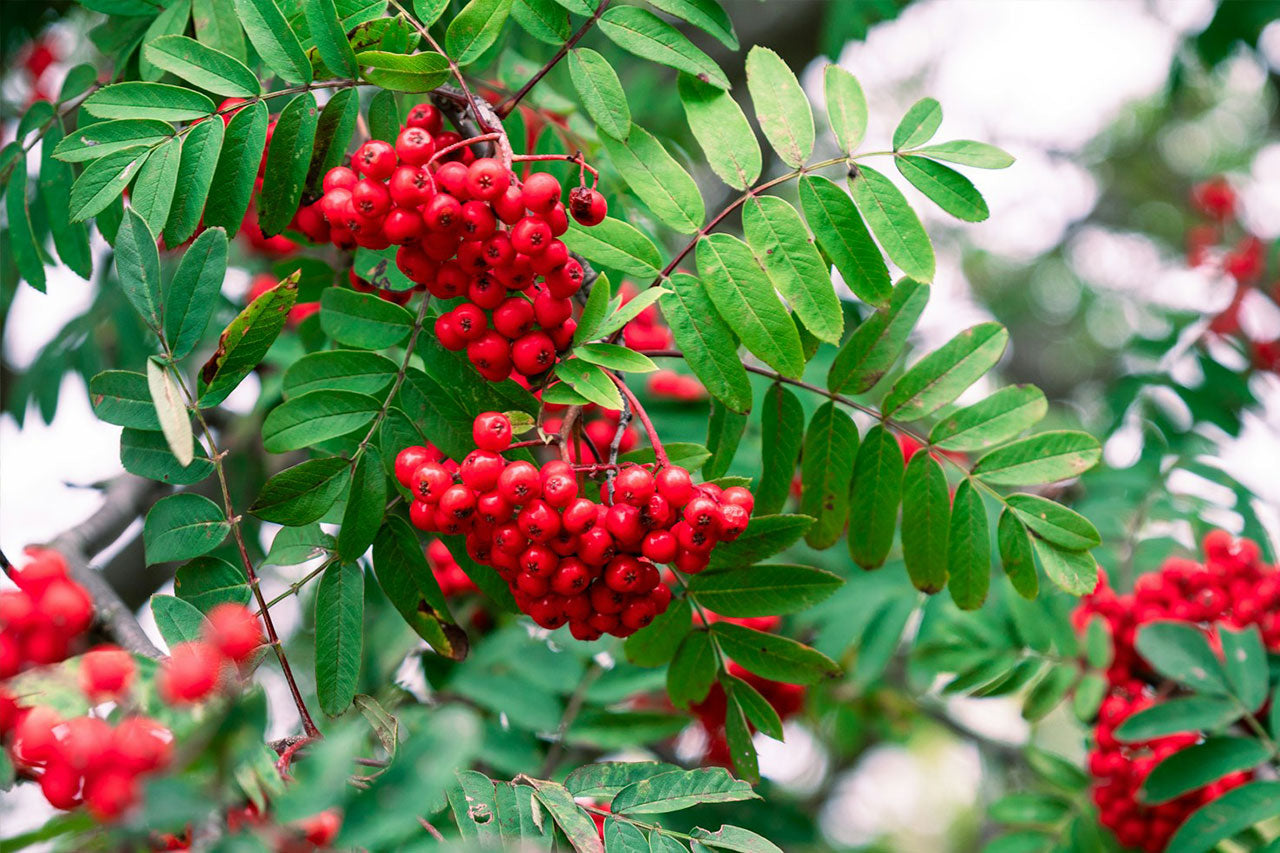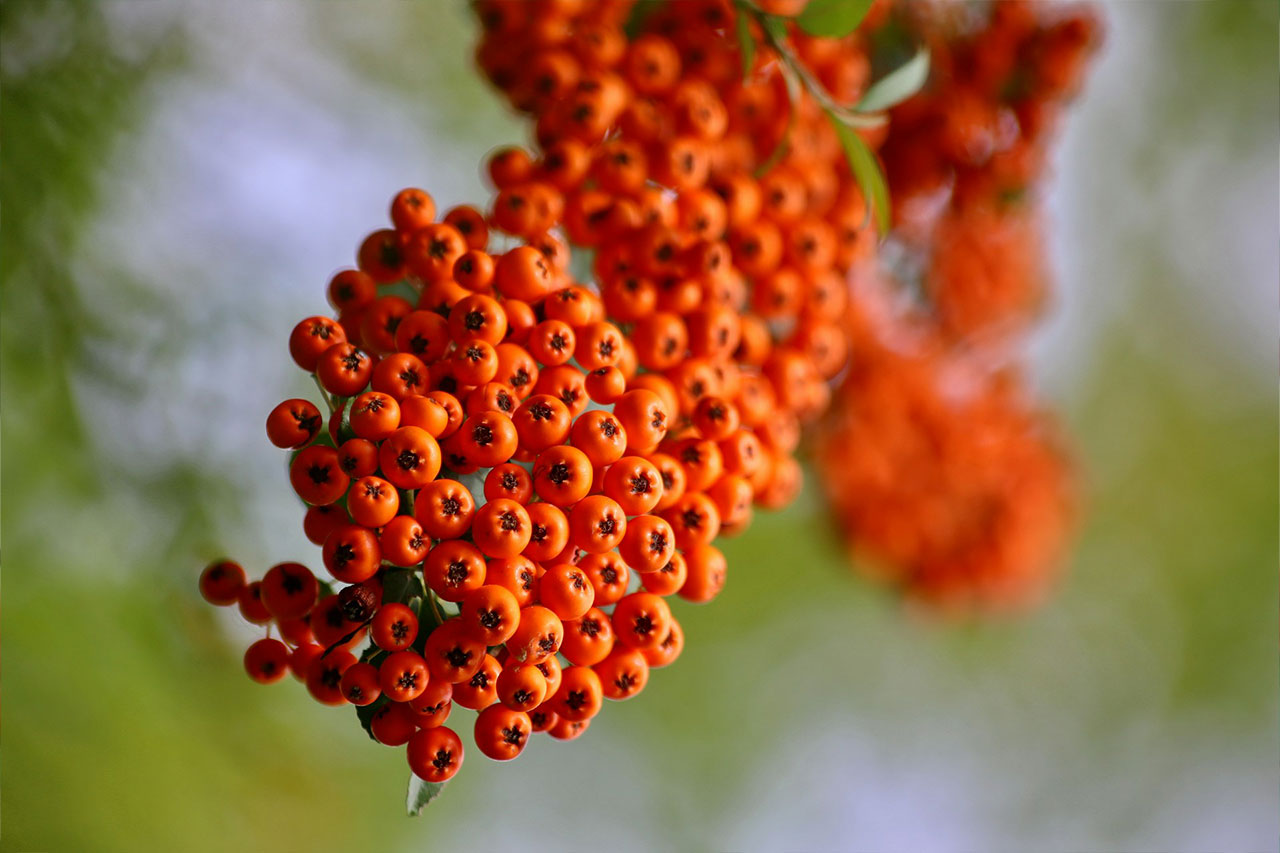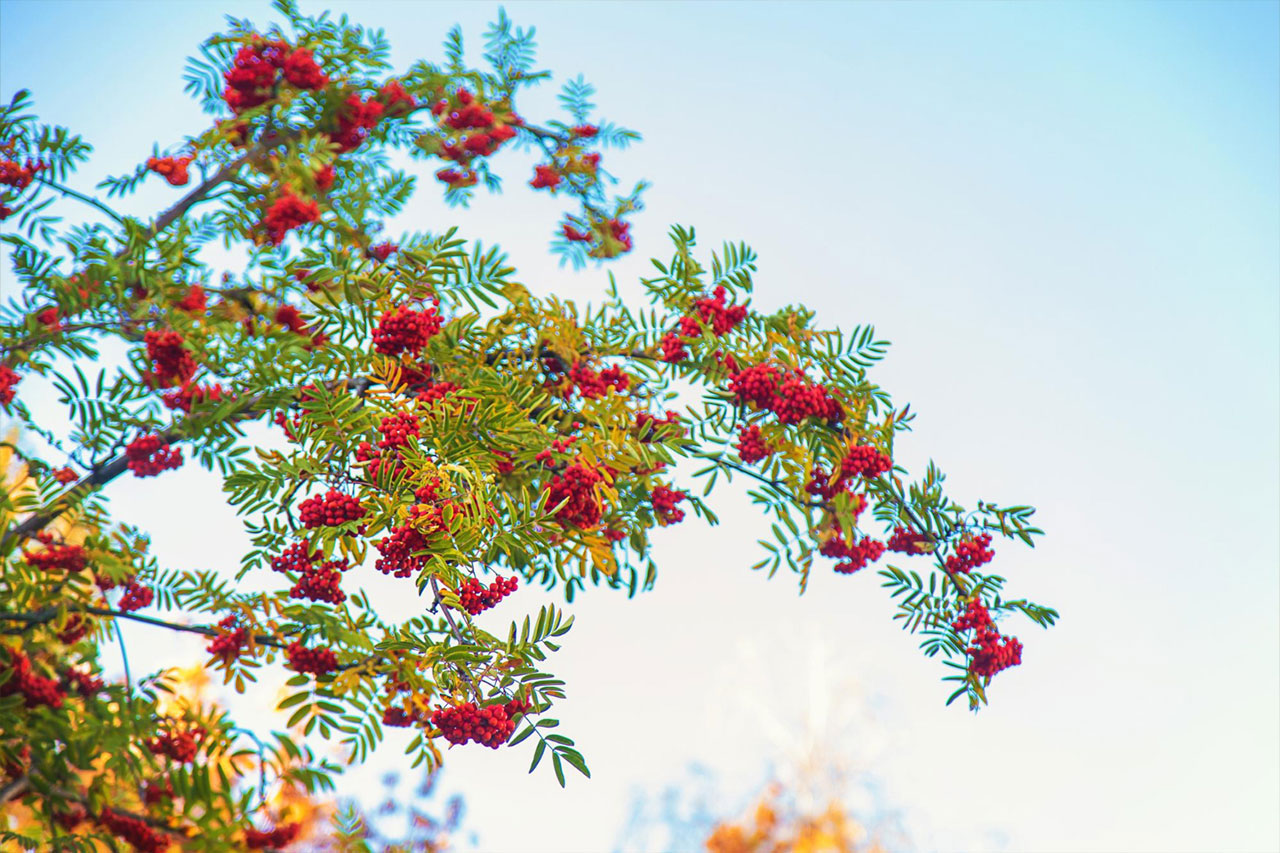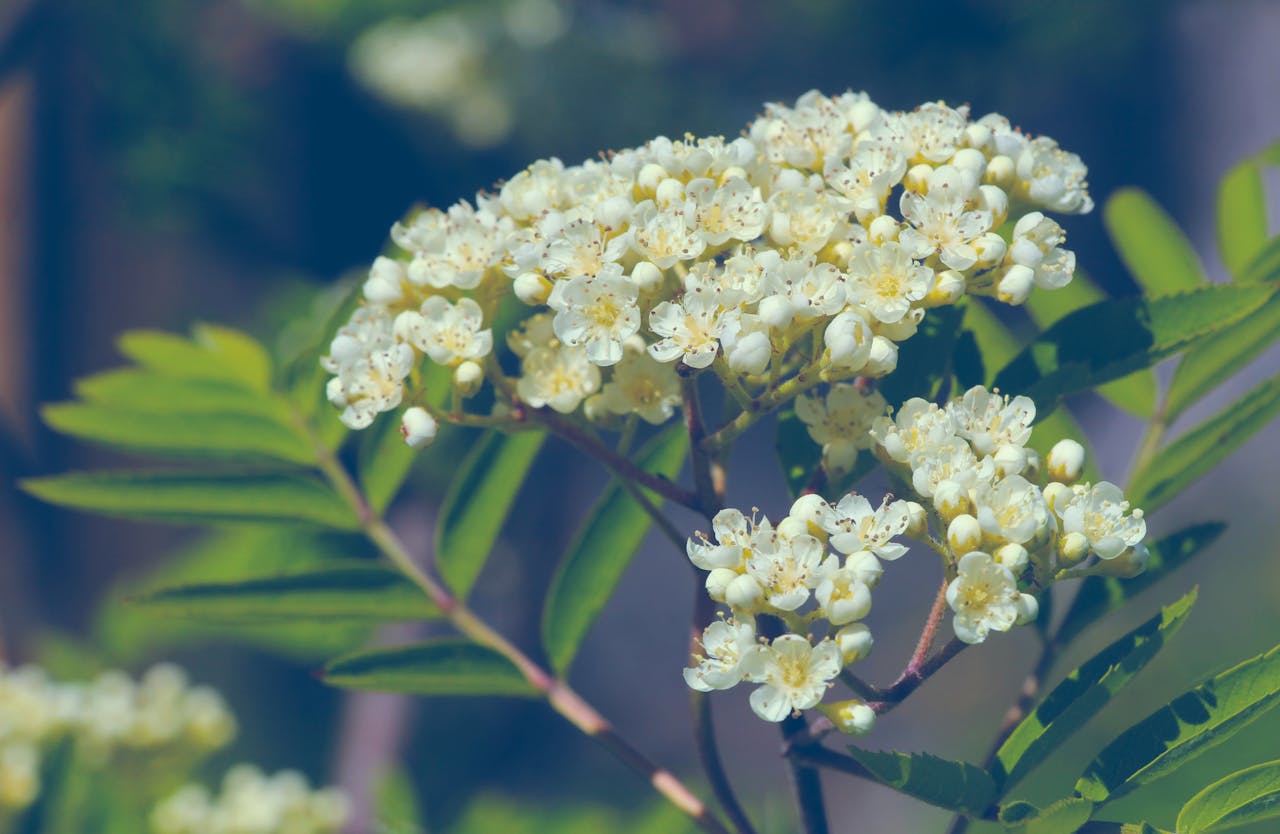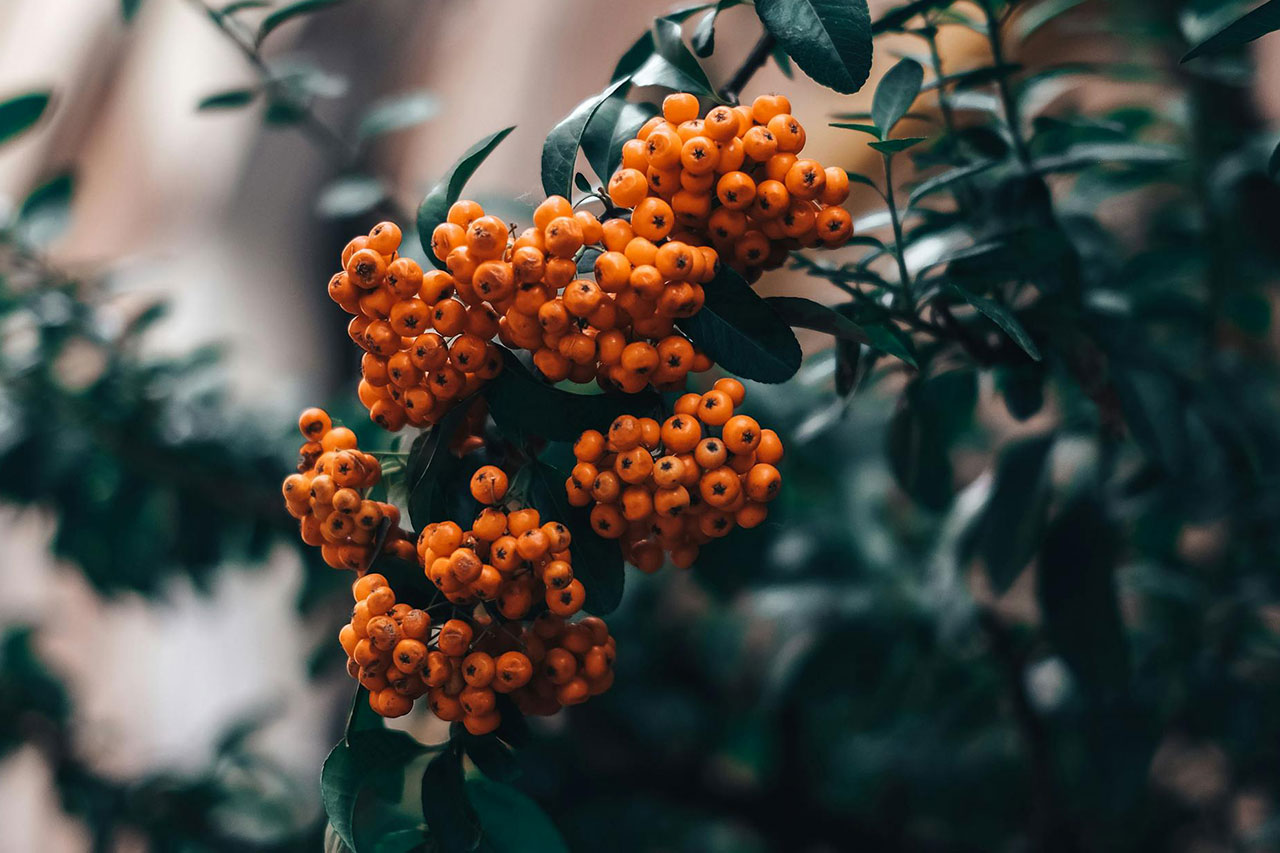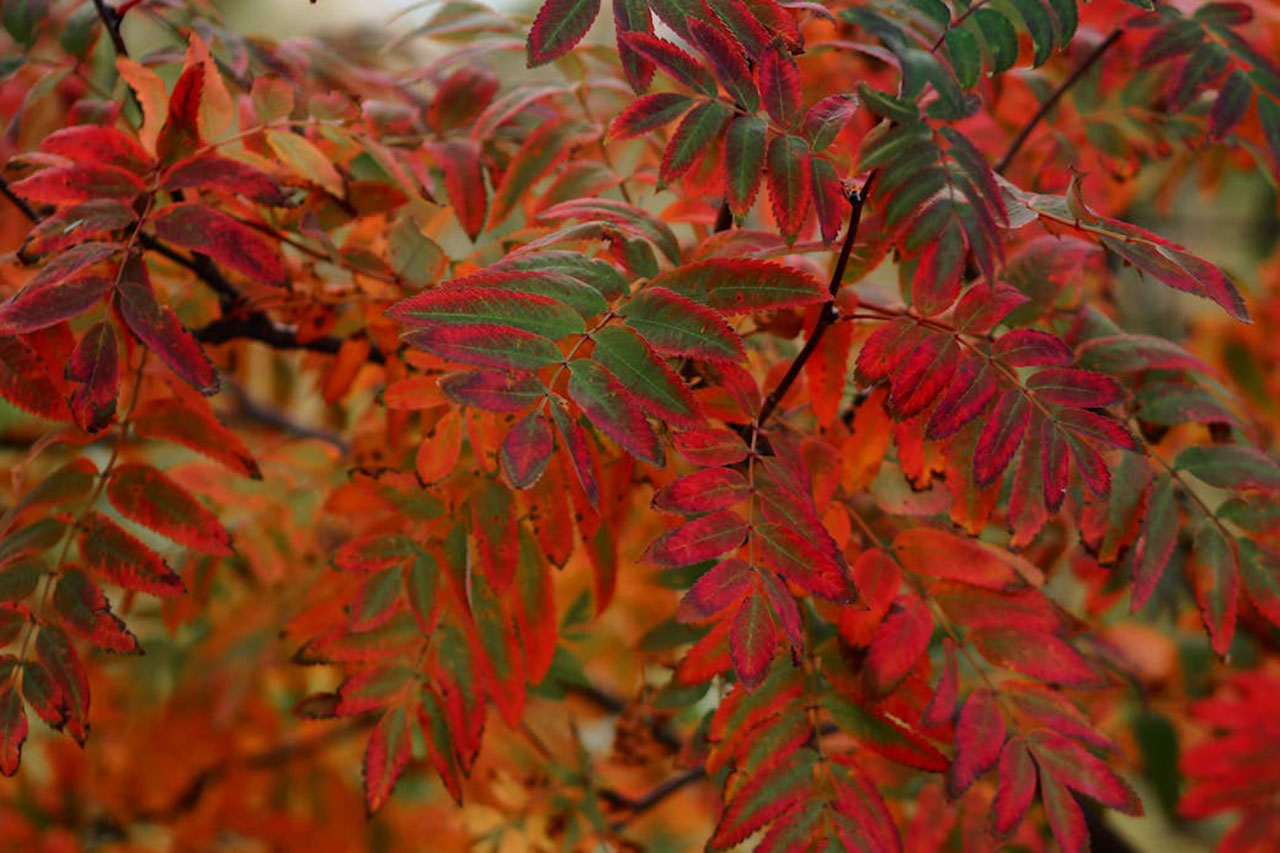

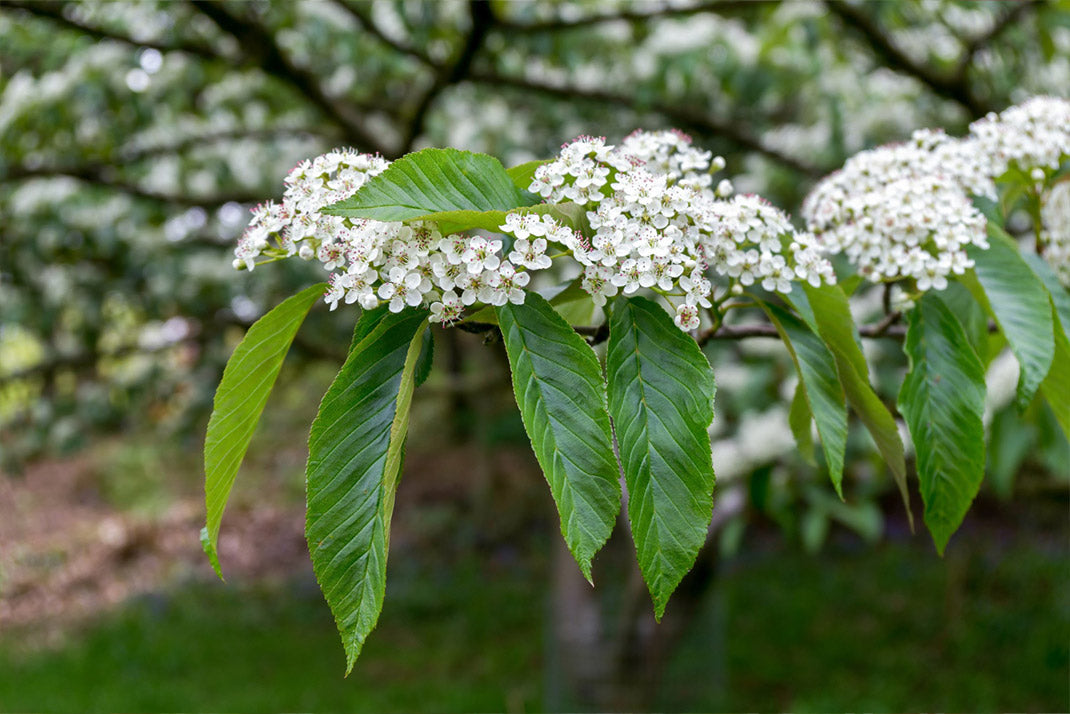
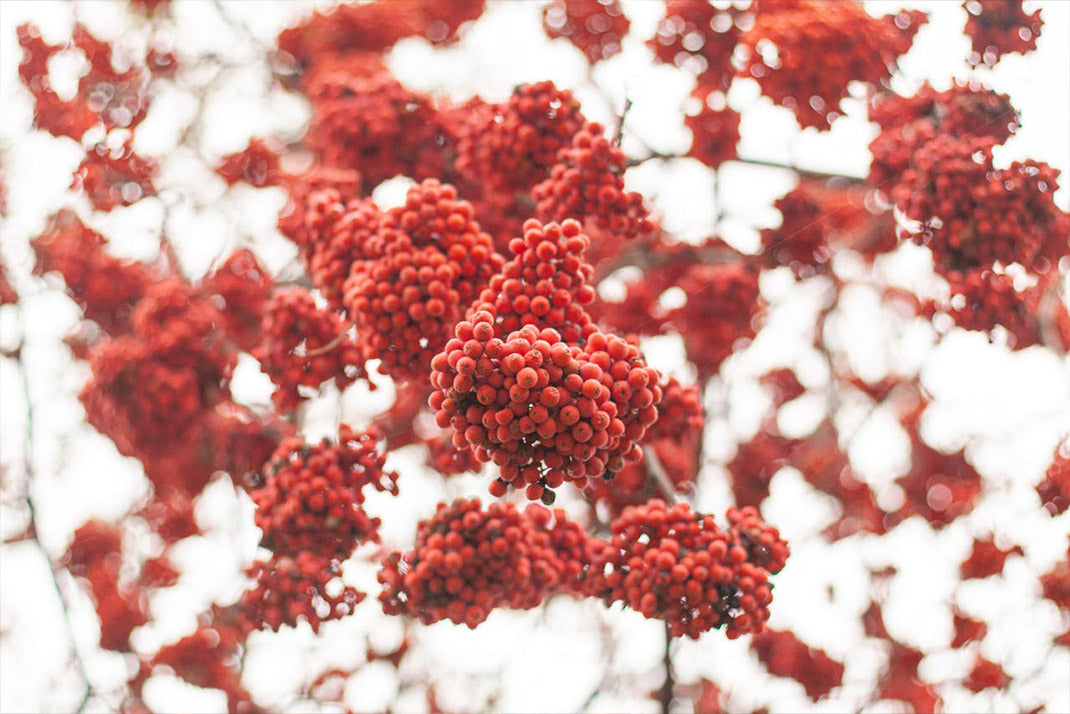
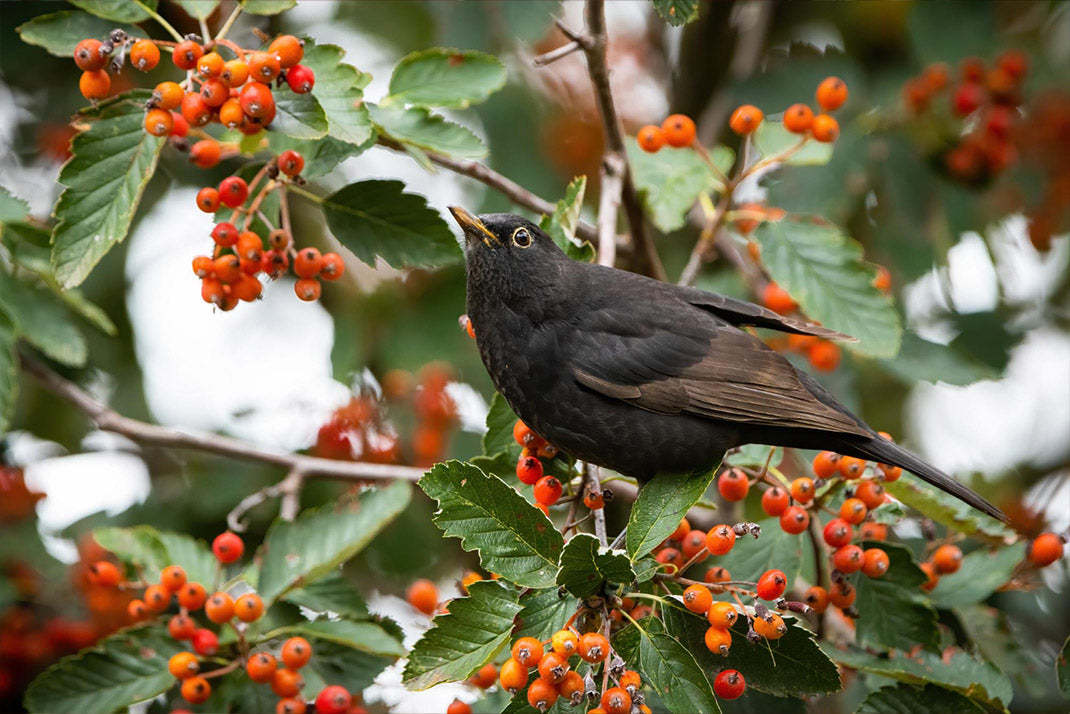
Sorbus trees quietly offer three shows for the price of one. Spring brings flat heads or corymbs of creamy blossom that hum with insects. In late summer and autumn, dangling bunches of berries light up the branches in shades of scarlet, amber, pink or even white, often lingering into early winter. At the same time, many cultivars colour their foliage in gold, orange or red, so you get blossom, fruit and autumn tints from the same compact tree. It’s a lot of performance from a relatively modest footprint.
Common name: Rowan, Mountain Ash and Whitebeam.
Latin name: Sorbus
Plant type: Deciduous ornamental tree, usually small to medium sized.
Size in UK gardens: Many garden Sorbus make elegant trees around 3–6m tall with a similar spread; the plain species can reach 8–10m+ if given space.
Best position: Full sun to light dappled shade, ideally with a little shelter and space for the crown to develop.
Soil: Moderately fertile, moist but well‑drained soil; most rowans prefer neutral to acidic loams, while whitebeams are very happy on chalk and limey ground.
Flowering time: Creamy white flower clusters in spring, followed by heavy bunches of berries from late summer into autumn and often good autumn leaf colour.
Fragrance: Flowers are usually lightly scented and busy with pollinators; foliage is only faintly aromatic when crushed.
Hardiness: Fully hardy across the UK (typically RHS H6–H7, around –15°C to –20°C or lower once established).
Care level: Generally easy – tough, tolerant trees that just need sensible siting, a bit of water while establishing and occasional light pruning.

Rather than travelling halfway across Europe, our mimosa trees are grown on site by the Simpson’s team. They’re toughened to local conditions, properly potted, and ready to get growing the moment you plant them.
Planting time: As container‑grown trees, Sorbus can be planted whenever the soil is workable and not frozen or waterlogged; in practice, spring and early autumn are usually the easiest windows for quick, steady establishment.
Watering: Water regularly through the first couple of growing seasons so the rootball and surrounding soil don’t dry out completely. Once established in decent ground, they normally only need extra water in unusually hot, dry summers.
Feeding: In most garden soils, a simple mulch of compost or well‑rotted manure in spring is all they need. Trees in long‑term containers appreciate a light slow‑release feed in spring and a top‑up of fresh compost every year or two.
Pruning: Little routine pruning is needed. Just remove dead, crossing or poorly placed branches, and lightly thin congested crowns in winter if necessary. Many whitebeams and rowans are happy left mostly to their own devices once shaped.
Winter: Fully hardy in the ground – they simply stand bare and wait out the cold. A mulch over the root area helps on very light soils, and young or potted trees are best kept out of the very fiercest, drying winds.
Availability is always changing, so please check with us if you have a particular variety in mind.


A reliable Japanese maple with rich burgundy foliage that keeps its colour well through summer, then finishes with glowing crimson tones in autumn. Upright and well-shaped, it gives strong contrast in borders without feeling fussy. A great “first Japanese maple” for creating instant presence.
A compact Japanese maple with neat leaves edged in cream, often flushed pink in spring. It brings light and fine detail to small gardens, and is excellent in pots near doors or seating. Give it shelter and soft sun for crisp variegation, steady colour, and a very tidy outline.
A classic weeping laceleaf that forms a graceful mound, draping like a living fountain. Leaves emerge red-purple and deepen through the season, then glow in autumn. Perfect by paths or water, where the cascading shape reads well and feels calm up close. Ideal for small spaces.
An elegant laceleaf maple with fresh green foliage and a naturally domed, cascading habit. It brings movement and fine texture to borders, especially in dappled shade where the leaves look feathery. Autumn colour turns warm gold and orange, softly and reliably. Suits part shade.


A more substantial rowan with a confident outline and a stronger canopy presence. It reads as a proper small tree, bringing structure and a traditional silhouette without becoming overpowering. A good option when you want rowan character with a slightly grander, more “parkland” feel.
A lively rowan with a bright seasonal personality, adding energy and colour as the year turns. Upright and tidy in habit, it sits neatly in the garden and reads clearly from a distance. A cheerful feature tree for borders and lawns where you want something upbeat and eye-catching.
A true conversation piece, valued for its unusual pink fruits that give a softer, more unexpected look. The habit is neat and ornamental, making it easy to use as a feature. A lovely choice when you want a rowan that feels different—elegant, decorative, and a little bit special.
A distinctive rowan with a smart outline and a strong ornamental look, making it a good candidate for a feature position. It brings classic rowan charm but with a slightly more individual character. Works well in mixed planting where you want a small tree that feels considered, not commonplace.


A bold rowan with larger leaves and a more substantial presence, giving it extra weight as a small tree. The canopy feels generous and architectural, making it stand out more strongly than many rowans. A great choice when you want rowan character, but on a more confident, robust scale.
A refined rowan with an elegant habit and a slightly different foliage character that lends it a more ornamental feel. It sits neatly in the garden, adding a light canopy and a clean outline. A good choice when you want rowan charm in a calm, composed form.
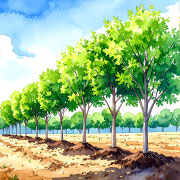
A well-regarded rowan with a tidy, upright habit that reads crisply in the landscape. It makes an excellent small tree for lines and avenues, where repeat planting creates rhythm and structure. A strong option when you want a “street-tree” look—smart, ordered, and reliably ornamental.
A bright, uplifting rowan that brings a lighter, sunnier mood into planting schemes. The habit stays neat and garden-friendly, and the overall look feels cheerful rather than heavy. A lovely choice for adding sparkle and warmth—particularly effective alongside deeper greens and darker foliage.


The wild service tree is a connoisseur’s choice, with handsome, oak-like leaves and a poised woodland character. It feels quietly distinguished—native in spirit, but not something you see everywhere. A beautiful specimen for larger gardens where you want rarity, authenticity, and a tree with gentle gravitas.
A charming, refined rowan with an airy habit and a delicate, ornamental look. It brings a softer presence than many rowans, fitting beautifully into smaller gardens and mixed planting. A lovely choice when you want elegance and detail—something that feels light, graceful, and quietly different.
An unusual rowan grown for its pale, waxy-looking fruits that give a cool, refined palette. The effect is subtle but striking, especially against darker evergreens and richer planting. A great choice for gardens that enjoy restraint and detail—ornamental interest with a softer, more sophisticated mood.
A warm, decorative rowan with golden-toned fruits that bring a cheerful late-season glow. The habit is neat and specimen-worthy, making it easy to use as a feature tree. A lovely option when you want rowan charm with a sunnier, more unusual finish than the typical reds.