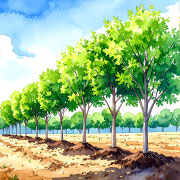

Yew (Taxus baccata and its cultivars) is one of those plants that can completely alter the feel of a garden. A single clipped cone by the front door, a pair of pillars flanking a path, or a low hedge around a border instantly gives structure and a sense of intention. The dark, rich green foliage makes a beautiful foil for flowering shrubs and perennials, and it works equally well in traditional, formal layouts and looser, cottage‑style schemes. Even in a small Cambridgeshire garden, one or two well‑placed yews can make the whole space feel more “finished”.
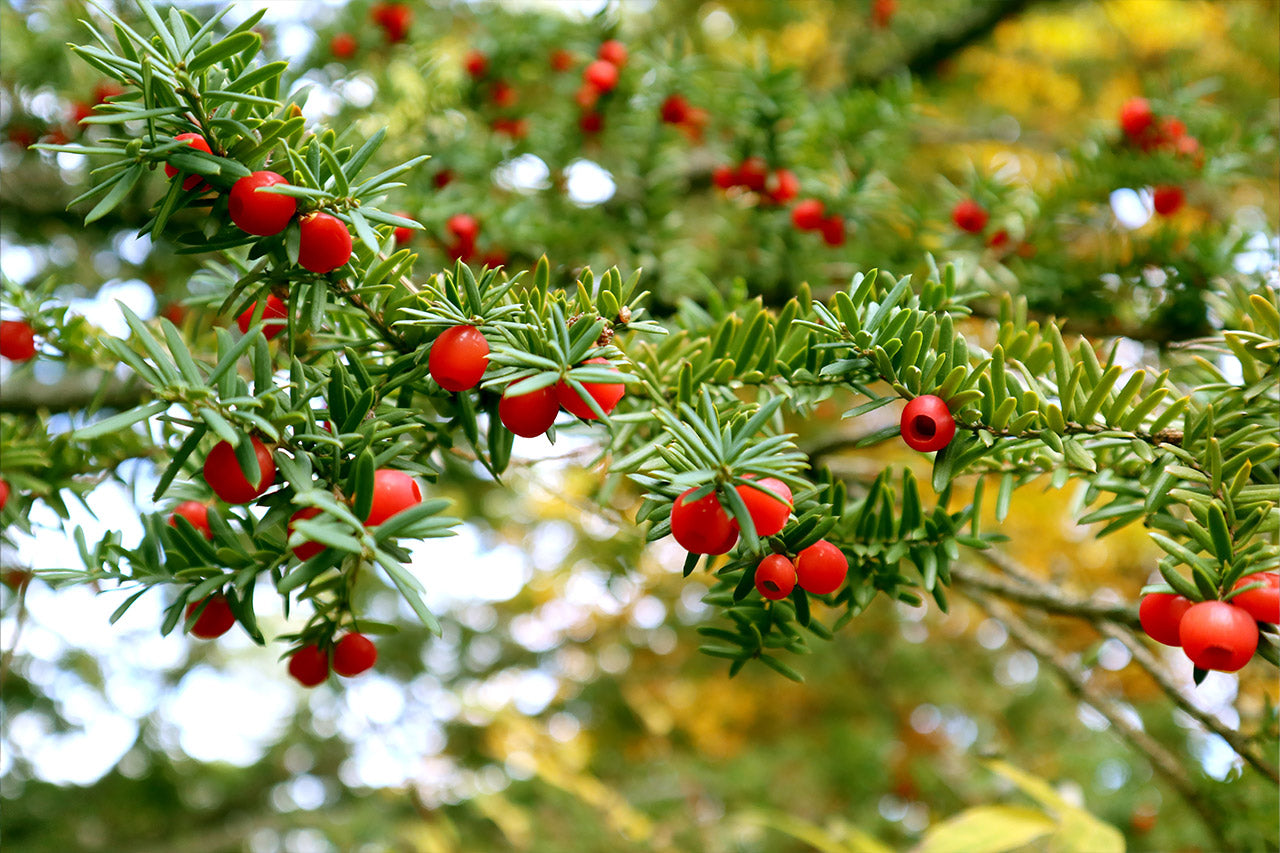
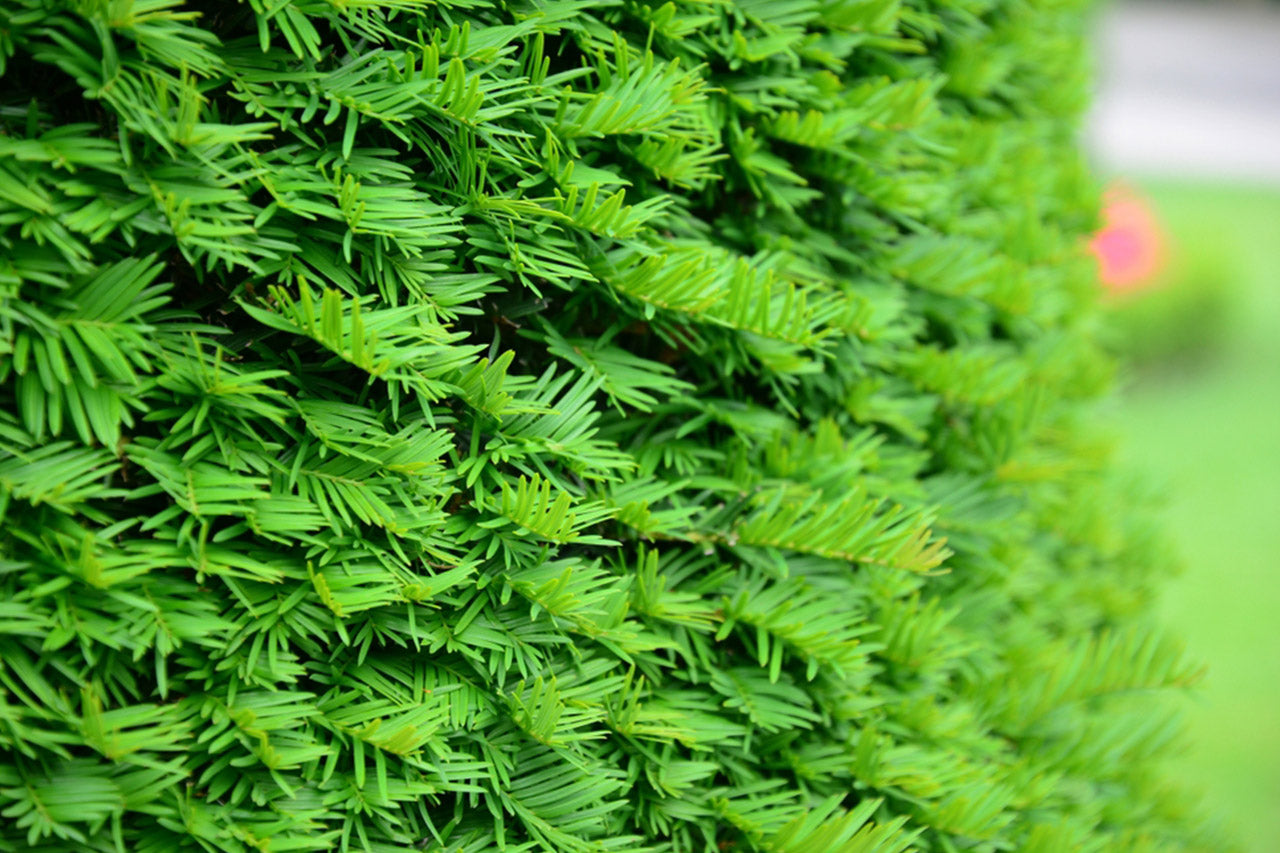
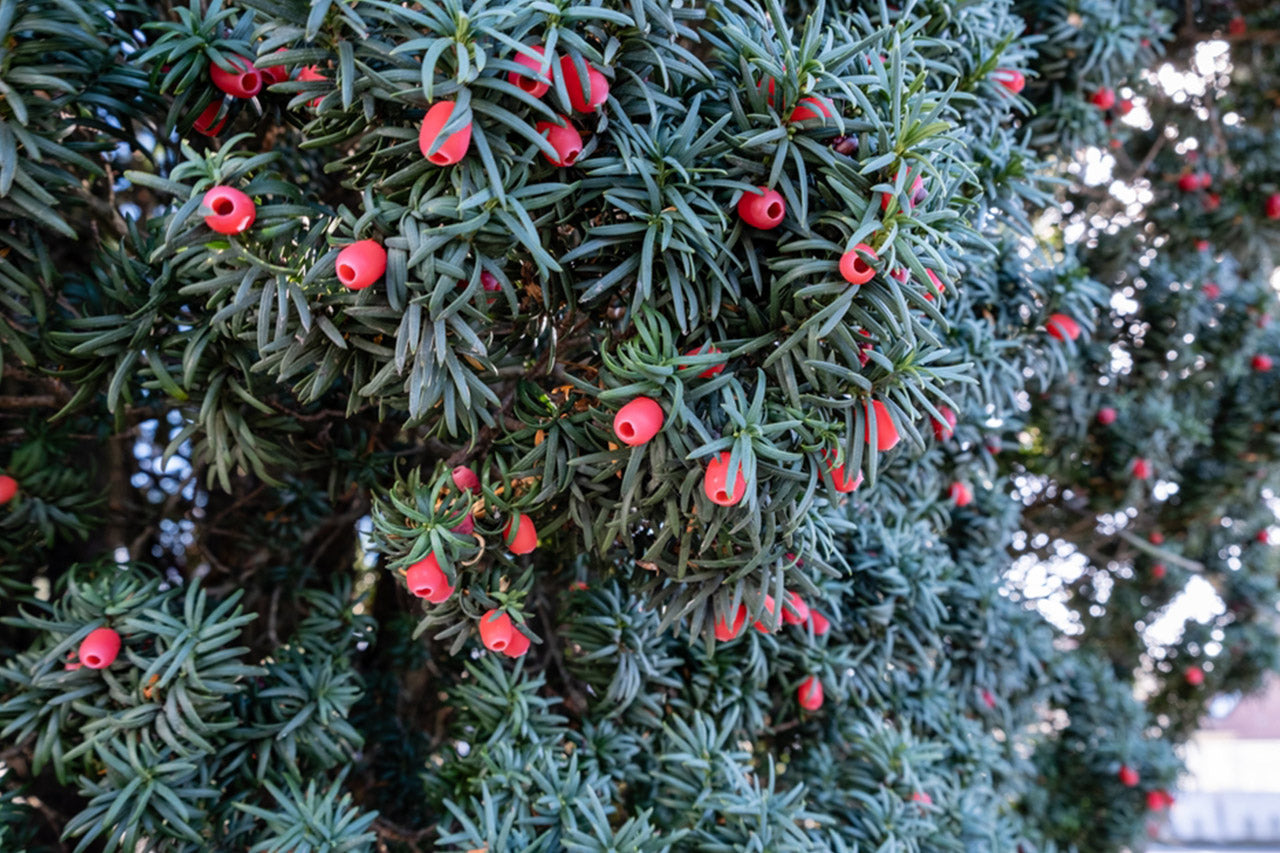
Common name: Yew, English yew or Common Yew.
Latin name: Taxus baccata and selected cultivars.
Size in UK gardens: Very variable; hedges are often kept between 1–3m high, while free‑growing specimens can eventually reach 6–15m or more. Many compact forms are suitable for smaller gardens.
Best position: Sun or light shade, in a reasonably sheltered spot with space for the chosen form to develop without constantly being hacked back from paths or buildings.
Soil: Moist but well‑drained soil; tolerant of many types including chalky and clay loams, but dislikes very heavy, waterlogged ground.
Flowering time: Tiny flowers in spring are not especially noticeable; main interest is evergreen foliage and (on female plants) red, berry‑like arils in late summer and autumn.
Hardiness: Fully hardy across most of the UK once established.
Care level: Moderate – easy enough if given the right soil and position, with regular but straightforward pruning and an awareness that all parts (especially seeds) are highly poisonous if eaten.

The Simpson’s team raises the majority of our trees here at the nursery. For varieties outside our own production, we work with independent local growers we trust - all chosen for UK climate suitability.
Planting time: Container‑grown yews can be planted most months when the soil isn’t frozen or waterlogged, with autumn and early spring usually easiest. Root‑balled hedging plants are best put in during the dormant season, from late autumn to early spring.
Watering: Water regularly in the first two or three years, especially in dry East Anglian springs and summers, so the rootball and surrounding soil don’t dry out completely. Established yews cope well with normal dry spells but benefit from the occasional deep soak in prolonged drought.
Feeding: In decent garden soil, yew doesn’t need heavy feeding – a spring mulch of compost or well‑rotted manure and a light general fertiliser on very poor soils is usually plenty. Over‑feeding with high‑nitrogen fertilisers is unnecessary and can lead to very soft growth.
Pruning: Clip hedges and shapes once or twice a year, usually in late summer and, if needed, a light tidy in late spring. Yew can be cut back into older wood to renovate an overgrown hedge, but this should be done in stages and with a bit of patience.
Winter: Established yews generally need no special winter protection. In very exposed sites, a windbreak for young plants and a mulch over the root area help, but hardy roots and tough foliage do most of the work themselves.
Availability is always changing, so please check with us if you have a particular variety in mind.
The great British evergreen: dark, glossy, and wonderfully dignified, with a timeless presence that suits cottage gardens and grand designs alike. Superb for hedging, topiary, and calm green backdrops, giving year-round structure and that classic, settled feel. for generations.
A classic golden-edged yew that brings warmth and definition, each needle neatly outlined to catch the light. Ideal for brightening a hedge line, clipping into topiary, or using as a feature near paths, where the variegation stays crisp all winter, and looks sunny in winter.
A yew with a lovely seasonal glow, flushing copper-orange at the tips so it looks as though it’s been kissed by low sun. Perfect for warming evergreen structure, whether clipped into shapes, used as a specimen, or repeated through borders for rhythm and warmth even on dull days
A handsome yew with coppery new growth that softens the usual dark green into something warmer and more animated. Wonderful as a refined hedge, a clipped column, or a focal point, it brings steady evergreen backbone with a gentle bronze sparkle in winter. It suits formal borders
A naturally narrow yew with a clean, upright silhouette—ideal when you want height but not width. Use it to flank a doorway, punctuate a border, or create a slim evergreen screen, bringing traditional yew gravitas in a form that suits tighter gardens, in pairs. Ideal for screens
A bright, golden yew that lifts a planting scheme like a lantern, in winter light. Use it for hedging, topiary shapes, or as a focal shrub by steps and patios, where the colour stays cheerful and makes darker greens look richer and more deliberate. Great for hedges and topiary.
A softly variegated yew with creamy, feathered tones that feel refined rather than loud. Superb as a light-lifting hedge or specimen, and it pairs beautifully with dark evergreens, stone, and brick, giving year-round structure with a gentle, elegant shimmer in winter sun too.
The famous Irish yew: tall, narrow, and instantly formal, like living architecture in deep green. Perfect for framing entrances, marking a path, or repeating for a disciplined rhythm, delivering strong evergreen structure and a sense of order that endures, year after year.
A golden Irish yew that keeps the same upright, columnar poise but with warm, sunlit colour. Ideal for flanking doorways, creating formal repeats, or adding a bright vertical accent among darker shrubs, giving year-round structure with a softer glow on dull days for lift.
A sturdier, more substantial Irish-yew style column, giving strong vertical structure with a confident evergreen presence. Use it to create a formal avenue feel, sharpen a boundary, or anchor a border, where its dark silhouette holds the design together. and strong rhythm.
A striking columnar yew with pale, creamy growth that reads almost silvery, giving a crisp, modern look. Brilliant in pairs to frame steps, or repeated in a line for rhythm, where it brings year-round structure and a lighter note than plain green yew in modern schemes. By paths, too.
A neat, modern yew with a naturally tidy outline, perfect when you want evergreen structure that looks composed rather than bulky. Use it as a slim screen, a clipped accent, or a quiet backbone in mixed borders, bringing classic yew calm to smaller spaces and courtyards too.
A low, spreading golden yew that makes a richly textured evergreen carpet, with warm tones that brighten the ground layer. Superb for edging beds, softening banks, and underplanting shrubs, giving a smart, finished look and year-round colour at ground level. for spring bulbs.
A dependable golden yew with a steady, warm glow that holds its colour through the seasons. Excellent for hedging and shaping, or as a feature shrub to lift darker planting, giving classic yew structure with a brighter, more welcoming presence all year, as punctuation. all year.
A fine, narrow yew with a refined, upright habit that feels elegant and controlled. Ideal for formal planting, entrance framing, or repeating to create rhythm along a path, where it provides year-round evergreen structure without the heaviness of broader forms, with poise.
A cheerful golden yew that holds its colour beautifully, bringing a sunny lift to classic evergreen structure. Lovely as a low, clipped hedge, a bright punctuation plant in borders, or a glowing partner to darker greens. In winter light it really earns its keep, looking warm and composed.
A smart, hybrid yew with a tidy, modern look—evergreen structure that feels crisp rather than heavy. Ideal for neat hedging, clipped shapes, or a calm backbone in mixed planting where you want year-round presence without fuss. It sits beautifully in contemporary schemes, especially beside brick, gravel, and stone.