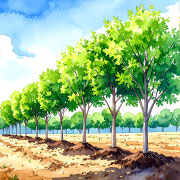

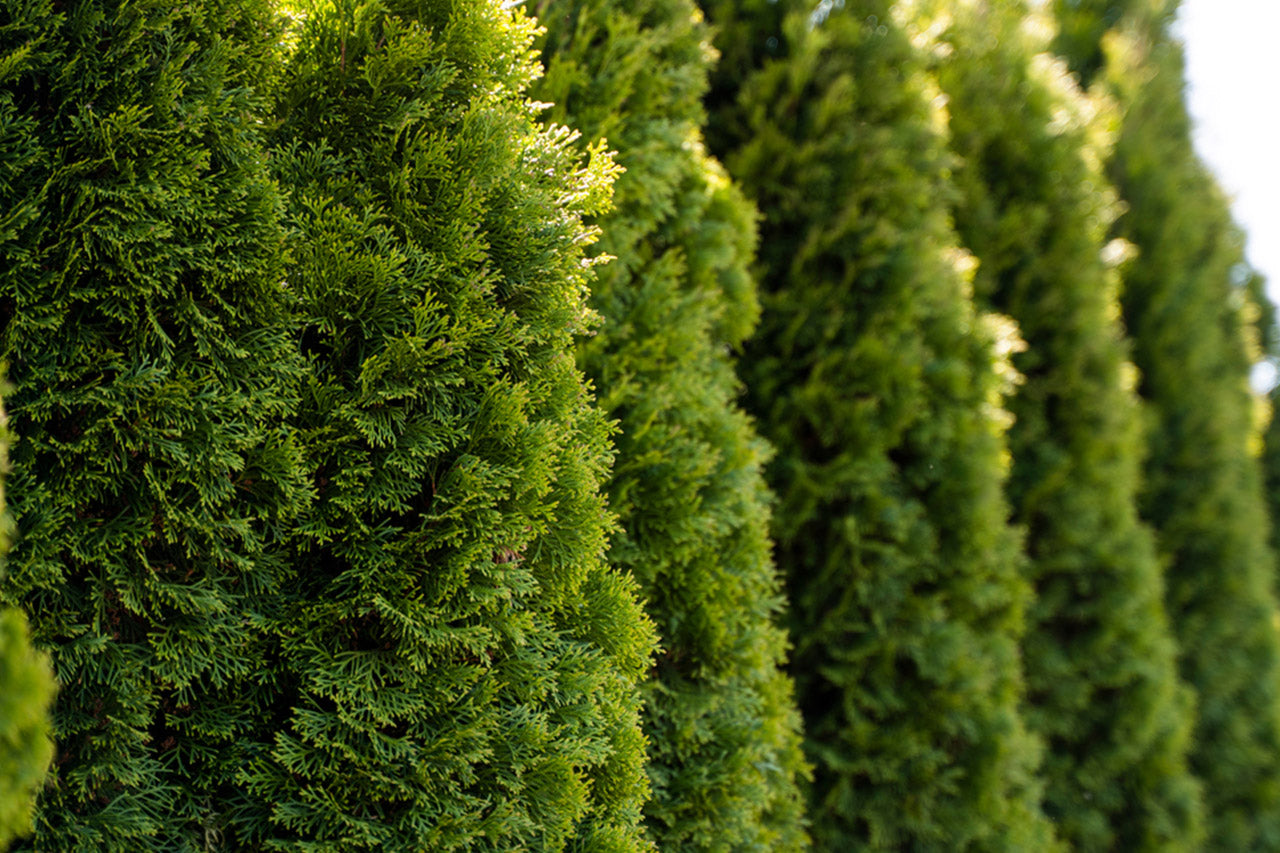
Thuja (often sold as western red cedar or arborvitae) is one of the best choices for evergreen hedging in real‑world UK gardens. It clips neatly, fills out quickly and gives you a dense, green wall without the harsh look some conifers can have. You can keep it low and tidy at chest height, or let it rise into a lofty privacy screen that still stays relatively slim. In a Cambridgeshire back garden overlooked by neighbouring houses, a Thuja hedge can transform the space, cutting out unwanted views and noise while still feeling soft and leafy rather than stark.
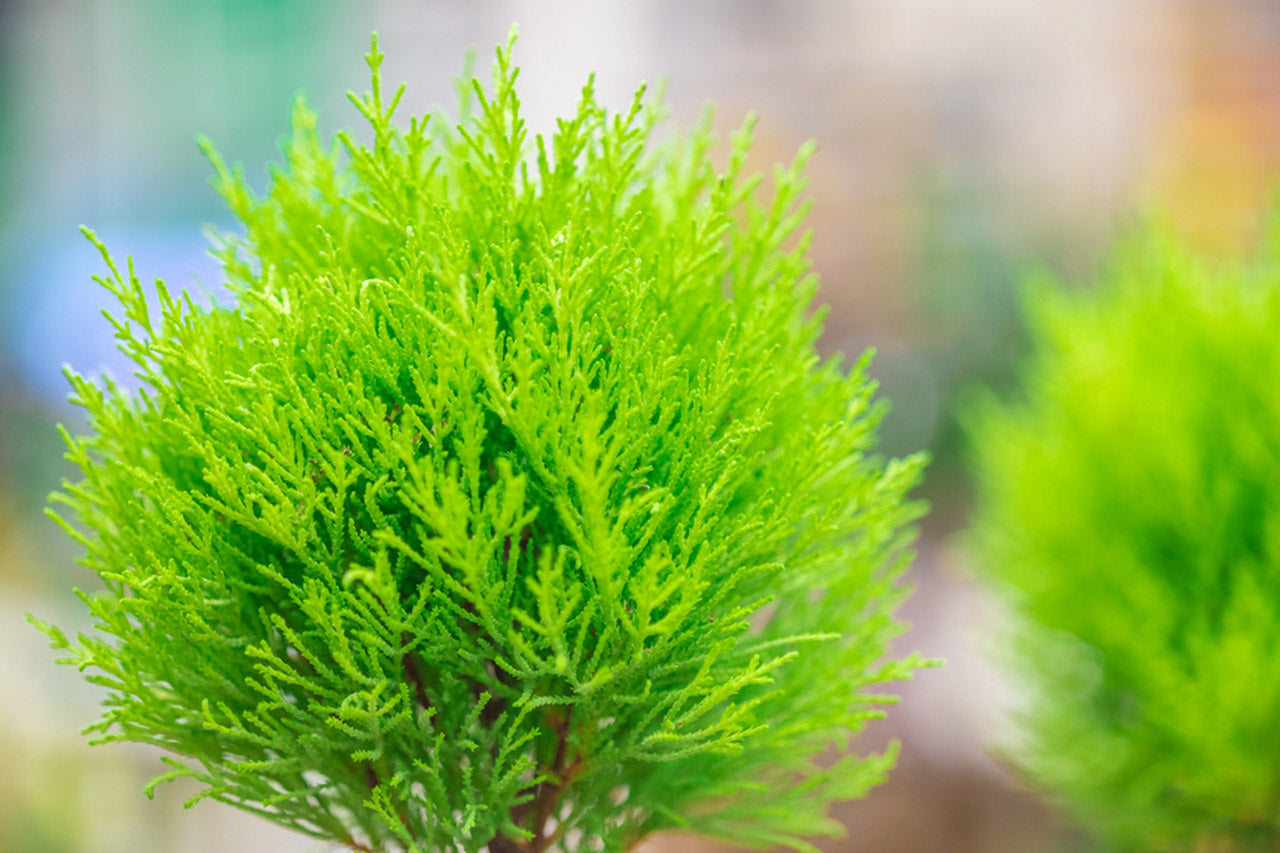
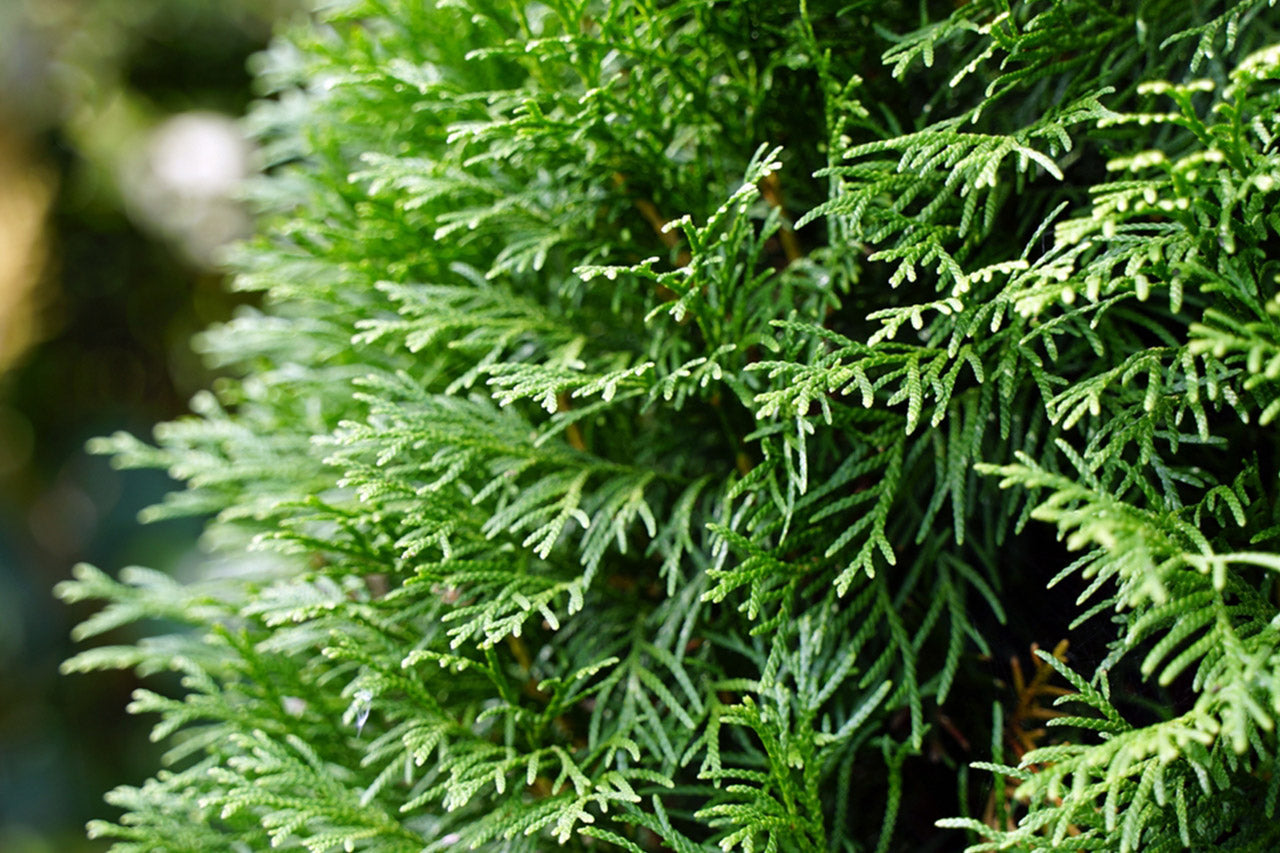
Common name: Thuja
Latin name: Thuja
Size in UK gardens: Very variable; hedges are often kept between 1.5–4m high, while free‑growing specimens can reach 6–10m or more. Compact columnar and dwarf forms stay much smaller.
Best position: A sunny or lightly shaded, reasonably sheltered spot, with room for the chosen variety to form a hedge, screen or specimen without constantly being cut back from paths or buildings.
Soil: Moist but well‑drained, reasonably fertile soil; will tolerate clay and chalk when drainage is good, but dislikes heavy, waterlogged ground.
Flowering time: Tiny flowers and cones are not the main feature; the key interest is evergreen foliage and clipped or natural form.
Hardiness: Generally fully hardy in most UK gardens once established.
Care level: Easy to moderate – straightforward if given reasonable soil and drainage, with regular but simple pruning and sensible watering while establishing.

The Simpson’s team raises the majority of our trees here at the nursery. For varieties outside our own production, we work with independent local growers we trust - all chosen for UK climate suitability.
Planting time: Container‑grown thujas can go in almost any time the soil isn’t frozen or waterlogged; autumn and early spring are usually easiest. Root‑balled hedging plants are best planted during the dormant season from late autumn to early spring.
Watering: Water regularly for the first couple of years, especially in dry spells and on lighter soils, so the rootball and surrounding soil don’t dry out completely. Established plants usually cope well with normal dry periods but will appreciate a deep soak in prolonged drought.
Feeding: In decent garden soil, Thuja doesn’t need heavy feeding – a spring mulch of compost or well‑rotted manure is normally enough. On very poor or sandy soils, you can add a light scattering of balanced, slow‑release fertiliser in early spring to support steady growth.
Pruning: Clip hedges and shaped plants once a year in late summer, with an optional light tidy in late spring if needed. Thuja can often be cut back into older wood to reduce size, but it’s better to do this gradually and avoid removing all the green growth at once.
Winter: Established thujas need little winter care beyond decent drainage and a mulch over the root area. Young hedges in exposed sites may benefit from some temporary wind protection until they’re well rooted.
Availability is always changing, so please check with us if you have a particular variety in mind.
A warm-toned thuja with amber-gold foliage that looks as if it’s catching late-afternoon sun even on grey days. Use it to brighten an evergreen mix, bring colour to a courtyard, or add a glowing contrast thread through borders. It’s particularly good at lifting winter planting when flowers have packed up.
A little evergreen bun of a plant—neat, rounded, and always tidy, as if it’s been quietly groomed. Perfect for low structure in borders, edging paths, or punctuating a gravel garden with steady green form. It gives that “finished” look all year, without demanding attention.
A compact thuja that flushes with fiery tones, bringing warm colour to the front of borders and pots without ever feeling loud. Brilliant as a low accent, a repeated rhythm plant, or a winter highlight among greens and silvers. It looks especially good when you want colour from foliage, not flowers.
A golden, tufted mound with a cosy, bun-shaped habit that instantly softens the edge of beds and paths. Wonderful in pots, rockeries, and front-of-border planting where you want a steady glow and fine texture. It’s a little “gold cushion” that keeps the garden looking cared-for year-round.
A dense, compact thuja that stays pleasingly small and rounded, giving you evergreen structure in miniature. Ideal for low hedging, clipped dots through a border, or as a grounding plant in a tidy courtyard scheme. It’s dependable, calm, and quietly smart in all seasons.
A playful variegated thuja speckled with pale tones, like light caught in foliage—brightening planting without needing flowers. Use it to lift darker evergreens, add sparkle near paths, or create a crisp contrast note in modern borders. It looks especially fresh in winter, when variegation really shows.
A compact, softly textured thuja with golden tones that often deepen to warm bronzes through the colder months. Perfect as a feature in a pot, a bright punctuation plant, or a gentle colour note among greens. It brings that “winter glow” effect that keeps a garden feeling alive.
A beautifully upright, narrow evergreen that gives instant structure—clean, composed, and easy on the eye. Ideal for smart screening, formal repeats, or flanking an entrance where you want height without bulk. It’s the sort of plant that quietly organises a garden and makes everything around it look more deliberate.
A bold, sunny thuja that holds bright golden colour and brings a confident lift to evergreen planting. Excellent as a feature shrub, a glowing screen element, or a contrast plant among dark yews and hollies. It’s a real mood-changer in winter borders.
A charming little thuja with soft, plush texture—almost touchable—forming a neat, compact mound. Perfect for pots, small borders, and front-of-bed structure where you want evergreen presence that feels gentle rather than spiky. It’s a lovely “small-space evergreen” with a calm, friendly look.
A wonderfully characterful evergreen with trailing, cord-like foliage that looks like living tassels. Superb spilling over a wall, softening the edge of a raised bed, or adding movement and texture to gravel and contemporary planting. It’s a conversation piece—but still tasteful and architectural.
A lively, textured thuja with a slightly exotic feel—full of movement and detail up close, yet still evergreen-structured from a distance. Use it as a feature shrub, a statement in a pot, or to bring richer texture into mixed borders. It adds interest in a way that feels modern and composed.
A strong, upright evergreen with a smart, reliable presence—ideal when you want screening that still looks handsome and well-mannered. Great for hedging and boundary structure, or as repeated vertical anchors through larger planting schemes. It gives that steady “evergreen backbone” feel all year.
A golden-toned western red cedar that brings warm colour and a brighter note to bold evergreen structure. Ideal for lifting a dark background, brightening a boundary line, or creating a glowing focal point that doesn’t rely on flowers. Particularly effective in winter when you want the garden to feel lit from within.
A distinctive thuja with a slightly different texture and presence—excellent when you want evergreen structure that isn’t the usual plain green. Use it as a feature shrub, a contrast plant among finer foliage, or a steady anchor in mixed planting. It brings quiet character and year-round weight to a scheme.
A striking evergreen with creamy-yellow striping through the foliage—like sunlight streaked across green. Perfect as a specimen shrub, a bold screen element, or a feature near paths where the pattern can be appreciated up close. It’s dramatic, but in a refined, architectural way.