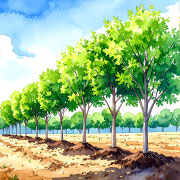

Walnut is one of those trees that instantly makes a garden feel more established. The leaves are large and elegant, made up of many leaflets that give the canopy a soft, feathered look, even though the tree itself is strong and substantial. In a bigger UK garden, a walnut becomes a natural centrepiece — a tree you notice from the house, and one you instinctively walk towards on hot days. It’s not a small tree, but if you have the space, the sense of calm and shelter it brings is hard to beat.
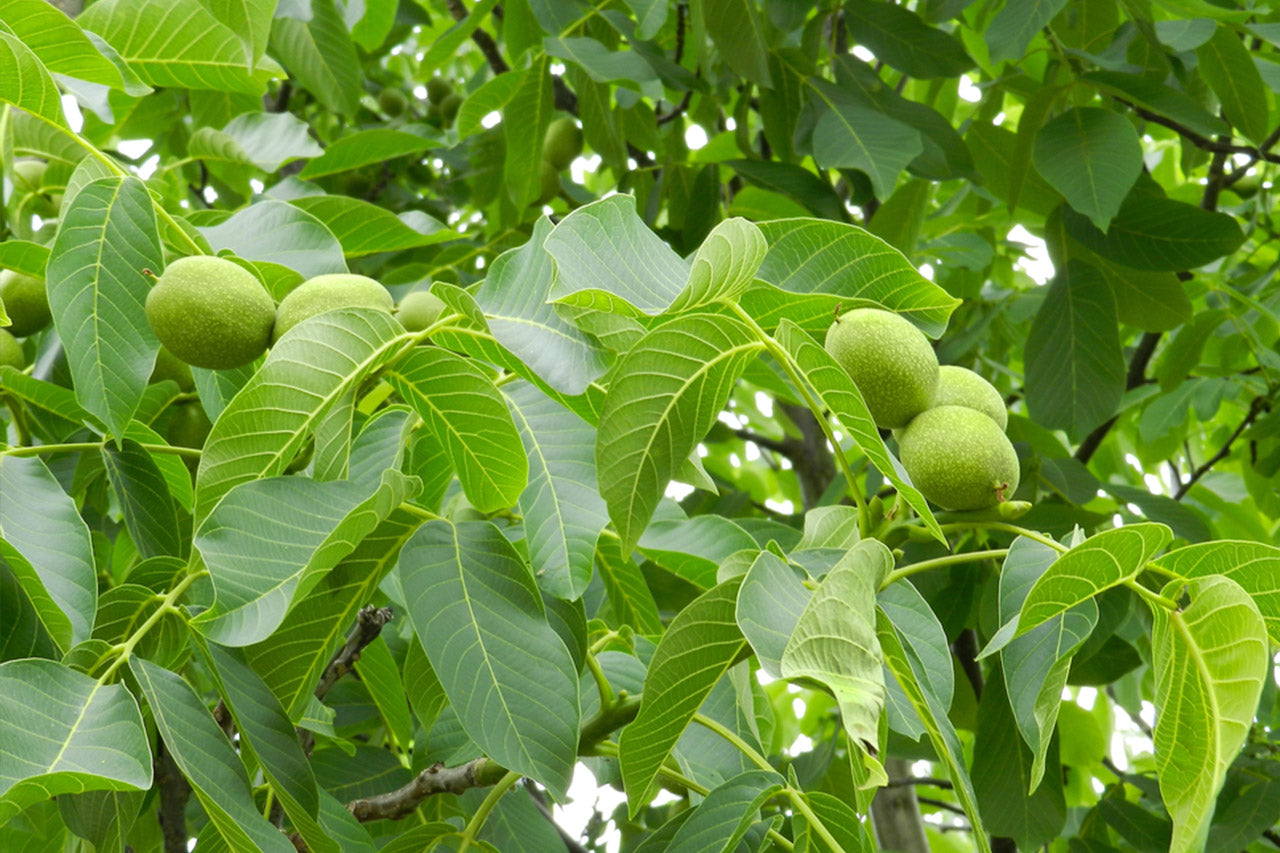
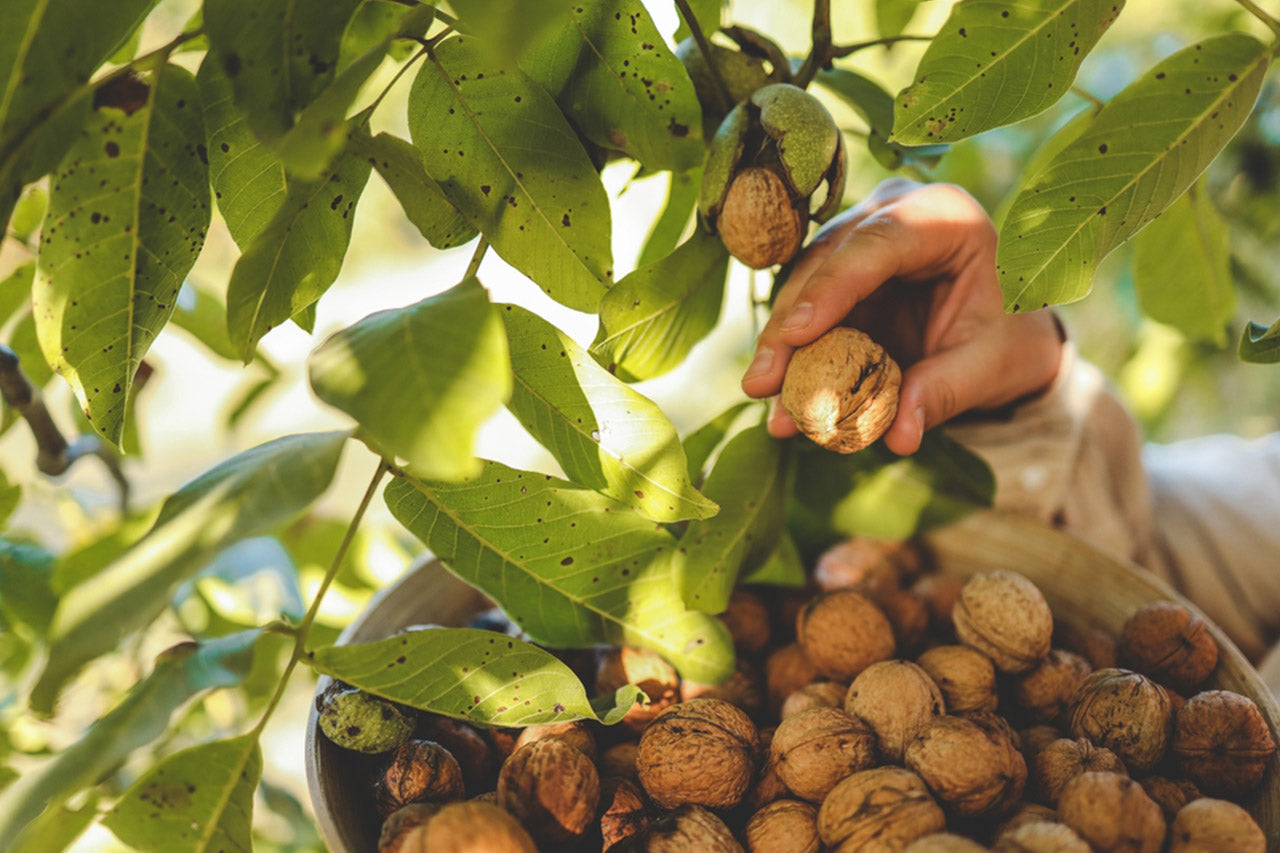
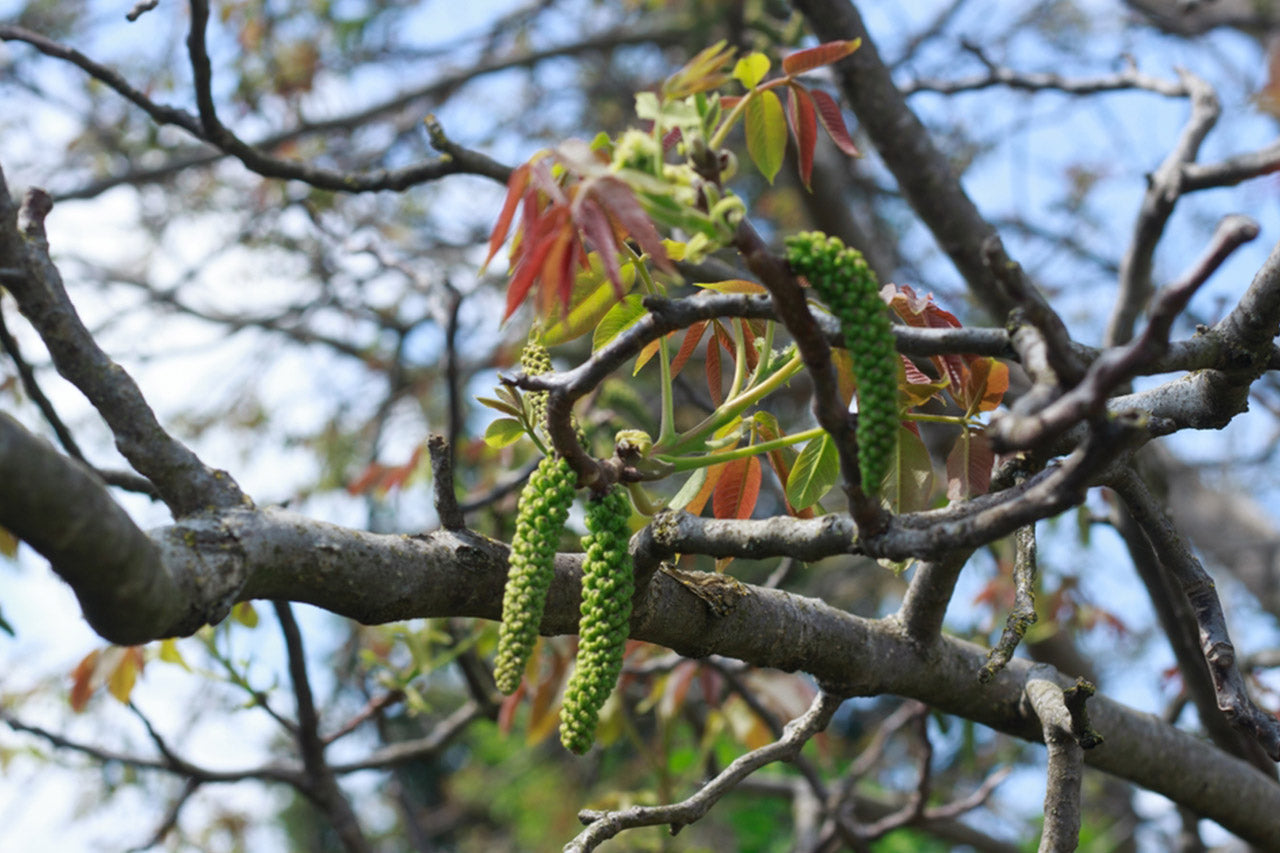
Common name: Walnut tree.
Latin name: Juglans regia.
Size in UK gardens: A large tree over time; commonly 10–20m+ in the long run, depending on conditions and how much space it’s given.
Best position: Full sun, in an open position with plenty of room away from buildings and boundaries.
Soil: Deep, fertile, well-drained soil; dislikes waterlogging and very shallow, poor ground.
Main interest: Broad canopy and handsome foliage, plus edible walnuts in autumn.
Fragrance: Foliage can smell pleasantly resinous when crushed; flowers are not grown for scent.
Hardiness: Hardy in most of the UK once established; young trees appreciate good establishment care.
Care level: Moderate – straightforward in the right place, but needs space and sensible siting.

The Simpson’s team raises the majority of our trees here at the nursery. For varieties outside our own production, we work with independent local growers we trust - all chosen for UK climate suitability.
Planting time: As container-grown trees, walnuts can be planted in most months when the soil isn’t frozen or waterlogged; spring and autumn are usually easiest.
Watering: Water regularly through the first 1–2 summers, especially in dry spells; deep watering helps establish strong roots.
Feeding: A yearly mulch of compost or well-rotted manure is often enough; on poorer soils, a light spring feed can support young trees.
Pruning: Keep pruning light — remove damaged or crossing branches and shape gently while young; avoid heavy cutting.
Winter: Hardy once established; young trees benefit from mulch and secure staking in windy sites.
Availability is always changing, so please check with us if you have a particular variety in mind.


A more garden-friendly walnut that still gives you that classic, handsome walnut presence—bold leaves, a generous canopy, and a real sense of maturity as it settles in. It feels purposeful and productive rather than purely ornamental, making it a lovely choice where you want a walnut without it dominating the whole landscape. Best as a feature tree with plenty of light and breathing space.
A smart, steady walnut with a clean, upright character—less sprawling, more composed—so it reads well in managed gardens and small orchards. It has that unmistakable walnut look (big foliage, strong framework), but with a slightly more “designed” feel. A good pick when you want the dignity of a walnut tree in a form that feels easier to place.
A classic, traditional-feeling walnut with an elegant, well-balanced outline and a calm, assured presence. It carries itself in a slightly more refined way than some bolder forms—handsome rather than heavy—making it ideal when you want a walnut that looks right in established, orchard-like settings. A lovely long-term tree that rewards patience with real stature.
A bold, rugged walnut with a darker, wilder mood—big, dramatic leaves, a powerful trunk, and bark that looks increasingly characterful with age. It feels almost woodland-like in presence, the sort of tree that makes a space feel older and more grounded the moment it starts to bulk up. Best for larger gardens and landscapes where it can become a true landmark.


A walnut with a slightly more “collector’s orchard” feel—chosen when you want something a touch different from the standard forms, but still unmistakably walnut in stature and texture. The canopy has that generous, leafy architecture that creates proper shade and presence. A great option when you want a walnut that feels considered and a little more distinctive.
The classic walnut silhouette: broad, handsome, and quietly majestic, with a canopy that gives deep, satisfying shade in summer. It brings that old-estate, orchard-edge atmosphere—strong framework, bold leaves, and a sense of permanence that only improves with time. A brilliant choice if you have the space for a real legacy tree.
A neat, purposeful walnut with a slightly more controlled outline—still bold in leaf and structure, but with a more manageable feel in the garden. It reads as an orchard tree you’d plant with intent: part feature, part harvest, all long-term investment. Ideal when you want walnut character without the tree feeling overly sprawling.
A walnut with a real ornamental twist—bringing extra colour interest so it feels as much about visual impact as it is about the traditional walnut form. It still has that strong, architectural framework and bold foliage, but with a richer, more decorative presence through the season. A lovely choice when you want a walnut that feels a bit more “designed” and distinctive.