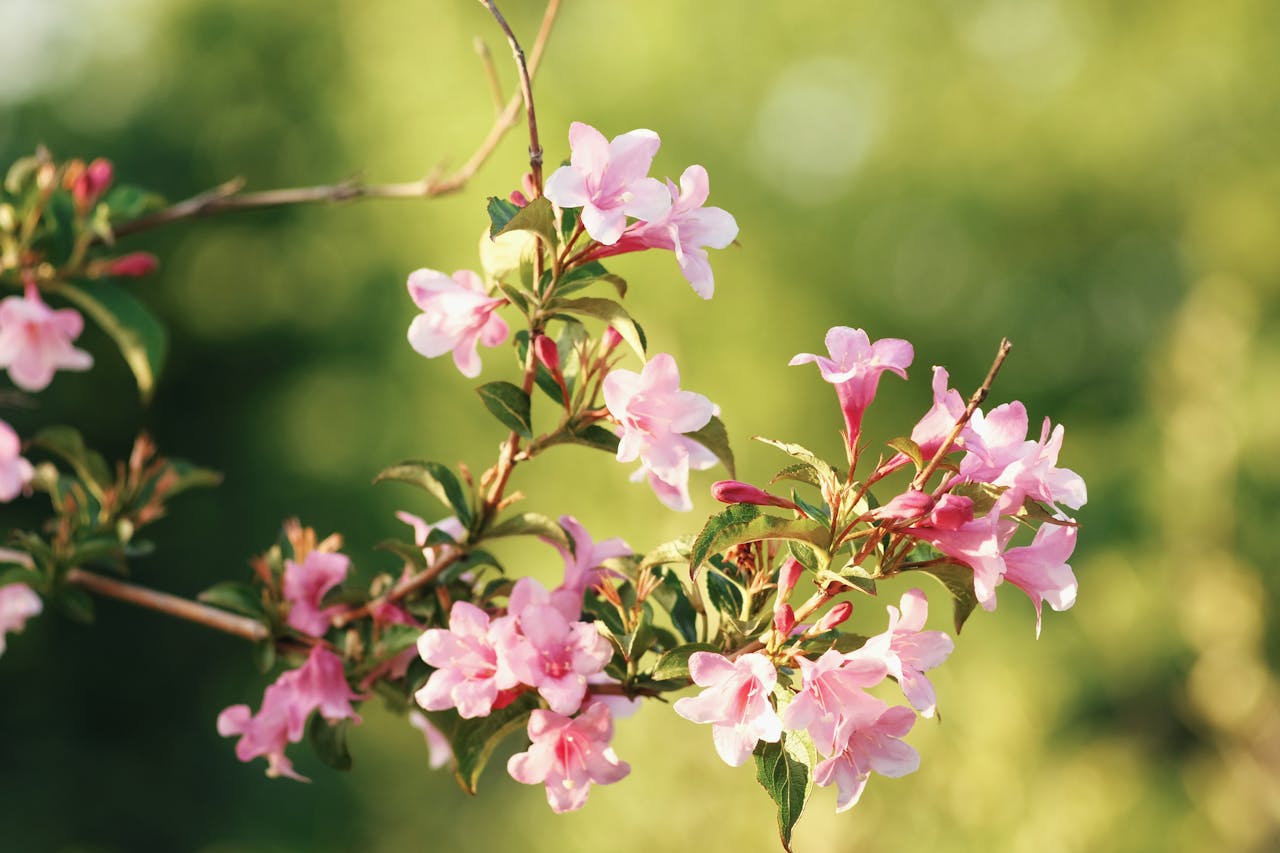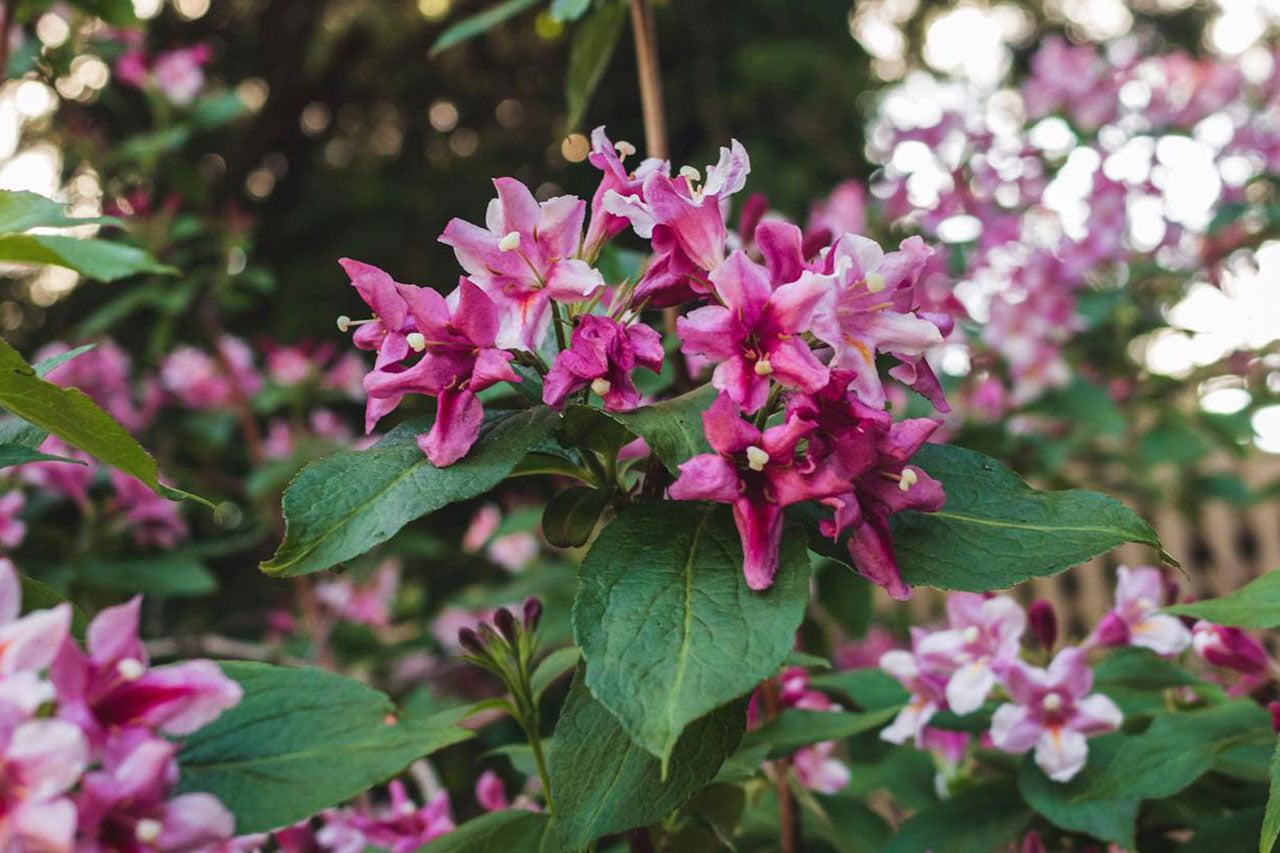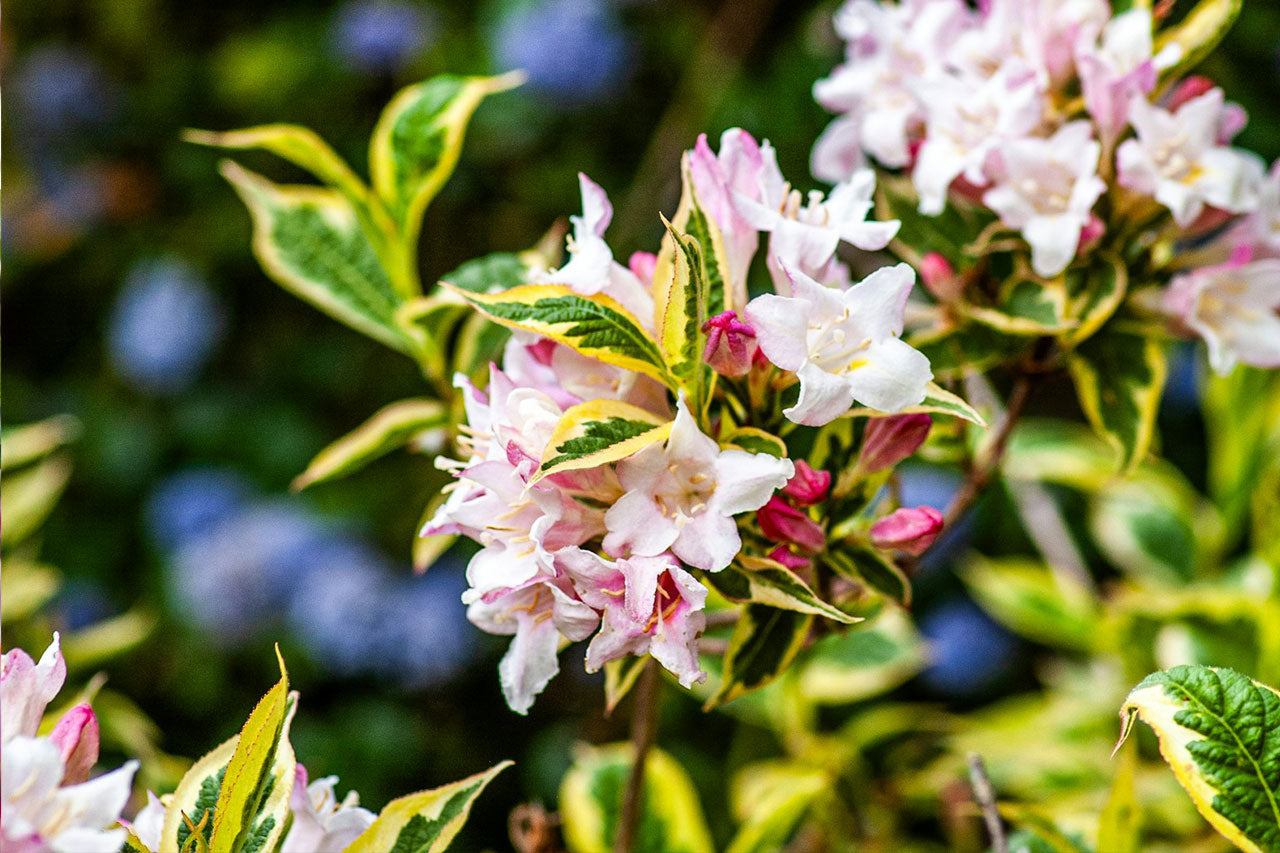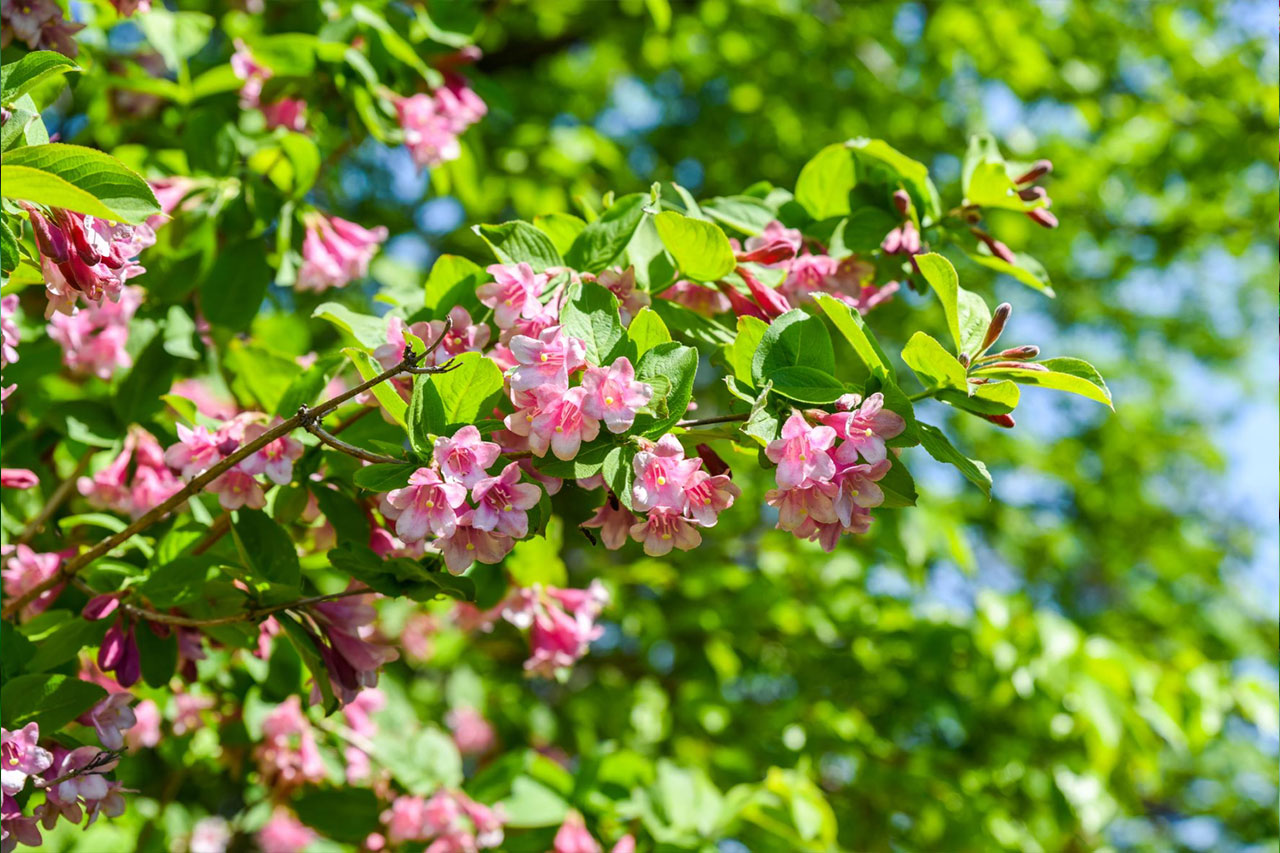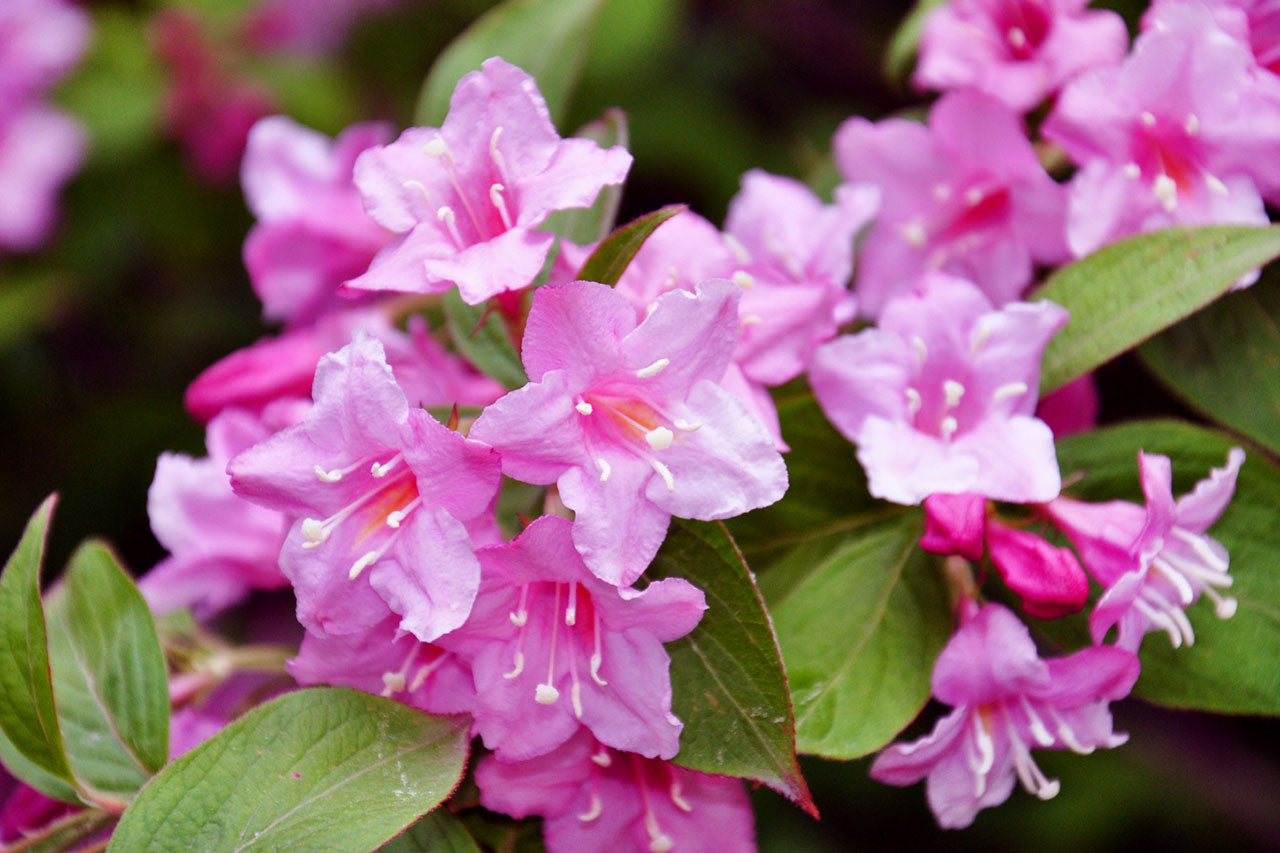

Few shrubs put on such a generous display for so little effort. In May and June, weigela’s arching stems are suddenly crowded with clusters of tubular flowers, often in rich pinks and reds that can be seen across the garden. Many modern varieties will even throw out a second flush later in the summer. If you like a real “ta‑da!” moment in late spring, it’s hard to beat a mature weigela working at full tilt.
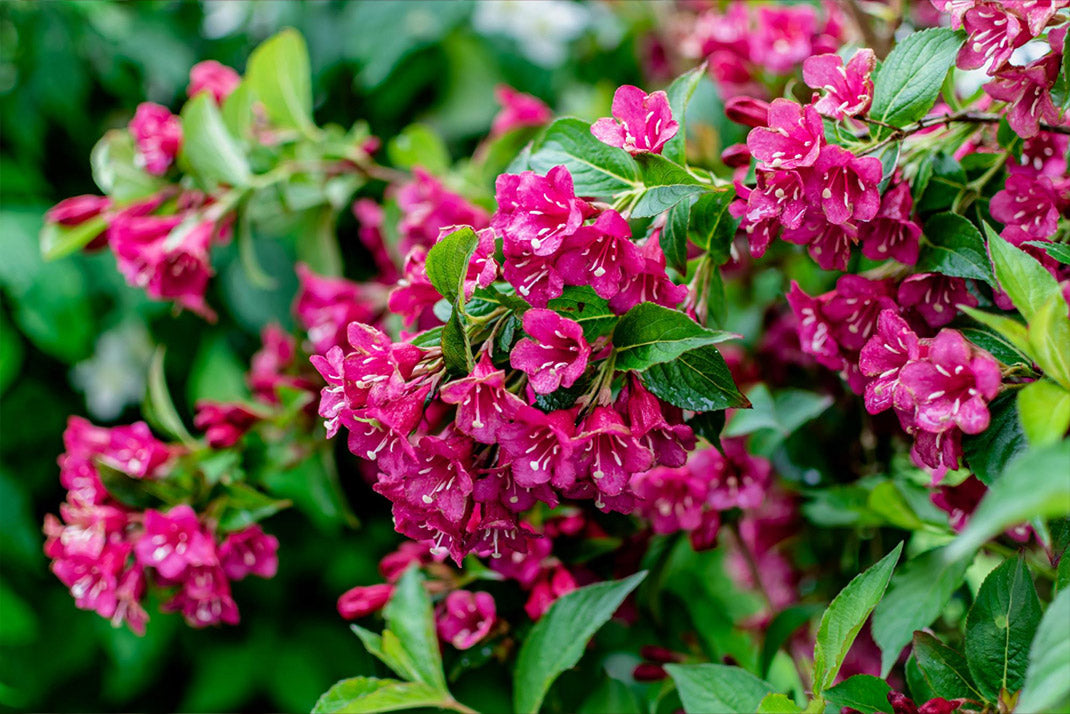
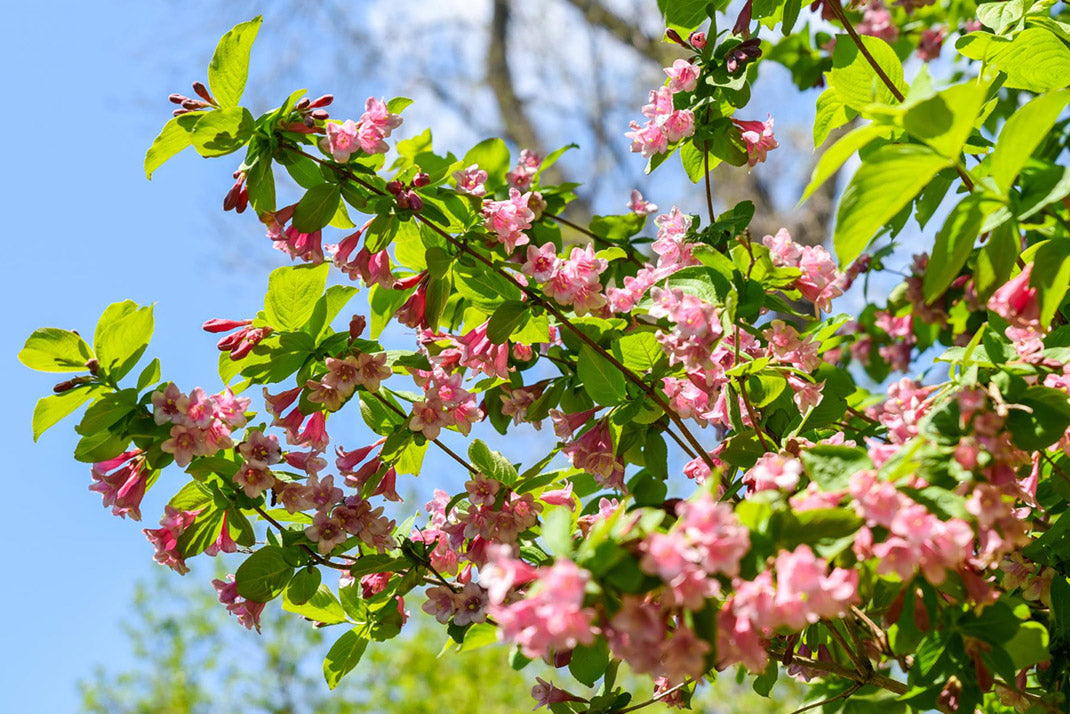
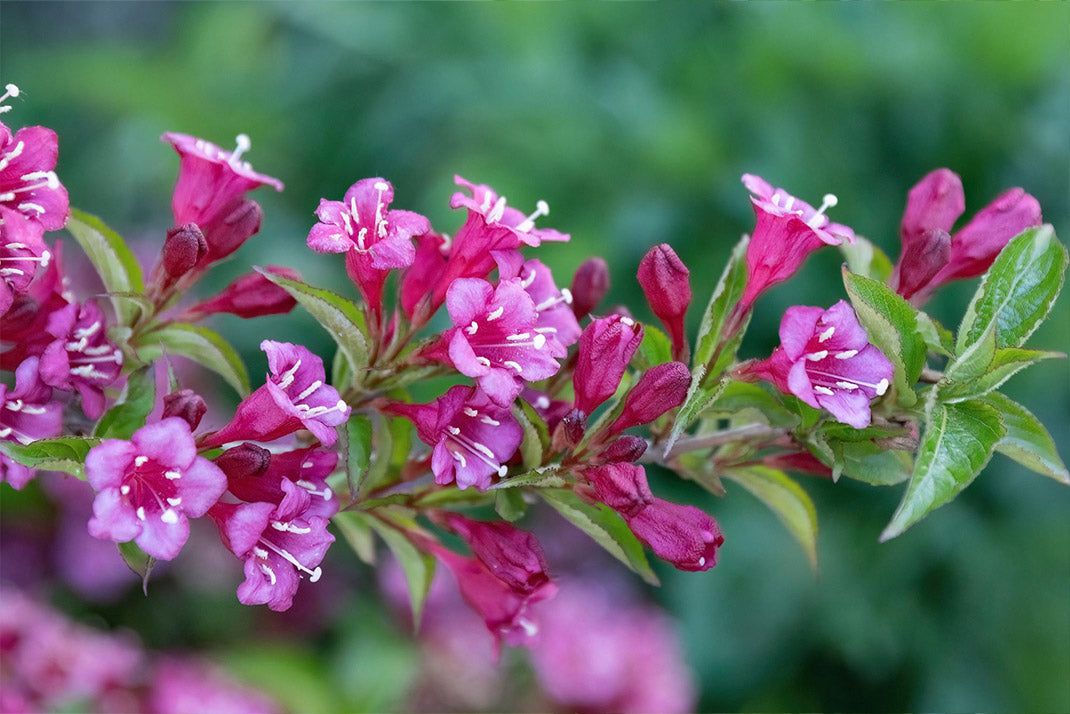
Common name: Weigela
Latin name: Weigela
Size in UK gardens: Typically 1.2–2.5m tall and wide, depending on variety; compact forms stay around 1m, while older, unpruned shrubs can reach 2–3m.
Best position: Full sun for the very best flowering, though most weigelas will still bloom in light or dappled shade.
Soil: Easy‑going – happy in most moist but well‑drained, reasonably fertile soils including chalk, clay, loam and sand, as long as they’re not waterlogged.
Flowering time: Main flush in late spring to early summer, often with a lighter repeat of flowers later in the summer on some varieties.
Fragrance: Most are grown for colour rather than scent; a few forms are lightly perfumed, but generally flowers are not strongly scented.
Hardiness: Fully hardy across the UK), coping well with normal winters once established.
Care level: Easy – a tough, low‑maintenance shrub if you give it sun, decent soil and a light prune after flowering.

The Simpson’s team raises the majority of our trees here at the nursery. For varieties outside our own production, we work with independent local growers we trust - all chosen for UK climate suitability.
Planting time: As container‑grown shrubs, weigelas can be planted in most months when the soil is workable and not frozen or waterlogged, with spring and early autumn usually giving the kindest conditions for new roots.
Watering: Water thoroughly for the first couple of growing seasons so the rootball and surrounding soil don’t dry out, especially on lighter soils. Once established, they generally only need extra water during prolonged summer droughts.
Feeding: In average garden soil, an annual mulch of compost or well‑rotted manure in spring is usually plenty. In very poor soils or containers, add a balanced slow‑release fertiliser in spring.
Pruning: Prune just after the main flush of flowers, removing some of the oldest stems at the base and shortening flowered shoots to strong new growth. This keeps the shrub compact and encourages plenty of flowering wood.
Winter: Fully hardy in the ground and needing no special protection; simply leave the shrub alone and it will leaf up again in spring. Container plants appreciate a sheltered corner out of the worst of the wind.
Availability is always changing, so please check with us if you have a particular variety in mind.
A striking weigela with deep, dark foliage that makes the pink flowers look even brighter, giving a bold, modern contrast in late spring and early summer. It’s superb in mixed borders as a feature shrub, and it pairs beautifully with fresh greens and silvery plants for a crisp, designed look.
A bright, variegated weigela that brings a lighter, more decorative feel, with foliage that stays interesting even when the plant isn’t in flower. The blooms add a cheerful seasonal show, and it’s excellent near the front of shrub borders where the leaf detail can be appreciated up close.
A classic, much-loved variety with rich ruby-red flowers that bring real warmth and drama to late spring borders. It has a generous, cottage-garden feel and sits beautifully among other flowering shrubs. A wonderful choice for adding a bold splash of colour and a long, cheerful flowering moment.
Compact and dramatic, with very dark foliage that gives borders a modern edge and makes the flowers stand out sharply. Perfect for smaller gardens and containers, it provides colour through the leaves as well as the blooms. An excellent contrast plant among brighter greens and pale flowers.
A bright, garden-friendly weigela with a soft, cheerful flowering display that brings a gentle cottage-garden feel. It’s ideal in mixed borders, where it adds seasonal colour without heaviness, and it blends beautifully with roses and early summer perennials for a relaxed, generous look.
A richly coloured weigela with a bold flowering display and a smart, decorative presence in the border. It’s excellent as a feature shrub, bringing strong colour and a lively seasonal moment, and it sits well alongside softer planting where it can provide a confident, anchoring splash.
A bright, golden-leaved weigela that acts like a little burst of sunshine in the border, making its flowers feel even more vivid. It’s perfect for lifting mixed shrub planting and adding contrast to darker evergreens. Particularly effective where you want colour through foliage as well as bloom.
Compact and floriferous, with masses of pink flowers that bring a cheerful, easy charm to borders and pots. Ideal for smaller gardens, it keeps a neat habit and gives a generous seasonal display. A lovely choice near paths and patios where you want colour at a manageable scale.
A dependable variety with bold red flowers that give a strong, classic late-spring show. It’s excellent in mixed borders, where the colour reads clearly from a distance, and it brings that lively, traditional shrub-border feel. A great choice when you want straightforward impact and reliable performance.
Foliage is the star here, with leaves that colour up in warm tones, giving a fiery look that lasts through the season. The flowers add an extra flourish, but the real value is that changing leaf colour which brings drama and contrast. Perfect for contemporary borders and pots where foliage impact matters.
A more upright, columnar weigela that brings flower and structure in a slimmer shape—ideal when you want colour but don’t have room for a broad shrub. Soft apple-blossom pink flowers create a charming seasonal show, and it works beautifully in borders as vertical punctuation or planted in a repeating line for rhythm.