

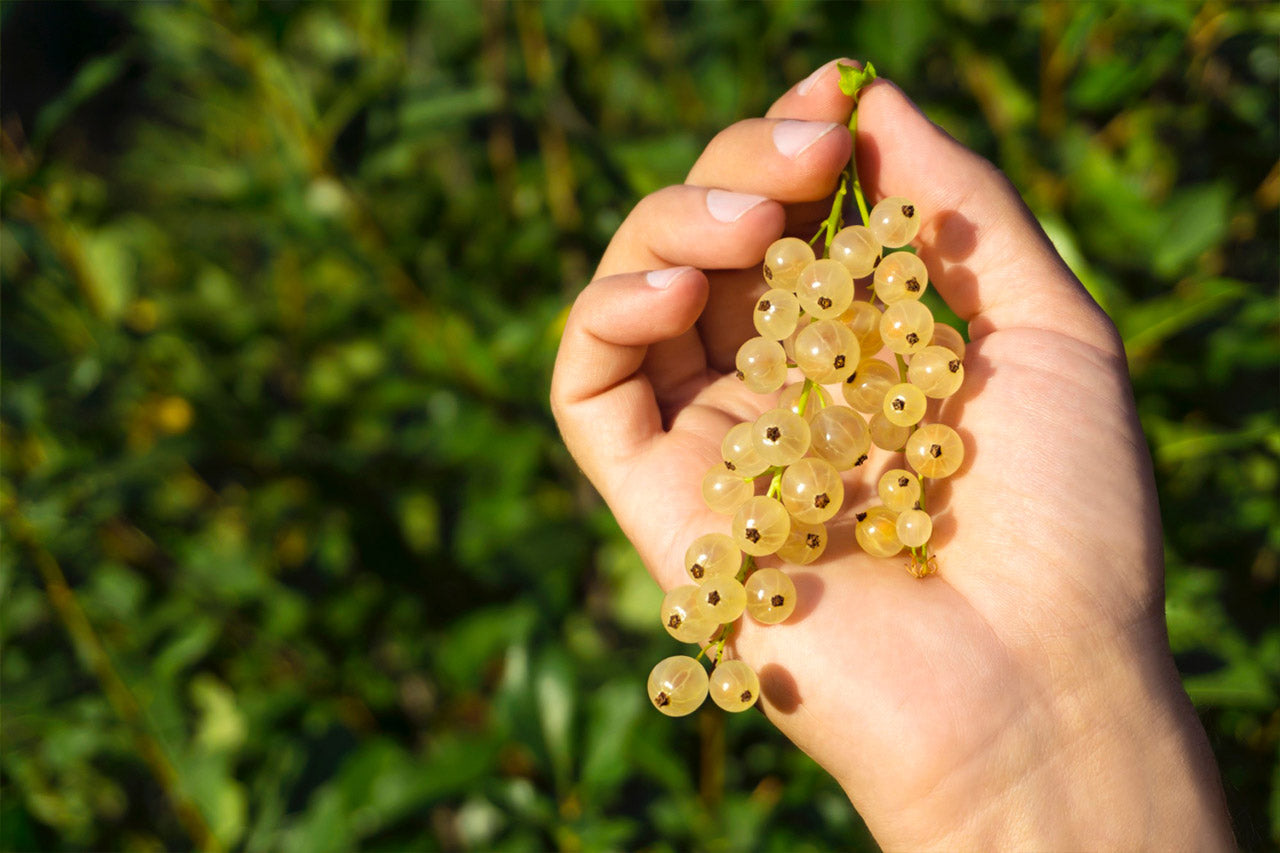
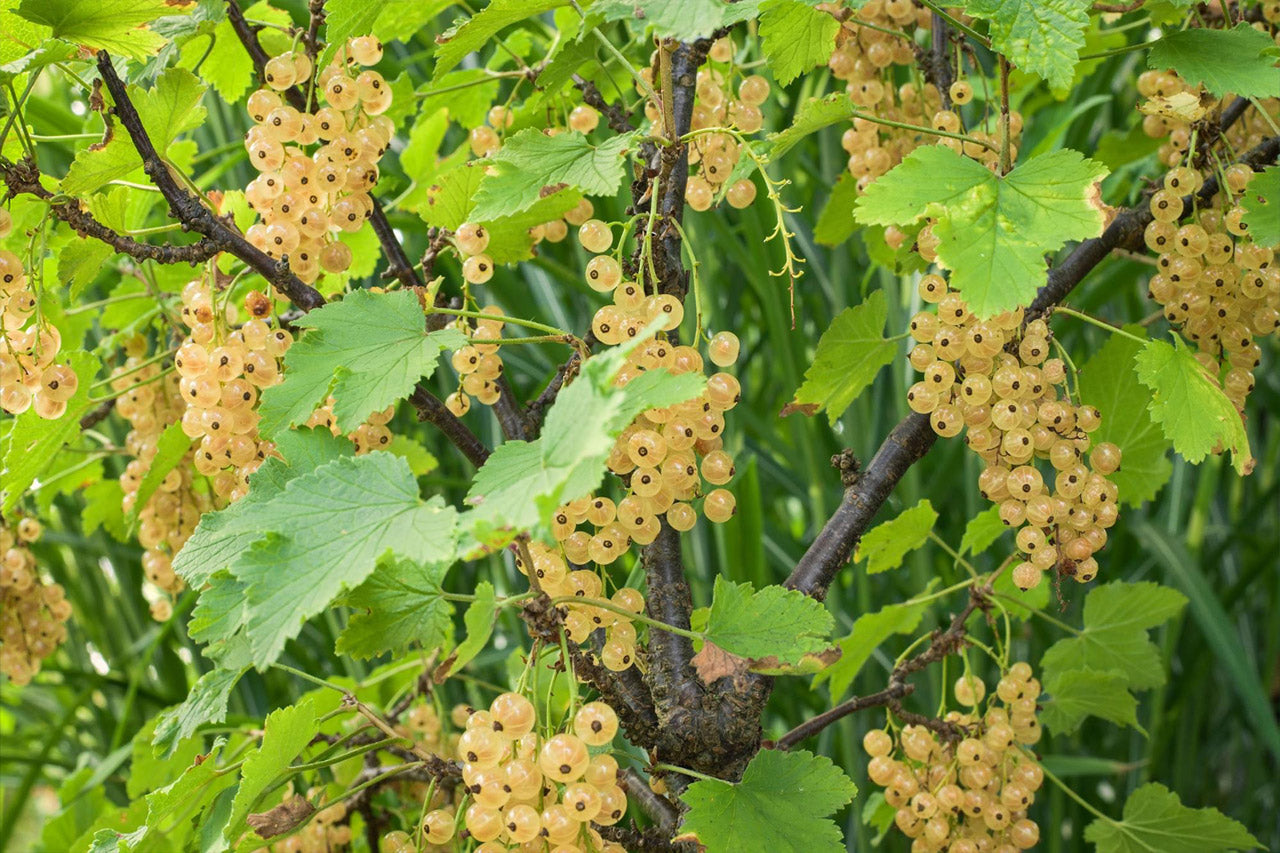
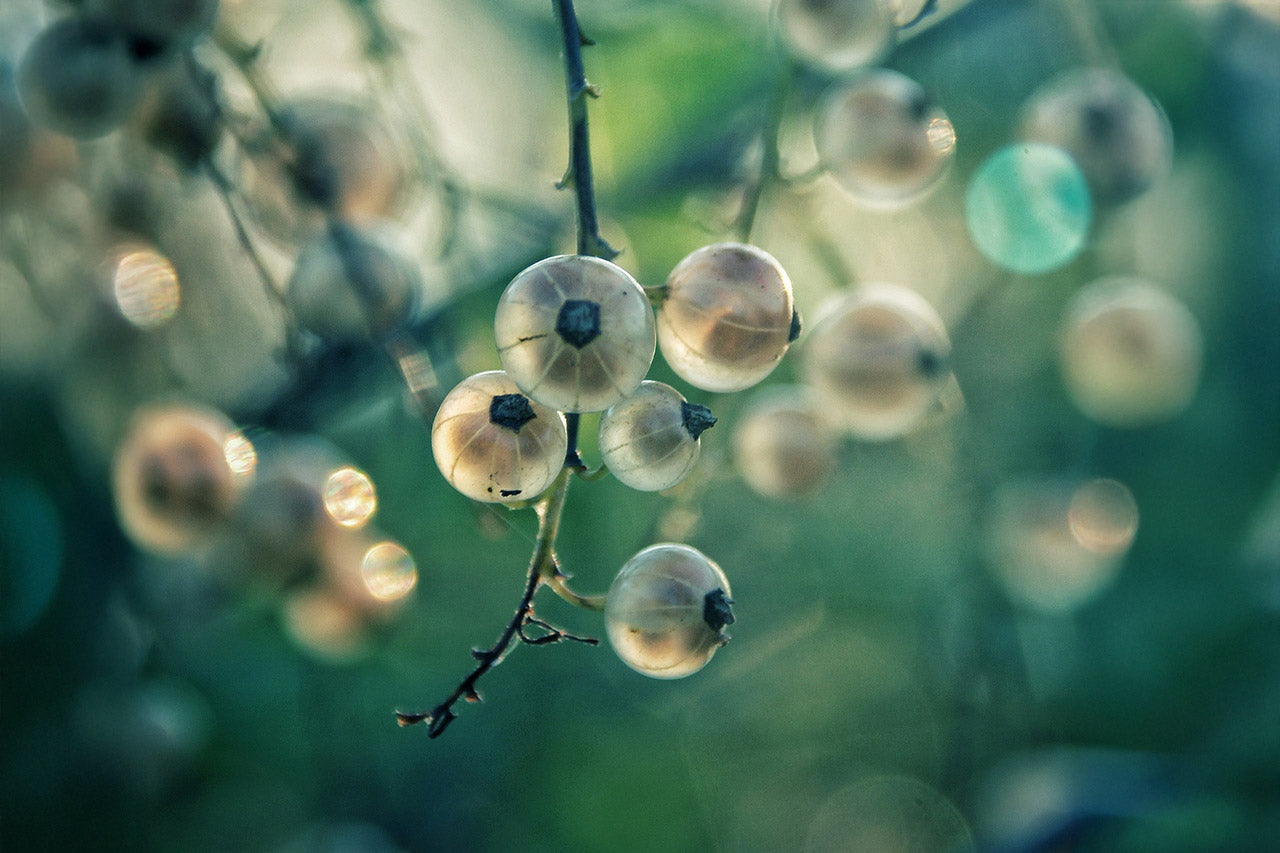
Whitecurrants are really just pale cousins of redcurrants, but they have a character all of their own. The fruit hangs in long, delicate strings of almost translucent berries, ranging from creamy white to pale champagne and soft blush pink, depending on the variety. Their flavour is gentler and less sharp than redcurrants – still fresh and tangy, but with a sweetness that works beautifully in summer puddings, jellies, cakes and fruit salads. In a typical Cambridgeshire garden, a single well‑grown bush can provide more than enough fruit for the kitchen while still looking ornamental on the plant.
Common name: Whitecurrant
Latin name: Ribes rubrum
Size in UK gardens: Typically around 1.2–1.5m tall and wide as a bush; can be kept smaller with pruning, or trained as cordons or fans.
Best position: A sunny, reasonably sheltered spot; will tolerate light shade, but best yields, sweetness and colour are in good sun.
Soil: Fertile, moisture‑retentive but well‑drained soil with plenty of organic matter; dislikes very dry, thin or waterlogged ground. In pots, use a rich, loam‑based compost.
Flowering time: Modest greenish‑white flowers in spring; fruit ripens from early to mid‑summer depending on variety and local climate.
Fragrance: Leaves and berries have a light, sharp “curranty” scent when crushed; flowers are not strongly scented.
Hardiness: Fully hardy across the UK once established.
Care level: Moderate – easy once you understand the pruning, with regular mulching, watering in dry spells and simple winter maintenance.

The Simpson’s team raises the majority of our trees here at the nursery. For varieties outside our own production, we work with independent local growers we trust - all chosen for UK climate suitability.
Planting time: As container‑grown plants, whitecurrants can be planted in most months when the soil isn’t frozen or waterlogged; late autumn and early spring are often easiest. Bare‑root plants are best planted during the dormant season from late autumn to early spring.
Watering: Water regularly in the first couple of years, and during dry spells thereafter, particularly from flowering through to fruit swell. Aim for consistently moist soil rather than cycles of very dry then very wet.
Feeding: Each spring, mulch generously around the base with compost or well‑rotted manure, and on poorer soils add a balanced fertiliser to support strong growth and good crops. In pots, use a slow‑release feed and top up with high‑potash liquid feeds in the growing season.
Pruning: Whitecurrants fruit mainly on short spurs carried on older wood. In winter, thin out some of the oldest stems and shorten new side shoots, keeping an open, upright framework with plenty of well‑lit fruiting spurs.
Winter: In the ground, whitecurrants usually need no special winter protection beyond their mulch. Container plants may benefit from being moved to a slightly more sheltered spot to protect roots from severe cold and repeated freezing and thawing.
Availability is always changing, so please check with us if you have a particular variety in mind.


A classic whitecurrant with long, elegant strings of pale, translucent berries that look jewel-like in the sun. The flavour is sweeter and gentler than redcurrants, making it lovely for eating fresh, as well as for desserts and summer puddings. A beautiful fruit to grow where you’ll enjoy the ornamental value too.
A particularly attractive whitecurrant with generous trusses of creamy, translucent berries and a sweet, mild flavour. Perfect for fresh eating, garnishes, and lighter desserts, and it looks wonderful on the plant. A great choice if you want a whitecurrant that’s both productive and decorative.