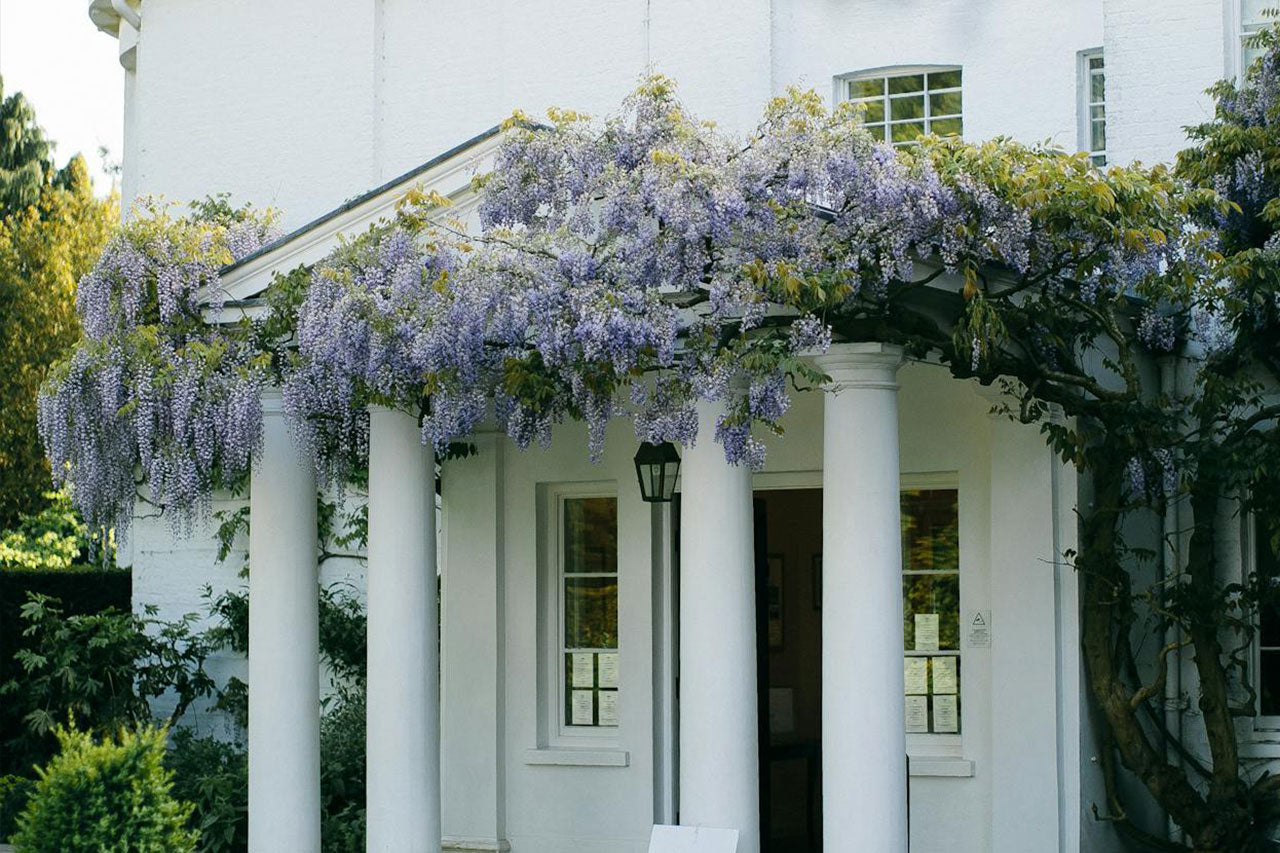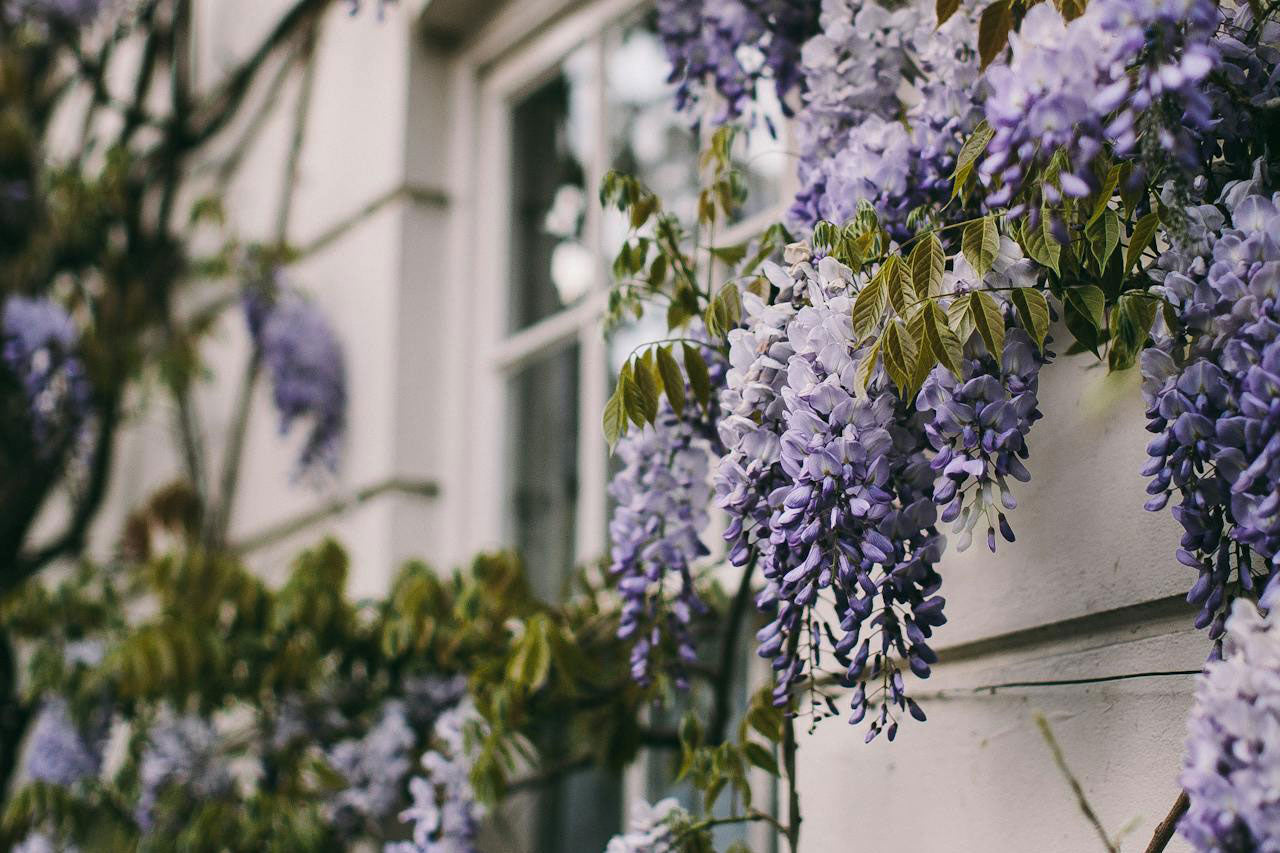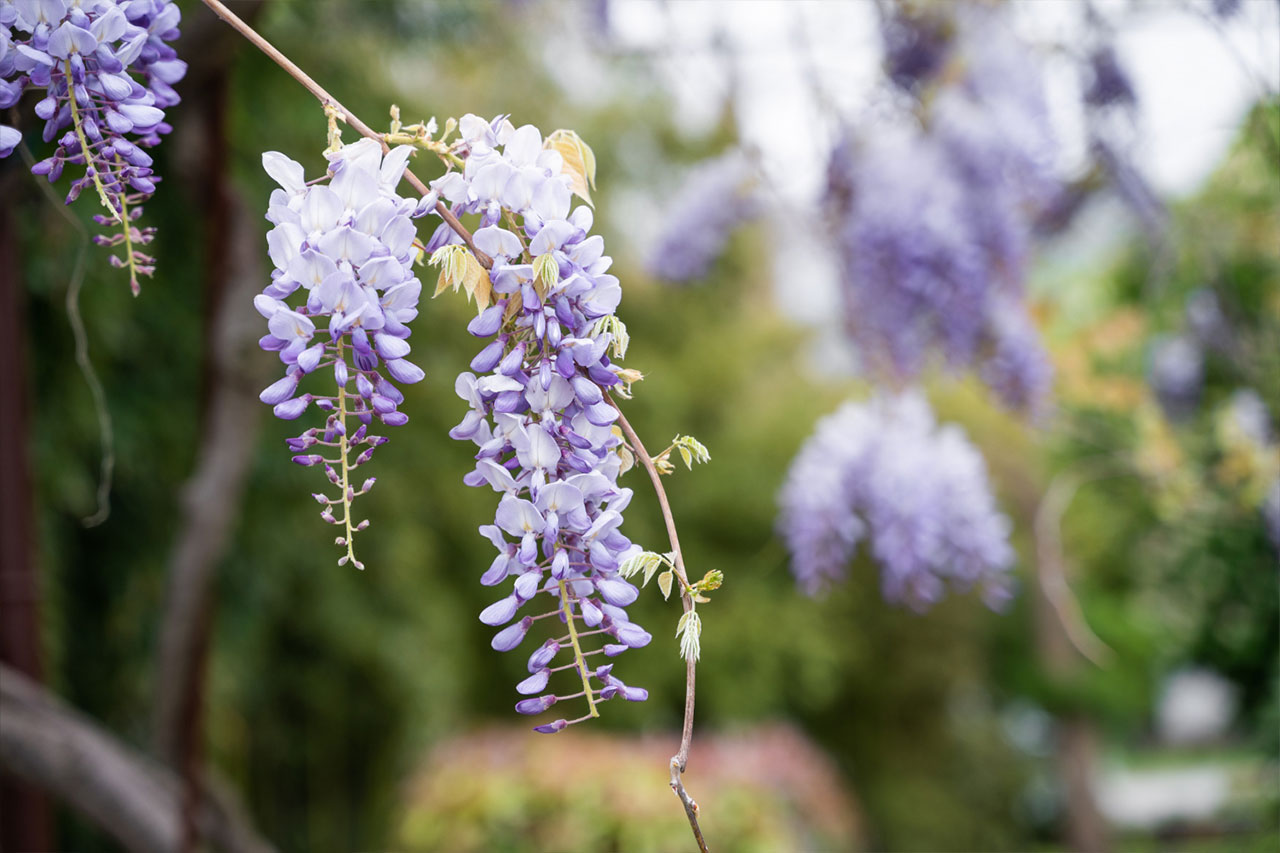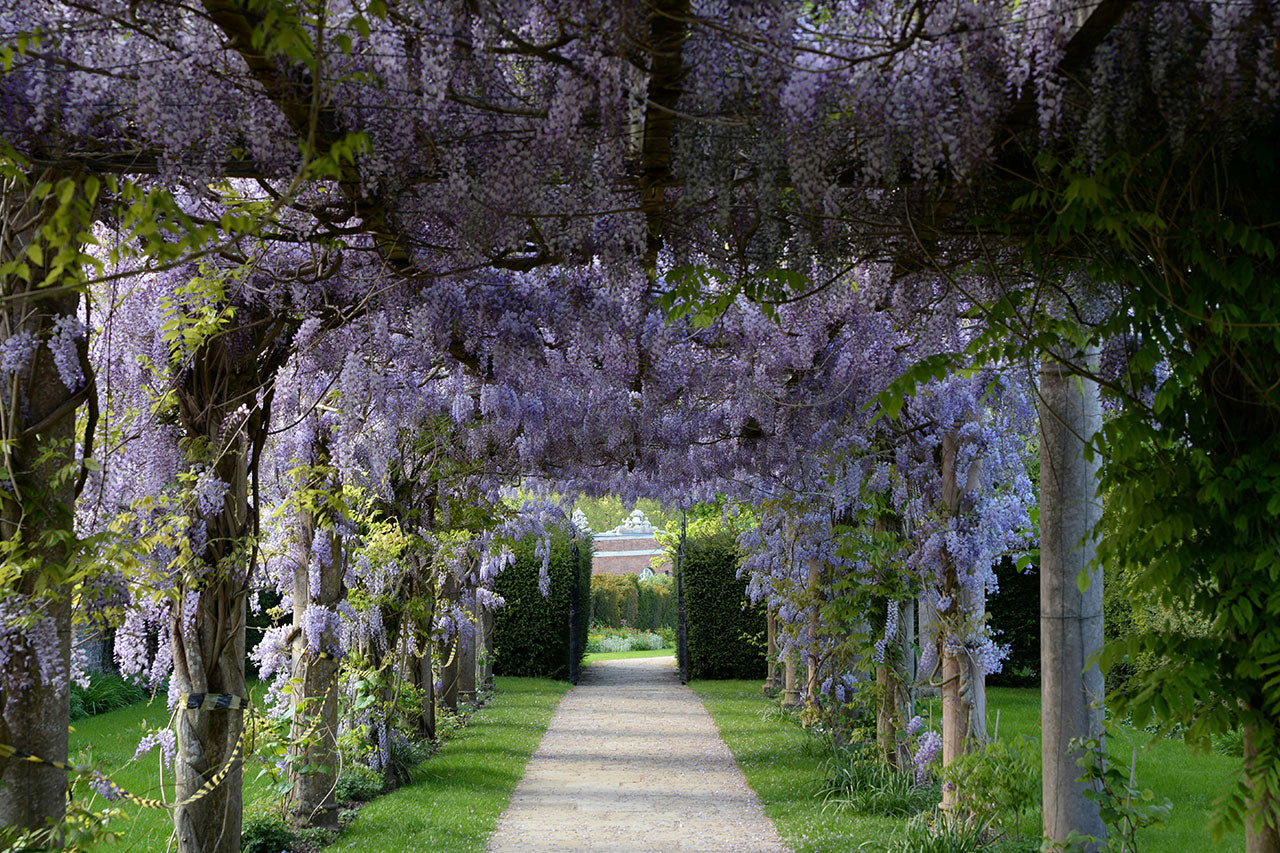

After the big spring display, wisteria doesn’t just sit there doing nothing. The fresh green leaves quickly fill out along the trained stems, softening the lines of brick, render or timber and making a gentle, leafy backdrop to the rest of the garden. Over a pergola or archway, they provide beautiful dappled shade for seating areas – especially welcome in sunnier Cambridgeshire gardens where a little cool is appreciated. The twining stems themselves can be trained into elegant sweeps and fans, so you end up with a living piece of structure as well as a flowering climber.
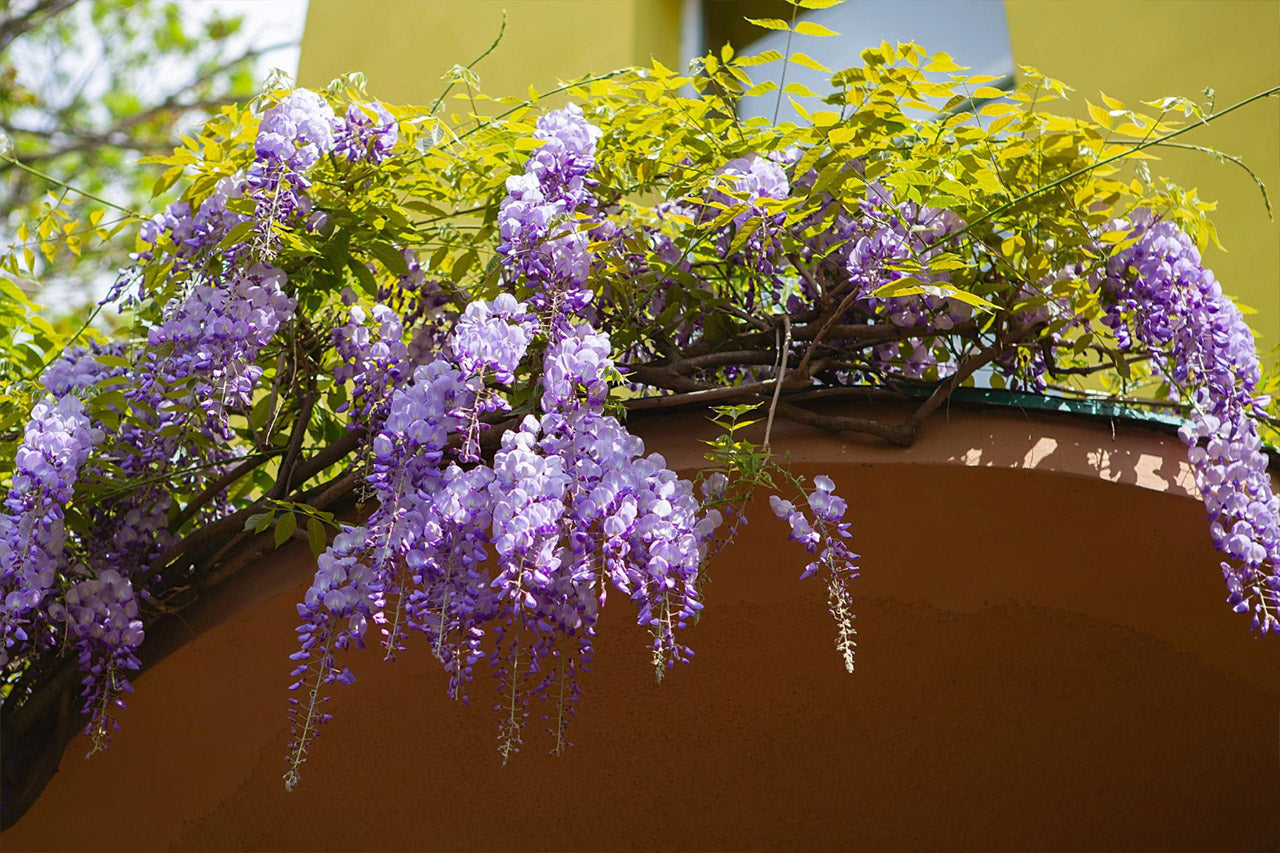
Common name: Wisteria
Latin name: Wisteria
Size in UK gardens: Typically 4–8m along a wall or pergola, and 3–5m high, depending on rootstock, variety and pruning; can be kept smaller with firm training.
Best position: A sunny, sheltered spot – ideally a south‑ or west‑facing wall, pergola or strong frame where stems and buds are protected from the worst of the wind.
Soil: Moist but well‑drained, moderately fertile soil; happiest in good loam or improved clay that doesn’t sit soggy. In containers, a generous, loam‑based compost is best.
Flowering time: Usually May to early June for the main display, sometimes with a lighter second flush later in summer on some varieties.
Hardiness: Generally fully hardy in most UK gardens once established; flower buds can be damaged by late frosts, but the plant itself is tough.
Care level: Moderate – easy enough if you can offer sun, a strong support and are happy to prune twice a year to keep it within bounds and flowering well.

The Simpson’s team raises the majority of our trees here at the nursery. For varieties outside our own production, we work with independent local growers we trust - all chosen for UK climate suitability.
Planting time: Container‑grown wisterias can go in whenever the soil isn’t frozen or waterlogged, with autumn and early spring usually easiest; bare‑root plants (less common) are best in the dormant season. Always choose a grafted, named variety for quicker, more reliable flowering.
Watering: Water regularly in the first two or three seasons so the rootball and surrounding soil don’t dry out, especially against house walls where rainfall may be limited. Established plants in the ground usually cope with typical dry spells but enjoy an occasional deep soak in particularly hot, dry East Anglian summers.
Feeding: Wisteria doesn’t need heavy feeding. A light, balanced fertiliser in early spring and an annual mulch of compost or well‑rotted manure around (but not against) the base are usually enough; avoid rich, high‑nitrogen feeds that promote leaf at the expense of flower.
Pruning: Follow the classic twice‑yearly routine: shorten long, whippy shoots in late summer, then cut these back again in late winter to form short spurs. This keeps the plant manageable and focuses energy into flowering rather than endless leafy growth.
Winter: Established plants in the ground need little winter care beyond a mulch over the root area and a quick check that wires, ties and pergola fixings are sound. Flower buds may be nipped by late frosts, but the plant itself is rarely bothered by ordinary winter weather.
Availability is always changing, so please check with us if you have a particular variety in mind.


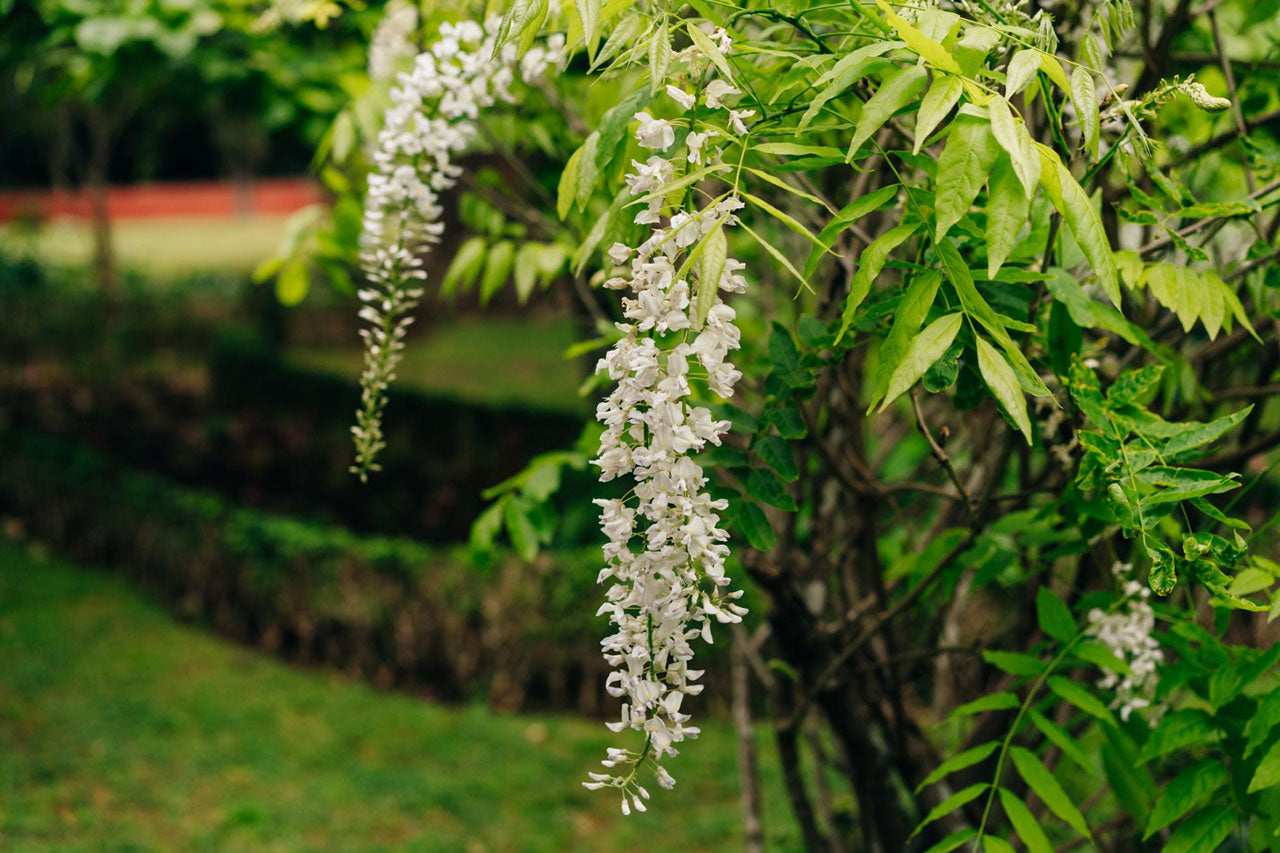
A white wisteria is pure spring theatre, with long cascades of bloom that hang like chandeliers and instantly make a pergola or porch feel grand. The colour is crisp and luminous, especially against timber or brick, and it’s wonderful for creating that classic “old garden” atmosphere with a softer, lighter palette.
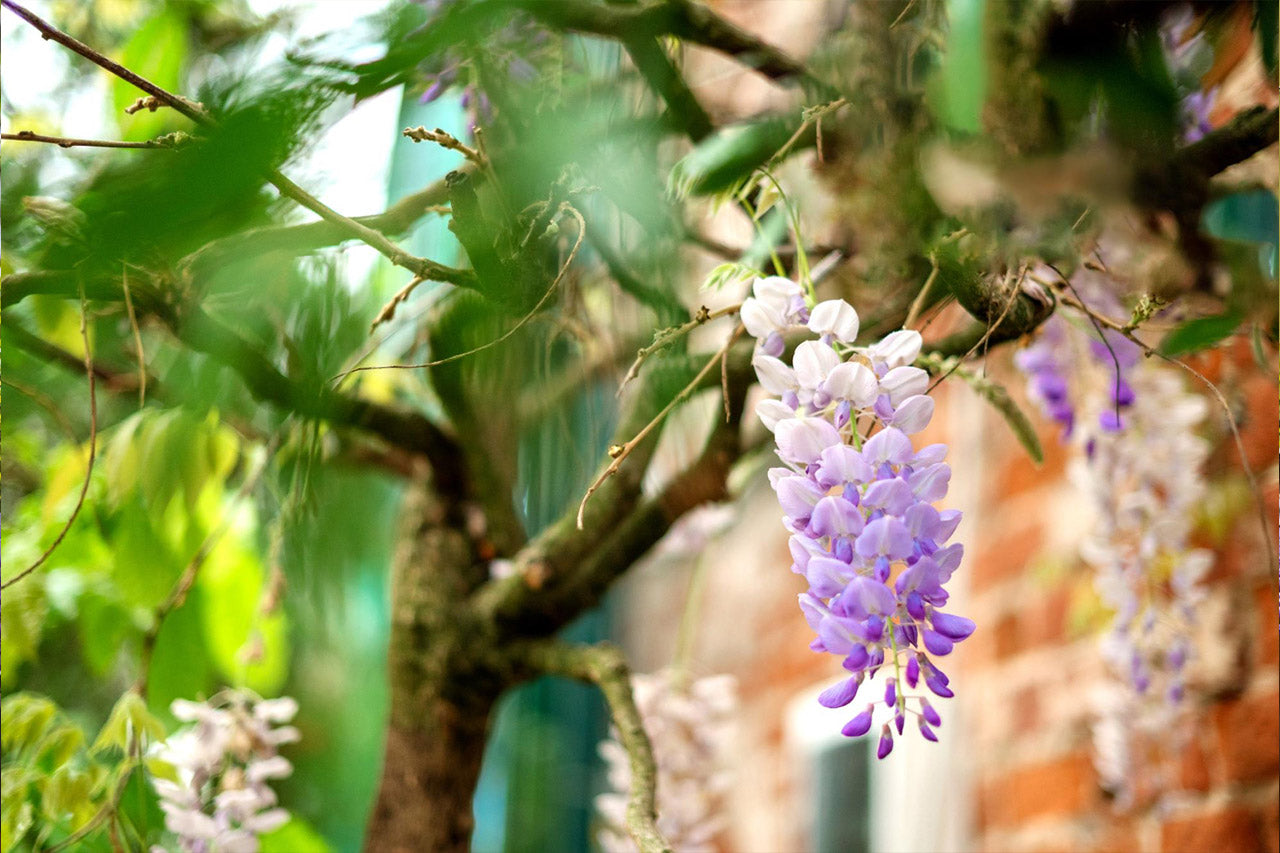
A Japanese wisteria with generous lilac-blue racemes that fall in elegant curtains, turning arches and pergolas into a springtime spectacle. It brings a romantic, slightly parkland feel to the garden, creating a living ceiling of flower that looks magical when viewed from beneath.
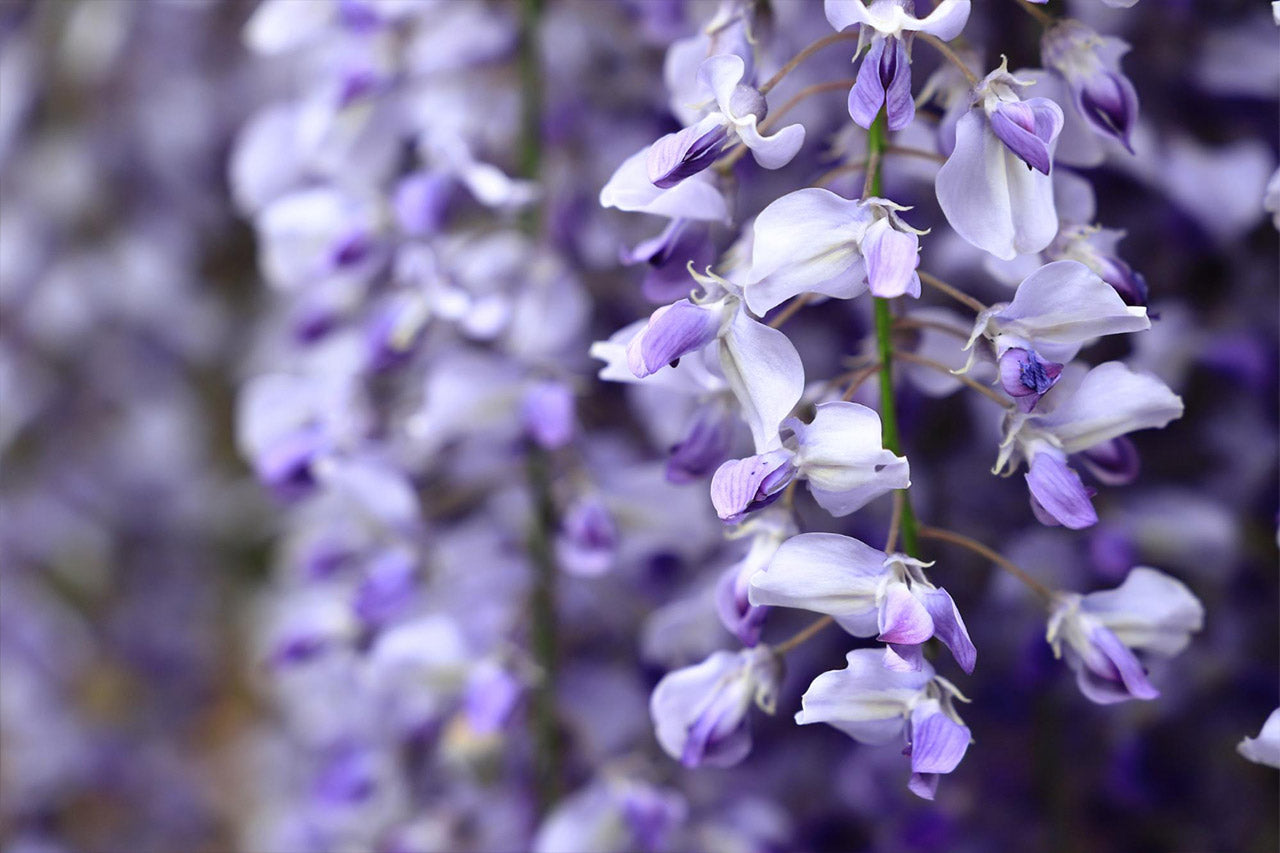
A much-loved blue wisteria that delivers a proper show, smothering itself in richly coloured racemes and making even a simple structure feel established and dramatic. It’s ideal for pergolas, porches and stout fences where you want maximum impact, giving that unmistakable sense of age, romance and occasion each spring.
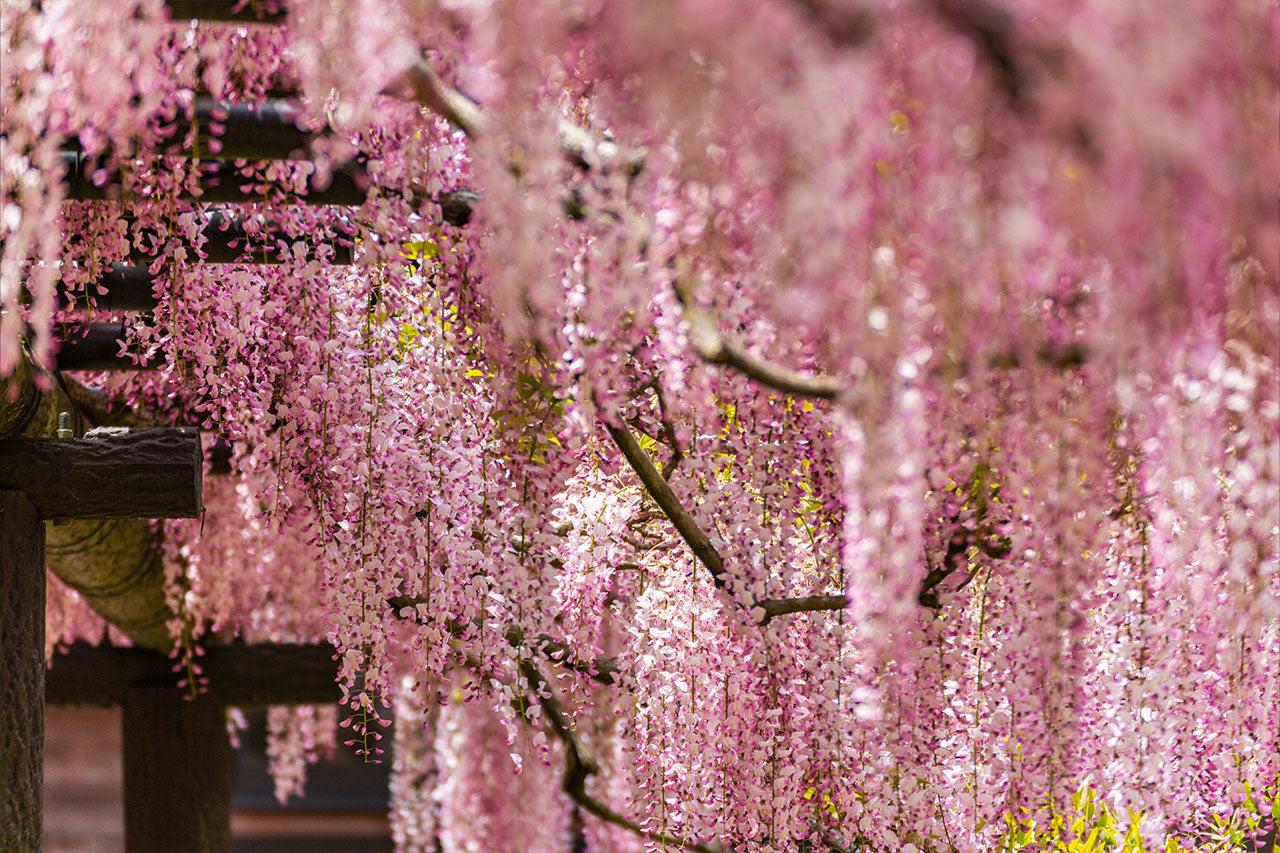
A softer, blush-pink wisteria that feels more pastel and dreamy, with flower curtains that look luminous in gentle light. It’s beautiful trained over arches and pergolas near seating, bringing classic wisteria grandeur but with a more delicate, romantic colour note that suits cottage and courtyard gardens alike.