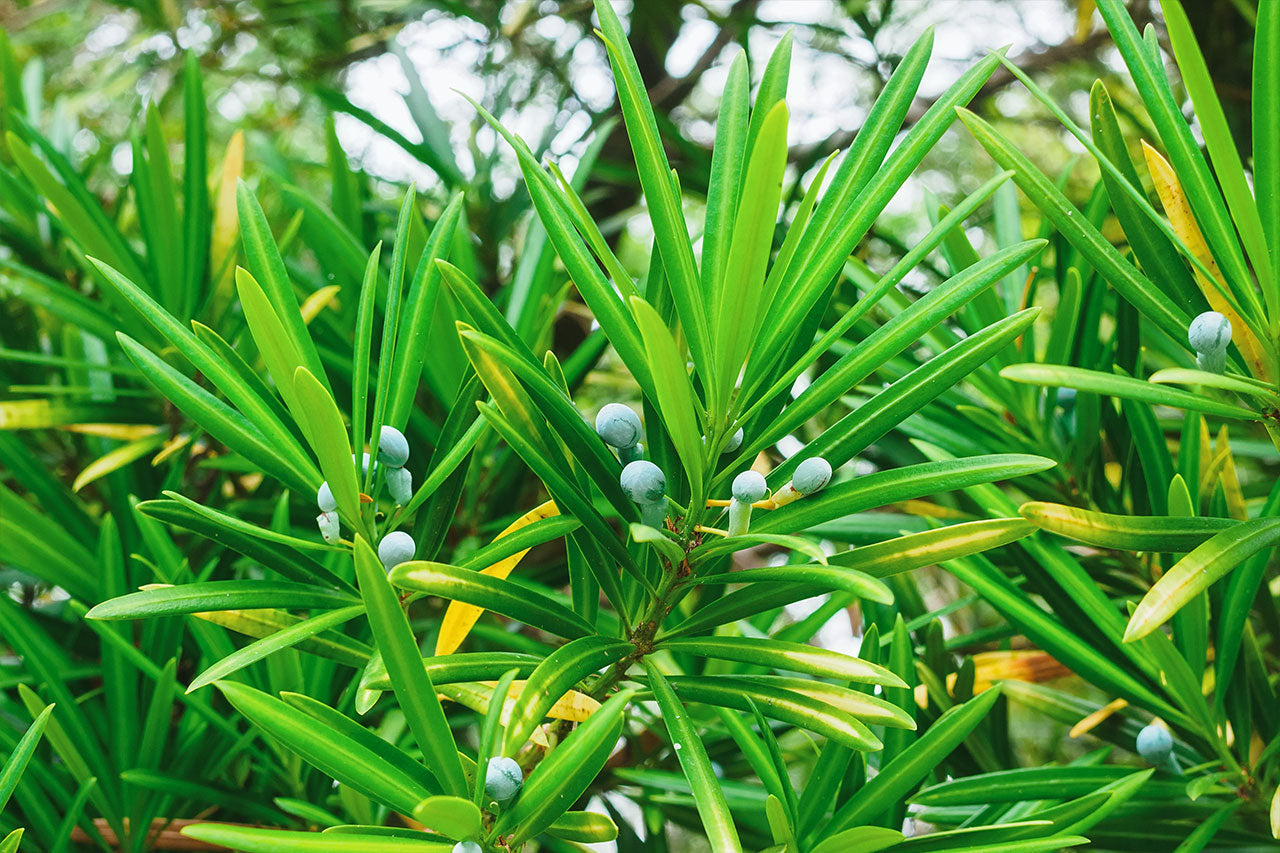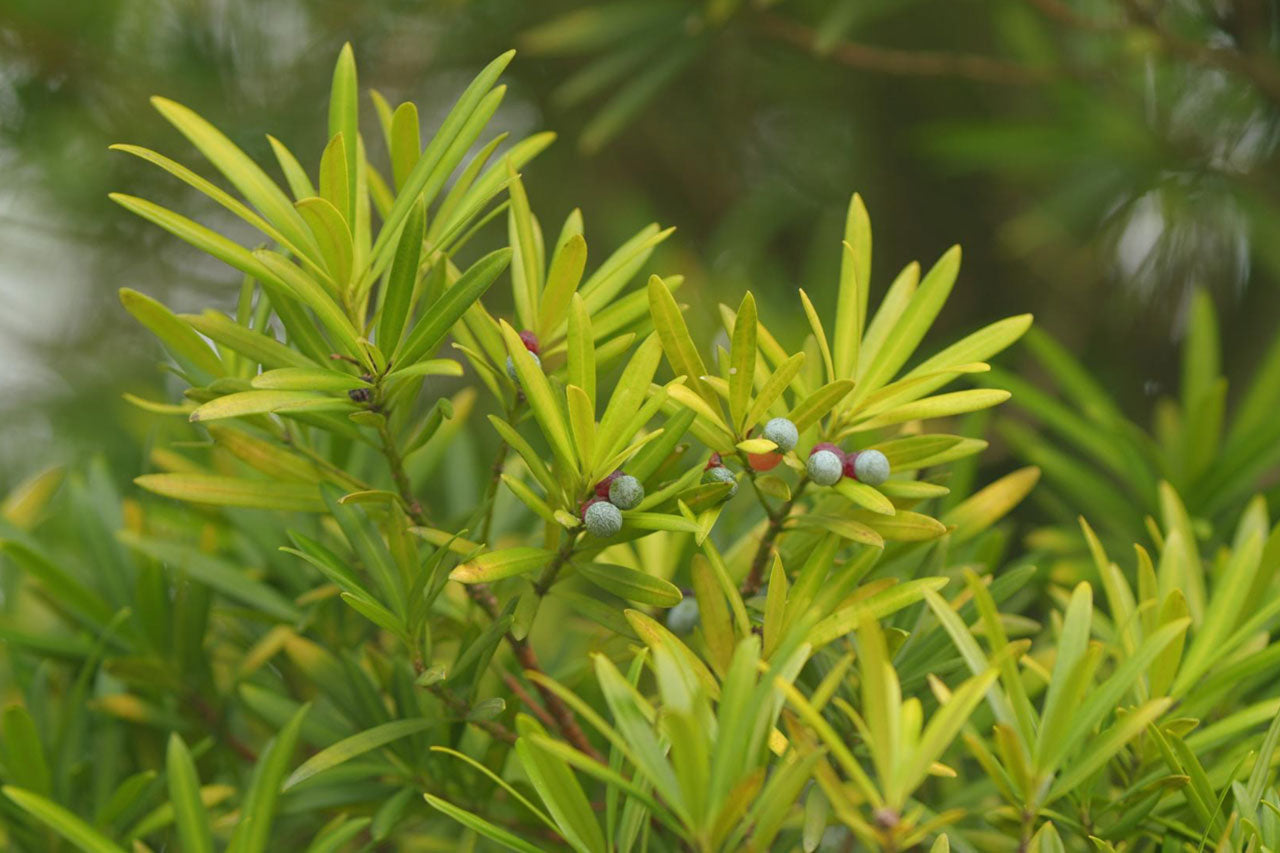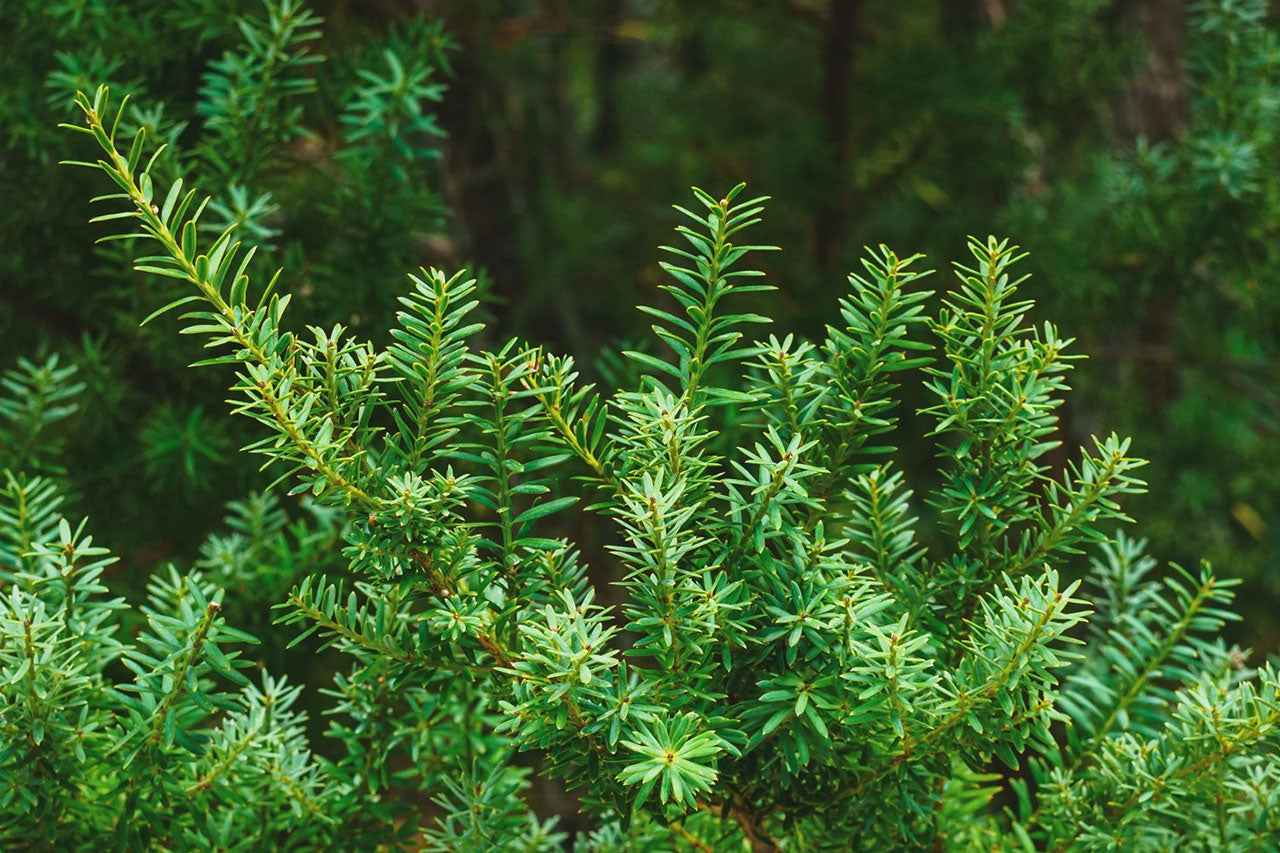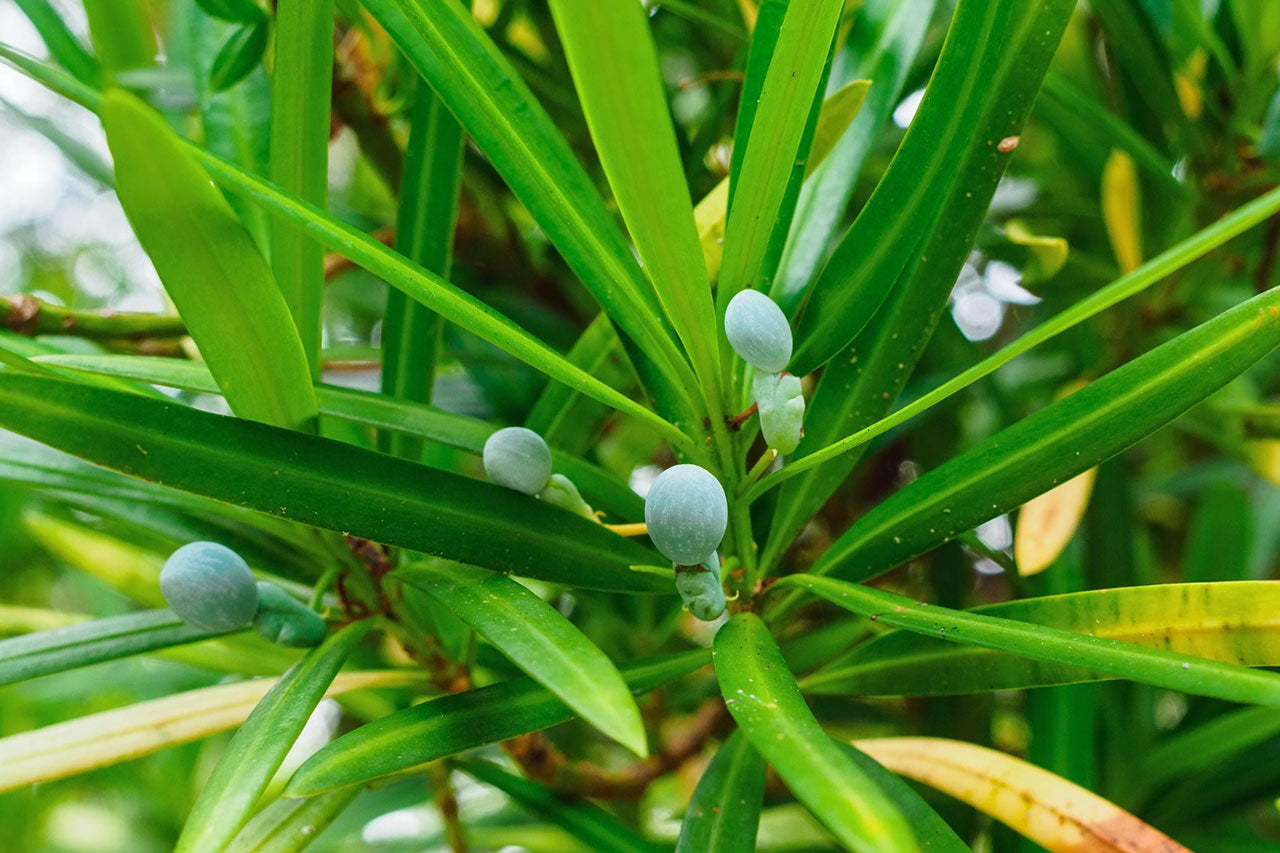

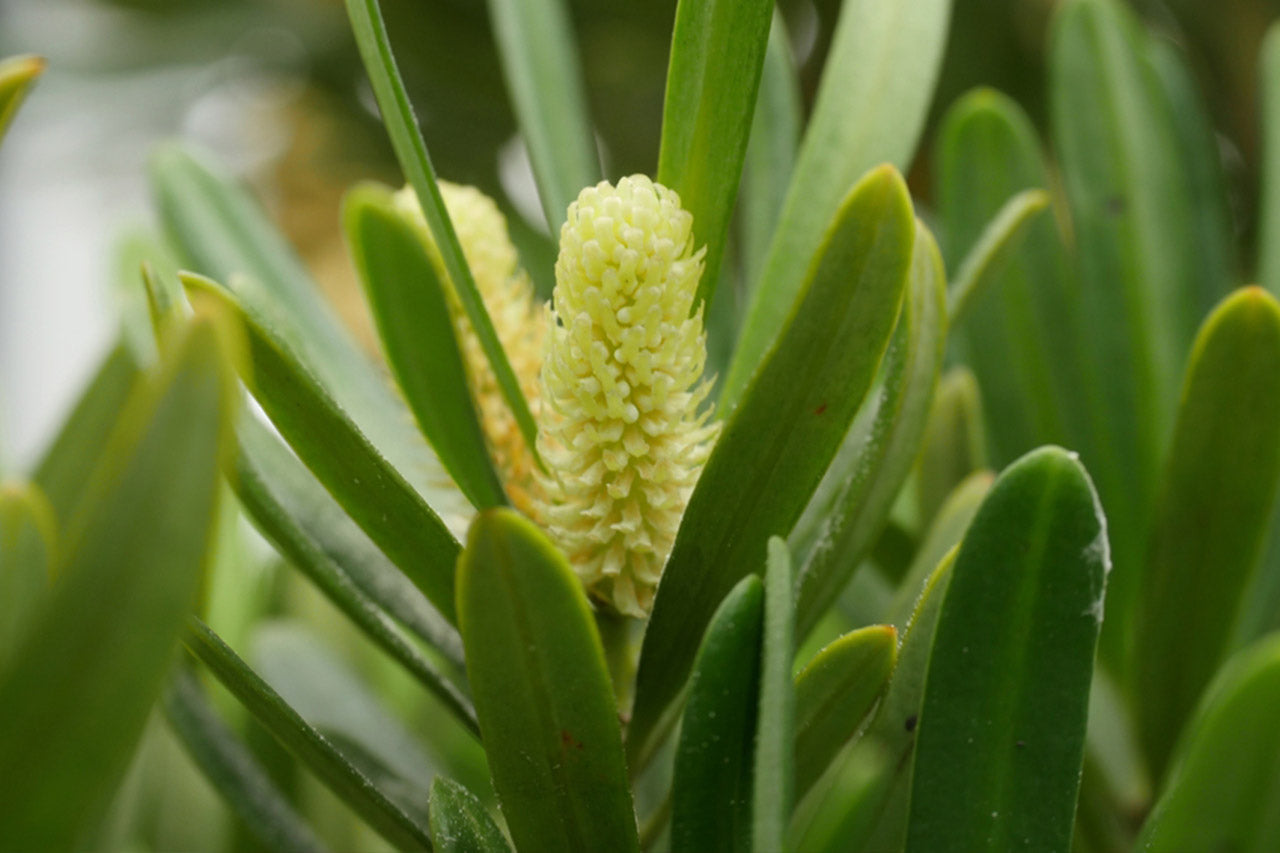
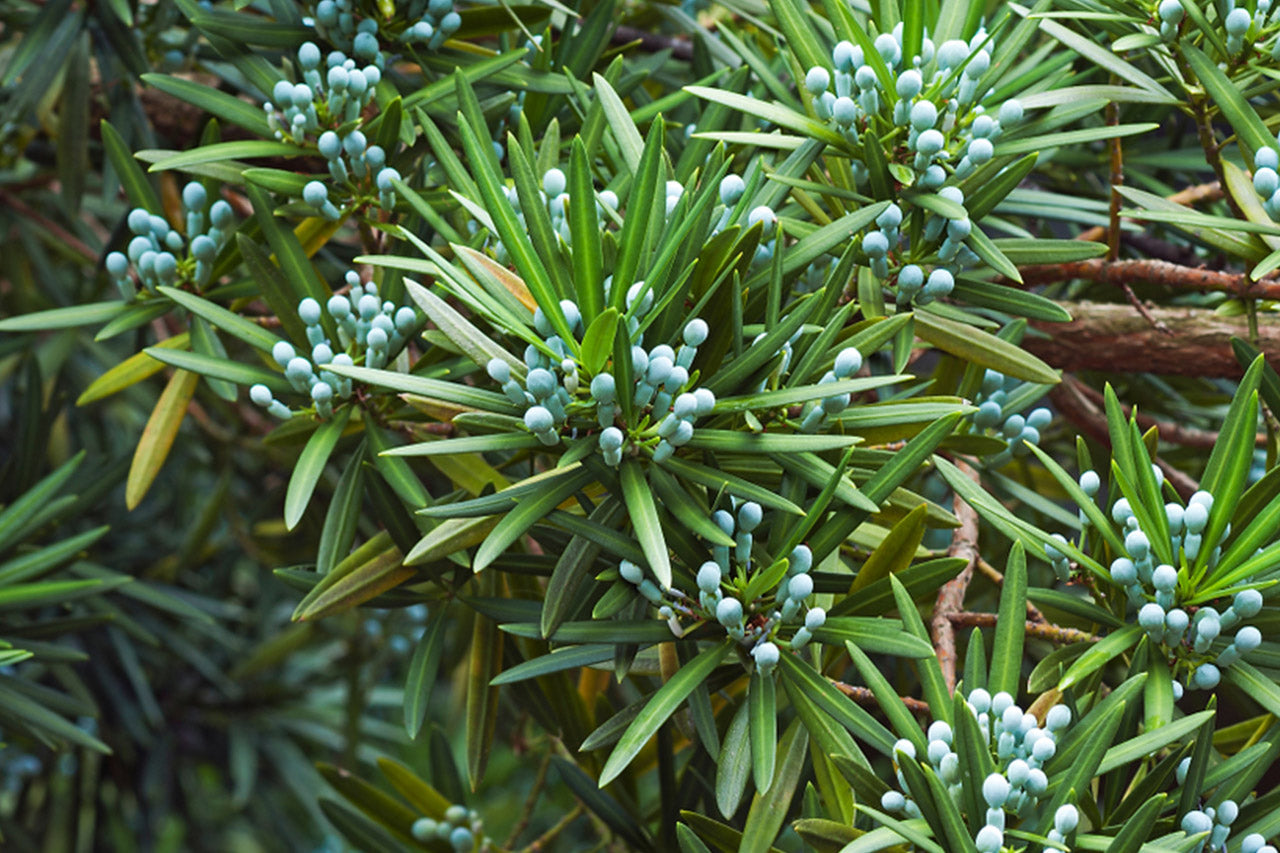
Podocarpus has a wonderfully refined look: long, narrow, glossy leaves held in neat sprays, giving the plant a clean, almost tailored finish. It’s evergreen, so it keeps its colour and structure through winter, and it doesn’t have that prickly feel some conifers bring to tight spaces. In a mixed border, it behaves like a calm, dark‑green anchor; in a pot, it looks quietly smart by the door or on the patio. If you like simple, evergreen structure, this one is a real keeper.
Common name: Yew plum pine
Latin name: Podocarpus
Size in UK gardens: Varies by cultivar and pruning; commonly 1.5–4m tall and 1–2m wide over time, or kept smaller in pots and hedges.
Best position: Sun to light shade, ideally in a sheltered spot; excellent for courtyards, borders and large containers.
Soil: Moist but well‑drained soil with good structure; dislikes waterlogging, especially in winter.
Main interest: Glossy evergreen foliage and neat structure all year; occasional small cones/fruiting structures are secondary.
Fragrance: Not noticeably scented.
Hardiness: Generally hardy in much of the UK in a sheltered position, but can suffer leaf scorch in harsh, cold winds or very severe winters.
Care level: Moderate – straightforward if you offer drainage and shelter, with light pruning to keep it dense and tidy.

The Simpson’s team raises the majority of our trees here at the nursery. For varieties outside our own production, we work with independent local growers we trust - all chosen for UK climate suitability.
Planting time: As container‑grown plants, Podocarpus can be planted in most months when the soil isn’t frozen or waterlogged; spring and early autumn are usually easiest for quick establishment.
Watering: Water regularly for the first year, especially in dry spells and in pots. Once established in the ground, it is fairly drought‑tolerant but looks best with occasional deep watering in prolonged dry weather.
Feeding: A spring mulch of compost or well‑rotted manure is usually enough; on poor soils or in pots, add a light balanced feed in spring.
Pruning: Light trimming once or twice a year keeps it dense and tidy; it responds well to shaping if you want a hedge or topiary form.
Winter: Usually fine in the ground if sheltered and well‑drained; protection is mainly about reducing wind scorch in very cold, exposed gardens.
Availability is always changing, so please check with us if you have a particular variety in mind.
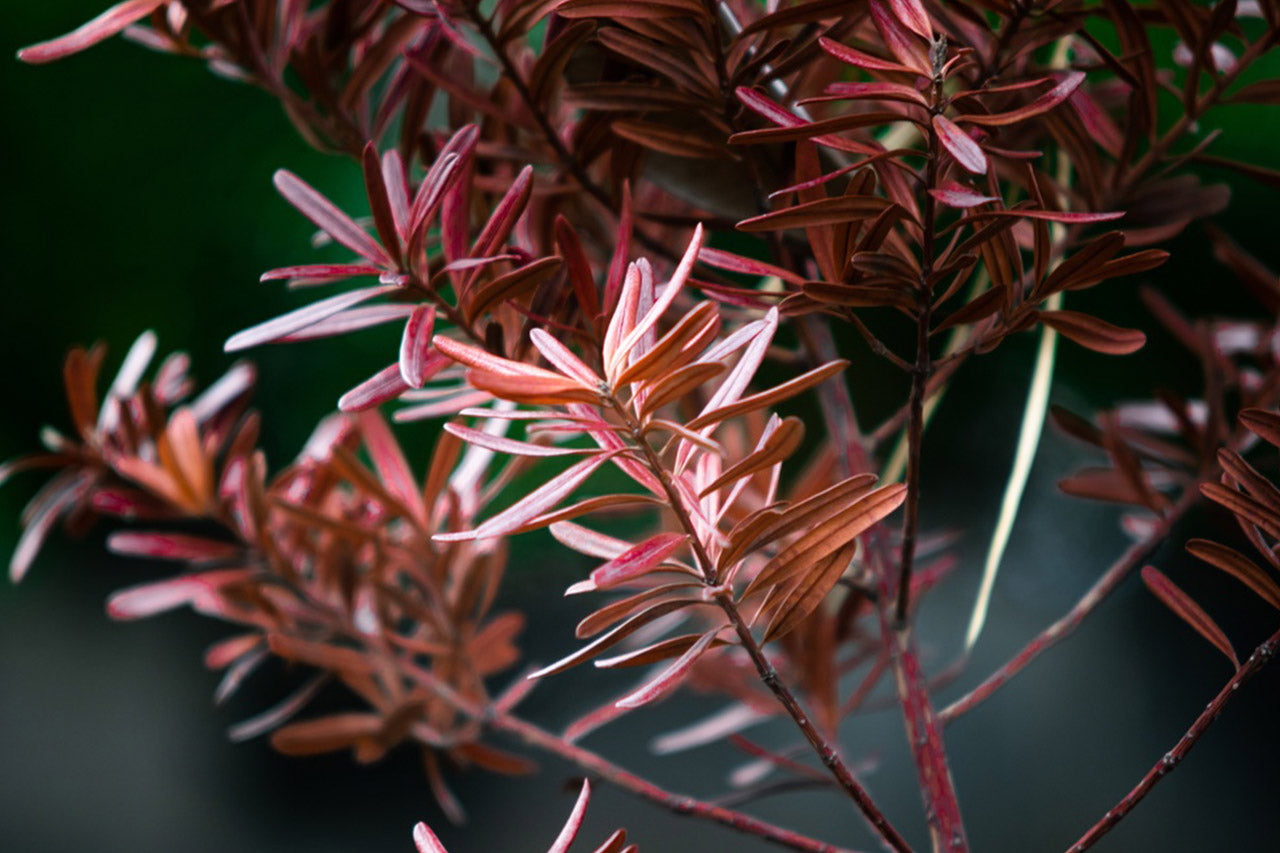
A smart, modern podocarp with fresh, fiery new growth that lights up evergreen planting without feeling flashy. Brilliant as a clipped accent, a low screen, or a border feature, where its fine texture reads clean and contemporary from season to season. It shines in winter light.
A podocarp that earns its name, flushing warm tones through the tips to give a gentle, glowing highlight among greens. Use it to punctuate a border, form a tidy evergreen screen, or sharpen a courtyard scheme with colour that never needs flowers, staying cheerful for months.
A mountain totara with a crisp, upright look and fine, tidy foliage that feels calm and architectural. Ideal for a smart hedge, a narrow screen, or a repeated rhythm plant in contemporary borders, giving year-round structure with a slightly exotic edge. with a smart, modern air.
A beautifully variegated podocarp with creamy tones that brighten planting like sunlight caught in leaves. Perfect for lifting darker evergreens, framing paths, or creating a pale, elegant screen, and it looks smart where texture and contrast do the talking beside brick too.
A richly coloured podocarp that carries ember-red new growth for a warm, lively finish, then settles into deep evergreen. Use it as a feature shrub, a clipped edge, or a colour thread through mixed planting, bringing winter interest and catching the eye from paces away too.